
Soft Water Filter for Home — The Complete Guide (Types, Costs, Installation, Maintenance, and Buying Advice)


Hard water is a nearly universal nuisance: it leaves scale on showerheads and faucets, shortens appliance life, dulls laundry, and makes soaps less effective. If you’ve noticed white or brown mineral deposits, spots on dishes, or frequent descaling of kettles and water heaters, the answer is often a soft water filter system. This guide explains — in practical detail — what “soft water” means, the technologies that produce it, how to size and choose a home system, cost considerations, installation and maintenance realities, environmental trade-offs, and straightforward advice for making a purchase that actually solves your problems.
Whether you’re researching a whole-house softener, a salt-free conditioner, or planning to pair a softener with a point-of-use RO for drinking water, this article will give you the technical vocabulary and decision steps you need to buy wisely.
Why soft water matters (and why it’s worth fixing)
Hard water contains dissolved calcium and magnesium minerals. When heated or when soap is used, these minerals precipitate and cause a long list of everyday problems:
- Scale buildup on heating elements and inside pipes reduces energy efficiency and shortens the life of water heaters, boilers, dishwashers, and espresso machines.
- Soap and detergent react with hardness minerals to produce scum, meaning you need more soap, laundry looks duller, and hair can feel less soft.
- Mineral spots on glassware and fixtures require frequent cleaning and aggressive chemical cleaners.
- Appliances that use heated water — kettles, steam irons, coffee makers — require descaling more often.
- Hard water can increase energy bills because scale reduces heat transfer efficiency.
A soft water system pays back through reduced appliance failures, lower energy use, less detergent and cleaning, and improved household convenience. How quickly it pays back depends on the severity of hardness and the appliances you own.
Definitions: hard water vs soft water and hardness metrics
Water hardness is measured in grains per gallon (gpg) or parts per million (ppm, mg/L). Conversion: 1 gpg ≈ 17.1 ppm (or mg/L). Rough industry categories:
- 0–3.5 gpg (0–60 ppm): soft to slightly hard
- 3.5–7 gpg (61–120 ppm): moderately hard
- 7–10.5 gpg (121–180 ppm): hard
- 10.6+ gpg (181+ ppm): very hard
If your water is above about 7 gpg, most homeowners begin to notice scale and performance issues. A lab test or a city water quality report will provide a specific number and help you pick the right solution.
Primary technologies that produce soft water
There are several ways to treat hardness. Each has pros and cons; the right choice depends on your goals (eliminate hardness completely, reduce scale, avoid salt discharge), the rest of your water chemistry, and practical constraints.
- Ion-exchange water softeners (salt-based)
This is the classic whole-house solution. Resin beads in a tank exchange hardness ions (calcium and magnesium) for sodium (or potassium), producing water that measures near-zero hardness at the tap.
How it works
- Water flows through a resin bed charged with sodium ions. Hardness ions bind to the resin.
- Periodically the resin is regenerated by flushing with a concentrated salt brine (sodium chloride) or potassium chloride, which displaces the hardness and restores the resin.
- The brine and suspended minerals are flushed to drain during regeneration.
Advantages
- Proven and highly effective — removes hardness completely.
- Simple to size and widely understood by plumbers and dealers.
- Delivers softened water throughout the house (showers, appliances, faucets).
Disadvantages
- Adds small amounts of sodium to the softened water (typically 8–12 mg/L per grain/gallon removed; amounts vary). This is generally low but matters for people on strict low-sodium diets; potassium chloride can be used as an alternative.
- Produces brine discharge (salted wastewater) that goes to sewer or septic systems — a regulatory and environmental issue in some areas.
- Uses water during regeneration.
- Requires ongoing salt purchase and periodic maintenance of the brine tank.
Sizing and capacity
Softener capacity is measured in grains (e.g., 24,000-grain, 32,000-grain). Choose capacity based on household water usage and hardness: estimate gallons per day × hardness (gpg) = grains per day, then select a resin capacity and target regeneration frequency (weekly or less often). Typical sizing guidance is included later.
- Salt-free conditioners (TAC / template-assisted crystallization and other scale control)
Salt-free devices do not remove hardness ions; instead, they change the chemical behavior of calcium and magnesium so minerals are less prone to forming adhered scale.
How it works (TAC example)
- The water flows through a media that catalyzes formation of microscopic, stable mineral crystals that remain suspended and do not adhere to surfaces.
- The hardness stays dissolved chemically but becomes less likely to deposit as hard scale.
Advantages
- No salt, no brine discharge, minimal maintenance.
- No change to sodium in drinking water.
- Easy to install and often relatively compact.
Disadvantages
- Effectiveness depends on feedwater chemistry and operating conditions (temperature, flow rates).
- Performance varies — in very hard water or high-temperature applications, salt-free systems may not eliminate all scaling; they generally reduce scale formation rather than guarantee zero scale.
- They do not improve soap lathering the same way softened water does (since hardness ions remain present).
Best for homeowners who cannot or prefer not to use salt-softeners, or where brine discharge is restricted. Also popular for homes seeking lower-maintenance, “eco-friendly” options.
- Reverse osmosis (RO)
RO is a high-purity, point-of-use option. It removes hardness and most dissolved ions by forcing water through a semi-permeable membrane.
How it’s typically used
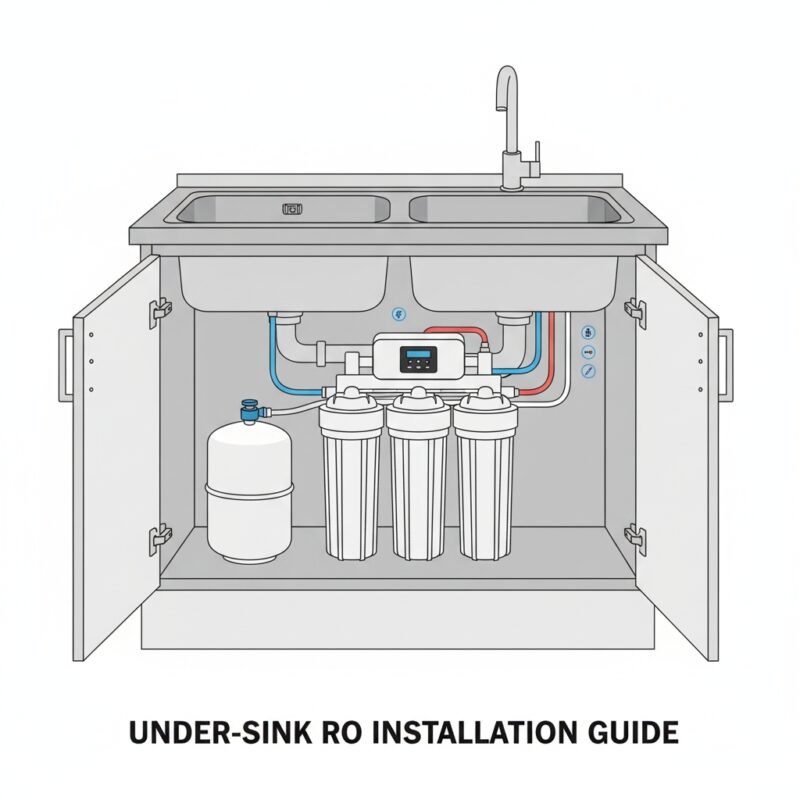
- Under-sink or countertop RO systems deliver drinking and cooking water free of hardness and contaminants.
- Whole-house RO is technically possible but expensive, requires large tanks and handles reject water issues — rarely the best first choice for ordinary homes.
Advantages
- Produces very low TDS (excellent drinking water).
- Removes many contaminants in addition to hardness (lead, arsenic, nitrates).
Disadvantages
- Produces wastewater (reject).
- Not usually practical as a whole-house solution due to cost, space, and waste volume.
- Requires pre-filters and membrane maintenance.
If you use a salt-based softener and want sodium-free drinking water, pairing a point-of-use RO at the kitchen sink is a common and effective approach.
- Electromagnetic/magnetic scale conditioners
These devices claim to reduce scale by subjecting water to magnetic or electromagnetic fields to alter crystal formation. Evidence is mixed: independent tests show inconsistent results across water types. These devices are low-cost and low-risk to try in mild-hardness situations but are not recommended where guaranteed scale control is required. - Ion-exchange alternatives and specialty media
Certain targeted filters (e.g., chelation, ion-exchange resins designed to remove specific ions) may help in unique cases. For iron-rich water, specialty iron filters or oxidation + filtration may be required in combination with softening.
Whole-house softener vs point-of-use strategies
The two main strategic decisions are whether to treat all incoming water or to treat only drinking water.
Whole-house softener (recommended when)
- You want scale-free water at every tap and in every appliance.
- You have appliances sensitive to scale (water heater, boiler, steam iron, espresso machines).
- You want the convenience of soap lathering throughout the house.
Point-of-use (recommended when)
- You prefer to avoid salt or brine discharge and are OK with targeted treatment.
- Your main concern is drinking water quality; a point-of-use RO at the sink delivers that without treating the entire plumbing network.
- You have a rental or temporary home where a full softener is impractical.
Hybrid common approach: install a whole-house softener or salt-free conditioner to protect plumbing and appliances, and add an under-sink RO unit for drinking water. This balances convenience, water quality, and health/consumer preferences. (If you want an example of a consumer RO unit to compare while planning, review an RO product like this: https://yourwatergood.com/product/ro-water-purifier/.)
How to size a household softener (practical steps)Sizing a softener correctly ensures appropriate regeneration frequency and reasonable salt/water use.
- Determine household daily water usage:
- A common assumption: 75–100 gallons per person per day. Use 75 for conservative, 100 for high use. Multiply by number of occupants.
- Multiply by measured hardness (gpg):
- Example: Family of four, 75 g/p/d = 300 gpd. Hardness 10 gpg: 300 × 10 = 3,000 grains per day.
- Choose regeneration frequency:
- Homeowners often prefer a weekly regeneration. Multiply daily grains by desired days between regenerations: 3,000 × 7 = 21,000 grains. Choose a softener with capacity slightly above that (e.g., 24,000-grain). Larger capacity softeners regenerate less frequently and tend to be more convenient.
- Confirm resin and valve:
- The control valve determines efficiency. High-efficiency metered valves regenerate only when needed; older timer systems regenerate on a schedule regardless of actual use.
- Account for iron or other contaminants:
- Iron in water reduces effective resin capacity; adjust sizing upward if iron is present. Confirm resin type or consider pre-treatment for iron.
Most dealers can run this calculation for you, but understanding the steps avoids upsells and mis-specified systems.
Installation overview and practical considerationsProfessional installation or DIY?
- Many homeowners hire licensed plumbers or water treatment dealers for whole-house softeners. Installation involves plumbing, drain connection for regeneration, and electrical connection for the control head. Professional installation protects warranties and ensures code compliance.
- Some salt-free conditioners and point-of-use units are DIY-friendly, but always follow manufacturer requirements.
Key installation items
- Location: place the system near the main cold water inlet and before the water heater if you want softened water in hot lines; ensure drain access and space to refill salt if using a softener.
- Bypass valve: essential so you can service the system without cutting off home water.
- Electrical: control valves often require 110–120V outlet for timed or metered heads; check code.
- Drain: softeners need a drain sized per local plumbing codes to handle backwash/brine discharge; if on septic, verify compatibility.
- Avoid treating hot water: feed softeners with cold water only to avoid damaging resin and control valves.
Permits and codes
- Local plumbing codes may require air gaps, approved drain connections, or limit brine discharge. Confirm with local authorities. Some municipalities restrict or ban salt-based softeners or impose fees; salt-free options can be preferable in those regions.
Maintenance: what to expect and how much it costs
Salt-based softeners
- Salt purchase: typical home: $50–$200 per year, depending on usage and system size. Dealers often provide an estimate.
- Periodic cleaning of brine tank and occasional resin servicing (rare; resin often lasts 10–15+ years).
- Metered valves reduce salt and water use compared to timer-based systems.
Salt-free conditioners
- Minimal ongoing cost; occasional media change or annual inspection per manufacturer guidance.
Point-of-use RO
- Pre-filters: replace 3–12 months depending on usage and feedwater.
- Membrane: replace every 2–5 years.
- Annual maintenance and filter bundle subscriptions are common and convenient.
Common maintenance costs: budget $100–$300 per year for typical household softening + drinking-water filtration supplies, but actual expenses vary by system type and water quality.
Health and safety considerations
- Sodium in softened water: Ion-exchange softening replaces hardness ions with sodium. The sodium content depends on hardness and system efficiency but is generally modest. For people on sodium-restricted diets (physician-advised), consider a point-of-use RO for drinking water or a potassium chloride regeneration (adds potassium instead of sodium).
- Drinking softened water: technically safe but not ideal for those monitoring sodium intake. Consider under-sink RO or a dedicated unsoftened feed to the kitchen tap if health concerns exist.
- Legionella and disinfection: softening systems do not disinfect. If your system design includes storage tanks or low-use outlets, maintain appropriate temperature and monitoring for microbial growth per public health guidance.
Costs: what to expect (ballpark U.S. ranges)
- Salt-based whole-house softener (equipment only): $700–$2,500 depending on capacity and brand.
- Installed whole-house softener (equipment + labor): $1,200–$4,000 typical, depending on complexity and local labor rates.
- Salt-free conditioning systems (equipment + install): $800–$3,000 depending on brand and flow capacity.
- Under-sink RO (equipment only): $150–$800; installed $250–$1,200 including faucet and plumbing.
- Annual operational costs: softener salt ($50–$200/year), RO filters and membrane ($50–$300/year), occasional servicing.
Total cost of ownership matters: a slightly higher upfront system with efficient metered regeneration often costs less over 5–10 years than a cheap, wasteful unit.
Environmental and regulatory trade-offs
- Brine discharge: salt-based softeners discharge concentrated brine that can harm wastewater treatment processes or groundwater if not managed. Some cities limit installation or assess surcharges. Check local rules.
- Water usage: regeneration consumes water. Modern efficient valves minimize this, but it’s still a factor.
- Energy: mostly minimal; pumps only for special designs.
- Salt-free options reduce environmental discharge but may be less effective in severe hardness.
If environmental impact is a priority, consider high-efficiency softeners, salt-free conditioners, or hybrid approaches with targeted RO for drinking water.
How to choose the right system — a decision checklist
- Test your water — lab test for hardness (gpg), iron, TDS, pH, and other relevant parameters.
- Define goals — eliminate scale everywhere? Reduce scale only? Avoid brine? Improve drinking water?
- Consider household specifics — family size, appliances sensitive to scale, septic vs city sewer, local regulations.
- Choose technology: ion-exchange for full softening; salt-free for low-maintenance scale control; RO for drinking water.
- Size the device correctly — work through the grain-capacity calculation shown earlier.
- Verify the valve type — demand/meters are more efficient than timers.
- Ask for a clear maintenance schedule and cost estimate.
- Check warranties, service options, and parts availability.
- If buying from a dealer, ask for references or examples of local installs.
- Consider a pilot (temporary install) or purchase from a vendor with a good return policy if you’re testing a salt-free conditioner for the first time.
Installation pitfalls and buyer warnings
- Undersized softeners that regenerate too often are both inconvenient and wasteful.
- Skimping on pre-filtration when iron or heavy sediment is present shortens resin life.
- Ignoring local discharge rules leads to fines or forced removal.
- Neglecting bypass valves or access makes future maintenance difficult.
- Believing in one-size-fits-all miracle devices — be skeptical of claims that a $100 device will replace a properly sized softener in very hard water.
Frequently asked questions (short answers)
Q: Will softening water remove iron?
A: Small amounts of dissolved iron can be handled by softeners, but moderate to high iron requires dedicated iron removal systems or pre-treatment; consult a professional.
Q: Is softened water safe for plants or pets?
A: Softened water contains sodium; most garden plants tolerate low levels but sensitive species may react. Use untreated or RO water for sensitive plants. Pets generally tolerate softened water, but consult a vet if you have concerns.
Q: Can I drink softened water?
A: Yes, but softened water has added sodium. People on strict low-sodium diets should use point-of-use RO or an unsoftened kitchen tap.
Q: How often does a softener need maintenance?
A: Salt refills vary; visual inspection monthly is common. Salt tank cleaning and periodic resin checks are typical over multi-year cycles. Plan for a professional check every 1–2 years.
Conclusion: making a practical, long-term choice
Soft water solves a set of real, measurable household problems. The right path depends on your water chemistry, environmental constraints, and priorities. For many homeowners, a correctly sized ion-exchange softener combined with a point-of-use RO at the kitchen sink offers the best balance: full protection throughout the house plus pure drinking water without added sodium. For homeowners facing regulatory limits on brine discharge or who prioritize low maintenance and environmental footprint, high-quality salt-free conditioning combined with targeted RO is a practical alternative.
Start with a lab water test, define your objectives, size the system using the grains-per-day approach, and compare 3 qualified vendor proposals. Ask for clear estimates of 5-year total cost of ownership, and insist on metered/efficient control valves and a bypass valve for maintenance. If you want an example under-sink RO to compare specifications and warranty while you plan your whole-house strategy, review a consumer RO option such as this product: https://yourwatergood.com/product/ro-water-purifier/.
A well-chosen soft water system reduces cleaning time, protects appliances, improves soap performance, and often pays back through lower energy and repair costs. Take the time to test, size, and specify correctly — the difference between a long-lasting, dependable system and a recurring problem is usually in the planning and installation.