
The ROI of Purity: Architecting Water Filtration for Quick Service Restaurants in the US Market

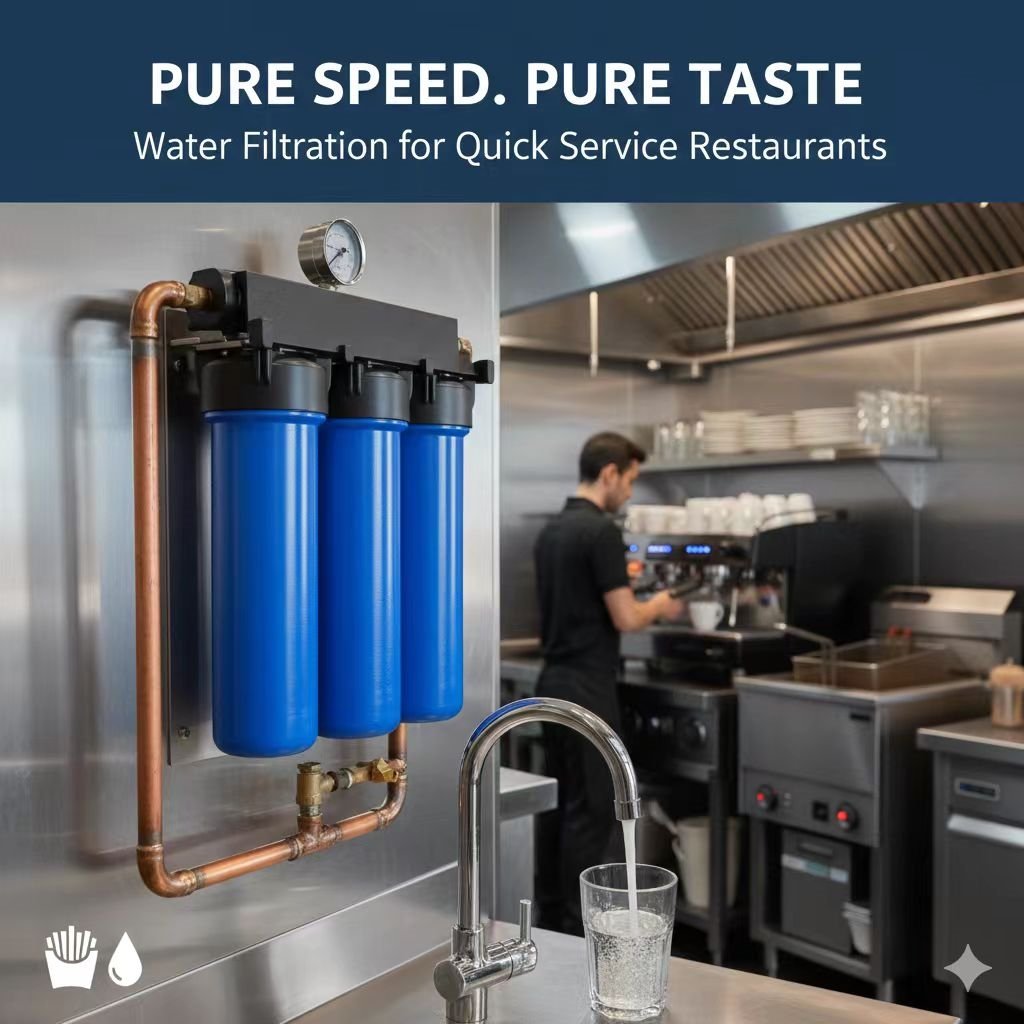
In the highly competitive landscape of the American food and beverage industry, operational efficiency and product consistency are the twin pillars of profitability. For owners of farm-to-table diners, high-volume cafes, and fast-casual dining establishments, controlling every variable in the kitchen is paramount. Yet, the most heavily utilized ingredient—water—is frequently left to the unpredictable fluctuations of local infrastructure or private wells. Implementing a commercial-grade water filtration for quick service restaurants is no longer a luxury; it is a critical infrastructural strategy.
From the agricultural heartland to the bustling coastlines, the United States presents a complex array of water quality challenges. Without a robust defensive barrier, raw water acts as a silent destructive force, accelerating equipment depreciation and compromising brand reputation. This comprehensive B2B guide explores the economic, operational, and technical imperatives of deploying an advanced water filtration for quick service restaurants, ensuring your capital assets are protected and your culinary standard remains uncompromised.https://yourwatergood.com/product/5-stage-ro-water-filter-for-home-busines/.
Navigating the American Water Landscape: Regional Challenges and EPA Standards
The United States boasts diverse geology, which directly impacts the groundwater and municipal supplies drawn by commercial businesses. A standardized approach to water management often fails because the contaminants threatening a kitchen in the Midwest are vastly different from those in the Southwest. A professionally specified water filtration for quick service restaurants must be tailored to combat these specific regional profiles.
Regional Vulnerabilities in US Well and Municipal Water
- The Midwest (Heavy Metals and Agricultural Runoff): Restaurants and farm-to-table operations relying on well water in the Midwestern agricultural belt frequently face high concentrations of nitrates from fertilizer runoff, alongside trace heavy metals. Nitrates are not only a severe health compliance issue but can also aggressively corrode internal copper piping in heating equipment.
- Texas and the Southwest (Extreme Mineral Hardness): Drawing from deep limestone aquifers, the water in Texas and surrounding states is notoriously hard. This water is laden with dissolved calcium and magnesium. When introduced into commercial boilers, it rapidly precipitates into dense scale, choking water lines and insulating heating elements.
- Coastal Regions (Sediment and Silt Intrusion): Businesses operating along the Eastern Seaboard or the Gulf Coast often battle fine sand, silt, and organic matter infiltrating their well systems or aging municipal lines. These abrasive particulates act like liquid sandpaper, destroying precision valves and commercial pumps.
Aligning with EPA Drinking Water Standards
The Environmental Protection Agency (EPA) sets rigorous national primary drinking water regulations that dictate the maximum allowable levels of specific contaminants. While municipal water is treated to meet these baselines at the facility, the journey through miles of aging city pipes can reintroduce lead, rust, and bacteria. For businesses on private wells, the burden of EPA compliance falls entirely on the restaurant owner. A multi-stage water filtration for quick service restaurants guarantees that your establishment not only meets but exceeds EPA standards, providing a legally compliant, safe, and superior product to your patrons.
The Economic Engine: ROI and Capital Equipment Protection
For the pragmatic B2B operator, capital expenditures must yield a definitive Return on Investment (ROI). The financial justification for a water filtration for quick service restaurants is found in its ability to drastically reduce operational downtime and extend the lifecycle of your most expensive kitchen assets.
Shielding High-Value Assets: Espresso Machines and Ice Makers
A high-specification commercial espresso machine or a high-yield ice maker requires a significant capital outlay. These machines operate under high heat and high pressure, making them exceptionally vulnerable to untreated water.
- The Cost of Scale: When hard water is heated, the resulting mineral scale coats boiler walls and internal sensors. This scale is an excellent thermal insulator. To reach the required brewing temperature, the machine must draw significantly more electricity, driving up utility overhead. Eventually, the heating element will burn out entirely, requiring thousands of dollars in emergency repairs.
- The Mechanics of Ice: Commercial ice machines rely on pure water freezing at a specific rate. High mineral and sediment content results in cloudy, brittle ice that melts rapidly, diluting premium beverages. Furthermore, scale buildup on evaporator plates causes ice to stick, leading to mechanical jams and expensive service calls.
Mitigating Rust and Particulate Damage
In older US cities or properties on aging wells, rust flakes from deteriorating iron pipes are a constant threat. When rust enters the narrow flow restrictors of a coffee brewer or a soda fountain dispenser, it causes immediate blockages. A dedicated water filtration for quick service restaurants intercepts these abrasive materials, preventing the scoring of solenoid valves and ensuring that your equipment operates smoothly through the busiest lunch rushes.
Brand Reputation and the Science of Consistency
In the quick service and fast-casual sectors, brand equity is built on the promise of a consistent customer experience. A patron expects their signature iced coffee to taste exactly the same in a suburban drive-thru as it does in a downtown storefront.
Eradicating Chemical Odors and Unwanted Flavors
Municipalities across the US rely heavily on chlorine and chloramines to sanitize public water lines. While effective for disinfection, these chemicals leave a harsh, medicinal odor and a bitter aftertaste. If your foundation ingredient tastes like a swimming pool, it will mask the delicate flavor notes of your premium coffee beans, organic teas, and complex fountain syrups.
The Standardized Sensory Profile
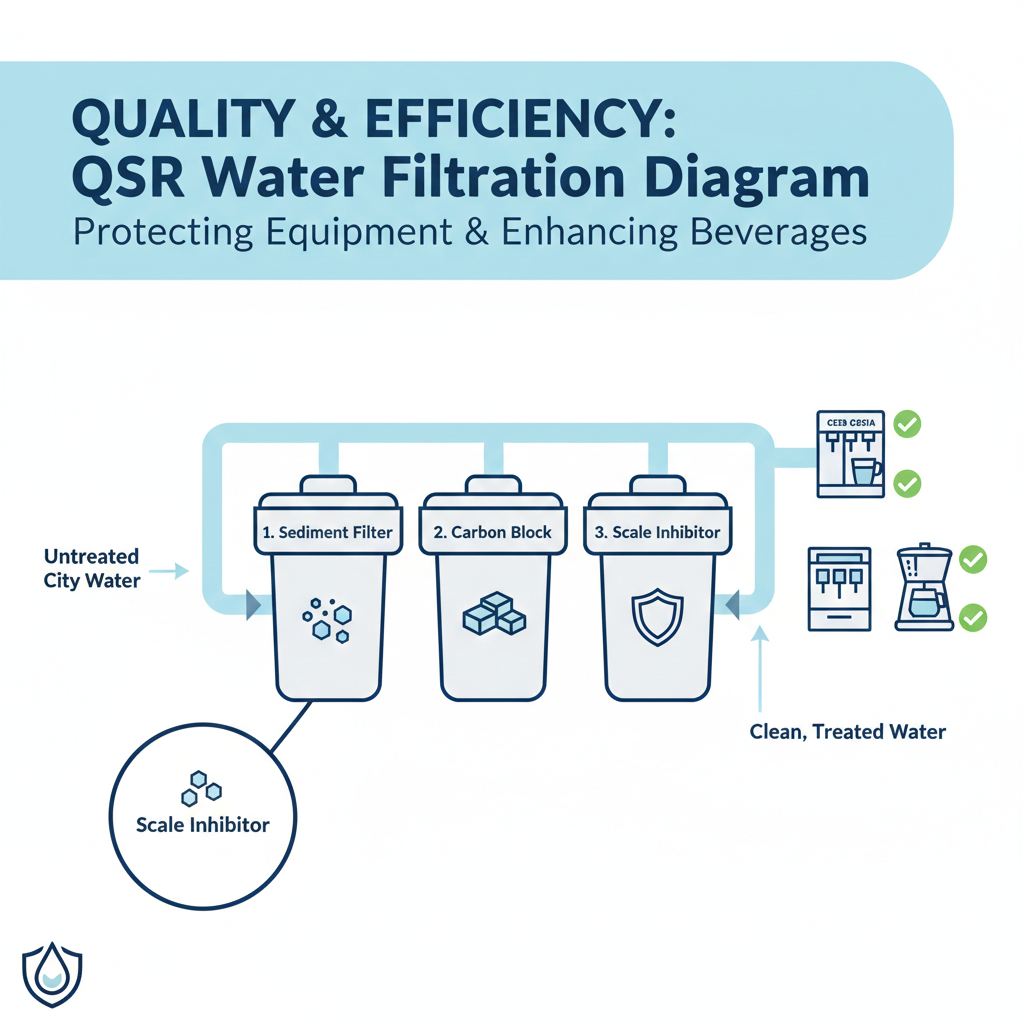
By implementing a specialized water filtration for quick service restaurants, you utilize high-capacity carbon adsorption to strip away these volatile organic compounds and chemical sanitizers. This creates a perfectly neutral, standardized water profile. Regardless of seasonal algae blooms in local reservoirs or sudden shifts in well water chemistry, your culinary output remains dependably excellent, safeguarding consumer trust and fostering brand loyalty.
POE vs. POU: Architecting Commercial Maintenance Efficiency
A critical decision in commercial facility management is determining where the filtration should occur. Understanding the strategic difference between Point of Entry (POE) and Point of Use (POU) is essential for maximizing the efficiency and maintenance budget of your water filtration for quick service restaurants.
Point of Entry (POE): The Facility Perimeter
A POE system is installed at the main water line where it enters the building.
- Operational Role: This setup acts as the primary shield for the entire facility. It is crucial for businesses on well water to utilize POE for heavy iron oxidation and bulk sediment removal, protecting standard plumbing, mop sinks, and public restrooms from staining and blockages.
- Efficiency Limitations: Treating the massive volume of water used to flush commercial toilets to the exacting standards of drinking water is a severe waste of expensive filtration media.
Point of Use (POU): The Precision Extraction
A POU system is installed directly at the terminal equipment—under the beverage counter, behind the ice maker, or connected to the espresso machine.
- Operational Role: POU systems provide ultra-fine, targeted purification exactly where the water is consumed.
- Commercial Advantage: By restricting premium filtration (like sub-micron carbon blocks or reverse osmosis) only to revenue-generating beverages, a POU water filtration for quick service restaurants maximizes the lifespan of your filter cartridges, significantly lowering your annual maintenance overhead.
The Hybrid Commercial Strategy
The most successful US quick service restaurants employ a hybrid architecture. They install a rugged POE system to handle bulk sediment and facility-wide scaling, combined with precision POU systems at the beverage stations to polish the water to culinary perfection.
Material Science Mastery: The Role of the pp cotton household water purifier company
The physical durability of a commercial filter is just as important as its purification capability. In a high-volume restaurant, the filtration media is subjected to relentless kinetic stress. This is where the advanced material science of a dedicated pp cotton household water purifier company becomes a critical business asset.
High-PSI Endurance in Commercial Kitchens
American commercial plumbing systems often operate at a high Pounds Per Square Inch (PSI) to meet the demand of multiple fixtures running simultaneously. Substandard filters can suffer from “blow-by” or structural collapse under this intense pressure, allowing raw sediment to bypass the filter and destroy downstream equipment. As a specialized pp cotton household water purifier company, we engineer our polypropylene (PP) cotton filters utilizing a thermal melt-blown process that creates an indestructible matrix, capable of withstanding extreme commercial PSI spikes without deformation.
Depth Filtration for Maximum GPM
In a quick service environment, speed is revenue. A filtration system must not bottleneck the Gallons Per Minute (GPM) required to fill large coffee urns or supply a continuous soda fountain. Our high-density PP cotton filters utilize graduated depth filtration—trapping coarse rust on the outer layers while catching microscopic silt near the core. This ensures maximum sediment holding capacity while maintaining the high GPM flow rates that American operators demand during peak hours.
Spotlight: The Ultimate High-Flow Solution for US Businesses
When selecting the terminal POU stage for your water filtration for quick service restaurants, Reverse Osmosis (RO) remains the industry gold standard for eliminating dissolved solids, heavy metals, and persistent chemical contaminants.
For operators seeking a system that bridges commercial output with manageable maintenance, the 5-Stage RO Water Filter for Home and Business is the premier choice. Engineered to meet the rigorous demands of the US market, this system provides exceptional GPM delivery and unparalleled purity. Because it is designed for versatile application, it serves as an ideal, low-maintenance solution for both the heavy daily use of a commercial kitchen and the high standards of a private residence. Incorporating this technology ensures your business is protected by the absolute highest tier of water purification.
The US Operator’s Maintenance Guide
A water filtration for quick service restaurants is a hardworking industrial machine. To guarantee continuous ROI and prevent unexpected downtime, facility managers must transition from reactive repairs to proactive maintenance.
Monitoring GPM Flow Rates and PSI Drops
Your first line of defense is monitoring pressure. We highly recommend installing analog pressure gauges before and after your primary sediment filter housings.
- A healthy system will show a minimal PSI differential.
- If the post-filter PSI drops significantly during operation, it indicates that the pre-filters from your pp cotton household water purifier company have successfully trapped their maximum capacity of well silt or municipal rust and require immediate replacement to restore your required GPM.
Strategic Cartridge Replacement Schedules
- Sediment and Carbon Pre-Filters: In a high-volume US quick service restaurant, these should be evaluated monthly and typically replaced every three to six months. Waiting until the water flow slows down means the filters are already over-saturated, placing severe strain on your system’s booster pumps.
- Reverse Osmosis Membranes: With proper pre-filtration maintenance, an RO membrane can last up to two years. Use a handheld Total Dissolved Solids (TDS) meter weekly to verify the membrane’s rejection rate remains within specification.
- Sanitization: Every time a filter change is performed, the internal housings should be sanitized to comply with local health department regulations and prevent bacterial biofilm accumulation.
FAQ: Strategic Insights for American Restaurant Owners
Q: Will adding a water filtration for quick service restaurants negatively impact the GPM at my soda fountain? A: Not if properly specified. Commercial-grade systems utilize oversized porting, high-flux filter media, and pressurized storage tanks (for RO systems) to ensure that the required GPM is always available on demand, even during the lunch rush.
Q: If my restaurant is on municipal city water, do I still need heavy-duty filtration? A: Absolutely. While city water leaves the plant meeting EPA standards, it travels through miles of deteriorating infrastructure. Frequent water main breaks and seasonal chlorine spikes make municipal water highly unpredictable. A commercial filter is your only guarantee of consistency at the tap.
Q: Why should I source my filters from a specialized pp cotton household water purifier company rather than a general restaurant supply catalog? A: Specialization equates to material superiority. A dedicated pp cotton household water purifier company focuses exclusively on filtration physics. Our products offer higher sediment holding capacities, superior PSI resistance, and extended lifespans compared to generic, white-labeled filters found in broadline catalogs.
Conclusion: Secure Your Infrastructure and Elevate Your Brand
In the fast-paced US food service industry, you cannot afford to leave your most critical ingredient to chance. Variable water quality is a hidden tax on your business, driving up utility costs, destroying expensive capital equipment, and undermining the consistency of your menu. Implementing a professional water filtration for quick service restaurants is a decisive, strategic maneuver that secures your operational uptime and protects your bottom line.
By partnering with experts and utilizing advanced technology, you transform a potential liability into a definitive competitive advantage. Don’t let scale, rust, or chemical odors compromise your hard-earned brand reputation.
Are you ready to optimize your restaurant’s water infrastructure? Explore our comprehensive range of commercial and residential purification solutions at www.yourwatergood.com. From high-capacity whole-house/building pre-filtration to our elite RO purifiers, we provide the robust technology required by American business owners. Contact our commercial specialists today to design a filtration strategy tailored to your specific regional water challenges.
One thought on “The ROI of Purity: Architecting Water Filtration for Quick Service Restaurants in the US Market”