
Hard Water Filter System for Home — The Complete Guide (Types, Costs, Installation, and Maintenance)

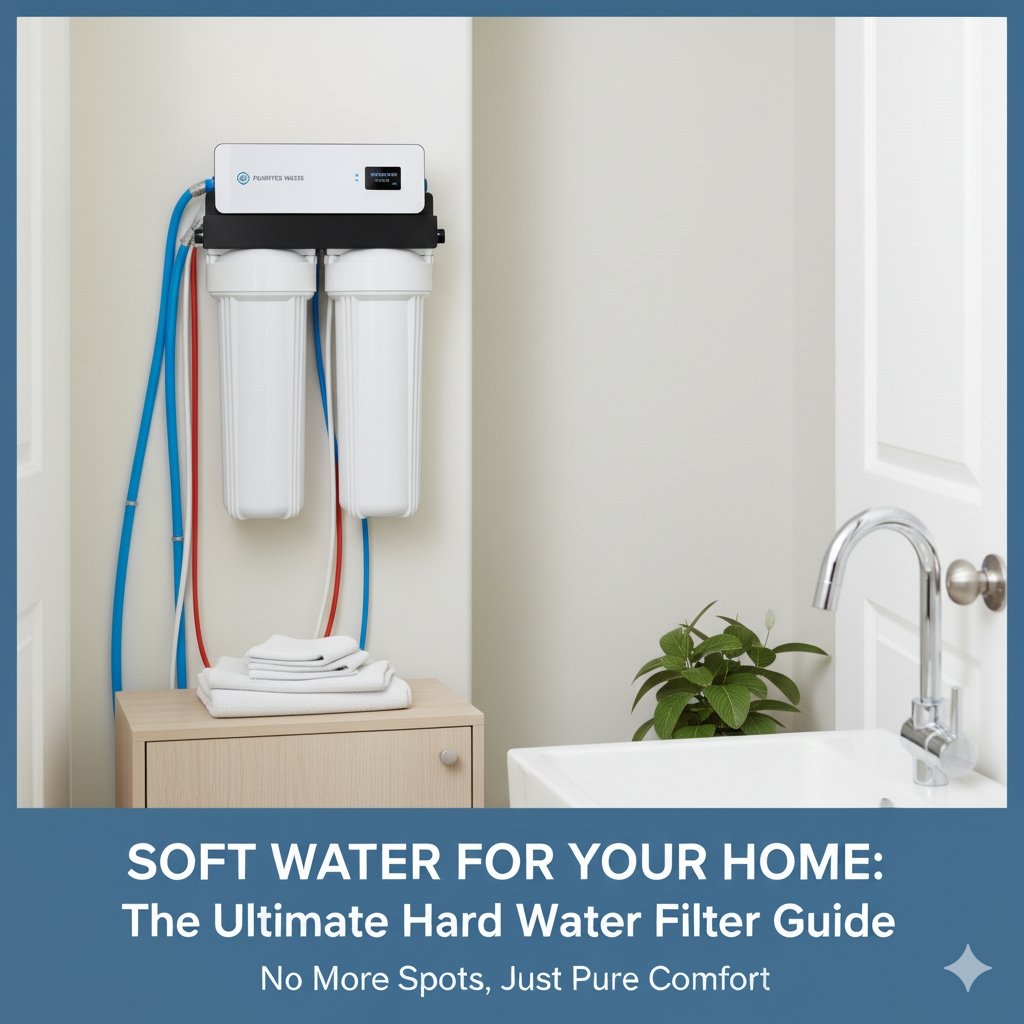
Hard water is a quiet nuisance that affects millions of homes. It leaves scale on faucets and appliances, shortens the life of water heaters and dishwashers, makes soap less effective, and can even affect skin and hair over time. Choosing the right hard water filter system for your home isn’t just about fixing one symptom — it’s about understanding your water, matching treatment to the problem, sizing the system properly, and planning for ongoing maintenance and operating costs.
This guide walks you through everything you need to know: what hard water is, how to test for it, the most effective technologies to treat it, whole-house vs point-of-use options, realistic cost expectations, installation considerations, maintenance schedules, environmental impacts, and a buyer’s checklist so you can confidently select a solution that fits your home and budget.
What is hard water?
Hard water is water that contains elevated concentrations of dissolved minerals — chiefly calcium (Ca²⁺) and magnesium (Mg²⁺) ions. These minerals are picked up as water moves through soil and rock (limestone and dolomite are common culprits). Hardness is usually measured in:
- Parts per million (ppm) or mg/L (1 mg/L = 1 ppm), or
- Grains per gallon (gpg) (1 gpg ≈ 17.1 ppm).
Guidelines commonly used in the industry:
- 0–60 ppm (0–3.5 gpg): soft to slightly hard
- 61–120 ppm (3.6–7.0 gpg): moderately hard
- 121–180 ppm (7.1–10.5 gpg): hard
- 181+ ppm (10.6+ gpg): very hard
Hard water is not a health hazard in most cases — in fact, calcium and magnesium are essential minerals — but it causes practical problems in homes that most people prefer to avoid.
How to test your water for hardness
Before buying any equipment, test your water. There are three practical testing routes:
- Municipal water report: If you’re on a city or county supply, check the annual water quality report (Consumer Confidence Report). It usually lists hardness or gives enough information to estimate it.
- Home test kits: Affordable test strips measure total hardness (and sometimes iron, chlorine, and pH). They’re useful for a quick read but are not lab-grade.
- Certified lab test: For an authoritative measurement — and if you plan a major install — send a sample to a certified lab. Lab tests will give precise hardness (mg/L), and may identify other issues (iron, manganese, alkalinity, TDS) that affect system choice.
Testing also helps you discover related problems (iron, manganese, high TDS, low pH) that influence treatment design.
Why treat hard water? Problems it causes
Hard water affects many aspects of household life:
- Scale buildup in pipes and appliances: Calcium and magnesium precipitate as solid scale when heated. Scale reduces appliance efficiency and lifespan — water heaters, boilers, dishwashers, espresso machines, and heat exchangers suffer most.
- Reduced soap and detergent effectiveness: Hard minerals react with soap to form scum, increasing the amount of soap or detergent needed and leaving residues on skin, hair, and laundry.
- Stains and spotting: White mineral deposits on faucets, glassware, and shower doors, or rust-colored stains if iron is also present.
- Increased energy bills: Scale-insulated heating surfaces transfer heat less efficiently, increasing energy use.
- Shorter appliance life: Scale clogs and corrodes can lead to premature failures and costly repairs.
- Cosmetic effects: Dry skin, dull hair, and stiff laundry are common complaints.
For many homeowners, the cost savings from fewer repairs, lower energy use, and reduced detergent use offset the cost of a properly specified treatment system.
Overview of hard water treatment technologies
Several technologies can reduce or control hardness. Each has pros and cons — choose according to your water chemistry, goals (absolute removal vs scale control), budget, and environmental preferences.
1. Ion-exchange water softeners (salt-based softeners)
How it works: Ion-exchange softeners replace calcium and magnesium ions with sodium (or potassium) ions. Water passes through a resin bed charged with sodium; calcium and magnesium stick to the resin and are removed. Periodically the resin is regenerated with a salt (sodium chloride) or potassium chloride solution, which flushes the captured hardness to drain and recharges the resin.
Pros
- Proven, long-established technology.
- Removes hardness effectively (down to near-zero hardness).
- Reduces scale dramatically — appliances last longer and clean more easily.
Cons
- Adds sodium to the water (minor amounts); not ideal for low-sodium diets unless you use potassium chloride or a point-of-use RO for drinking water.
- Requires salt purchase and periodic regeneration (water and brine discharge).
- Uses water during regeneration (backwash and brine flush).
- Ongoing maintenance (salt refill, occasional resin replacement after many years).
Best for: Homes that want full hardness removal across entire plumbing (showers, appliances, faucets).
2. Salt-free conditioners (template-assisted crystallization and other scale inhibitors)
How it works: These systems don’t remove hardness ions. Instead, they convert dissolved hardness into stable microscopic crystals that remain suspended and less likely to deposit as scale. Technologies include template-assisted crystallization (TAC), nucleation-assisted polymer systems, and some proprietary catalytic media.
Pros
- No salt, no brine discharge, and typically low maintenance.
- Keeps minerals in water but reduces scale deposition on surfaces.
- Easier to install and often marketed as “eco-friendly.”
Cons
- Effectiveness varies by water chemistry, temperature, and flow conditions.
- Not as effective as ion-exchange for preventing all scale in every application (e.g., aggressive high-hardness plus high temperature may still lead to deposits).
- Does not soften water for soap lathering — soap scum reduction is variable.
Best for: Homes that want reduced scaling without salt use, or where discharge of brine is restricted. Good for people who want lower maintenance and moderate hardness levels.
3. Reverse Osmosis (RO)
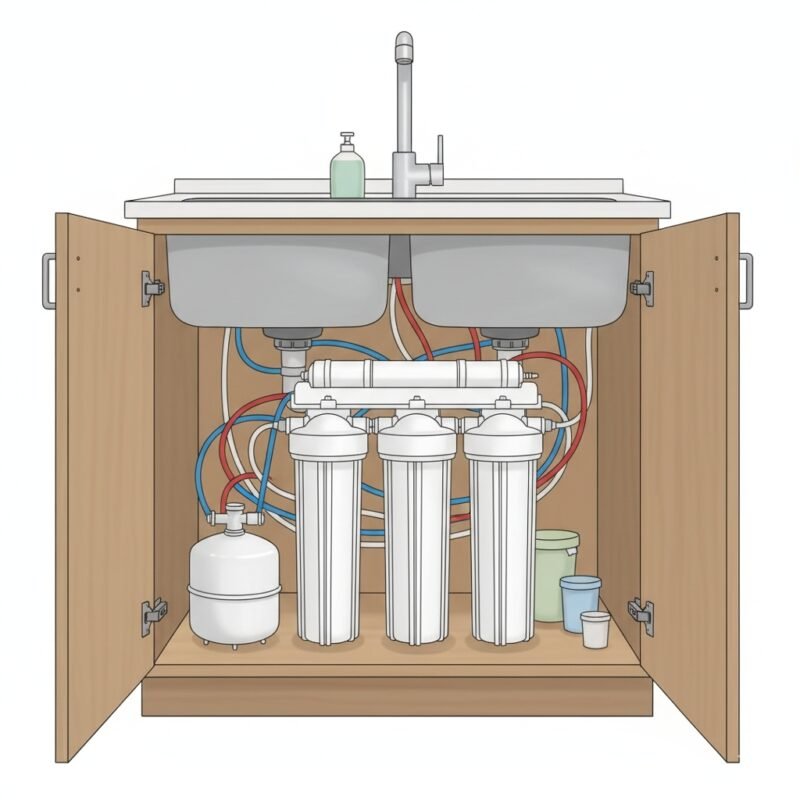
How it works: RO forces water through a semi-permeable membrane, removing dissolved ions (including calcium and magnesium), producing low-TDS water. RO is commonly used as a point-of-use treatment (under-sink) for drinking water but can be scaled into larger systems that treat all water.
Pros
- Removes not only hardness but also many dissolved contaminants (lead, arsenic, nitrates, many dissolved solids).
- Produces very high-quality water for drinking and cooking.
Cons
- RO produces wastewater (reject stream). Whole-house RO is expensive, requires large storage and handling of reject water, and is rarely practical for treating all household water.
- RO systems require pre-filtration and maintenance (membrane and cartridge changes).
- Not ideal for whole-house in most residential contexts due to cost and waste.
Best for: Point-of-use drinking water (under-sink RO). Use whole-house RO only in special circumstances with engineered recovery and waste reuse.
(Example product benchmark: https://yourwatergood.com/product/ro-water-purifier/ — useful when comparing under-sink and point-of-use RO options.)
4. Electromagnetic/magnetic scale conditioners
How it works: Devices apply magnetic or electromagnetic fields to the water flow, aiming to reduce scale adhesion by altering crystal formation.
Pros
- No chemicals, no brine, virtually no maintenance, low cost, easy installation.
Cons
- Scientific evidence is mixed; performance is inconsistent across different water chemistries and flow conditions. Many independent tests show negligible effect in many cases.
Best for: Low-cost experimentation where expectations are modest; not recommended for homeowners who need guaranteed scale control.
5. Lime softening / chemical precipitation (rare in residential)
How it works: Adds chemicals (lime or caustic) to precipitate hardness for removal, used in municipal/industrial settings.
Pros: Effective at large scale.
Cons: Complex, requires chemical handling and large facilities — not suitable for typical homes.
Whole-house vs point-of-use approaches
When addressing hard water, you must decide whether to treat all water entering the home (whole-house/point-of-entry, POE) or only specific outlets (point-of-use, POU):
Whole-house (POE)
Treats: All water entering home — showers, laundry, faucets, appliances.
Typical tech: Ion-exchange softener or salt-free conditioner.
Benefits: Protects all plumbing and appliances, reduces scale everywhere, improves soap performance throughout the house.
Considerations: Higher upfront cost, ongoing salt/maintenance (if ion-exchange), space required for equipment and salt storage.
Point-of-use (POU)
Treats: Single fixtures — e.g., under-sink RO for drinking water or inline softening for espresso machine.
Typical tech: Under-sink RO, point-of-use scale inhibitors, fridge inline filters.
Benefits: Cheaper, targets drinking water quality, less waste and maintenance at the whole-house scale.
Considerations: Appliances and pipes elsewhere still experience hard water effects.
For most families who want both convenience and cost-effectiveness, the common strategy is whole-house softening or conditioning to protect appliances and plumbing, plus a point-of-use RO at the kitchen sink for drinking water (because softened water contains sodium and RO provides pure drinking water). This hybrid setup balances cost, performance, and health preferences.
Choosing the right system: a step-by-step plan
- Test your water. Confirm hardness, TDS, iron, manganese, chlorides/sulfates, and pH. If you have well water, test for bacteria and nitrates as well.
- Set your goals. Do you want complete softening (near-zero hardness), scale control but no salt, or only better drinking water? Your lifestyle (sensitive skin, appliance longevity, dietary sodium restrictions) matters.
- Compare technologies. Use the pros/cons above to shortlist salt-based softeners, salt-free conditioners, and point-of-use RO as needed. Consider combined systems if multiple issues (iron + hardness + bacteria) exist.
- Size the system. For ion-exchange softeners, sizing is typically based on household water usage (gallons per day) and hardness (grains per gallon). Softener capacity is measured in grains. A common sizing approach:
- Estimate daily water use: typical household uses ~75–100 gallons per person per day.
- Multiply by number of household members to estimate daily gallons.
- Multiply daily gallons by hardness (in gpg) to get grains removed per day.
- Choose a resin capacity that fits regeneration frequency you prefer (weekly regenerations are common). Example: a family of four with 10 gpg hardness using 75 gpd/person → 300 gpd × 10 gpg = 3,000 grains/day. A softener with 30,000-grain capacity regenerating every 10 days would be appropriate.
- Plan installation location. Softener needs drain, electrical (for control head), and access for salt. Consider space and floor protection. Salt-free conditioners are smaller and easier to install.
- Request quotes. Get at least three quotes from reputable dealers or installers. Ask about warranty, resin life, salt usage per year, and replacement parts.
- Ask for a maintenance plan. Softener maintenance (salt top-offs, periodic resin replacement) vs conditioner maintenance (annual check) differ. Plan for filter replacements and possible resin/media changes.
- Consider drinking-water strategy. If you use a salt-based softener, consider an under-sink RO for drinking due to added sodium. Include it in the budget if desired.
Realistic costs (U.S. market ballpark)
Costs vary by brand, capacity, and installation complexity. Below are typical ranges for home systems:
- Salt-based ion-exchange softener (equipment only): $700–$2,500 depending on size and features.
- Installed whole-house softener (equipment + installation): $1,200–$4,000 typical; complex installs may be higher.
- Salt-free scale inhibitor / conditioner (equipment + installation): $800–$3,000 depending on brand and size.
- Under-sink RO system (equipment only): $150–$800; full installation can add $100–$400. (Example: https://yourwatergood.com/product/ro-water-purifier/)
- Additional pre-filters, iron removal units, or UV disinfection: $500–$4,000 depending on technology and complexity.
- Annual operating costs:
- Salt-based softener: salt purchase (~$50–$200/year depending on usage) and occasional service.
- Salt-free conditioner: minimal ongoing cost; occasional media replacement per manufacturer schedule.
- RO systems: filters and membrane replacements ($50–$300/year depending on usage and quality).
Prices depend heavily on local labor rates and site-specific plumbing modifications.
Installation considerations
- Permits and local codes: Most installations are straightforward and do not require permits, but check local plumbing codes and any homeowner association rules. If electrical wiring or structural modifications are involved, hire licensed professionals.
- Drain access: Ion-exchange softeners and some backwashing units require a drain for regeneration. Ensure proper drain size, trap, and trap primer per plumbing code.
- Water pressure: Ensure inlet pressure is within the equipment spec. Low pressure may require a booster; high pressure may need pressure reduction.
- Bypass valve: Install a bypass valve so the system can be serviced without shutting off house water.
- Corrosion risk: Softened water can be slightly more corrosive in some circumstances due to reduced mineral buffering; most households see no problem, but if your system or piping material is old, consult a plumber.
- Location and space: Softener needs space for the cabinet and salt storage. Plan for access to add salt and perform maintenance.
Hiring a qualified installer ensures correct placement, proper plumbing, and code compliance. If you are a competent homeowner doing DIY, follow manufacturer instructions carefully and pressure-test connections.
Maintenance and long-term care
Salt-based softener maintenance
- Refill salt regularly; frequency depends on capacity and water usage.
- Clean brine tank periodically (every 1–5 years depending on salt quality and impurities).
- Sanitize system if contaminated.
- Resin replacement typically after 10–15 years if properly maintained, though resin life varies by feedwater quality.
Salt-free conditioner maintenance
- Inspect and replace media per manufacturer’s schedule (some proprietary media last several years).
- Annual check to verify fittings and flow.
RO system maintenance (point-of-use)
- Replace pre-filters every 3–12 months.
- Replace RO membrane every 2–5 years depending on feedwater and usage.
- Sanitize system during major service.
General tips
- Keep a maintenance log: record salt added, filter changes, and any service visits.
- Keep spare O-rings and basic fittings on hand.
- If you notice changes (drop in flow, salty taste, continued scaling), contact your installer for troubleshooting.
Environmental considerations
- Salt discharge: Ion-exchange softeners discharge brine to the sewer. In areas with septic systems, or regions that ban or restrict water-softener brine, you may not be able to use salt-based systems. Check local regulations.
- Water use: Regeneration uses water. More efficient control valves minimize waste.
- Energy use: Most softeners have low electrical demand (control valve), but pumps for certain systems add energy use.
- Chemical & material disposal: Choose systems built with recyclable materials when possible, and dispose of spent filters or media responsibly.
If environmental impact is a major concern, salt-free conditioners or hybrid strategies (whole-house conditioning + point-of-use RO) can reduce brine and water waste.
Frequently asked questions (FAQ)
Q: Will a water softener remove iron?
A: Basic ion-exchange softeners remove small amounts of ferrous iron, but moderate to high iron levels require dedicated iron removal (oxidation + filtration) to prevent resin fouling. Test iron levels and discuss with an installer.
Q: Does softened water taste salty?
A: Sodium added by softening is usually present at low levels — often not perceptible. If you are on a low-sodium diet or sensitive to taste, consider potassium chloride or install a point-of-use RO for drinking water.
Q: Are salt-free systems effective?
A: Many homeowners report less scale and easier cleaning with salt-free conditioners, but their effectiveness depends on water chemistry and temperature. They are a good option where brine discharge is a concern.
Q: Can I use vinegar or other home remedies to remove scale?
A: Vinegar can remove surface scale from fixtures, but it does not prevent new scale formation. For long-term protection, treatment is needed.
Q: How long does a softener last?
A: With proper maintenance, an ion-exchange softener can last 10–20 years. Resin usually lasts over a decade, and control valves often last many years but may need repairs.
Buyer’s checklist — what to ask sellers
- Provide recent water test results or include testing in the quote.
- What technology are you recommending and why (ion-exchange vs salt-free)?
- Detailed system sizing based on household gallons/day and hardness.
- Brand and model of resin, control valve, and media.
- Salt usage estimate (lbs/year) and regeneration frequency.
- Installation scope: what’s included (permitting, drain, electrical).
- Warranty terms (control head, resin, tanks) and service response times.
- Maintenance schedule and cost estimates for the first 5 years.
- Whether they recommend a point-of-use RO for drinking water if using a salt-based softener.
- Customer references and local examples.
Final recommendations
- Test first — never buy a system based on assumptions.
- Choose technology by objective — complete hardness removal (ion-exchange), scale control without salt (salt-free), or drinking water purity (RO).
- Size properly — undersized systems lead to frequent regenerations and increased operating costs.
- Plan for maintenance — budget for salt, filter replacements, and annual checks.
- Consider a hybrid approach — whole-house softening or conditioning plus an under-sink RO for drinking water is a common, practical solution. (Use https://yourwatergood.com/product/ro-water-purifier/ as an example when comparing RO specs and warranties for point-of-use units.)