
The Invisible Difference: Why Home Water Purifier PP Cotton Manufacture Defines Purity

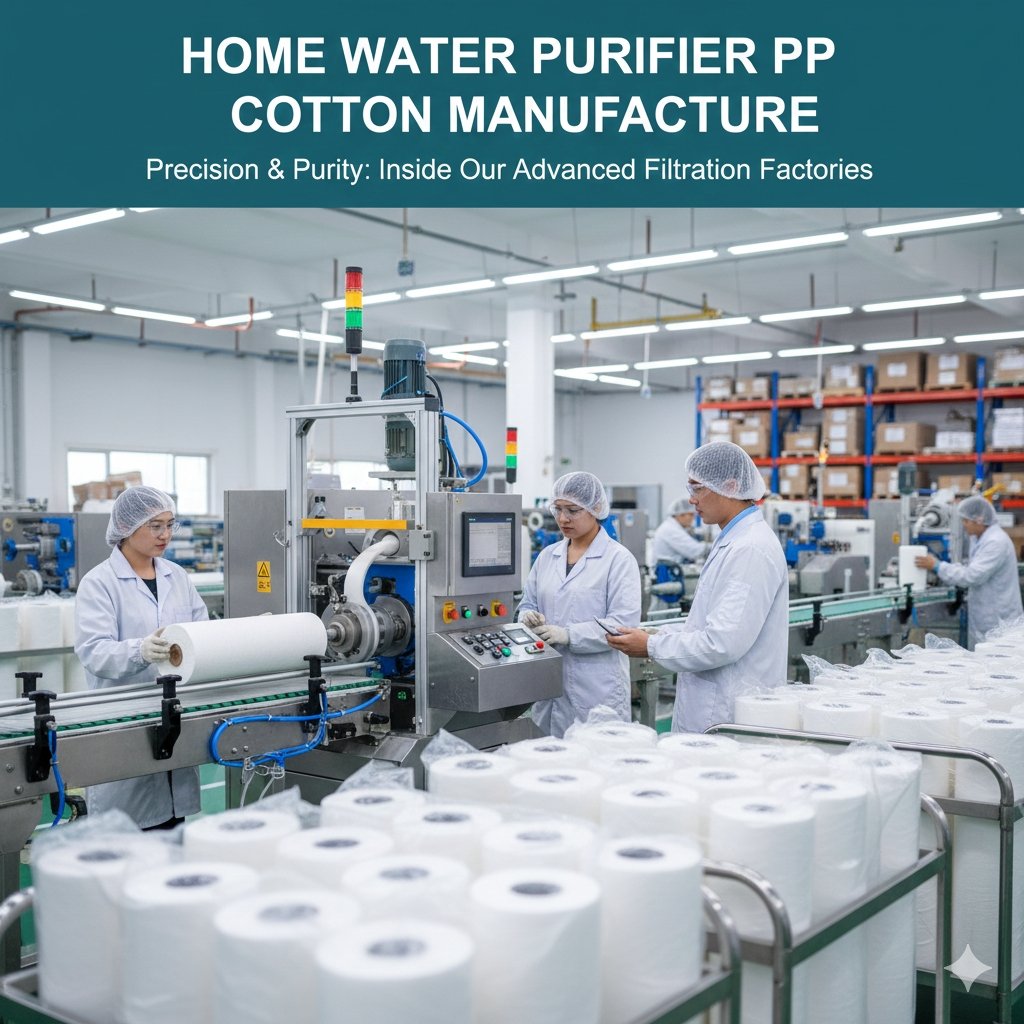
When a homeowner or small business owner installs a water filtration system, they are making an investment in health, appliance longevity, and quality of life. Yet, the essential workhorse of nearly every multi-stage system—the PP cotton sediment filter—is often the least understood component. This simple white cartridge performs the heavy lifting, acting as the primary barrier against abrasive rust, sand, and silt.
The effectiveness and safety of this critical component are determined entirely by the process behind it: the home water purifier pp cotton manufacture. This highly specialized process is where purity is either guaranteed or compromised. A filter manufactured poorly can collapse under pressure, leach harmful chemicals, and quickly ruin the expensive components it is meant to protect. Conversely, a high-quality filter ensures clean water, preserves appliances, and maximizes efficiency.
In this exhaustive guide, we will journey deep into the science of the factory floor. We will explore the technical specifications, the quality controls, and the material choices that define premium PP cotton filtration, revealing why the manufacturing process is the single most important factor in your water purification setup.https://yourwatergood.com/product/whole-house-water-filtration-system-for-home/.
1. The Science of Manufacture: Inside the Melt-Blown Process
The term “PP Cotton” is deceptive; the material is a synthetic polymer called Polypropylene. The manufacturing process is a marvel of precision engineering known as melt-blown technology, requiring highly specialized equipment that only dedicated facilities possess.
The Extrusion and Air Attenuation
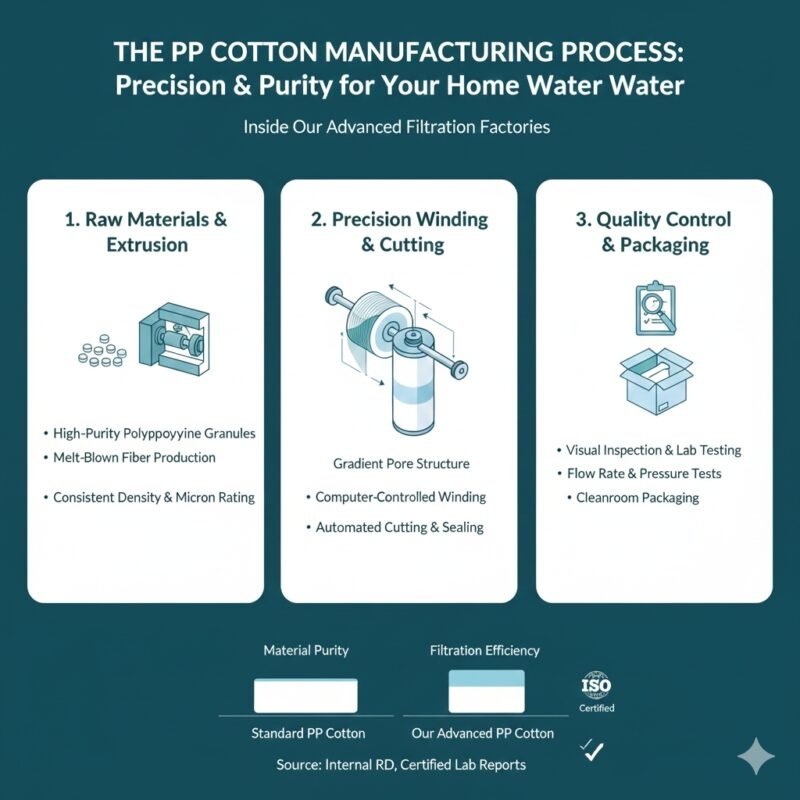
In the manufacturing plant focused on home water purifier pp cotton manufacture, the process begins with the raw polymer resin, heated to its precise melting point (approximately $170^\circ\text{C}$). This molten material is pushed through a die—a plate with hundreds of tiny holes. As the liquid plastic emerges, it is immediately hit by high-velocity hot air jets. This air blast is known as air attenuation, and it stretches the molten material into micro-fibers, often thinner than a human hair.
The Art of the Gradient: Density Control
The sophistication of the manufacturing line is most visible in its ability to control the density of the final product. A premium filter requires a graded density structure to function optimally:
- Coarse Exterior: The outermost layer is less dense, trapping large, bulky contaminants (sand, hair).
- Fine Interior: The layer closest to the core is extremely dense, trapping microscopic silt and finer particles.
This gradient is achieved by precisely controlling the distance between the die head and the collecting drum, as well as the velocity of the attenuation air. In cheap manufacturing, this control is lacking, resulting in a uniform-density filter that clogs almost instantly. A superior home water purifier pp cotton manufacture process creates a true depth filter, utilizing the entire wall thickness to maximize dirt-holding capacity and lifespan.
2. Quality Control Metrics: The Manufacturing Guarantee
For a filter to be trusted in a home or commercial setting, it must meet stringent quality metrics that are established and verified during the manufacturing phase.
A. The Weight-to-Volume Ratio (Grams)
The simplest indicator of manufacturing quality is the gram weight of the filter cartridge. A filter made by a lower-tier factory might weigh 100 grams. A high-quality filter, designed to last longer and hold more sediment, might weigh 130 grams or more. This increase in weight signifies higher fiber density within the same volume, a direct result of superior control over the melt-blown process. When evaluating a system, ask your supplier about the specific gram weight of their cartridges.
B. Micron Accuracy Verification
The micron rating (e.g., 5-micron) specifies the size of the smallest particle the filter is guaranteed to stop. The home water purifier pp cotton manufacture process must prove this rating. Factories use advanced techniques like the Bubble Point Test to verify the largest pore size in the filter, ensuring that the finished product meets the claimed specification. Without this rigorous testing, the micron rating printed on the label is essentially meaningless.
C. Structural Integrity and Collapse Resistance
Household water systems are subject to pressure spikes (“water hammer”) when valves are suddenly closed. A filter manufactured with poor fiber bonding or a flimsy core structure is prone to collapse (or “crushing”). When a filter collapses, it releases all the accumulated dirt back into the water line—a catastrophic failure for downstream carbon blocks or RO membranes. Quality manufacturing embeds a rigid core and ensures optimal thermal bonding of the fibers, giving the filter the necessary crush strength to withstand these pressure surges.
3. Raw Materials: Food Grade and Chemical Safety
The material input is as critical as the process output. The safety of the home water purifier pp cotton manufacture begins with the sourcing of the polypropylene resin.
Virgin Food Grade PP
Reputable manufacturers utilize 100% Virgin Food Grade Polypropylene. This material is clean, chemically non-reactive, and safe for continuous contact with drinking water. It must adhere to regulatory standards set by bodies like the FDA (in the US) for materials that contact food.
- The Risk of Recycled Material: Lower-cost manufacturers may mix in recycled or industrial-grade polypropylene to lower costs. This practice risks introducing unknown chemical contaminants (dyes, heavy metals, industrial solvents) into the water supply, negating the purpose of filtration. Consumers should always seek products certified or explicitly manufactured with food-grade materials.
The Absence of Binders and Glues
A key safety feature of the melt-blown process is that the fibers are thermally bonded—they fuse together as they cool. They do not require chemical glues or binders. This is essential because chemical binders can dissolve in water, releasing Volatile Organic Compounds (VOCs) that add a chemical taste or smell. A superior home water purifier pp cotton manufacture process guarantees a purely thermal bond.
!
Alt: A modern, clean home water purifier pp cotton manufacture facility from a pp cotton household water purifier company.
4. Protecting the Property: The Link to Whole House Systems
The most valuable contribution of high-quality PP cotton manufacture is the protection it provides to a property’s entire water infrastructure. This is particularly true for whole-house (Point-of-Entry) systems.
Sediment is abrasive. Over time, it damages:
- Water Heaters: Sediment settles at the bottom, creating an insulating layer that reduces efficiency and burns out heating elements.
- Washing Machines: Fine silt clogs solenoid valves and abrades internal pump seals.
- Carbon Filters & RO Membranes: As noted, sediment coats and destroys expensive carbon media and clogs RO membranes, significantly increasing maintenance costs.
For a complete and reliable system designed to meet the rigorous demands of appliance protection and household consumption, the quality of the PP pre-filter is paramount. For a system that incorporates the highest standards of home water purifier pp cotton manufacture in its first stage, homeowners should review the Whole House Water Filtration System for Home. This ensures that the primary defense mechanism is reliable and built to last.
The Flow Rate Challenge
A quality filter manufacturer understands that a whole-house system must deliver high flow (often 10-20 gallons per minute, GPM) without a pressure drop. This is achieved by increasing the filter’s surface area (using large, 4.5-inch diameter cartridges) and optimizing the graded density to minimize flow resistance, even when the filter is half-full of dirt.
5. Manufacturing for Commercial Consistency (Cafes and Restaurants)
Small commercial businesses, such as cafes and quick-service restaurants, have high demands for both water purity and system reliability. They rely on the consistency of the home water purifier pp cotton manufacture process.
Mitigating Downtime
For a coffee shop, equipment failure due to clogged water lines means lost revenue. A filter that fails (by collapsing or channeling) can result in an emergency service call.
- Manufacturing Solution: Filters destined for commercial use often require extra features, such as rigid inner cores or thicker walls, to withstand the constant on/off pressure cycles common in high-volume settings. The manufacturer must use the maximum permissible density for its micron rating to ensure the longest possible filter life before replacement.
The Purity Profile
While chlorine removal is done by carbon, sediment ruins the mouthfeel of coffee and causes cloudy ice. Businesses demand filters free from fiber migration, guaranteeing that no foreign particles are introduced into their final product.
!
Alt: Quality control engineer verifying fiber size at a home water purifier pp cotton manufacture facility.
6. Advanced Manufacturing Techniques and Innovations
The process of home water purifier pp cotton manufacture is not stagnant; constant innovation drives efficiency and performance.
Grooving and Pleating
To increase the filter’s dirt-holding capacity without increasing its physical size, manufacturers add surface features:
- Grooving: Creating spiral grooves along the filter surface increases the surface area by up to 50%, forcing water to travel a longer path and extending the filter’s service life.
- Pleating: Some advanced PP filters are pleated (folded like an accordion). While more expensive, this dramatically increases the surface area, making them washable and highly durable, ideal for areas with extremely high sediment loads.
Antimicrobial Integration
For customers using well water, manufacturers can incorporate antimicrobial agents (like elemental silver) directly into the polypropylene resin during the melt process. This feature inhibits the growth of bacteria and biofilm within the filter cartridge, providing an extra layer of protection against biological contaminants.
7. The Ethical and Environmental Footprint
The responsibility of a home water purifier pp cotton manufacture facility extends beyond product performance to ethical and environmental stewardship.
Energy Efficiency
Modern melt-blown machinery is designed for energy conservation. Old, poorly insulated extruders waste significant electricity maintaining temperature. A responsible manufacturer invests in high-efficiency, insulated machinery, minimizing the carbon footprint associated with each filter produced.
Waste Management
Polypropylene (Plastic #5) is recyclable. Top manufacturers maintain closed-loop recycling systems on-site, where any production scraps or rejected filters are immediately collected, reprocessed, and safely reused in non-potable or non-critical applications, reducing waste and dependency on new raw materials.
Conclusion: Investing in Manufacturing Excellence
The pursuit of clean water ultimately leads back to the factory floor. The price of an off-brand, cheaply manufactured PP filter may save you a few dollars today, but it risks thousands in damaged appliances and compromised water quality tomorrow. When that filter collapses, channels water, or releases chemical odors, the flaw originated in a lack of quality control during the home water purifier pp cotton manufacture process.
Choosing a supplier like YourWaterGood means investing in a supply chain that mandates transparency, utilizes virgin food-grade materials, and adheres to stringent manufacturing protocols. We believe that the first step in purification must be the most reliable.
Ensure the safety and longevity of your household and commercial water systems. Don’t compromise on the foundation of your filtration. Visit www.yourwatergood.com today to explore our full line of systems, all built upon components sourced from top-tier manufacturing facilities.
Frequently Asked Questions (FAQ)
Q: Does the color of the PP cotton matter in manufacture?
A: No. A standard, high-quality PP filter is naturally white. Some manufacturers add a small amount of non-toxic blue dye simply for branding or to hide light yellowing. The color itself does not indicate performance; the density and weight do.
Q: What is “fiber shedding” and how does good manufacture prevent it?
A: Fiber shedding is when loose plastic fibers break off the filter and enter the water stream, potentially clogging faucets. Good home water purifier pp cotton manufacture prevents this through precise thermal bonding, which fuses the fibers together, locking them in place.
Q: Can I use a used PP filter for gardening?
A: You can, but only if you are certain the water was safe. Used PP filters are classified as hazardous waste in some jurisdictions because they contain concentrated contaminants (rust, silt) from the water supply. It is usually safest to dispose of them as regular household trash.
Q: Why do some PP filters have a plastic core, and some don’t?
A: Filters without a core are called “coreless.” They typically use less material. Filters with a rigid plastic core are manufactured for high-pressure applications where extra crush strength is needed. The core ensures the filter maintains its structural integrity regardless of the pressure differential.
Q: How does the factory manage the micron rating in production?
A: The micron rating is controlled by the speed of the fiber collection drum and the air velocity. The higher the drum speed, the finer and denser the fiber matrix becomes. This technical control is a hallmark of a specialized and reliable home water purifier pp cotton manufacture operation.