
Strategic Asset Protection: The Definitive Guide to Point of Entry Water Filter Implementation for US Small Businesses and Restaurants

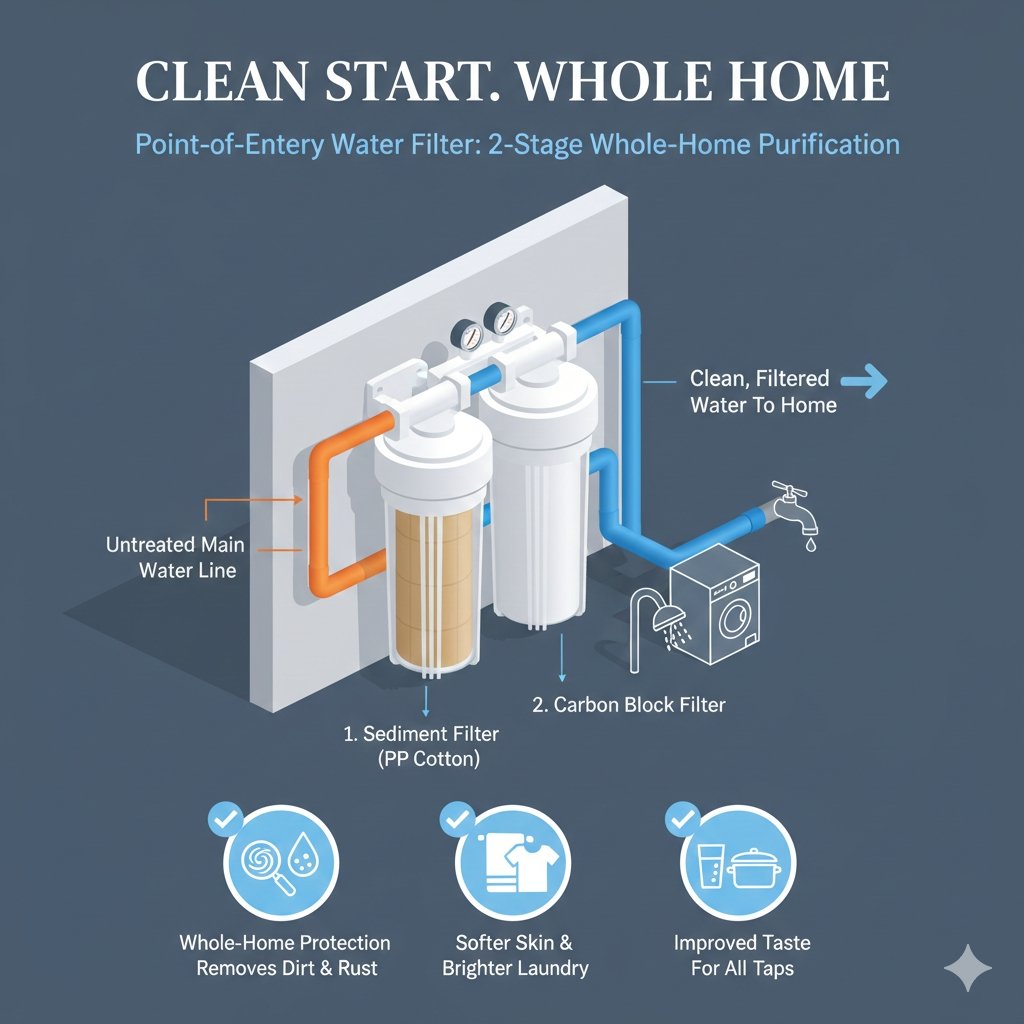
In the complex landscape of American commercial operations, the quality of the water flowing into a facility is often the determining factor between long-term profitability and unexpected capital expenditure. For small business owners, farm-to-table restaurant operators, and hospitality managers, water is more than a utility; it is a critical raw material. Whether it is used for high-pressure steaming, brewing specialty coffee, or feeding industrial ice makers, the incoming water stream carries geological and chemical footprints that can either preserve or destroy expensive infrastructure.
Implementing a professional point of entry water filter system is the strategic baseline for modern facility management. This “first line of defense” approach ensures that every drop of water entering the building is pre-conditioned to meet rigorous operational standards. By addressing contaminants at the main service line, business owners can mitigate the risks of equipment failure, protect their brand reputation, and ensure a consistent customer experience.https://yourwatergood.com/product/whole-house-water-filtration-system-for-home/
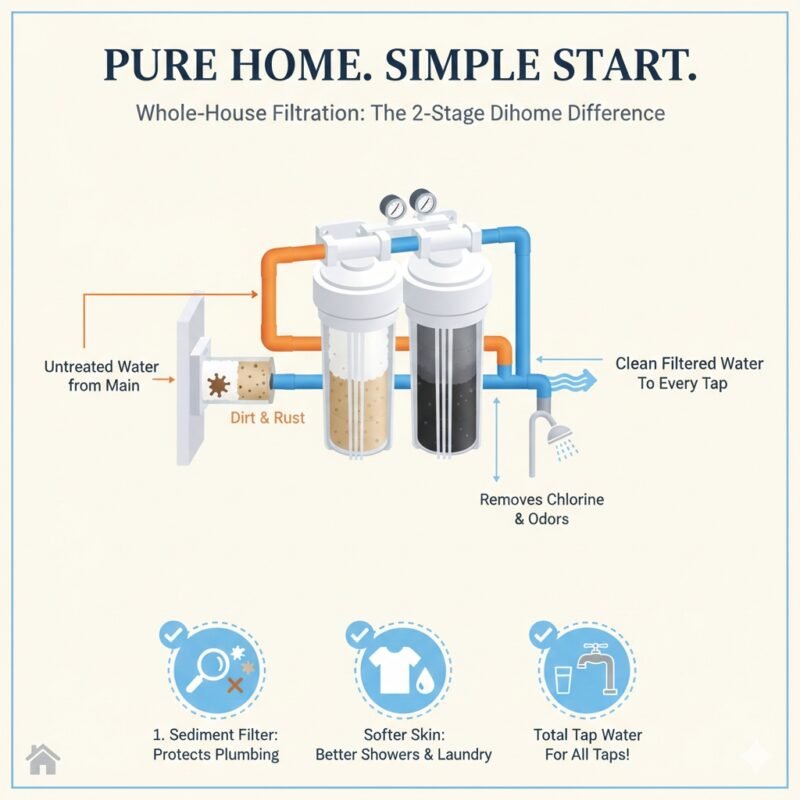
Regional Geological Challenges: Why a Point of Entry Water Filter is Non-Negotiable
The United States presents a diverse array of water quality challenges dictated by regional geology and agricultural history. For businesses relying on well water or even aging municipal grids, a point of entry water filter acts as a vital barrier against localized contaminants.
The Midwest: Agricultural Runoff and Heavy Metal Infiltration
In the American Midwest, the primary concern for restaurant owners is often the presence of agricultural byproducts and heavy metals in well water. High concentrations of nitrates from fertilizers can infiltrate aquifers, leading to health compliance risks and undesirable flavor profiles in beverages. Furthermore, heavy metals such as lead or arsenic, which may occur naturally or via industrial legacy, require robust filtration. A high-capacity point of entry water filter designed for heavy-duty contaminant removal is essential in these states to ensure that water meets the safe consumption expectations of both patrons and regulators.
Texas and the Southwest: The Hard Water Burden
Business owners in Texas and across the Southwest face a relentless battle against dissolved minerals. The limestone-heavy geography results in extreme water hardness, characterized by high levels of calcium and magnesium. Without a point of entry water filter equipped with scale-inhibition or softening capabilities, this “liquid rock” precipitates out within the internal components of commercial boilers and espresso machines. This leads to rapid scale accumulation, which chokes water flow and causes catastrophic heating element failure.
Coastal Regions: Sediment and High Turbidity
Along the Atlantic, Pacific, and Gulf coasts, the challenge is often mechanical. Sandy soil structures and fluctuating water tables frequently introduce high levels of suspended solids and silt into the water supply. These sediments act as abrasives, wearing down the valves and seals of commercial dishwashers and beverage dispensers. A dedicated point of entry water filter in these regions focuses on sediment reduction to prevent the “gritty” water quality that can ruin a restaurant’s reputation and its equipment.
The ROI of Water Filtration: Protecting Expensive Commercial Assets
For a B2B operator, the installation of a point of entry water filter is not a mere expense; it is a high-return investment in asset longevity. The economic impact of poor water quality is felt most acutely in the repair and replacement cycles of high-spec commercial machinery.
Espresso Machines and Brewing Equipment
A high-end commercial espresso machine represents a significant capital investment. These machines rely on intricate internal plumbing and precise temperature control. When untreated water enters the system, minerals and iron deposits begin to coat the boiler walls. This forces the machine to work harder to maintain temperature, significantly increasing electricity consumption. A point of entry water filter prevents this mineral buildup, ensuring that the machine operates at peak thermal efficiency and extending its service life by several years.
Commercial Ice Makers
Ice makers are notoriously sensitive to water quality. Iron and rust from well water can stain the internal molds, while nitrates and chlorine can affect the clarity and taste of the ice. Furthermore, sediment can clog the distribution tubes, leading to uneven freezing or total system freeze-ups. By utilizing a point of entry water filter, operators ensure that the ice—which is often the most used “ingredient” in a bar or restaurant—remains crystal clear and free of off-flavors, protecting the brand reputation for quality.
Maintenance Cost Mitigation
The cost of an emergency service call from a commercial plumber or appliance technician can be staggering. Most of these service calls are necessitated by scale buildup, corrosion, or sediment blockages—all of which are preventable. A point of entry water filter reduces the frequency of descaling procedures and emergency repairs, allowing business owners to allocate their maintenance budgets toward proactive growth rather than reactive fixes.
Strategic Comparison: Point of Entry (POE) vs. Point of Use (POU)
Understanding the architectural difference between Point of Entry and Point of Use filtration is critical for operational efficiency. While both have their place in a commercial setting, their roles are distinct.
| Feature | Point of Entry (POE) Filter | Point of Use (POU) Filter |
| Installation Point | Main water line (Total Facility) | Specific tap or appliance (Surgical) |
| Primary Function | Bulk sediment, rust, and chlorine removal | Fine polishing, taste, and odor refinement |
| Equipment Protection | Protects water heaters, pipes, and all appliances | Protects one specific machine (e.g., Espresso) |
| Maintenance Efficiency | High (One central system to monitor) | Lower (Multiple cartridges at different sites) |
| Flow Rate | High GPM (Gallons Per Minute) capacity | Lower GPM for localized use |
A point of entry water filter is the superior choice for overall facility maintenance because it prevents contaminants from even entering the building’s plumbing. Without POE filtration, sediments can settle in the facility’s main water heater, leading to inefficiency and premature failure of the building’s entire hot water supply. For maximum protection, we recommend a hybrid approach: a robust point of entry water filter for the whole building, supplemented by specialized POU filters for sensitive beverage equipment.
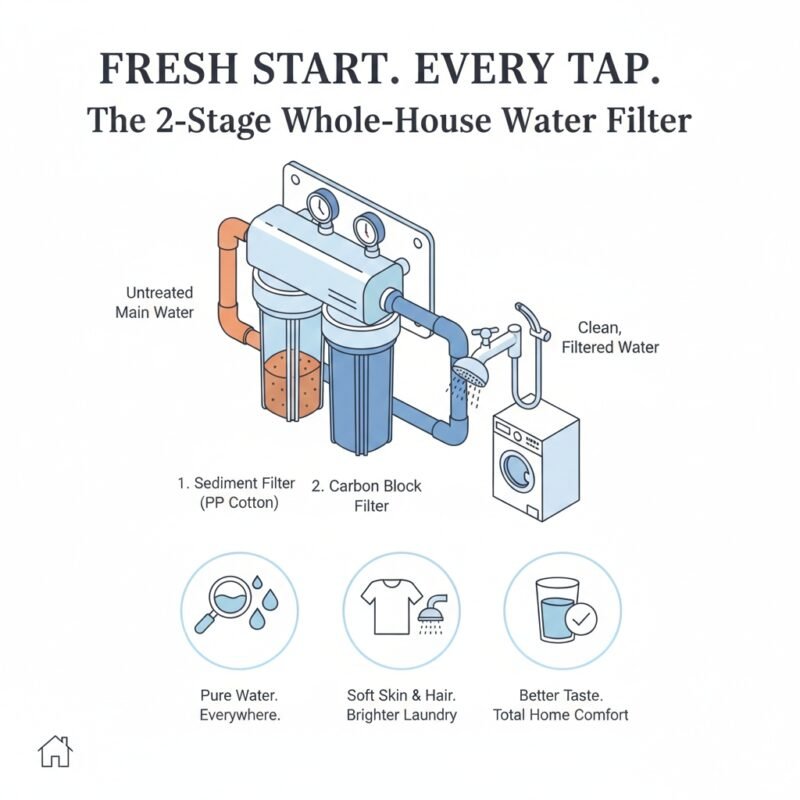
Material Science: The Excellence of PP Cotton in Commercial Filtration
As established water filter manufacturers, we emphasize the importance of material science in high-flow environments. The heart of many professional point of entry water filter systems is the Polypropylene (PP) cotton sediment cartridge.
In a commercial kitchen or a small manufacturing facility, water is often pulled at high GPM rates simultaneously from multiple points. This creates significant pressure on the filter media. Our PP cotton filters are engineered with a gradient density structure. The outer layers trap larger particulates like rust and sand, while the inner core captures microscopically fine silt.
Unlike standard residential filters, commercial-grade PP cotton must withstand high PSI (Pounds Per Square Inch) without collapsing or “channeling”—a failure where water carves a hole through the filter, bypassing the media. As specialized water filter manufacturers, we utilize a heat-fused manufacturing process that ensures the fibers remain stable under the rigorous pressure demands of a busy American restaurant, providing consistent filtration and protecting the high-flow requirements of the facility.
Compliance and Safety: Following the EPA Framework
While the United States Environmental Protection Agency (EPA) sets the standards for municipal water treatment, commercial operators—especially those on private wells—must be vigilant about maintaining these standards within their own facilities. The EPA framework for drinking water focuses on both “primary” standards (health-related contaminants like lead and nitrates) and “secondary” standards (aesthetic issues like taste, odor, and color).
A professional point of entry water filter is designed to bring facility water into alignment with these rigorous frameworks. For instance, in regions with high iron content in the well water, the water may appear orange or leave rust stains. While not always a primary health hazard, this fails the EPA secondary standards and destroys customer confidence. By installing a point of entry water filter, businesses ensure they are not only compliant with safety standards but are also exceeding the aesthetic expectations that define a premium brand.
Technical Specifications: GPM and PSI Management
When selecting a point of entry water filter, two technical metrics are paramount: Gallons Per Minute (GPM) and Pounds Per Square Inch (PSI).
- Flow Rate (GPM): A commercial facility requires a high GPM capacity. If the filter is too small, the water pressure at the dish station or the pre-rinse sink will drop significantly during peak hours. A professional point of entry water filter should be sized to handle the peak simultaneous demand of the building without restricting flow.
- Operating Pressure (PSI): Most commercial appliances, particularly ice makers and coffee brewers, require a specific incoming PSI to function correctly. The point of entry water filter must be robust enough to handle the incoming city or well pressure while maintaining a low “pressure drop” across the filter media.
For businesses looking for a solution that balances these technical requirements, we recommend the Whole House Water Filtration System for Home & Business. This system is engineered specifically for high-flow applications, offering a low-maintenance, high-GPM solution that fits seamlessly into American commercial plumbing configurations. It is the ideal choice for business owners who need a reliable point of entry water filter that won’t compromise their facility’s performance.
Maintenance Guide for US Commercial Operations
To maximize the lifespan of your point of entry water filter, a proactive maintenance schedule is essential. American business owners should follow these guidelines:
- Monitor Pressure Differential: Install pressure gauges before and after the point of entry water filter. When the PSI difference between the two gauges exceeds a certain threshold (typically fifteen PSI), it indicates the filter is saturated and needs replacement.
- Regular Cartridge Inspection: In regions with high sediment or coastal silt, check the PP cotton pre-filter every three months. Even if the flow rate hasn’t dropped, a saturated filter can become a breeding ground for biofilm.
- Annual System Sanitization: Once a year, the filter housing should be cleaned and sanitized to ensure that no bacteria have bypassed the system, particularly in well water setups.
- Logbook Records: Maintain a maintenance log. This is often required for health inspections and helps in predicting the ROI of your filtration components.
FAQ: Essential Insights for Restaurant Owners
Q: Will a point of entry water filter remove the “rotten egg” smell from my well water? A: Yes, provided the system is equipped with the correct carbon or specialized media blocks. That smell is often caused by hydrogen sulfide or certain types of bacteria common in US wells. A point of entry water filter with a high-capacity activated carbon stage is very effective at neutralizing these odors.
Q: Does installing a point of entry water filter void the warranty on my commercial espresso machine? A: On the contrary, most high-end manufacturers require specific water quality standards to maintain the warranty. Installing a professional point of entry water filter is often a requirement to ensure the machine isn’t damaged by scale or rust, thereby protecting your warranty coverage.
Q: How much space do I need for a point of entry water filter? A: Most commercial POE systems are designed to be compact and wall-mounted near the main water shut-off valve. They typically require a footprint of about two to three square feet of wall space, making them suitable even for small mechanical rooms in boutique cafes.
Q: Can a point of entry water filter handle the high GPM needed for a commercial dishwasher? A: Absolutely. Commercial systems are specifically rated for high-flow applications. When sized correctly, a point of entry water filter will provide all the water needed for high-temp or chemical-sanitizing dishwashers without causing a drop in performance.
Conclusion: Securing Your Business Future
In the American B2B sector, operational excellence is built on a foundation of reliability. A point of entry water filter is more than just a plumbing component; it is a strategic tool for risk management and brand preservation. By protecting your equipment from the harsh realities of regional water chemistry—whether it be Midwest nitrates, Texas minerals, or Coastal silt—you ensure that your business remains efficient, compliant, and profitable.
As veteran water filter manufacturers, we understand the unique pressures of the American commercial environment. We invite you to explore our specialized solutions designed to meet the high GPM and PSI demands of your facility.
Are you ready to safeguard your equipment and elevate your brand reputation?
Visit www.yourwatergood.com to view our full catalog of high-performance filtration systems. Would you like us to provide a customized water quality assessment based on your specific US zip code and equipment list?