
SoftStart Supply: The Complete Playbook for PP Cotton Household Water Purifier Suppliers

1. Why PP cotton matters in household water purifiers
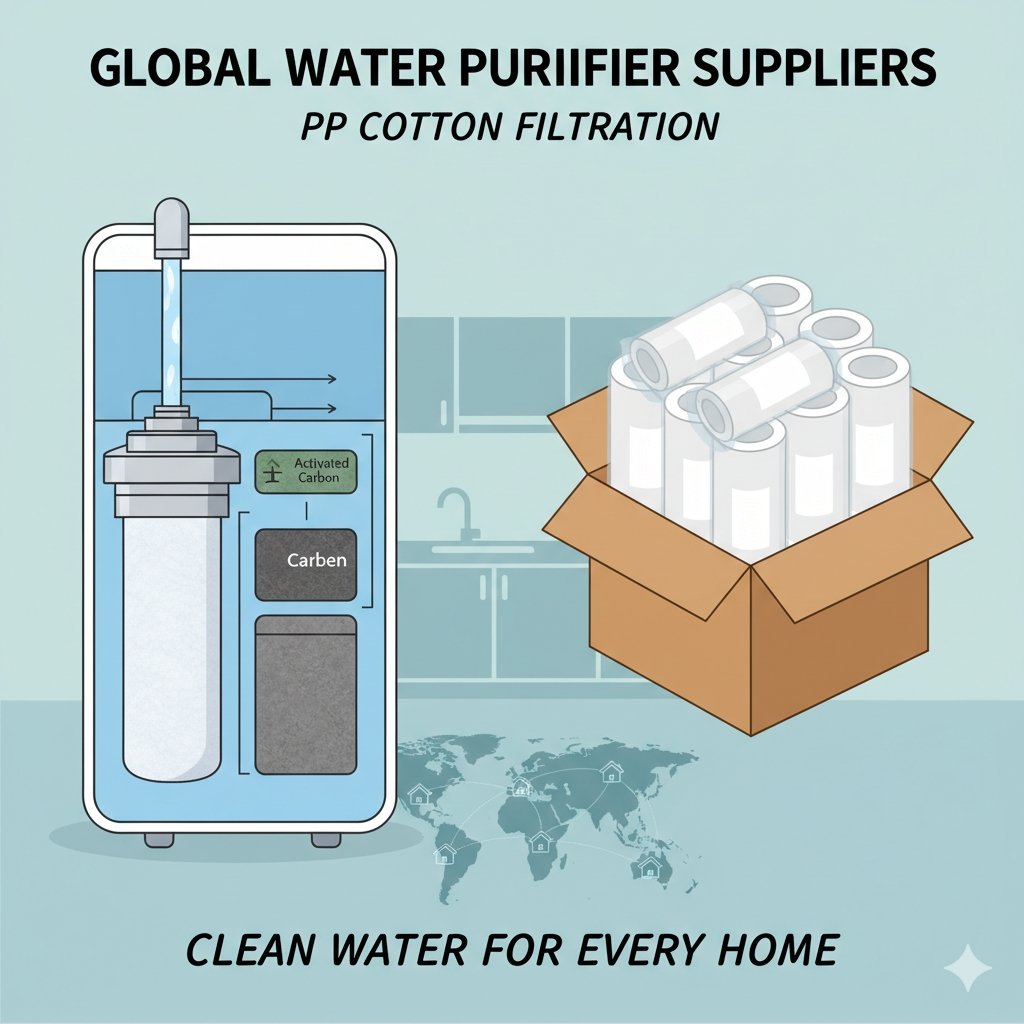
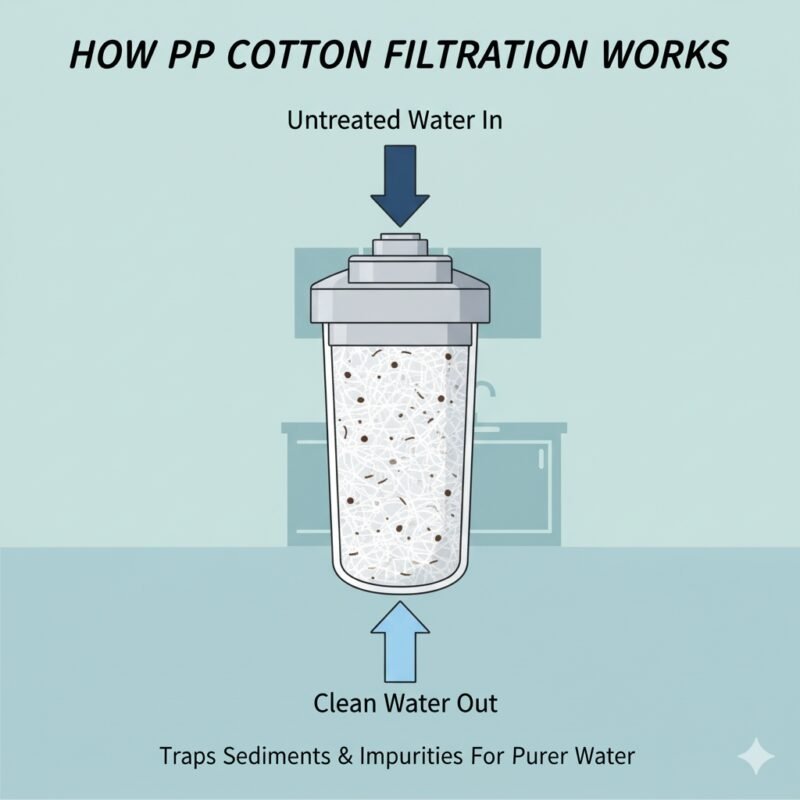
PP cotton (polypropylene sediment media) is a foundational component in household water purification. It acts as the first line of defense—trapping sand, silt, rust, and other particulates before they reach more sensitive downstream media like carbon blocks or RO membranes. For manufacturers, distributors, and procurement teams, PP cotton’s simplicity hides a set of critical decisions: choosing the right grade, ensuring consistent quality, and optimizing supply chain practices to avoid costly downstream failures.
- High recurring demand: Sediment cartridges are replaced routinely, creating steady reorder cycles.
- Critical protective role: Poor PP cotton shortens the life of more expensive components and increases warranty claims.
- Differentiation opportunities: Suppliers who control fines, deliver consistent micron ratings, and offer reliable logistics create real value for buyers.
If you’re evaluating whole-house filtration designs that include sediment stages, compare how PP cotton performance integrates into the full system: https://yourwatergood.com/product/whole-house-water-filtration-system-for-home/.
2. PP cotton fundamentals: grades, micron ratings, formats
Material and manufacturing basics
PP cotton is made from polypropylene fibers thermally or mechanically bonded into a porous matrix. Key parameters that determine performance include:
- Apparent density (g/L): Higher density typically means smaller pores and more particulate retention, but also higher pressure drop.
- Bonding method: Melt-blown and spun-bond methods produce different fiber geometries and dust-release characteristics.
- Gradient vs. uniform structure: Gradient (depth) cartridges trap large particles near the outside and finer particles deeper, extending life.
Micron ratings and real meaning
Micron ratings are often expressed as nominal values (e.g., 5 µm, 10 µm). Understand the distinction:
- Nominal rating: Approximate performance—useful for comparisons but not absolute.
- Absolute rating: Guarantees retention of particles down to a specified size (required for some critical applications).
Typical household choices:
- 20–50 µm: coarse pre-filtration for heavy debris.
- 5–10 µm: the household sweet spot for most municipal supplies.
- 1–3 µm: fine sediment removal, often used upstream of RO or UF.
Common physical formats
- Standard 10″ and 20″ (2.5″ OD) cartridges — industry common for housings.
- Inline capsules for fridges, ice makers, or tight spaces.
- Pleated cartridges when higher flow and longer life are needed within a given housing size.
3. Supplier spec sheet: what buyers must request
When you evaluate vendors, insist on a spec sheet with measurable, testable parameters:
- Material details: polypropylene grade, melt flow index, bonding technique.
- Micron rating: nominal and any absolute retention data.
- Apparent density / basis weight.
- Flow vs pressure-drop curves at target GPM.
- Operating temperature and pressure limits.
- Recommended life: gallons or months under defined conditions.
- Dimensional tolerances (length, OD, ID).
- Fines/extractables test results after recommended flush volumes.
- QC & manufacturing standards (ISO 9001, batch traceability).
- Packaging, MOQ, lead time, sample policy.
A professional supplier provides these items without delay.
4. Where suppliers add value beyond basic PP media
Quality PP cotton supply is not just commodity pricing—many buyers pay premiums for operational advantages:
- Low fines: superior bonding reduces initial turbidity and customer complaints.
- Gradient construction: better dirt-holding capacity and slower pressure rise.
- Pleated or hybrid designs: higher dirt capacity without changing housings.
- OEM services: custom end-caps, private labeling, and specific lengths.
- Reliable logistics: regional warehouses, consistent MOQs, and predictable lead times.
These differentiators lower downstream costs (fewer membrane replacements, fewer service calls) and improve brand reputation.
5. Essential QC tests buyers should require
Don’t rely on word-of-mouth—require documented testing:
- Flow/pressure drop curves: bench-tested at realistic flows.
- Dirt-holding capacity: amount of particulate retained before a specified ΔP.
- Retention/efficiency: percent capture at specific particle sizes (test with polystyrene sphere challenges if possible).
- Extractables or fines test: quantify particulates released during initial flush.
- Dimensional & tensile tests: ensure physical durability under pressure.
- Material safety / extractables: verify no taste/leachables under normal temps.
Ask for batch-level Certificates of Conformance (CoC) or sample lab reports for acceptance.
6. Certifications, labeling, and regulatory checkpoints
Most sediment PP cartridges aren’t certified for contaminant reduction, but compliance and traceability still matter:
- ISO 9001 — quality management system evidence (supplier-level).
- FDA food-contact compliance — important for cartridges contacting drinking water.
- REACH / RoHS — for EU shipments and chemical safety requirements.
- NSF/ANSI — relevant only if the cartridge claims contaminant reduction (rare for plain sediment cartridges).
Require clear labeling and batch IDs, storage instructions, and a documented shelf-life or handling guidance.
7. Pricing signals, MOQs, and lead times
Pricing depends on resin cost, process, certifications, and service level:
- Ballpark per-unit (10” standard) ranges: $1.50–$3 commodity; $3–$6 mid-tier; $6–$12 premium/pleated or custom.
- MOQ: often 500–5,000 depending on customization; stock SKUs have lower MOQs.
- Lead time: 2–6 weeks typical; regional distribution reduces that.
Negotiate not just unit price but payment terms, ramp discounts, and replenishment cadence to manage cash flow and inventory.
8. Packaging, storage, and shelf-life best practices
Protect quality in transit and storage:
- Individual sealed polybags in master cartons prevent contamination—vacuum packing saves space.
- Store dry, out of sunlight, moderate temperature. Avoid high humidity storage that may damage labels or boxes.
- FIFO rotation in warehouses prevents long-term degradation of packaging and seals.
- Palletize securely and specify pallet heights and protective corner boards for freight handling.
PP cartridges generally store well for years if packaging remains intact, but document supplier storage recommendations.
9. Logistics, returns, and technical support
A good supplier offers more than product:
- Clear RMA policy and quick replacement for verified defects.
- Technical datasheets, installation guides, and troubleshooting aids.
- Regional stocking or consignment to lower lead times for high-turn SKUs.
- Bench test support for engineering teams during integration.
Define acceptable defect rates and sample return protocols in your purchase agreement.
10. Sourcing strategy: pilots, audits, and quality gates
A robust sourcing approach minimizes disruption:
- Sample and bench test: validate flow, pressure-drop, and fines.
- Field pilot: run 60–90 days in real installations to validate life and performance.
- Factory audits / references: request third-party audits or client references.
- Define acceptance tests: set pass/fail criteria for batch release (pressure-drop, particle shedding).
- Maintain safety stock: plan inventory buffers of 6–12 weeks depending on lead time and sales variability.
- Dual-sourcing: qualify at least two suppliers for critical SKUs.
Contractually lock in quality gates and hold-release terms to prevent shipping of nonconforming batches.
11. Commercial negotiation and TCO thinking
Price is only one variable—consider total cost of ownership:
- Replacement frequency: gallons-per-cartridge directly impacts recurring spend.
- Impact on downstream components: cheap, dusty cartridges can accelerate RO membrane replacement.
- Logistics & stockholding: consolidation and freight terms change landed cost.
- After-sales support and emergency spares availability reduce downtime costs.
Negotiate volume discounts, favorable payment terms, and periodic price reviews tied to resin-cost indices.
12. Sustainability and end-of-life handling
Environmental responsibility matters to buyers and consumers:
- Prefer replaceable-media housings where the housing is retained and only the inner element is discarded.
- Ask suppliers about recyclable packaging and take-back or recycling programs.
- Consider coconut-based carbon pairings and lower-impact resin suppliers when evaluating whole-system sustainability.
- Encourage bulk refill packs to reduce per-unit shipping and packaging waste.
Document recycling options for end users and highlight them in product literature.
13. Matching PP choices to system types
Point-of-Use (POU) — under-sink/inline
- Typical choice: 5–10 µm PP depth cartridges or carbon-backed sediment.
- Priorities: low fines, compact dimensions, and NSF certification if health claims are needed.
Point-of-Entry (POE) — whole-house
- Typical choice: pleated cartridges or manifold banks; consider backwashing filters for heavy sediment.
- Priorities: high dirt-holding capacity, low ΔP at house flow rates, easy access for service.
RO pre-filter
- Typical choice: graded-depth PP followed by carbon pre-filter.
- Priorities: predictable pre-filter life matching membrane maintenance cycles, minimal fines.
14. Common pitfalls and how to avoid them
- Buying on price alone. Test first—cheap cartridges that shed fines cost more downstream.
- Ignoring packaging and transport risks. Damaged goods lead to high rejection rates.
- No contingency supplier. Supply chain disruptions are common—dual-source critical SKUs.
- Lack of acceptance criteria. Define measurable quality gates and require CoCs or batch reports.
15. Quick checklist for first-time buyers
- Request representative samples and run bench tests.
- Pilot small batches in the field for 60–90 days.
- Confirm packaging and shelf-life guidance.
- Negotiate acceptance testing and RMA policy.
- Establish safety stock and reorder cadence.
- Audit or review factory QC processes.
- Ensure spare parts and technical support commitments.
- Evaluate environmental disposal/recycling options.
- Lock payment, MOQ, and lead-time terms in contract.
- Maintain a second approved supplier for critical SKUs.
16. Example 5-year cost snapshot (illustrative)
For a mid-size distributor stocking both POU and POE lines:
- Initial tooling and SKU setup: modest one-time cost.
- Average cartridge cost: assume $3.50 per 10″ PP cartridge (mid-tier).
- Average replacement cadence: one POU cartridge per household per year; POE cartridges every 18–24 months.
- Inventory & logistics: 6–12 weeks of safety stock recommended for key SKUs.
When modeling profitability, include returns/warranty expenses and the savings from fewer downstream failures when using better-quality PP cotton.
17. Conclusion — building a reliable PP cotton supply operation
PP cotton is simple but mission-critical. The best suppliers focus on measurable performance—low fines, consistent micron retention, robust packaging, and reliable logistics. The best buyers insist on testing, pilot runs, clear acceptance criteria, and redundancy in supply. When PP cotton is specified and managed correctly, it protects downstream media, reduces service incidents, and keeps customers satisfied.
For a benchmark on how PP cotton integrates into whole-house systems, compare sediment staging and integration to a representative whole-home product: https://yourwatergood.com/product/whole-house-water-filtration-system-for-home/.