
Supply Lines Unlocked: How PP Cotton Household Water Purifier Wholesalers Deliver Reliable Sediment Solutions

Introduction
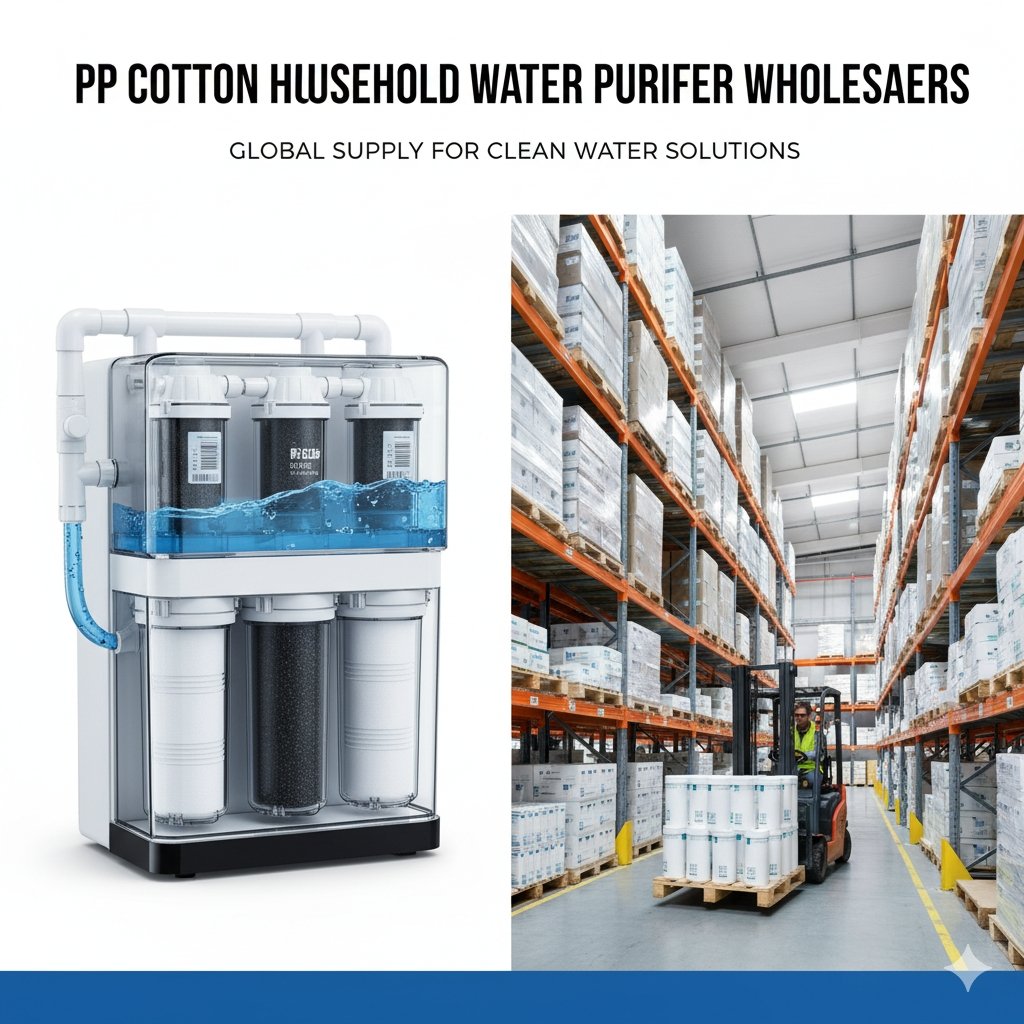
PP cotton sediment cartridges are the humble, high-volume backbone of the household water-purification market. For wholesalers, success depends not on flashy features but on predictable performance, consistent supply, intelligent logistics, and a transparent value proposition for OEMs, retailers, and installers. This article digs into what wholesalers must know to compete and win: the product fundamentals, manufacturing realities, quality control and test data that matter, packaging and logistics best practices, commercial and contractual levers, sustainability and end-of-life handling, real-world sourcing workflows, and practical negotiation tactics you can apply immediately.
If you evaluate whole-system proposals, keep a system benchmark handy to understand how sediment stages integrate upstream of carbon or RO modules: https://yourwatergood.com/product/whole-house-water-filtration-system-for-home/.
- Why PP Cotton Matters to Wholesalers
Sediment cartridges are low-margin by unit, but they are high-frequency and mission-critical. A good sediment cartridge:
- Protects downstream media (carbon blocks, membranes) and thus lowers warranty risk for system sellers.
- Reduces service calls and increases end-customer satisfaction.
- Creates predictable reorder cycles—consumers change cartridges on calendar schedules, generating recurring revenue.
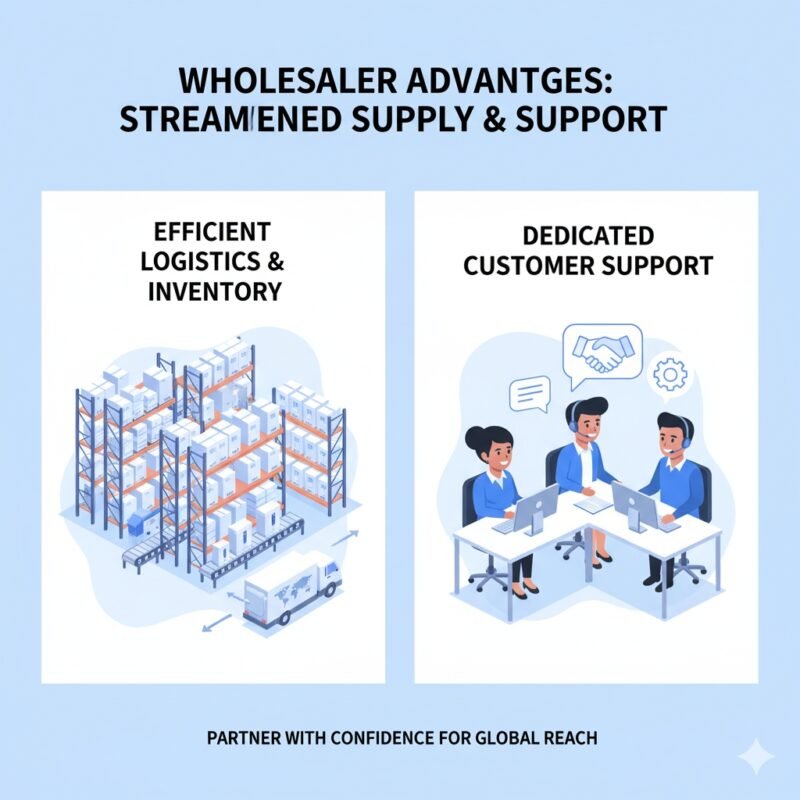
For wholesalers the opportunity is scale and service: provide consistent product, responsive logistics, and product intelligence that helps customers match the right cartridge to the application.
- Product Fundamentals: What Buyers Care About
Understanding the product at a technical level helps wholesalers avoid costly mismatches.
Core attributes:
- Material: polypropylene (melt-blown or spunbonded nonwoven). Melt-blown depth media is dominant for sediment cartridges.
- Micron rating: commonly nominal 1–5 µm for fine pre-filtration, 5–10 µm typical for household, and 20–50 µm for coarse pre-filters. Always confirm whether ratings are nominal or absolute.
- Geometry and size: standard 10″ and 20″ (2.5″ OD) cartridges are most common, with inline capsules and pleated modules for larger flows.
- Density profile: gradient/graded-density extends life and avoids rapid ΔP rise.
- Mechanical robustness: core strength, end-cap bonding, and O-ring integrity matter in real-world installations.
Wholesalers must be able to answer: which micron rating for RO pre-filter vs whole-house pre-filter? Which cartridge form factor will not bypass in a given housing? These are the questions your retail and installer customers will ask repeatedly.
- Manufacturing Realities: Where Cost Meets Performance
Cartridge performance is driven by manufacturing control. Wholesalers should audit these dimensions when qualifying factories.
Key manufacturing variables:
- Resin quality and traceability: melt flow index, additive package, and food-contact grade documentation. Variability in resin lots changes fiber formation and porosity.
- Melt-blown process control: die temperature, air velocity, collector speed — small adjustments produce measurable differences in fiber diameter and web uniformity.
- Graded-density capability: the best producers can tailor layer transitions to meet specific dirt-holding and ΔP targets.
- Conversion steps: cutting, end-cap bonding (thermal welding preferred to adhesive), core insertion, and final conditioning/packaging. Automation reduces human variability and improves yield.
For wholesalers, volume discounts are important, but never sacrifice process controls for lower per-unit cost. A slightly higher unit price with consistent performance reduces returns and warranty claims—improving lifetime margin.
- Quality Control: Tests That Predict Performance
Wholesalers must require and validate specific test data. Marketing claims without test evidence are a liability.
Essential QC tests:
- Flow vs pressure-drop (ΔP) curve: show performance at a range of flows (e.g., 1–10 GPM for POE, 0.5–2 GPM for POU). This predicts service life and pump compatibility.
- Dirt-holding capacity: amount of particulate a cartridge retains before ΔP reaches a service threshold (e.g., 15 psi). Use a standard challenge test with realistic particulates.
- Particle retention/efficiency: particle-count or polystyrene bead challenges that report % capture at designated microns; clarifies nominal vs absolute claims.
- Extractables / fines test: quantify particulate release during initial flush—low fines reduce first-use complaints.
- Dimensional and mechanical testing: end-cap pull tests, core collapse tests, O-ring compression checks.
- Microbial and material safety testing: show no problematic extractables and provide MSDS and food-contact documentation.
Request batch Certificates of Conformance (CoC) tied to lot numbers, and reserve the right to random-lot verification testing. Include QC acceptance gates in purchase orders.
- Certifications and Regulatory Paperwork
Sediment cartridges rarely carry NSF claims for contaminant removal unless marketed with health claims. Still, buyers and installers want assurance.
Documentation to require:
- Raw-material compliance (FDA food-contact where applicable).
- Factory quality management (ISO 9001 preferred).
- Independent lab reports for particle retention, extractables, and dirt-holding tests.
- Export and import documentation depending on destination markets (REACH/RoHS in EU, local potable water compliance).
- Traceability and lot numbering on packaging.
Wholesalers should keep a dossier of certificates accessible for customers. Being able to produce paperwork quickly wins business.
- Packaging, Storage, and Shelf-Life Considerations
Packaging protects product and influences landed-cost and perceptions.
Best practices:
- Individual sealed polybags inside master cartons minimize contamination and migration of fines. Vacuum-sealed packing reduces volume and freight cost.
- Clearly label cartons with SKU, lot number, manufacture date, and recommended storage conditions.
- Store in cool, dry, UV-protected warehouses using FIFO rotation. Extended exposure to heat and sunlight may affect secondary materials or labels.
- For retail SKUs, create visually clear retail-ready packaging with basic install instructions and replacement interval recommendations.
Packaging choices impact freight, damage rates, and returns—budget accordingly.
- Logistics: Managing Lead Times, MOQs, and Safety Stock
Reliable delivery is a competitive differentiator.
Inventory strategy:
- Calculate safety stock based on supplier lead times and your customers’ reorder cadence (sediment cartridges are predictable recurring purchases—use that to optimize reorder points).
- Negotiate regional stock options or consignment agreements with manufacturers to reduce replenishment lead time for critical SKUs.
- For private-label runs, expect higher MOQs (commonly 500–5,000 units) and longer lead times. Plan promotions and seasonal demand ahead of time.
Freight optimization:
- Balance unit cost savings from overseas suppliers against inventory carrying cost and transit-time variability. Consolidated shipments and full-container loads reduce per-unit freight. Use DDP pricing scenarios to show customers landed cost transparently.
- Commercial Terms, Pricing, and TCO Thinking
Wholesalers must present price as part of a total-cost story.
Pricing levers:
- Unit cost vs lifetime: cheaper cartridges that clog faster increase replacement frequency and warranty costs for downstream OEMs. Provide TCO models showing expected replacement intervals and overall cost per year.
- Volume discounts and indexed pricing: tie price escalators to resin cost indices to hedge against raw-material volatility.
- Payment terms: negotiate net 30–90 depending on relationship; for new sellers consider letters of credit or deposits.
Value-based selling:
- Offer bundled logistics, co-branded packaging, or starter kits for new system installations.
- Provide training materials and installer cheat sheets to reduce installation errors and returns.
- Sourcing and Supplier Qualification Workflow
A repeatable qualification process minimizes risk.
Recommended steps:
- Issue a clear technical RFQ with required test data, sample policy, MOQ, packaging specs, and CoC requirements.
- Request production samples and independent lab data. Bench-test samples (flow/ΔP, rinse/fines, retention).
- Run a field pilot: deploy 100–500 units in real installations across different feedwater conditions for 60–90 days. Measure complaint rates and replacement cadence.
- Audit the factory or request a third-party audit covering SPC practices, material traceability, and environmental controls.
- Negotiate acceptance gates and hold-release conditions tied to batch CoC before full shipment.
- Maintain a secondary qualified supplier to ensure redundancy.
Document everything in supplier contracts and include clear RMA handling steps.
- Commercial Negotiation Tactics Specific to PP Cotton
Negotiation is more than price; it includes service and risk sharing.
Tactics:
- Leverage pilot results to secure better pricing—demonstrated performance reduces supplier risk.
- Ask for samples and initial small-run MOQs to validate before scaling.
- Negotiate agreed-upon quality gates (ΔP bands, fines ppm) with penalties or remediation for out-of-spec batches.
- Request first refusal on matched product SKUs for new configurations or colors.
- Use rolling quarterly forecasts to secure better production scheduling without full commitments.
- Sustainability and End-of-Life Strategy
Sustainability is increasingly important for retailers and OEMs.
Options for wholesalers:
- Favor cartridges designed for replaceable-media housings rather than sealed capsules where possible. This reduces plastic waste and appeals to eco-conscious buyers.
- Partner with manufacturers that use recyclable packaging and can supply recycling or take-back programs for spent cartridges.
- Offer a “recycle-return” incentive or bundling program to encourage proper disposal.
- Evaluate suppliers that disclose resin sourcing and carbon footprint—this can be a differentiation point for B2B customers.
- Value-Added Services That Differentiate Wholesalers
Beyond mere product delivery, wholesalers can build sticky relationships through services.
Potential services:
- Technical datasheet kits and cross-compatibility charts to reduce wrong-SKU sales.
- Co-branded retail packs and private-label manufacturing for key accounts.
- Inventory management programs, drop-shipping, or consignment stock for installers and e-commerce sellers.
- Training webinars and quick-install video assets for retail staff and installers.
- On-call QC support with access to lab retesting for disputed lots.
These services convert transactional buyers into long-term partners.
- Pricing Model Example and TCO Illustration
Illustrative (not prescriptive) example to use with customers:
Scenario: a homeowner uses a 10″ 5 µm PP cartridge replaced annually. Cartridge unit cost to wholesaler: $3.50. Retail sells for $9.99.
- Annual cost to homeowner: $9.99 (if replaced annually; vary by usage).
- Impact on downstream membrane replacement: a high-quality pre-filter could extend RO membrane life by 12–24 months, saving $50–$150 over several years.
- For OEMs: moving from a $2.00 commodity cartridge to a $3.50 higher-quality cartridge reduces membrane claim frequency and service calls—deliver a simple ROI calculation for these customers.
Use simple spreadsheets to show customers how a small unit cost variance changes TCO and reduces operational headaches.
- Common Failure Modes and Remedies
Know the common field issues and how to address them:
- Initial turbidity after install (fines): require larger initial flush volumes in instructions, or source low-fines manufacturing.
- Pressure drop: matching ΔP curves to expected flow and recommending pleated cartridges for POE heavy-sediment installations solves this.
- End-cap leakage or bypass: ensure thermal-bonded end-caps and perform pull tests on batches.
- Short life: review local turbidity and recommend a tighter pre-filter or change schedule.
- Contractual Protections: Warranties, RMAs, and Recalls
Contracts should be precise about expectations.
Include:
- Clear warranty language around manufacturing defects, with time and usage boundaries.
- RMA process: sampling, testing timeline, and remediation obligations (replacement, credit).
- Recall and traceability terms: require lot numbers and batch CoC on each carton to enable rapid isolation.
- Performance-based clauses: remediation if batch test results fall outside agreed tolerances.
These terms protect both wholesalers and customers from expensive disputes.
- Sales Channels and Go-to-Market Strategies
Wholesalers can pursue multiple channels:
- Traditional plumbing wholesalers and installers: focus on technical specs and quick availability.
- E-commerce and retail: emphasize retail-ready packaging and clear replacement cadence labeling.
- OEM private labeling: offer design and testing support with minimums and tooling flexibility.
- International distributors: manage export documentation, compliance, and localized packaging.
Tailor marketing materials to each channel—installers want datasheets and troubleshooting, retailers want clear shelf messaging and SKU simplicity.
- Case Study Snapshot (Illustrative)
A regional wholesaler replaced a low-cost commodity supplier after repeated membrane complaints from a major OEM customer. They ran a 90-day pilot with a mid-tier producer that offered graded-density melt-blown cartridges with documented low fines and reliable ΔP curves. Results: membrane replacement claims dropped 18% within the year and the wholesaler negotiated a 7% higher unit price in exchange for longer contract terms and priority production slots. The OEM extended a preferred-supplier agreement, increasing annual order volume and stabilizing the wholesaler’s business.
- Practical Checklist for Onboarding New Suppliers
- Define technical spec and acceptance criteria clearly.
- Request production samples and full QC documentation.
- Run bench tests (flow/ΔP, extractables, retention).
- Perform a 60–90 day field pilot across diverse feedwater conditions.
- Audit production capability or obtain third-party audit.
- Negotiate quality gates, pricing, lead times, MOQ, and RMA terms.
- Set up SKUs, packaging, and traceability labeling.
- Establish reorder points and safety stock based on lead time.
- Launch with a joint technical training session for customers.
- Monitor performance and enforce contract terms as needed.
Conclusion: Scale, Predictability, and Trust Win
For PP cotton household water purifier wholesalers, the business is less about commoditization and more about predictable supply and reliable performance. The winners are the wholesalers who treat sediment cartridges as mission-critical components, invest in test-based supplier qualification, manage logistics proactively, and sell value (lower TCO, reduced warranty claims) rather than price alone. By partnering with manufacturers that demonstrate process control, providing clear QC documentation, and offering value-added services such as regional stocking and technical training, wholesalers can turn an unglamorous product into a dependable revenue stream and a core competitive advantage.