
RO Water Filter for Home Manufacturer — The Complete Guide for Producers, OEMs and Brand Owners

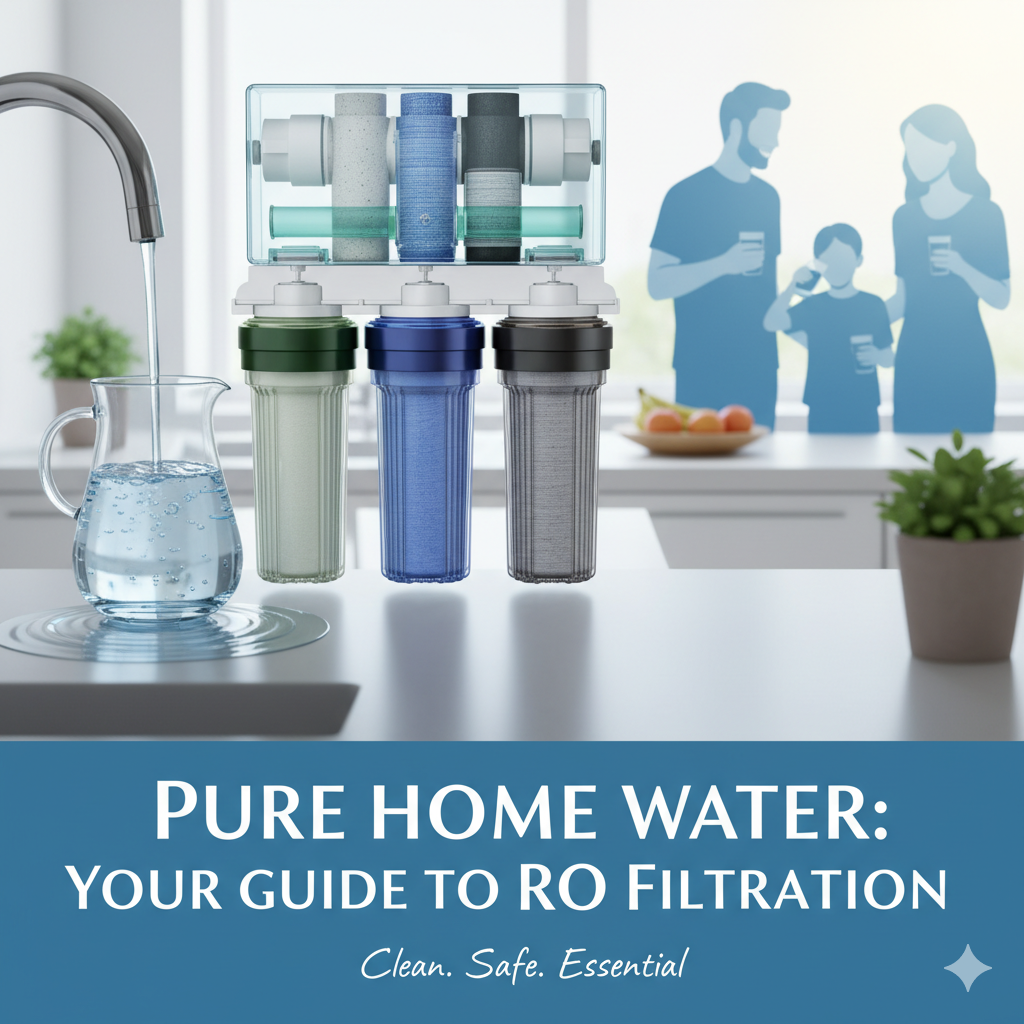
Reverse osmosis (RO) systems are among the most requested home water-treatment products: they deliver very low total dissolved solids (TDS), remove heavy metals and many chemical contaminants, and provide consumers with near-bottled-water quality at the kitchen tap. For manufacturers, producing reliable household RO systems requires careful attention to component sourcing, membrane selection, plumbing and pressure design, quality control, certification, and after-sales support. This guide walks factory engineers, procurement managers, private-label brands and OEM partners through every critical step of designing, manufacturing, certifying and bringing a home RO purifier to market.
Throughout the text you’ll find practical checklists, engineering considerations, quality metrics, sourcing warnings and commercial advice — everything needed to produce RO systems that perform, comply and build brand trust. Near the end you’ll also find a natural product reference you can use while comparing specifications: https://yourwatergood.com/product/ro-water-purifier/.
1. Market context — why home RO remains important
RO is not the right solution for every household, but demand remains strong for several reasons:
- Consumers want higher-grade drinking water than municipal supplies sometimes provide (taste, TDS, fluoride, lead concerns).
- Point-of-use RO is a recognized premium feature in kitchens and is commonly paired with built-in faucets and water dispensers.
- RO technology is mature; economies of scale and improved membrane chemistry make compact, efficient home units viable.
- Brands that can prove performance (via third-party tests and certifications) command higher margins.
For manufacturers, the opportunity lies in combining robust engineering with predictable manufacturing practices and an efficient supply chain so final products meet both consumer expectations and regulatory/retailer demands.
2. Core components of a residential RO system
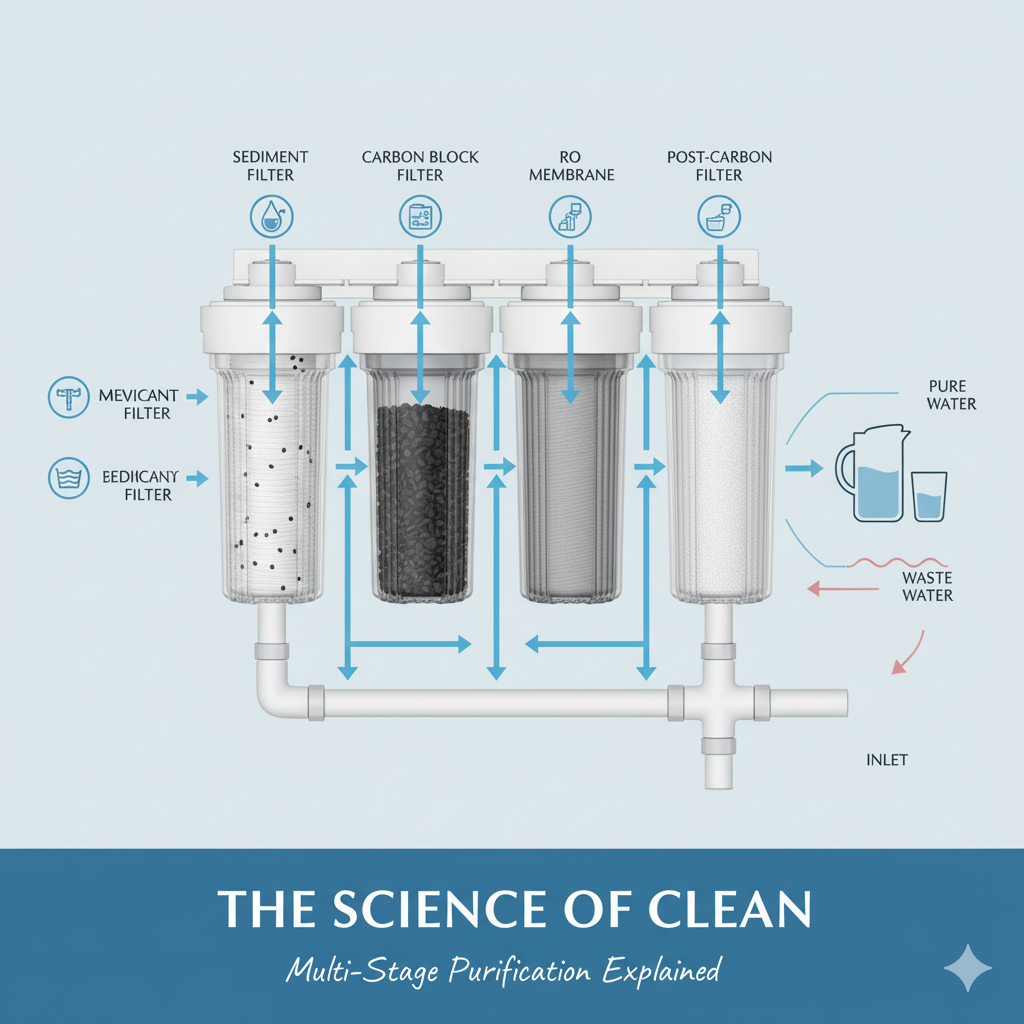
A standard under-sink or countertop RO unit consists of several key subsystems. Each must be spec’d and produced to tolerances, with traceable materials.
- Pre-filtration stage(s)
- Sediment filter (typically PP melt-blown) to remove sand, rust and particulates.
- Carbon pre-filter (granular or block) to protect membranes from chlorine and organics that foul RO membranes.
- Pressure and feed components
- Shut-off valves, check valves, pressure regulators and tubing fittings rated for potable water.
- RO membrane element
- Spiral-wound thin-film composite (TFC/TFC-polyamide) membranes are standard for domestic RO; select membrane rejection rate, nominal flux, and operating pressures to match target performance.
- High-pressure pump (optional)
- Some compact systems use incoming water pressure; low pressure locations need booster pumps to achieve membrane permeate rates and recovery ratios.
- Post-filtration and remineralization
- Post carbon polishing and mineralization cartridges restore taste and add beneficial minerals if desired.
- Storage tank (for classic RO)
- Pressure bladder tanks sized to deliver acceptable drawdown and recovery; or design tankless systems with higher membrane throughput.
- Flow-restrictor / concentrate control
- Ensures proper cross-flow over the membrane and manages concentrate flow to control recovery ratio and membrane life.
- Plumbing fittings and faucet
- Dedicated faucet, drain saddle or drain adapter for concentrate, and quick-connect fittings.
- Electronics & indicators (optional)
- TDS meter, pressure sensors, auto shutoff, and LED indicators for filter change alerts are differentiating features.
Every component is an opportunity for failure if underspecified; design for compatibility, durability and user serviceability.
3. Design choices that drive performance and cost
Key design variables affect both product performance and manufacturing cost:
- Membrane selection (rejection vs flux): Higher rejection membranes remove more contaminants but may have lower flux at the same pressure. Choose membrane tradeoffs based on target TDS reduction, flow rate and whether you include a pump.
- Number and type of pre-filters: Adding a sediment + carbon combination improves membrane life but increases BOM and replacement frequency.
- Recovery ratio and waste generation: Higher recovery reduces wastewater but can accelerate membrane fouling; make target recovery transparent in specs.
- Booster pump inclusion: Adds cost and complexity (electrical safety, noise mitigation) but enables systems in low-pressure regions.
- Tank vs tankless: Tankless designs reduce footprint but often cost more and require higher capacity membranes or pumps.
- Remineralization & pH adjustment: Many buyers prefer re-mineralized water; adding a calcite or alkaline post-filter improves taste and perceived value.
- Smart features: TDS display, auto-flush, and filter life monitoring increase price and differentiation but also increase failure modes and service requirements.
Manufacturers should map target price points to design choices carefully. For example, budget models avoid pumps and remineralization while premium models include pumps, multi-stage polishing and digital displays.
4. Raw materials and supplier selection
Robust sourcing is essential. Typical materials and supplier considerations:
- Membranes: Buy from established membrane makers with documented performance curves, lot traceability and warranty. Avoid vague membrane labels; require lab slip with rejection vs pressure curves.
- Activated carbon: Coconut shell carbon is preferred for taste/odor, but verify ash content and particle size. For carbon block production ensure consistent binding and water passage characteristics.
- PP melt-blown: For sediment pre-filters, source food-grade polypropylene with proven melt-flow index and validated melt-blown equipment tolerances.
- Housing plastics & fittings: Use FDA-approved resins (e.g., NSF-compliant grades) and test injection molds for dimensional stability to prevent leaks.
- Bladders & tanks: Certified, pre-charged tanks meet longevity expectations; test bladder life and pressure retention.
- Pumps & electric components: If including pumps, source CE/UL approved motors and ensure low noise and thermal protections.
Supplier audits, certificate of analysis (COA) checks, and sample validation in real feedwater conditions are mandatory. Avoid single-source risk for critical items (membranes, pumps).
5. Manufacturing process flow & assembly best practices
A repeatable production flow prevents lot variability:
- Incoming inspection
- Verify COAs for resin, carbon and membranes. Randomly test dimensional specs and sample test membranes. Maintain quarantine for suspect lots.
- Subassembly fabrication
- Mold housings, assemble endcaps, pre-assemble manifold blocks and test fittings before media insertion.
- Media insertion & bonding
- For carbon blocks ensure correct compressive bonding; for sediment cartridges monitor gradient density. Use calibrated presses or ultrasonic welding for secure seals.
- Membrane installation
- Handle membranes in clean conditions, avoid contamination. Ensure proper o-ring lubrication with food-grade grease and torque control on housings.
- Functional testing
- Pressure and leak test at rated PSI (and a higher pressure for short duration). Conduct performance test for percent rejection and permeate flow at specified feed pressure, temperature and TDS.
- Electrical & control testing
- For pumped models, run electrical safety tests (insulation resistance, earthing), motor current tests and verify auto shutoff behavior.
- Final QC & batch sampling
- Release only batches that meet flow, TDS reduction and leak test criteria. Maintain batch records for traceability.
- Packaging & labeling
- Include installation manual, filter schedule, safety notices and contact info. For private-label orders ensure correct artwork on cartons and a QA step matching SKU codes.
Document SOPs (standard operating procedures) and implement SPC (statistical process control) for critical metrics like membrane permeate rate and carbon block density.
6. Performance verification — lab tests you must run
Companies should maintain a relationship with accredited labs or build in-house capability to run:
- Percent rejection tests for common contaminants (NaCl/TDS standard test) under controlled pressure/temperature.
- Lead reduction tests if claiming lead removal (NSF 53 testing protocol or equivalent).
- Flow and recovery measurement over a standardized feedwater matrix (TDS, temp).
- Pressure drop testing across pre-filters and carbon blocks at declared flows.
- Microbial challenge testing if claiming microbial reduction (or validation of UV stages).
- Accelerated lifecycle tests to estimate filter life and membrane fouling under high sediment loads.
Publish performance curves and test protocols in technical documentation; retailers and accreditation bodies will request these during onboarding.
7. Certifications & regulatory compliance
For the U.S. and many export markets, third-party certification is a differentiator (and sometimes a requirement):
- NSF/ANSI 58 — specific for reverse osmosis systems (performance, structural integrity and materials).
- NSF/ANSI 42 and 53 — depending on what contaminants you advertise removed (taste/odor vs health contaminants).
- NSF/ANSI P231, 244 — for microbiological claims or disinfection.
- Electrical safety — UL/CUL or equivalent for systems with pumps/electronics.
- Material compliance — FDA food contact, RoHS/REACH if applicable for markets with chemical restrictions.
NSF listing requires submitting samples and lab reports; plan several months and a predictable budget for testing and certification. For private-label brands, verify whether certification covers the final branded configuration (packaging, labels and assembly).
8. Packaging, manuals and user experience
A reliable product is supported by clear manuals and sensible packaging:
- Installation manual with step-by-step photos, tubing diagrams, and troubleshooting. Include parts list and filter lifespans in gallons and months.
- Warranty card and registration instructions — registrations help with warranty enforcement and post-sale marketing.
- Serviceability — design for easy filter access and clear orientation markings to minimize installation errors.
- Replacement-parts channel — make cartridges and membranes easy to order (SKU on box and manual).
- Packaging protection — protect membranes and electronics with internal fixtures; include desiccant where appropriate.
User experience affects return rates more than product specs. Invest in a well-written manual and intuitive design.
9. Production costs, BOM and pricing strategy
Typical cost buckets to estimate for a home RO unit:
- Membrane element — often the single largest component cost.
- Pre-filters & carbon — recurring cost drivers for consumers; choose widely available cartridges to lower long-term friction.
- Housing & plumbing fittings — injection molding tooling amortization and per-unit plastic cost.
- Pump & electronics (if included) — increases unit COGS and warranty exposure.
- Labor & testing — assembly, QC and testing time.
- Packaging & documentation — printed materials, cartons and inserts.
- Certification & lab fees — one-time but material for SKU rollout.
When pricing, plan for landed cost, distribution margins, retailer expectations and service contract pricing. Consider offering bundled filter subscriptions to lock recurring revenue and improve lifetime value.
10. Reliability engineering and warranty policy
RO systems have moving parts and consumables. Manufacturers should:
- Define realistic warranty terms: separate structural warranty (housing, manifold) and limited coverage for consumables.
- Establish MTBF and service intervals: data-driven intervals reduce warranty disputes.
- Provide clear RMA procedures: logistics and spare parts availability reduce customer frustration.
- Monitor return metrics: track failure modes and feed corrective action into production SOPs.
A two-year limited warranty on structural components and one-year on electronics is common; consumables are typically excluded from warranty coverage.
11. After-sales service, spare parts and consumables
Manufacturers that neglect the supply chain for replacement filters lose customers quickly. Best practices:
- Guarantee replacement availability for at least 3–5 years after production stops.
- Offer filter subscription services at competitive prices; fulfillment integration increases brand stickiness.
- Train authorized service partners in key markets to perform warranty repairs and scheduled maintenance.
- Maintain spare parts inventory for pumps, valves and electronics to minimize lead times.
A strong consumable program is often the most profitable part of the business.
12. Quality issues to avoid — common manufacturing defects
Watch for repeat quality problems that create returns and poor reviews:
- Leaks caused by poor molding tolerances or incorrect o-ring materials (age, swelling).
- Membrane packaging damage from poor internal fixtures leading to under-performing units.
- Insufficient pre-filtration resulting in rapid membrane fouling and short life.
- Inadequate pump protection causing pump burnout or noisy operation.
- Unclear installation instructions leading to misinstallation (flow reversal, drain issues).
Implement a closed-loop corrective action system: record defects, root-cause analysis, and preventive controls.
13. Environmental and sustainability considerations
Consumers increasingly care about waste and energy:
- Water recovery: design for higher recovery ratios where possible or offer permeate pumps to reduce waste. Be transparent about wastewater/gallon of permeate.
- Packaging: choose recycled cartons and reduce unnecessary plastic.
- Refillable housings: offering housing reuse with replaceable cartridges reduces plastic waste.
- Energy use: if including pumps, specify efficient motor classes and auto-shutoff.
- Recycling programs: consider take-back or mail-in programs for spent membranes and cartridges.
Sustainable practices can be a competitive advantage and reduce lifecycle costs.
14. Going to market — regulatory, retailer and distributor expectations
Large retailers and online marketplaces often require evidence:
- Test reports and certification for any removal claims.
- Labeling compliance with local regulations (health claims, disposal instructions).
- Documentation for electrical safety for powered models.
- Return policy and warranty handling — retailers prefer standardized processes.
If selling via Amazon or other platforms, ensure compatibility with fulfillment processes and supply enough inventory to avoid stockouts that hurt ranking.
15. OEM / private-label partnerships — practical tips
If you are a brand working with a contract manufacturer:
- Lock down specifications: membrane model, nominal TDS reduction, recovery ratio, pump model, filter life.
- Sample validation: test pre-production samples in real household water conditions.
- Agree QA gates: acceptance tests at C/O stage with defined tolerances.
- Protect IP: contracts for tooling, artwork, and product design.
- Negotiate spare parts and MOQ: ensure practical MOQ and spare part stocking commitments.
A pilot production run and field trials reduce risk before scaling.
16. Field testing & pilot program recommendations
Before mass launch, run a structured pilot:
- Deploy 50–200 units across representative homes (hard vs soft water, city vs well water).
- Collect data: TDS reduction over time, filter life, user satisfaction, leak occurrences.
- Monitor service calls and common user errors to improve manuals and packaging.
- Refine replacement intervals and marketing claims based on pilot data.
Pilot inputs should inform final spec and warranty terms.
17. Example bill of materials (high-level)
A simplified BOM for a mid-range under-sink RO unit:
- RO membrane, 75–100 GPD TFC element
- Sediment PP 5 µm pre-filter (10″)
- Carbon block pre-filter (10″)
- Post carbon polishing cartridge
- Remineralization cartridge (optional)
- Storage tank (3–4 gallons) or tankless manifold
- Flow restrictor, check valves, auto shutoff valve
- Quick-connect fittings, tubing, dedicated faucet
- Optional booster pump & transformer
- Injection-molded housings & brackets
- Packaging, manual, warranty card
Quantify each line with supplier quotes and margin planning.
18. Pricing strategies and margins
Manufacturers must balance COGS with channel expectations:
- Direct-to-consumer (DTC) allows higher margin and subscription models for filters.
- Retail channels require competitive MSRP and channel margins (distributor and retailer cuts).
- White-label/OEM margins vary: manufacturers sell at lower per-unit price but gain volume and manufacturing efficiencies.
Model total cost of ownership for consumers to justify premium positioning (filter subscription, certification and warranty).
19. Common questions from brands & engineers
Q: How often will consumers need to change membrane/filters?
A: Typical schedule: pre-filters every 3–12 months, post filters annually, membrane 2–5 years depending on water quality.
Q: Should we include a booster pump?
A: Only if target markets include low inlet pressure regions. Pumps add cost and electrical certification requirements.
Q: How to reduce wastewater?
A: Use higher-recovery membranes, permeate pumps, and optimize flow restrictor sizing; always disclose wastewater/gallon metrics.
Q: Is NSF certification mandatory?
A: Not legally, but essential for retailer acceptance and consumer trust for health-related claims.
20. Conclusion — building a reliable RO brand
Manufacturing home RO water purifiers is a technically demanding but rewarding endeavor. Success requires:
- Strong sourcing of critical components (membranes, carbon, pumps).
- Rigid process control and meaningful QC testing (leak tests, rejection tests, flow curves).
- Certification and clear, honest marketing claims.
- A durable spare-parts and consumable strategy to support the product in market.
- Pilot testing and iterative improvements based on field data.
Companies that get these elements right deliver products that reduce customer issues, lower warranty costs and build long-term brand equity. When evaluating product references and comparing technical specs while you design or source your RO unit, consider reviewing example listings and product pages like this one for an established consumer RO solution: https://yourwatergood.com/product/ro-water-purifier/.
FAQ — quick reference for technical teams
What feed pressure is ideal for a typical home RO?
A: 40–60 psi is ideal; below 40 psi consider a booster pump.
How to size an RO for a family of four?
A: A 50–100 GPD membrane with a 3–4 gallon tank meets typical drinking/cooking needs; use higher capacity if filling many bottles.
How to reduce membrane fouling?
A: Use effective sediment pre-filtration, carbon to remove chlorine and organics, and advise regular cartridge replacement.
What is acceptable TDS reduction claim?
A: Many consumer RO units achieve 90–98% TDS reduction under test conditions; publish test conditions with claims.