
Water Filter For Under The Sink: The Complete Guide (Types, Costs, Installation, Maintenance & Buying Advice)

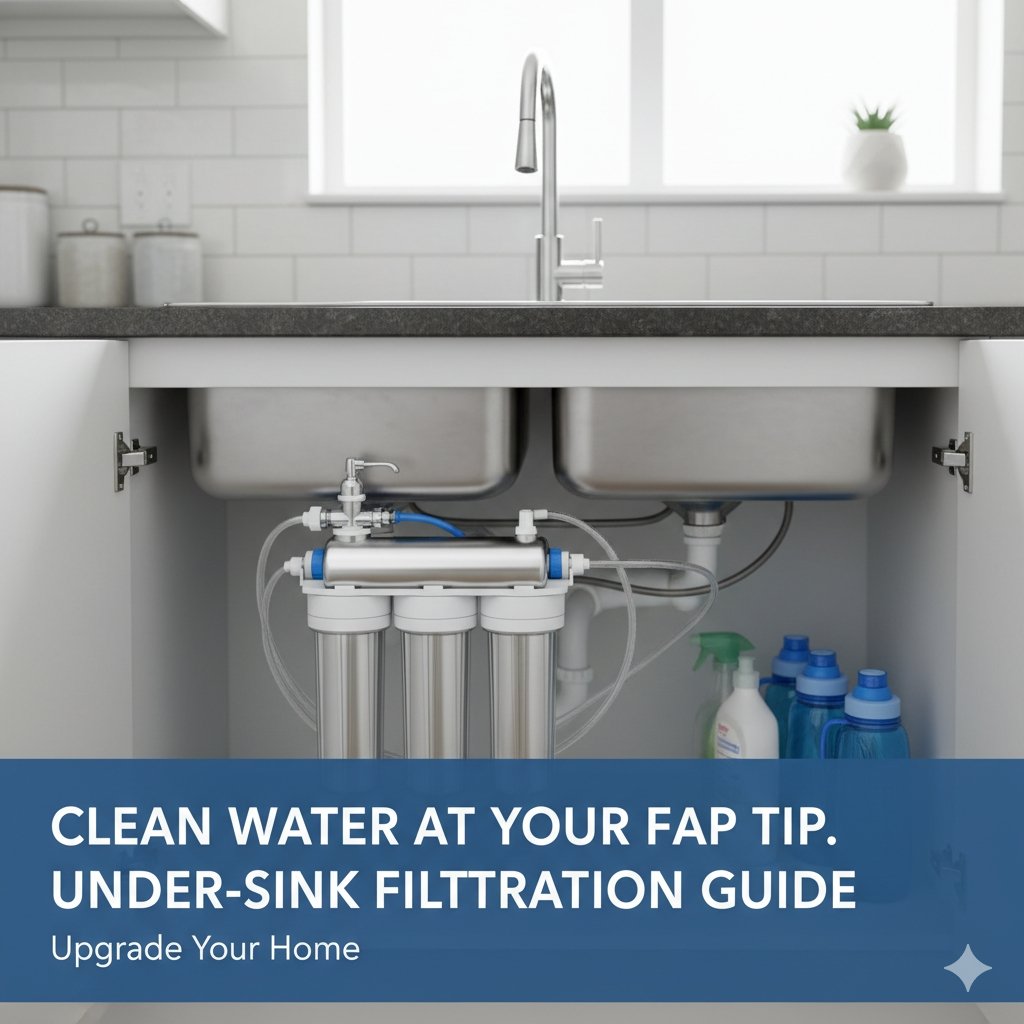
Clean, great-tasting water at the kitchen tap is a small luxury that makes a big difference in day-to-day life. An under-sink water filter (also called an undercounter or under-counter filter) is a popular, space-efficient solution: it keeps countertops tidy, treats water at the point of use, and usually delivers better water than pitchers or faucet attachments. This practical guide walks you through everything you need to know — how under-sink filters work, the technologies available (including reverse osmosis), realistic cost expectations, installation and maintenance, certification and testing, and a buyer’s checklist so you can pick the right water filter for under the sink system for your home.
Where helpful, this guide cites current U.S. market signals and product examples so you can compare prices and options with confidence. For a full reverse-osmosis under-sink product to benchmark against as you shop, see this example: https://yourwatergood.com/product/ro-water-purifier/.
1. What is an under-sink water filter and why choose one?
An under-sink water filter is a compact filtration system mounted beneath the kitchen sink. It treats water at the point of use (the dedicated filtered faucet) rather than treating all water entering the house. Typical benefits include:
- Improved taste and odor (chlorine reduction)
- Reduced sediment and particulate visible in ice or coffee
- Protection for a single tap or appliance (coffee machines, ice makers)
- Higher performance than pitcher or faucet-mounted filters
- Minimal visual impact — the system and tanks live under the sink
Under-sink systems are ideal when you want high-quality drinking and cooking water without the expense, plumbing work, or footprint of a whole-house system.
2. Main types of under-sink filters (what they remove and when to choose)
Under-sink options vary by technology and performance. Here are the most common systems and what they do best:
a) Carbon block / activated carbon under-sink filters
- What they remove: Chlorine, taste and odor, many VOCs, some pesticides and organic contaminants.
- Why choose it: Low cost, easy maintenance, excellent at improving taste and smell for municipal water.
- Limitations: Not reliably effective for dissolved salts, fluoride, nitrates, or heavy metals unless specifically certified.
b) Multi-stage systems (sediment + carbon + specialty media)
- What they remove: Sediment, chlorine, some heavy metals and specific contaminants depending on media.
- Why choose it: Balance between cost and contaminant coverage; good for users with a mix of taste/odor and moderate contaminant concerns.
- Limitations: Each media stage adds cost and replacement parts.
c) Reverse osmosis (RO) under-sink systems
- What they remove: Dissolved solids (TDS), lead, fluoride (if configured), many heavy metals, salts, and a wide range of contaminants. RO is the most thorough point-of-use treatment.
- Why choose it: When you want near-bottled-water purity for drinking and cooking.
- Limitations: Produces waste water (brine), sometimes lowers pH (remedied with remineralization stages), typically requires a small storage tank and periodic membrane changes.
d) Ultrafiltration / nanofiltration (less common under-sink)
- What they remove: Fine particulates, some bacteria, and certain macromolecules without RO’s wastewater footprint.
- Why choose it: When you need microbial barrier performance without RO’s complexity.
- Limitations: Not as effective as RO for dissolved ions.
e) Inline mini-filters and cartridges
- What they remove: Sediment and chlorine for a single appliance (fridge, ice maker, espresso machine).
- Why choose it: Very low cost and compact.
- Limitations: Limited contaminant removal and capacity.
3. Reverse osmosis (RO) under-sink systems — what to expect
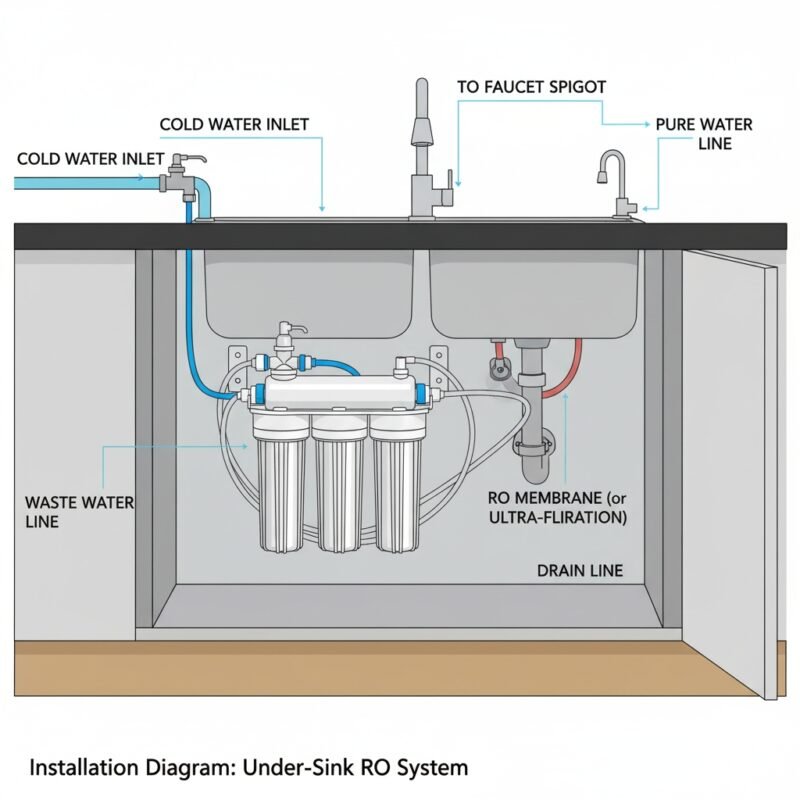
RO systems are popular under-sink choices because they remove the broadest range of contaminants. A typical residential under-sink RO includes pre-filters (sediment, carbon), an RO membrane, a storage tank, and a post-filter or remineralization stage.
Key tradeoffs to understand:
- Purity vs. waste: RO produces purified water and a concentrate stream. Modern systems are more efficient than older models, but they still produce some wastewater.
- Flow & storage: RO membranes have limited throughput; most systems include a small storage tank so you don’t wait for a glass to fill. Tankless, high-flow RO designs exist but cost more.
- Maintenance: RO membranes and filters need periodic replacement; membranes typically last 2–5 years, pre- and post-filters more frequently.
Typical consumer under-sink RO prices in the U.S. cluster in the $150–$600 range for the system alone, depending on stages and brand, with higher-end or NSF-certified models pushing up past $600. Retailers like Home Depot and specialty brands such as APEC and Waterdrop offer well-reviewed options across that range. ModernizeThe Home Depot
4. Realistic cost expectations (equipment, installation, ongoing)
Understanding total cost means looking beyond the sticker price of the unit. Here are practical ranges you should expect in the U.S. market:
Equipment price (system only)
- Simple carbon or sediment under-sink filter: $50 – $200
- Multi-stage under-sink systems: $150 – $500
- Under-sink RO systems (residential): $150 – $600 (typical consumer models), with premium/NSF/advanced units reaching $700+. Retailers and brands offer a wide selection in these ranges. The Home DepotAPEC WATER
Installation cost (if you hire a plumber)
- DIY-friendly units: many under-sink filters and RO systems are designed for homeowner installation and cost little or nothing to install beyond time.
- Professional installation: $100 – $400+ depending on complexity (adding a faucet hole, fitting into tight cabinets, connecting to existing lines). Budget higher if your sink needs drilling or if electrical work (e.g., for a UV stage) is required. Plumbing and installation add roughly $100–$500 to the total for typical setups. benjaminfranklinplumbing.com
Ongoing maintenance & replacement filters
- Sediment / carbon cartridges: $10 – $60 each; replaced every 3–12 months depending on usage and water quality.
- RO membranes: $50 – $200; typically replaced every 2–5 years.
- Service & repair: expect occasional service costs; typical repair or service visits run $100 – $300 depending on the issue. HomeGuideWater Filter Guru
Total first-year cost (typical scenarios)
- Budget carbon under-sink: System $80 + installation $100 (DIY reduces) + first-year filters $40 = ~$220
- Mid-range RO under-sink: System $350 + installation $200 + filters & membrane first year $100 = ~$650
- High-end NSF certified RO: System $700 + installation $300 + first-year maintenance $150 = ~$1,150
These are illustrative — always ask vendors for a clear cost breakdown including recommended replacement schedule and filter prices.
5. DIY vs professional installation — pros and cons
DIY installation
Pros
- Save installation costs. Many systems are designed with quick-connect fittings and clear instructions.
- You control the timeline and can install same day.
Cons
- Mistakes can cause leaks that damage cabinets and belongings.
- May void warranty if manufacturer requires professional install.
- Some systems require drilling the sink or working near electricals (UV), which is best handled by pros.
Professional installation
Pros
- Plumbers ensure leak-free connections, proper faucet drilling/placement, and correct pressure settings.
- Often includes a short warranty on labor.
Cons - Additional cost ($100–$400+).
- You must schedule and possibly wait for an appointment.
If you’re comfortable with basic plumbing, many under-sink systems and RO units are DIY-friendly. If you lack experience or your plumbing is old/complex, budget for a plumber.
6. How to size and choose the right under-sink system (questions to answer first)
Before buying, gather a few facts about your water and needs:
- What’s your water source? Municipal tap water typically needs chlorine/taste removal and sediment protection. Well water may have iron, hardness, or microbial issues that need different solutions.
- What contaminants do you care about? Taste/odor, sediment, lead, fluoride, nitrates, hardness, or microbes? Prioritize based on water test results.
- Do you want drinking water only or water for cooking and appliances too? Under-sink filters serve one faucet; consider point-of-use RO for drinking and a whole-house or appliance-specific protection for others.
- Space under the sink: RO with a storage tank needs cabinet space; measure height and width before choosing. Tankless RO exists but costs more.
- Budget for maintenance: Ask for the cost of replacement cartridges and the expected lifespan (gallons or months).
- Flow expectations: If you want fast filling of kettles or multiple simultaneous draws, check the system’s flow rate and tank capacity.
A simple lab water test (municipal water report or private lab) helps you avoid overpaying for unnecessary features.
7. Certifications, testing, and claims — what to demand
Not all filter claims are equal. Look for third-party verification and clear performance data:
- NSF/ANSI Standards — common ones include Standard 42 (taste/odor/chlorine), Standard 53 (health-related contaminants like lead), Standard 58 (reverse osmosis systems). Certified products list the exact contaminants tested and the test report.
- WQA or other testing bodies — additional certifications can be helpful but always check the scope.
- Flow & pressure specs — request flow-vs-pressure curves, especially for RO systems if you want high throughput.
- Material safety — food-contact material declarations (FDA or equivalent).
- Real test data — ask for lab reports that show percent reduction for claimed contaminants.
Certifications cost manufacturers time and money, but they give you measurable confidence in performance.
8. Comparing brands & where to buy (retail vs specialty suppliers)
Under-sink filters and RO systems are widely sold through big retailers and specialty suppliers. Typical channels:
- Big box retailers (Home Depot, Lowe’s): wide selection, easy returns, occasional installation services. You can find budget to mid-range systems here. The Home DepotLowe’s
- Specialty brands (APEC, Waterdrop, iSpring, Culligan, Aquasana): often offer higher-spec models, better support, and clearer filter schedules. APEC and others provide many under-sink RO models in the consumer budget range. APEC WATERWater Filter Guru
- Local water treatment companies: they can do water testing, custom designs, and licensed installation (useful for complex or well water scenarios).
- Online marketplaces (Amazon): lots of options and user reviews; evaluate carefully and verify certifications.
When comparing, line up: certification, filter life, replacement cost, flow rate, warranty, and availability of replacement parts.
9. Installation checklist (what a professional will do)
If you hire a plumber, expect these steps and checks:
- Locate a place for the dedicated faucet and, if needed, drill the sink or install a deck-mounted faucet.
- Shut off and depressurize the cold-water supply under the sink.
- Install the filter housings and mount them to the cabinet wall.
- Connect cold-water feed to the system, then run output to the dedicated faucet. RO systems get a storage tank and possibly a drain saddle for membrane wastewater.
- Test for leaks, verify pressure, and flush filters per manufacturer instructions.
- Show the homeowner how to change filters and provide a maintenance schedule.
Ask for a simple handover: where filters live, how to shut off water in an emergency, and the contact for service.
10. Maintenance: filter change intervals, what to stock, and costs
Maintenance keeps systems working reliably and is predictable when you buy the right product:
- Pre-filters (sediment / carbon): typically replaced every 3–12 months depending on water.
- RO membranes: usually 2–5 years depending on feedwater and pre-treatment.
- Post-filters and remineralizers: replaced annually or per manufacturer guidance.
- O-rings and fittings: replace if showing wear; keep a small spare kit.
- Sanitization: annual sanitization of housings is recommended for RO tanks and some multi-stage systems.
Budget for replacement parts each year — for many households this is $50–$200 annually, but heavy-use or poor-quality source water can push that higher. Consider subscribing to filter replacement services to keep it simple. Water Filter GuruHomeGuide
11. Troubleshooting common under-sink problems
- Low flow from the filtered faucet: clogged pre-filter or a fouled membrane. Replace sediment/carbon filters and check tank pressure (for RO systems).
- Leaks under the sink: loose fittings or improperly seated O-rings — shut the valve and inspect fittings.
- Bad taste after install: new carbon filters can have loose carbon fines; flush per manufacturer instructions (often several tankfuls).
- Noise from tank or pump: air in the lines or failing pump on tankless systems — contact support if noise persists.
- High TDS on RO: check membrane life and pre-filter condition; high incoming TDS can reduce membrane life.
Keep manufacturer support and local plumber contact info handy.
12. Under-sink vs other options: when to pick point-of-use vs whole-house
- Under-sink (point-of-use): Best for drinking/cooking water at the kitchen sink, with affordable systems and low waste of treated water.
- Whole-house (point-of-entry): Best if you care about shower water, appliance protection, and house-wide problems (hardness, heavy sediment). Whole-house systems are more expensive and complex.
- Combination approach: Many families choose a simple whole-house sediment/carbon system for pipes and appliances and add an under-sink RO for drinking water.
If you need drinking water for one tap only, an under-sink RO or multi-stage carbon system is often the most cost-effective route.
13. How to evaluate vendor promises & avoid marketing traps
- Watch vague claims: “removes contaminants” without naming which ones is a red flag. Ask for test reports.
- Check precisely what’s certified: a product might be NSF 42 certified (taste/odor) but not NSF 53 (health contaminants).
- Compare lifetime costs, not just upfront: proprietary filter cartridges can be inexpensive up front but costly over time.
- Be skeptical of miraculous claims: e.g., “removes 99% of everything” — ask what “everything” means and under which test conditions.
A little skepticism and a request for hard data go a long way.
14. Sample buying checklist (use this at checkout)
- Confirm the contaminants you need removed and check certification for those contaminants.
- Measure under-sink space and confirm the unit (and tank if RO) fits.
- Check flow rate and whether the system has a storage tank (RO) or is tankless.
- Ask the seller for filter replacement prices and replacement interval.
- Verify warranty terms and whether professional installation is required to maintain warranty.
- Ensure replacement parts are available in your market (or via the brand).
- Compare total cost of ownership (system + install + 3 years of filters).
- Read recent user reviews and look for common failure modes.
If you want a direct product to compare specs and price while you shop, check this RO model as a technical benchmark: https://yourwatergood.com/product/ro-water-purifier/.
15. Environmental & efficiency considerations
- Water waste from RO: modern RO systems are more efficient; look for models with better recovery ratios and optional permeate pumps or booster pumps to reduce waste.
- Filter disposal: spent carbon cartridges and membranes are not typically recycled in curbside programs. Consider brands with refillable housings or cartridge-takeback programs if sustainability is important.
- Energy use: most under-sink filters are passive; only some RO systems with pumps or UV stages draw electricity.
If environmental impact matters, check recovery rate (RO), reusable housings, and manufacturer recycling options.
16. Final recommendations & buying scenarios
- On a tight budget and municipal water: a two-stage sediment + carbon under-sink unit is often sufficient and cheap to maintain.
- Want the purest drinking water: choose a 3–5 stage RO under-sink with good pre-filtration and a remineralization stage if you’re concerned about pH.
- Living with well water or known contaminants: get a lab test first and design a system based on that (iron filters, UV for microbes, etc.).
- Prefer low maintenance: look for systems with longer-life cartridges and easy, tool-free replacements.
Whichever path you choose, factor in certification, replacement part availability, and total cost of ownership. For a concrete product to evaluate against specs and price, see: https://yourwatergood.com/product/ro-water-purifier/.
17. Frequently asked questions (short answers)
Q: How long does an under-sink RO system last?
A: The housings and faucets can last a decade or more; membranes and cartridges typically need periodic replacement (membrane 2–5 years; pre/post filters 3–12 months).
Q: Does an RO system remove fluoride?
A: Many RO membranes reduce fluoride effectively; check product data and certification for specific removal rates.
Q: Is the filtered faucet safe for hot water?
A: No — under-sink systems are designed for cold water only. Hot water can damage filters and membranes.
Q: Will an under-sink filter improve my shower?
A: No — an under-sink filter treats a single tap. To affect showers and the whole house, use a point-of-entry (whole-house) system.
18. Closing: make an informed, practical choice
An under-sink water filter is one of the most effective ways to get high-quality drinking and cooking water without major remodeling. Start with a simple water test, pick the technology that matches your contaminants of concern, and compare total cost of ownership rather than the lowest upfront price alone. If you want a balanced under-sink RO to compare features and specs as you shop, check this product listing and use it as a benchmark: https://yourwatergood.com/product/ro-water-purifier/.