
The Ultimate Family Guide: Securing Peace of Mind with the Perfect water softener for a small family in japan home Setup

As parents, caregivers, and homeowners, we dedicate an immense amount of energy to creating a safe, nurturing environment for our loved ones. We meticulously read nutrition labels at the grocery store, carefully select the safest household cleaning products, and invest heavily in our children’s well-being. Yet, when it comes to the most fundamental and frequently consumed element of our daily lives—the tap water flowing directly into our kitchens—many of us simply turn the handle and hope for the best.
If you have ever stood in a home goods store in Tokyo or Osaka, staring at endless rows of complicated filtration pitchers and complex plumbing attachments, feeling a deep sense of “purchase anxiety,” you are absolutely not alone. The technical jargon, combined with the challenge of navigating appliance specifications, can leave any well-meaning parent feeling completely overwhelmed.
As the Chief Product Expert at yourwatergoodcompany, an organization deeply rooted in advanced material science and passionately dedicated to residential health, I speak with families daily who are trying to navigate this exact confusion. We understand the specific concerns of modern families living in Japan, whether you are an expatriate adjusting to a new environment or a local family prioritizing health.
Today, we are going to cut entirely through the marketing noise. We will explore the hidden realities of municipal tap water in Japan, break down the long-term economics of home filtration, and provide you with the clear, authoritative knowledge you need to determine if a dedicated water softener for a small family in japan home installation is the right choice to protect your family and elevate your daily life.https://yourwatergood.com/product/whole-house-water-softener-manufacturers/
The Hidden Realities of Japan’s Municipal Tap Water
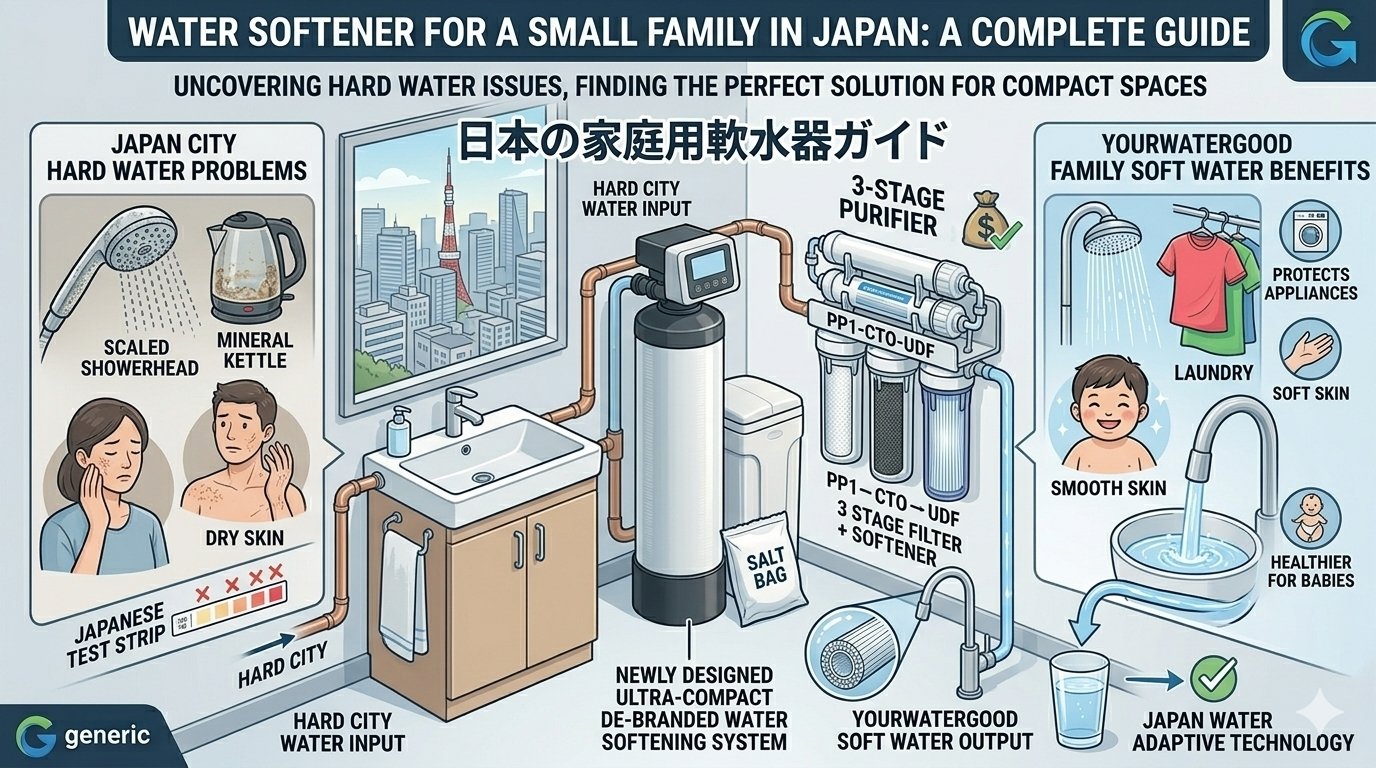
Japan is globally renowned for its cleanliness, efficiency, and infrastructure. Because municipal city water is treated at highly advanced central plants, a comforting misconception exists that it arrives at your kitchen sink in pristine, uncompromised condition. While Japanese treatment facilities do an incredible job of neutralizing acute waterborne diseases, the journey from the municipal plant to your family’s glass is fraught with invisible, accumulative hazards.
Aging Infrastructure and the Sediment Threat
While modern Japanese city centers boast cutting-edge infrastructure, many established neighborhoods, historic districts, and sprawling suburbs rely on plumbing networks laid down decades ago. As water travels through miles of aging pipes before reaching your property line, it scrapes against deteriorating pipe walls. This journey introduces microscopic flakes of oxidized iron (rust), mud, and heavy sediment into the water supply.
For your family, this sediment is far more than just an invisible nuisance. Have you ever noticed your pristine white laundry taking on a dull, slightly discolored hue over time? Or perhaps your family experiences inexplicably dry, itchy skin or brittle hair after a warm evening bath? These are the classic hallmarks of sediment and rust particulate micro-abrasion. Heavy sediment loads also wreak havoc on your home’s internal plumbing, quietly clogging delicate showerheads and reducing the efficiency of your modern washing machine.
The Double-Edged Sword of Disinfection
To ensure water remains microbiologically safe as it travels through vast urban grids, municipal treatment plants must rely on chemical disinfectants, primarily chlorine (often recognized by its distinct smell, sometimes referred to locally as kalki). While chlorine is undeniably effective at neutralizing harmful bacteria, it is fundamentally a harsh chemical additive.
When you turn on your kitchen tap and are greeted by an odor reminiscent of a public swimming pool, you are experiencing chlorine off-gassing. This aggressive chemical completely destroys the delicate flavor profiles of your morning espresso, and it ruins the subtle, refined taste of premium Japanese green teas. Furthermore, while the debate around fluoride and other disinfection byproducts continues globally, an increasing number of health-conscious families express deep concerns about the long-term, daily ingestion of these chemicals, preferring to take absolute control over exactly what their children consume.
The Silent Danger of Lead Contamination
Perhaps the most concerning threat to a family’s water security is the presence of heavy metals, specifically lead. Despite stringent modern regulations, a number of homes in older residential wards still receive water through legacy lead service lines or have internal plumbing joints soldered with older, lead-bearing materials.
Lead is a potent neurotoxin, and its effects are particularly devastating to the developing brains and nervous systems of young children. Because dissolved lead is entirely colorless, odorless, and tasteless, it is impossible to detect without specialized laboratory testing. Relying on a basic, inexpensive carbon pitcher filter to protect your children from potential heavy metal contamination is simply a risk no parent should be forced to take.
Decoding Japanese Drinking Water Standards: What They Mean for You
To truly understand your family’s water quality, it is helpful to understand the regulatory framework governing it. In Japan, the Ministry of Health, Labour and Welfare (MHLW) establishes the rigorous drinking water quality standards under the Waterworks Law. This comprehensive framework mandates strict maximum contaminant levels for a vast array of organic, inorganic, and microbial threats to protect public health.
However, a critical operational reality exists: these national standards primarily regulate the water as it leaves the municipal purification plant and travels through the main distribution network. If the water picks up rust from a deteriorating secondary city main, or leaches lead from your specific building’s legacy internal plumbing, it becomes an immediate household issue. This reality leaves the ultimate burden of ensuring truly pure, great-tasting, and appliance-safe water squarely on the shoulders of the homeowner or tenant.
Elevating Your Family’s Daily Life: The Quality of Life Upgrade
Investing in a professional-grade purification and softening system is not merely a defensive measure against contaminants; it is a profound, daily upgrade to your family’s lifestyle and culinary experience.
Culinary Excellence in Your Own Kitchen
Water is the universal solvent and the foundational ingredient of almost every meal you prepare. If you invest in premium, single-origin coffee beans, delicate loose-leaf teas, or high-quality ingredients for a traditional dashi broth, brewing them with chlorinated tap water is a culinary tragedy. The chlorine binds with delicate essential oils, muting complex acidities and leaving a flat, medicinal aftertaste.
When you utilize highly purified water, free of chemical odors and suspended particles, flavor extraction is perfectly balanced. Your coffee will taste brighter, your tea will feature a brilliant, clear color without a murky surface film, and your homemade soups and rice will retain their vibrant textures and natural, uncompromised sweetness.
Appliance Protection and Anti-Scale Defense
While Japan’s water is generally softer than many regions in North America or Europe, mineral content still varies significantly depending on your specific prefecture and local water source. Over time, even moderately hard water introduces dissolved calcium and magnesium to your appliances.
When this water is heated, these minerals form a stubborn, rock-like crust known as scale. Scale is a silent destroyer of expensive kitchen appliances. It coats the internal heating elements of your premium electric kettles, high-end espresso machines, and professional-grade blenders, forcing them to use exponentially more electricity and drastically shortening their lifespans. By integrating an advanced water softener for a small family in japan home environment, you provide an absolute shield of defense for these costly investments, ensuring they perform flawlessly and efficiently.
Material Safety and Engineering Excellence
At yourwatergoodcompany, we understand that when you install a filtration system in your kitchen, you are trusting us with your family’s health.
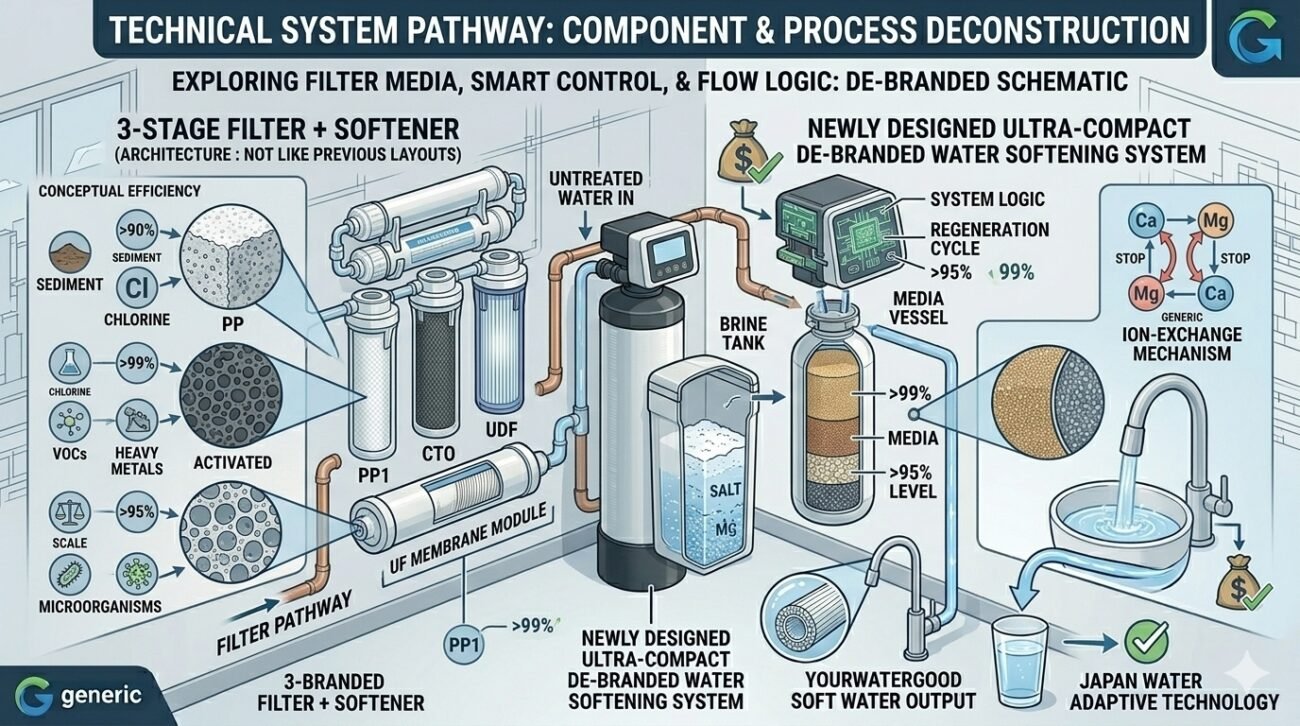
We mandate that our professional residential systems are constructed using strictly food-grade materials. This uncompromising standard ensures that no microplastics or harmful chemical plasticizers ever leach back into your perfectly purified water. Our premium multi-stage filtration architecture, leveraging advanced material science, excels at systematically stripping away microscopic bacteria, viruses, and complex Total Dissolved Solids (TDS). The result is nothing but pure, life-sustaining hydration for your growing children.
Smart Family Economics: The 5-Year Cost Analysis
A major source of purchase anxiety for families is the initial price tag of a comprehensive home filtration system. However, when we analyze the economics over a standard 5-year period, the financial logic becomes undeniable.
The Hidden Extravagance of Bottled Water
Many families, distrustful of their tap water and overwhelmed by complex filtration options, resort to purchasing heavy plastic bottles from the local supermarket or subscribing to expensive water delivery services. While seemingly a small expense on a weekly basis, the compounding cost is staggering. Purchasing bottled water week after week easily amounts to a massive financial drain over a 5-year span. Furthermore, the environmental guilt of generating massive amounts of single-use plastic waste weighs heavily on modern, eco-conscious households.
The Filtration Investment and the PP Cotton Secret
By contrast, investing in a robust home purification and softening system requires a higher initial capital outlay but practically eliminates your drinking water budget for the foreseeable future. The secret to keeping long-term maintenance costs incredibly low lies in the strategic architecture of the filtration stages.
In advanced Reverse Osmosis (RO) purification setups, the most expensive and critical component is the RO membrane itself. To protect this vital component, professional systems utilize a highly dense PP (Polypropylene) cotton pre-filter as the absolute first line of defense. The PP cotton filter’s sole job is to act as a physical shield, capturing the aggressive rust, mud, and heavy sediment we discussed earlier before it can foul the downstream filters.
Because our specialized PP cotton is incredibly cost-effective to manufacture, replacing this pre-filter frequently costs very little. By diligently replacing the inexpensive PP cotton filter on schedule, you prevent sediment from ever reaching the expensive RO membrane. This simple habit extends the life of your premium filters by years, drastically lowering your family’s overall maintenance overhead and maximizing your financial return on investment.
Installation, Space, and Technical Specifications for the Japanese Home
Understanding how a system fits into your home, both physically and mechanically, is crucial for eliminating purchase anxiety, especially in Japanese residences where space optimization is an art form.
Compact Design for Maximum Efficiency
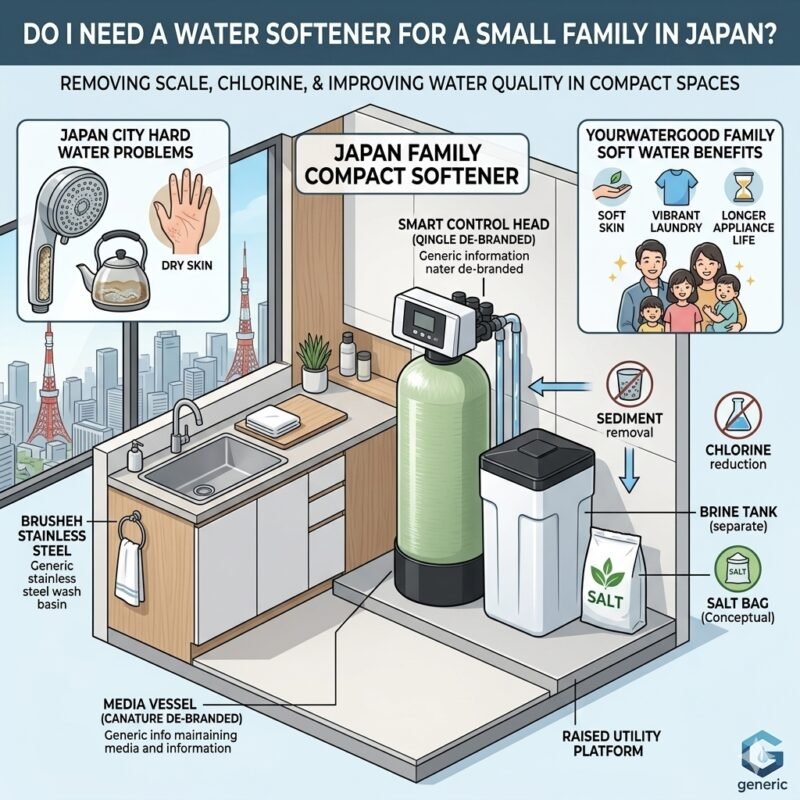
We recognize that under-sink real estate in a typical Japanese apartment or house is incredibly valuable. Gone are the days when water filtration required dedicating massive amounts of space to industrial-looking storage tanks.
Modern engineering focuses heavily on Compact Design. Today’s advanced systems are sleek, incredibly space-saving, and designed to slide effortlessly beneath standard kitchen counters, leaving plenty of room for your cleaning supplies, dish soap, and storage bins. Furthermore, we engineer these systems to be exceptionally DIY-friendly. Utilizing simple quick-connect fittings and intuitive tubing, many homeowners can comfortably complete the installation without needing to hire a professional plumber, saving both time and money.
Demystifying Local Technical Metrics
When evaluating any water system for use in Japan, you will encounter two critical technical metrics that dictate performance, differing from Western standards:
- Production Rate (Liters per Day – L/day or Liters per Minute – L/min): Instead of Gallons Per Day (GPD), Japanese systems measure output in liters. A standard family typically consumes several liters of drinking and cooking water per person daily. Modern, high-efficiency systems are rated with ample L/day capacities to ensure that water flows rapidly from your dedicated faucet in real-time, allowing you to fill a large cooking pot instantly without frustrating delays.
- Water Pressure (Megapascals – MPa): Instead of PSI, incoming city water pressure is measured in Megapascals. Most residential filtration and RO systems require a steady baseline pressure to effectively push the water through the dense filtration media. The vast majority of modern Japanese homes operate safely within a standard range of 0.2 to 0.5 MPa, which is the absolute sweet spot for optimal filtration performance, rapid flow rates, and maximizing the longevity of your filters.
Your Trusted Guardian: The yourwatergoodcompany Solution
Navigating the complexities of municipal water chemistry, localized pressure dynamics, and family health requires a partner you can implicitly trust. As a premier provider of residential health solutions, an authority in material science, and your dedicated family water quality guardian, www.yourwatergood.com is committed to bringing absolute peace of mind to your household.
We do not simply assemble plastic parts; we engineer comprehensive environmental solutions. We highly encourage families to implement both dedicated household water purifiers and Reverse Osmosis (RO) purifiers for uncompromising safety.
If you are ready to completely transform the water in your home, protecting both your delicate appliances and your family’s long-term well-being, we have the perfect solution. We highly recommend exploring our flagship engineering directly at our whole house water softener manufacturers portal. This meticulously engineered line is designed to provide massive, uninterrupted flow rates, seamless operation, and the ultimate defense against sediment, chlorine, and hard water impurities.
Essential Maintenance Guide for the Busy Household
We know that modern families are incredibly busy juggling work, school, and daily chores. Professional water systems are designed to be largely self-sufficient, but a few simple routines will guarantee flawless performance year after year.
- The PP Cotton Schedule: Never wait for the water flow to slow down at the faucet. Replace your dense PP cotton pre-filters precisely every few months, depending on the age of your local city pipes. This simple, affordable step is the single most important action you can take to protect your RO membrane and save money.
- Monitor Your MPa Pressure: Keep an eye on your home’s water pressure. If you notice a sudden, severe drop in water pressure across your entire kitchen, it may indicate a local municipal line flush, which can send a wave of sediment into your home that prematurely saturates your pre-filter.
- Sanitize During Changes: Whenever you open the filter housings to perform a scheduled cartridge swap, take an extra moment to wipe down the inside of the housing with a mild, food-safe sanitizing solution to ensure the internal environment remains perfectly pristine.
Frequently Asked Questions (FAQ) for Families
Q: If I use a highly effective RO purifier, won’t it strip away all the healthy minerals my growing children need? A: This is a very understandable concern. While advanced RO filtration does strip the water down to a highly pure state, the overwhelming majority of the healthy minerals your body absorbs—like calcium and magnesium—come directly from your daily diet. The fresh produce, dairy, and balanced meals your family consumes provide vastly more bioavailable minerals than a glass of tap water ever could.
Q: Is the system difficult to maintain? I am not a plumber. A: Not at all. We specifically engineered our systems for the everyday consumer. The cartridges utilize simple, ergonomic twist-and-lock mechanisms. If you can comfortably change a lightbulb or a vacuum cleaner bag, you can easily change these filters without specialized tools.
Q: We live in a compact apartment with very limited under-sink space. Will this system really fit? A: Yes! Space constraints are a primary consideration in our engineering process. Our systems feature a highly optimized Compact Design specifically intended to share tight under-sink real estate with your existing plumbing and storage. The tankless options, in particular, hug the side wall of your cabinet, maximizing your usable space.
Take the Next Step Toward Ultimate Peace of Mind
Your family deserves the absolute highest standard of living, and that foundational wellness begins with the purest, safest water possible. Do not allow unpredictable municipal pipelines, invisible heavy metals, or appliance-destroying mineral buildup to compromise your home’s sanctuary.
It is time to eliminate purchase anxiety and make a definitive, empowering choice for your family’s health and your home’s longevity.
Our engineering team is here to guide you every step of the way. Visit our platform, connect with our product experts, and Request a Free Home Water Consultation today. Let us help you secure the perfect, customized water purification strategy for your specific household. Your family’s health is your greatest asset—protect it with uncompromising quality.