
The Comprehensive Technical Guide: what is pp cotton for water filter and Why It Matters for Your Business

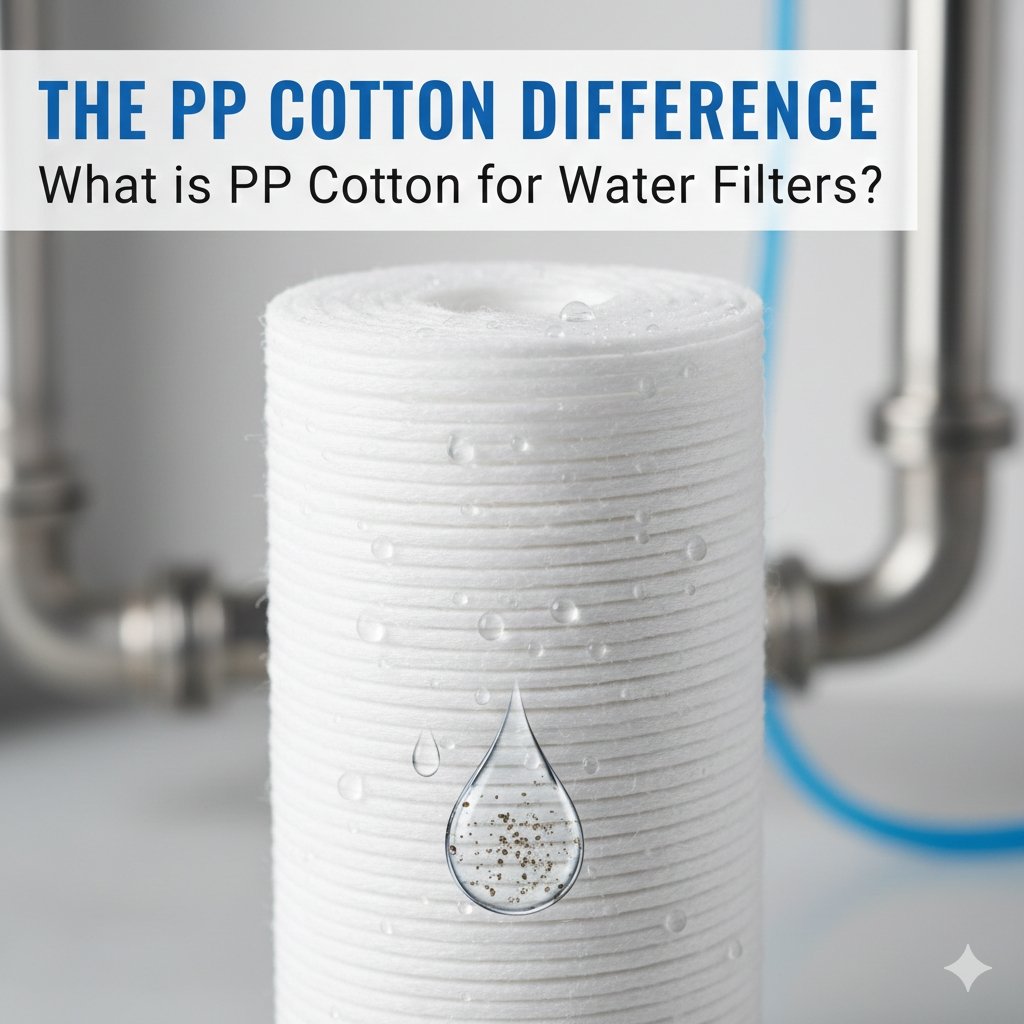
In the modern landscape of water treatment, the first line of defense is often the most critical. Whether you are managing a high-traffic boutique cafe, a small restaurant, or ensuring the safety of a residential property, the materials used in your filtration system dictate the longevity of your equipment and the quality of your output. One of the most frequently asked questions by facility managers and homeowners alike is: what is pp cotton for water filter?
While the term sounds simple, the technology behind it is a cornerstone of mechanical water purification. Polypropylene (PP) cotton is not a traditional textile; it is a specialized thermoplastic polymer engineered into a complex fiber network designed to trap physical contaminants. This guide provides a deep dive into the engineering, applications, and strategic advantages of using high-quality PP cotton in your filtration strategy.https://yourwatergood.com/product/whole-house-water-filtration-system-for-home/.
Defining the Basics: what is pp cotton for water filter?
To understand what is pp cotton for water filter, we must first look at the material itself. Polypropylene is a rugged, heat-resistant, and chemically inert plastic. When we refer to it as “cotton” in the context of water treatment, we are describing its appearance and physical texture after it has undergone a specific manufacturing process.
The Molecular Foundation of Polypropylene
Polypropylene is a linear hydrocarbon polymer. In the water treatment industry, its inert nature is its greatest strength. Because it does not react with acids, bases, or bacterial colonies, it serves as an ideal medium for filtering water without introducing secondary chemical contaminants. For a specialized pp cotton household water purifier company, the purity of the raw resin is the first step in ensuring a food-grade final product.
The Melt-Blown Manufacturing Process
The creation of PP cotton involves a high-tech process known as “melt-blown” technology. Polypropylene resin is melted at high temperatures and then extruded through tiny nozzles. High-velocity hot air then “blows” these molten fibers onto a rotating mandrel.
- Fiber Orientation: The fibers are layered in a random, three-dimensional web.
- Bonding: As the fibers cool, they thermally bond to one another without the need for chemical glues or binders.
- Porosity: The resulting structure is a dense, “fluffy” cylinder that provides what engineers call “depth filtration.”
The Engineering Principle of Depth Filtration
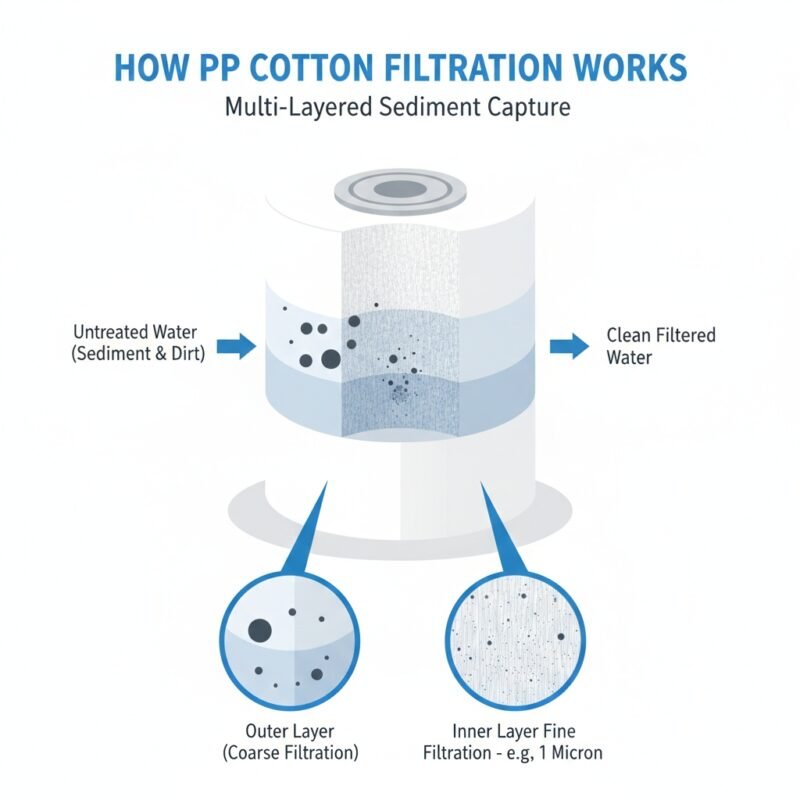
One cannot fully answer what is pp cotton for water filter without discussing how it actually captures debris. Unlike a window screen that only traps dirt on its surface, PP cotton is a “depth” media.
Gradient Density Architecture
The most effective sediment filters are manufactured with a gradient density. This means the outer layers of the filter are slightly looser, while the inner core is significantly denser.
- Outer Layers: These act as a pre-filter, catching larger particles like sand, pebbles, and heavy rust flakes.
- Internal Core: As the water moves deeper into the filter, the tighter fiber network traps smaller silts and microscopic particulates. This design ensures that the filter does not “blind” or clog on the surface immediately, allowing it to hold a massive volume of sediment before requiring replacement.
Micron Ratings and Precision
PP cotton filters are typically rated by “microns.” A micron is one-millionth of a meter. High-quality filters from a reputable pp cotton household water purifier company usually offer ratings from one to fifty microns. For small businesses like cafes, a five-micron or one-micron filter is essential for protecting sensitive equipment from the fine silts found in municipal water supplies.
Why PP Cotton is Essential for Small Businesses (Cafes and Restaurants)
For the owner of a small business, water is more than a utility; it is a raw ingredient. In a specialty coffee shop, water makes up the vast majority of every cup of espresso.
Protecting High-Value Culinary Assets
Commercial espresso machines, ice makers, and combi-ovens utilize precision solenoid valves and micro-pumps.
- The Abrasive Effect: Even microscopic sediment acts like liquid sandpaper. Over time, it erodes the seals in your equipment, leading to leaks and costly downtime.
- Clogging Micro-Orifices: Fine silt can block the tiny nozzles in steam wands or coffee group heads. By understanding what is pp cotton for water filter and implementing it correctly, business owners can significantly extend the Mean Time Between Failures (MTBF) for their expensive machinery.
Improving Product Consistency
Sediment in water doesn’t just damage machines; it affects flavor and aesthetics. Rust flakes from aging city pipes can introduce a metallic tang to water, while fine silt can make ice appear cloudy. A PP cotton stage ensures a “clean canvas” for your culinary creations.
Integration into Whole-House and Commercial Systems
While a single filter at a sink is useful, the most professional approach is a Point-of-Entry (POE) system. This ensures that every drop of water entering the building—from the dishwasher to the restroom faucets—is treated.
For comprehensive protection, we highly recommend the Whole House Water Filtration System for Home. This system utilizes high-capacity PP cotton cartridges to shield your entire infrastructure. Whether you are running a household or a small boutique hotel, this system acts as the ultimate gatekeeper against the debris common in the water grids of the US and Europe.
Comparing PP Cotton to Other Filtration Media
To further clarify what is pp cotton for water filter, it is helpful to see how it stands against other common materials.
| Feature | PP Cotton (Melt-Blown) | Activated Carbon | Ceramic Filters |
| Primary Function | Physical Sediment Removal | Chemical Adsorption | Micro-Biological Removal |
| Target Contaminants | Rust, Silt, Sand, Scale | Chlorine, Odor, VOCs | Bacteria, Cysts |
| Flow Rate | High | Moderate | Low |
| Durability | High (Disposable) | Moderate | High (Cleanable) |
| Cost | Low | Moderate | High |
The Synergy with RO Systems
In many households and restaurants, a Reverse Osmosis (RO) system is used for drinking water. However, an RO membrane is extremely delicate. A PP cotton filter is almost always used as the “Stage 1” pre-filter. It removes the physical grit that would otherwise tear the sensitive RO membrane, making the PP cotton filter an essential “bodyguard” for your more expensive purification stages.
How to Identify Quality from a pp cotton household water purifier company
Not all polypropylene filters are created equal. When sourcing for a B2B environment, you must look for specific quality indicators.
- Weight and Density: A heavier PP cotton cartridge generally indicates more material and a higher dirt-holding capacity. If a filter feels “hollow,” it will likely fail prematurely.
- Certification: Ensure the media is food-grade and meets international safety standards for plastic purity.
- Surface Texture: A high-quality melt-blown filter should have a firm, non-fuzzy surface. If the fibers are loose, they can “shed” into the water stream, causing further clogs downstream.
As a dedicated pp cotton household water purifier company, YourWaterGood focuses on the structural integrity of every fiber, ensuring that our filters provide consistent micron protection from the first gallon to the last.
Maintenance: When to Change Your PP Cotton Filter
Because PP cotton is a mechanical barrier, it will eventually become saturated. Understanding the signs of a spent filter is vital for facility management.
Pressure Drop (Delta-P)
The most scientific way to know when to change your filter is by monitoring water pressure. As the fiber network fills with silt, it becomes harder for water to pass through. If you notice a significant drop in pressure at your faucets or espresso machine, the PP cotton is likely exhausted.
Visual Discoloration
Most professional systems use transparent or translucent housings. New PP cotton is bright white. As it traps contaminants, it will turn yellow, then orange (rust), and finally dark brown or black (silt and organic matter). We recommend a replacement every three to six months, depending on the turbidity of your local water supply.
Environmental and Sustainability Considerations
In the current global market, sustainability is a key metric for B2B procurement.
- Recyclability: Polypropylene is a thermoplastic that can be melted down and recycled into other industrial products.
- Chemical-Free: Unlike softeners that use salt or chemical resins, PP cotton is a purely mechanical process. It adds nothing to the water, making it one of the most eco-friendly ways to achieve purity.
- Energy Efficiency: By keeping your water heaters and boilers free of sediment, PP cotton ensures that your equipment operates at peak thermal efficiency, lowering your overall energy consumption.
Frequently Asked Questions (FAQ)
Q: Can PP cotton remove chlorine? A: No. PP cotton is for physical sediment only. To remove chlorine, you must follow the PP cotton stage with an activated carbon filter.
Q: Is PP cotton safe for hot water? A: While polypropylene has a high melting point, most sediment cartridges are designed for cold-water lines (Point-of-Entry). High heat can cause the fibers to soften and lose their micron rating. Always check the temperature rating on the cartridge.
Q: Does it remove lead? A: Only if the lead is in a solid particulate form (like lead pipe flakes). It does not remove dissolved lead. For that, you would need a specialized RO system or lead-specific carbon block.
Q: Can I wash and reuse a PP cotton filter? A: No. Because it is a depth filter, the dirt is trapped deep inside the fiber web. Surface washing will not restore its flow or efficacy. These are designed to be low-cost, disposable items.
Conclusion: Making the Right Choice for Your Property
Understanding what is pp cotton for water filter is the first step toward a more professional and reliable water management strategy. For businesses in the US and Europe, where equipment costs are high and water quality can vary, this simple sediment filter is a non-negotiable component of success.
By implementing a high-capacity system like the Whole House Water Filtration System for Home, you provide a comprehensive shield for your plumbing, your appliances, and your customers. At www.yourwatergood.com, we are committed to being the pp cotton household water purifier company that you can trust for industrial-grade quality and residential-level care.
Invest in the foundation of your water quality today. Protect your assets, enhance your flavors, and ensure the safety of your water with precision-engineered polypropylene technology.