
Whole Home Water Filter For Well Water — The Complete Guide for Homeowners (What to test, how systems work, costs, and step-by-step planning)

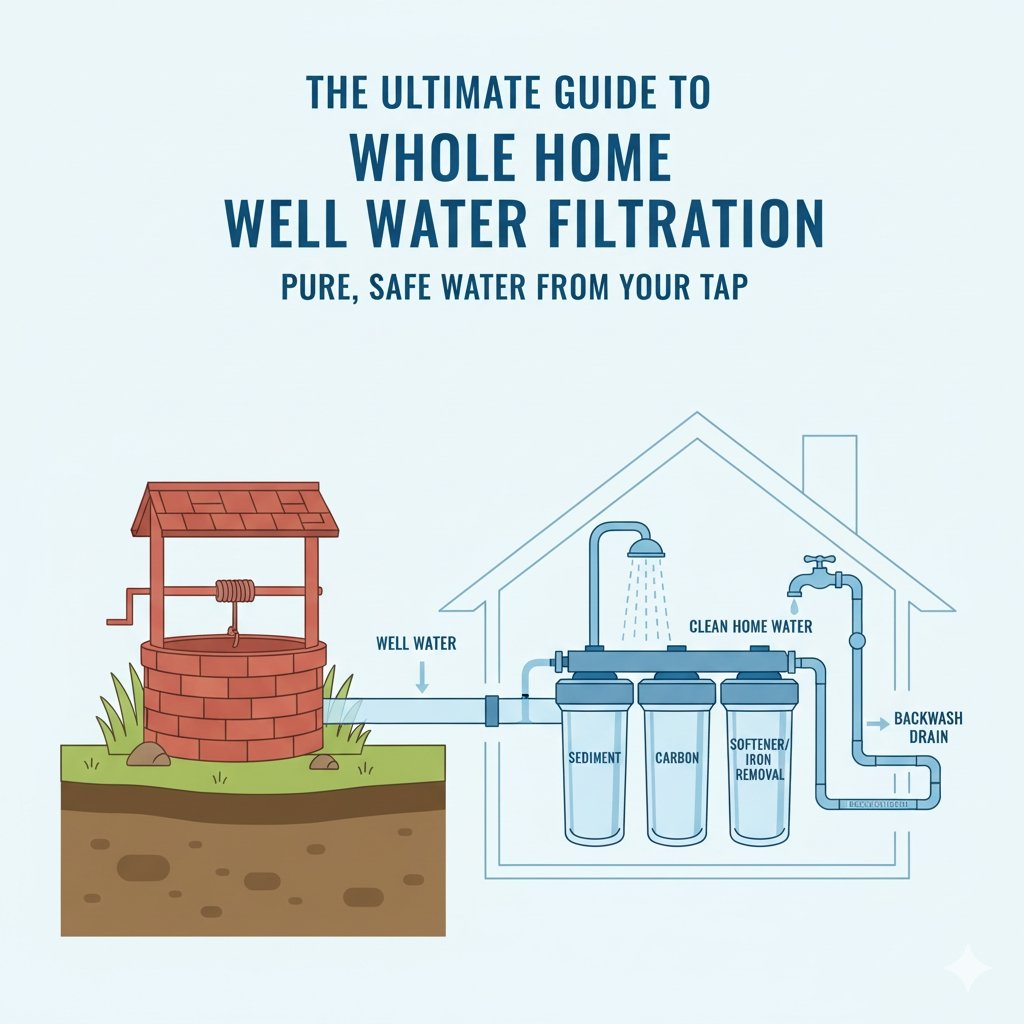
If your home uses a private well, congratulations — you control your water source. That control comes with responsibility: well water can be excellent, but it can also contain contaminants that municipal systems don’t face (iron, manganese, bacteria, hardness, nitrates, hydrogen sulfide, radon, etc.). Choosing the right whole-home (point-of-entry) filtration system for well water means starting with testing, understanding the typical well-water problems, and matching a treatment train (pre-filters → specialty media → disinfection → point-of-use polishing) to the contaminants present. This guide walks you through everything you need to know: what to test, common treatment technologies for well water, realistic cost expectations, installation and maintenance planning, and a practical decision checklist so you get a system that actually solves your problems — not one that wastes money.
Quick takeaways (if you only skim)
- Test first. Annual basic testing is recommended for private wells (bacteria, nitrates, TDS, pH), with expanded tests if problems appear. Don’t buy a system until you know what’s in your water.
- Match treatment to contaminants. Iron/manganese, hardness, and bacteria each need different approaches (oxidation + filtration, softeners/ion exchange or template, UV/chlorination). There is no single “do-it-all” cartridge for heavy well problems. (US Water Systems)
- Whole-home filtration + point-of-use RO is common. Many well owners protect plumbing and appliances with whole-house sediment/carbon/backwash systems and use under-sink RO for drinking water. (APEC WATER)
- Cost varies widely. Expect simple whole-house sediment/carbon systems in the low thousands (equipment + install); specialized iron/UV/softener + professional installation can push total project cost to several thousand dollars. Get multiple quotes and lifetime (5-10 year) cost projections. (Angi, modernize.com)
1) Why well water is different (and why testing matters)
Municipal water systems are treated and monitored under federal and state regulations. Private wells are not regulated the same way — the homeowner is responsible for testing and treatment. The CDC and EPA recommend that private well owners test water at least annually for key indicators (total coliform bacteria, nitrates, total dissolved solids, and pH), and more frequently if problems or changes occur (after flooding, well servicing, or when someone in the household gets sick). Testing identifies the real problem (or problems) so you don’t overpay for unnecessary technology or miss a serious health hazard. (US EPA)
Common well-water issues include:
- Microbial contamination (total coliforms, E. coli) — acute health risk.
- Hardness (calcium, magnesium) — causes scale, dry skin, soap scum. (Culligan)
- Iron & manganese — rusty stains, metallic taste, clogged fixtures; can be dissolved or particulate forms and require different treatments. (cleanwaterstore.com)
- Hydrogen sulfide (rotten-egg smell) — often needs oxidation/air stripping or targeted media. (cleanwaterstore.com)
- Nitrate, arsenic, radon, VOCs — site-specific contaminants that sometimes require RO, ion exchange, or specialized media. (Investopedia)
Bottom line: a proper lab water analysis is step one. The rest of the decisions flow from the results.
2) Typical whole-home treatment strategy for well water
For well water the “treatment train” approach is standard. A treatment train layers technologies in the order that best protects downstream equipment and optimizes service life:
- Sediment removal (pre-filtration). Large particles, sand, and rust are stripped out with cartridge or pleated filters; this protects downstream media and pumps.
- Oxidation + iron/manganese removal. If your water has dissolved iron or manganese, oxidation (air, chlorine, or chemical oxidants) followed by greensand, catalytic carbon, or backwashing media is typical. Insoluble iron often uses backwashing filters. (US Water Systems,)
- Carbon / catalytic carbon (optional). Reduces organic taste/odor issues, some pesticides, and (with the right media) chloramines; catalytic carbon can also assist with iron/manganese and chloramine breakdown. (SpringWell Water Filtration Systems)
- Water softening / scale control. Ion exchange softeners or salt-free scale conditioners protect appliances when hardness is high. Decide based on hardness test and whether you accept sodium in softened water. (Culligan)
- Disinfection (if bacteria present). UV is a chemical-free, widely used option for microbiological control at the point of entry (pre-treated by sediment/carbon). For persistent bacterial contamination, shock chlorination of the well and chlorination feed systems (followed by carbon to remove chlorine if needed) may be required. Always follow CDC/EPA guidance for disinfection procedures. (US EPA)
- Point-of-use polishing (optional). For drinking water, many owners install under-sink RO or dedicated faucets after the whole-house system so drinking water is extremely pure without routing all household water through RO. (APEC WATER)
A whole-home system rarely consists of a single off-the-shelf cartridge when well issues are moderate to severe. Instead, it’s a sequence of components sized and specified for your water chemistry.
3) How specific problems are treated (practical mini-guide)
A. High sediment / turbidity
Solution: multi-stage sediment filters (large pleated pre-filters, then micron cartridges) or an automatic backwashing sediment filter. These protect succeeding media and extend service life. Pleated/cleanable options lower replacement cost. (oceanicwater.com, The Home Depot)
B. Iron (dissolved ferrous vs particulate ferric)
- Particulate iron: mechanical filtration (sediment) works.
- Dissolved iron: oxidation (air/chemical) + media like greensand or catalytic carbon, or an oxidizing filter that backwashes (greensand needs periodic regeneration with potassium permanganate). Professional sizing and maintenance are important. (US Water Systems, )
C. Manganese
Manganese removal often parallels iron treatment: oxidation + filtration, greensand, or specialized manganese dioxide media. Aeration followed by filtration is also common. (cleanwaterstore.com)
D. Hydrogen sulfide (rotten-egg smell)
Aeration, catalytic carbon, or targeted oxidizing media remove H₂S. Levels and source dictate the method. (cleanwaterstore.com)
E. Hardness (scale)
Ion-exchange softeners (salt-based) are the standard solution. Salt-free conditioners (template-assisted crystallization, electric/conditioning) are alternatives for customers avoiding added sodium. Evaluate softener discharge/regulatory constraints in your area. (Culligan)
F. Bacterial contamination (coliforms, E. coli)
If present, immediate action is required: shock chlorination of the well, corrective sanitary work, and (for continuous protection) a UV disinfection system installed after adequate pre-filtration. The CDC/EPA provide step-by-step guidance for disinfecting wells and for ongoing testing. (US EPA)
G. Nitrate, arsenic, radon, VOCs
These are site-specific and often require specialized media, ion exchange, or point-of-use RO for drinking water. For humans exposed to nitrates (infants) or arsenic (long-term), point-of-use RO is commonly recommended as the most dependable home solution. (Investopedia)
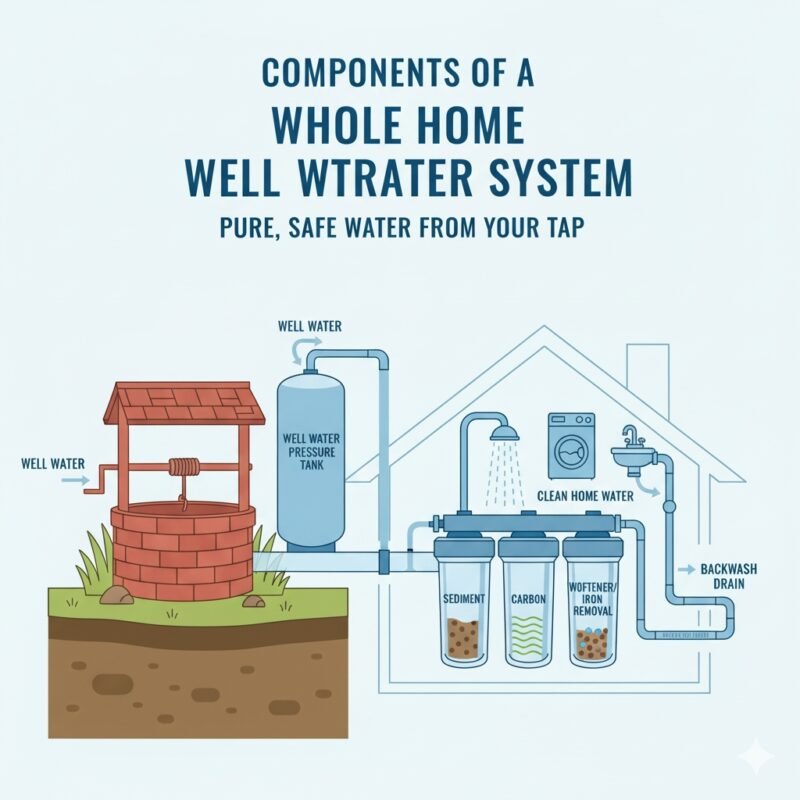
4) Typical whole-home system components and configuration
A professionally designed whole-home well system commonly includes:
- Sediment pre-filter bank (e.g., 5–50 µm stage, sometimes multi-depth cartridges).
- Automatic backwashing iron/manganese or multimedia filter if iron/manganese/turbidity are issues. (oceanicwater.com, US Water Systems)
- Catalytic carbon / KDF stage for taste/odor and chloramine or some metals control. (SpringWell Water Filtration Systems)
- Water softener or antiscalant feed, if hardness is high. (Culligan)
- UV disinfection chamber after pre-filtration for microbiological control. (US EPA)
- Point-of-use RO under kitchen sink for drinking water (optional). (APEC WATER)
Every installation should include valving and bypass so the home has water during service, a pressure gauge and sample taps for testing, and a plan for waste/by-pass routing if backwashing or regeneration is required.
5) How much will a whole-home well system cost? (realistic U.S. ranges)
Costs depend heavily on site conditions, required technologies, and labor rates. Use these ranges as planning numbers — get quotes.
- Basic sediment + carbon whole-home system (equipment only): $800 – $2,000. Good for minor sediment and taste/odor issues. (Angi, The Home Depot)
- Backwashing iron/manganese filter or dedicated iron removal system (equipment + install): $1,500 – $6,000 depending on media, regeneration needs, and complexity. US Water Systems,
- Whole-home system that includes softener + catalytic carbon + UV (equipment + install): $2,500 – $8,000 typical for many well homes. (Angi, modernize.com)
- High-end/complex installs (large backwash tanks, chemical feed, automation, large storage, specialty contaminant removal): $8,000 – $20,000+. Complex well chemistries (high iron + manganese + VOCs) push projects into this band. (Angi, modernize.com)
Operating costs (filters, media renewal, softener salt, UV lamp changes, service) typically run $100–$1,000+ per year depending on system complexity and water condition. For budgeting, request a 5-year TCO estimate from vendors (parts, labor, electricity, water used in backwashing/regeneration). (Angi, modernize.com)
6) Finding the right vendor & getting comparable quotes
When shopping, ask every vendor for the same deliverables so you can compare apples to apples:
- Recent water test or include test as part of the proposal (vendor-sponsored sampling is fine if done by a certified lab).
- Written scope listing stages, media types, brand/model numbers, and expected filter life.
- Performance guarantee (e.g., iron reduced below X mg/L, bacterial TDS levels, or turbidity target).
- Detailed pricing: equipment, labor, permit costs, civil work, and a separate O&M estimate (filters, lamp replacements, salt).
- References & photos of similar local installs.
- Service contract options and response times.
- Warranty terms on media, tanks, pumps and labor.
Get at least three quotes. If a vendor tries to sell you a single cartridge as a cure-all without testing or explanation, walk away.
7) Installation & practical site considerations
- Space & access. Whole-house tanks and backwashing equipment need space (garage, utility room, or dedicated shed). Ensure freeze protection if installed outdoors.
- Electrical & plumbing. UV and pumps need electrical circuits; backwash lines need drains or routing to a safe disposal/irrigation option. Backflow prevention may be required by code.
- Bypass valves. Make sure the system has a bypass for service so you’re never without water.
- Drain capacity & reuse. If the system backwashes frequently or discharges concentrate, check local regulations and septic capacity; consider reusing backwash water for irrigation where allowed.
- Permit & code compliance. Ask whether permits or inspections are required locally.
A reputable installer will quote these items and include them in a site-specific scope.
8) Maintenance you can expect (simple schedule)
A clean maintenance plan keeps performance reliable:
- Monthly/quarterly: Inspect pre-filters / change sediment cartridges as recommended.
- Every 6–12 months: Replace carbon filters if used for taste/odor or VOC reduction; service softener (check salt).
- Annually: UV lamp replacement and sleeve cleaning (if UV is present); check backwash control heads and calibrate meters. (US EPA)
- Every 2–7 years: Replace media in iron or specialty tanks (depends on feed concentrations and media type).
- As needed: Shock chlorination if microbial contamination recurs; immediate corrective action if the well is compromised (flooding, construction, etc.).
Ask vendors for a calendar with expected consumable parts and costs. Consider a service contract in the first 1–2 years while you learn the system.
9) Common mistakes homeowners make (and how to avoid them)
- Buying before testing. This wastes money and often fails to fix the real issue. Test first.
- Undersizing pre-filtration. Skimping on sediment pre-filters lets media foul and shortens life.
- Neglecting UV with bacterial issues. Relying on carbon alone when bacteria are present is unsafe. (US EPA)
- Ignoring long-term O&M costs. Cheap upfront systems with expensive proprietary cartridges can cost more over time. Ask for 5-year cost projections. (Angi)
- No bypass or poor installation access. Plan for serviceability from day one.
A good installer will point these out and build the job to avoid them.
10) When to consider professional well rehabilitation instead of only filtration
Sometimes the well or its surroundings are the problem (cracked casing, contaminated surface flow, septic proximity). If contamination is recurring or the source is bacterial infiltration, well disinfection, wellhead repair, or relocating the well may be required — filtration without fixing the well is a band-aid. Consult a licensed well contractor and your local health department if problems continue after treatment.
11) Example system builds (realistic scenarios)
Scenario A — Minor issues (sediment + chlorine taste):
- Sediment pre-filter bank → catalytic carbon whole-house tank → point-of-use RO at kitchen.
Budget (est): $1,200–$3,000 installed. (Angi)
Scenario B — Iron + hardness + odor (typical rural well):
- Multi-stage sediment → oxidizing iron filter (backwashing greensand or catalytic media) → softener → UV (if bacteria suspected) → PO-U RO for drinking.
Budget (est): $3,500–$10,000 installed (depends on iron levels and regeneration needs). (US Water Systems, )
Scenario C — Complex contaminants (nitrate/arsenic/VOC):
- Comprehensive lab testing → custom media (ion exchange / specialized GAC) → whole-house pre-treatment → under-sink RO for drinking (often required for health contaminants).
Budget (est): $5,000–$20,000+ depending on media and certification needs. (Investopedia, modernize.com)
Use these ballparks to sanity-check vendor quotes.
12) Choosing point-of-use vs whole-home RO for well owners
Whole-home RO is possible but often not the most practical first step: it’s expensive, requires large storage and creates reject water. A common and cost-effective pattern is:
- Whole-home sediment / iron / odor pretreatment + softener if needed to protect plumbing and appliances.
- Under-sink RO at the kitchen for drinking and cooking water (lowers TDS, arsenic, nitrate, fluoride where needed).
This hybrid model solves the main homeowner goals — clean water where you drink it plus protection for the rest of the house — without subjecting every faucet to RO’s limitations. (APEC WATER)
If you are specifically evaluating RO units, a convenient example product to review while comparing specs and warranty terms is: https://yourwatergood.com/product/whole-house-water-filtration-system-for-home/ — use it as a benchmark for flow rates, media and maintenance schedules when talking to vendors (note: always match specs to your lab results).
13) How to evaluate performance claims and certifications
- Ask for test reports — percent reduction, testing protocol, and conditions (feed TDS, temperature, pressure).
- Look for recognized certifications (NSF/ANSI standards for contaminant reduction where applicable) and ask whether the certification covers your final assembled product (private-label units sometimes require separate listing).
- Request real references: ask to see installations in similar water chemistry and climate. Vendors who only sell by brochure and can’t show field installs are riskier.
Certification and proof protect you from over-promised performance.
14) Funding, rebates, and incentives
Occasionally state or local programs offer rebates for water-efficient or health-improving upgrades. Check local extension services, state health or environmental agencies, and utility programs — sometimes incentives exist for certain technologies or for properties in sensitive watershed areas. Always ask vendors if any local rebates or financing options apply to your project.
15) Final decision checklist (step-by-step)
- Order a comprehensive water test (basic + targeted tests for suspected contaminants).
- List your objectives (drinking water only, appliance protection, nuisance stains, health contaminants).
- Request 3 site-specific proposals with full scope, brands, media, and 5-year O&M.
- Compare TCO (equipment + install + annual consumables) not just upfront cost. (Angi)
- Confirm service & spare parts availability and warranty terms.
- Ensure proper bypass and access for maintenance.
- Plan for annual testing after installation to verify performance and detect changes.
Frequently Asked Questions (short answers)
Q: How often should I test my well after installing treatment?
A: Test at least annually for baseline parameters; test more often (every 3–6 months) if biological contamination was a concern or after system changes.
Q: Can a single whole-house unit remove iron, manganese, hardness and bacteria?
A: No single passive cartridge typically removes all those effectively. Expect a treatment train combining oxidation/backwashing media, softening, and disinfection for bacteria.
Q: Is UV enough for bacterial problems?
A: UV is very effective when properly sized and after sediment/carbon pre-filtration; it does not provide residual disinfection in the plumbing — for that, chemical options exist, but they bring other tradeoffs. (US EPA)
Wrap-up
If you own a well, investing a little time in accurate water testing and in designing a correctly staged whole-home treatment plan will save you money, headaches, and potential health risk in the long run. Well water can usually be made excellent with the right combination of pre-filtration, targeted media, and disinfection; the trick is matching the solution to the lab results rather than chasing the brightest ad. Start with a lab test, get several detailed proposals, and compare total cost-of-ownership over 5 years. If you want a concrete product to benchmark while you evaluate proposals, review this whole-house option for its specs and maintenance plan: https://yourwatergood.com/product/whole-house-water-filtration-system-for-home/.
Key authoritative resources & further reading
- CDC — Guidelines for testing and disinfecting private wells.
- EPA — Private well protection and disinfection options (chlorine, UV, ozone). (US EPA)
- Penn State Extension — Iron and manganese in private water systems.
- Industry cost and buyer guides (Modernize & Angi) for whole-house filtration price ranges. (modernize.com, Angi)
- Technical articles on iron/manganese removal and greensand/oxidation approaches. (US Water Systems, cleanwaterstore.com)