
What Is Reverse Osmosis Water Filter System — Complete Guide for Homeowners

This topic is covered in full in our main guide: What Is A Reverse Osmosis Water Filter System — Principles, Performance & Practical Steps.
What is reverse osmosis water filter system, and why are so many homeowners choosing RO technology for drinking water? In short, a reverse osmosis water filter system forces water through a semipermeable membrane that blocks dissolved solids, heavy metals, and many chemical contaminants. The result is very high-quality drinking water that tastes cleaner and is safer for cooking, infant formula, and sensitive uses. This comprehensive guide explains how RO works, what it removes (and what it does not), the types of systems available, key installation and maintenance steps, and practical tips for choosing the right unit for your household.
How Reverse Osmosis Works: The Science in Plain Language
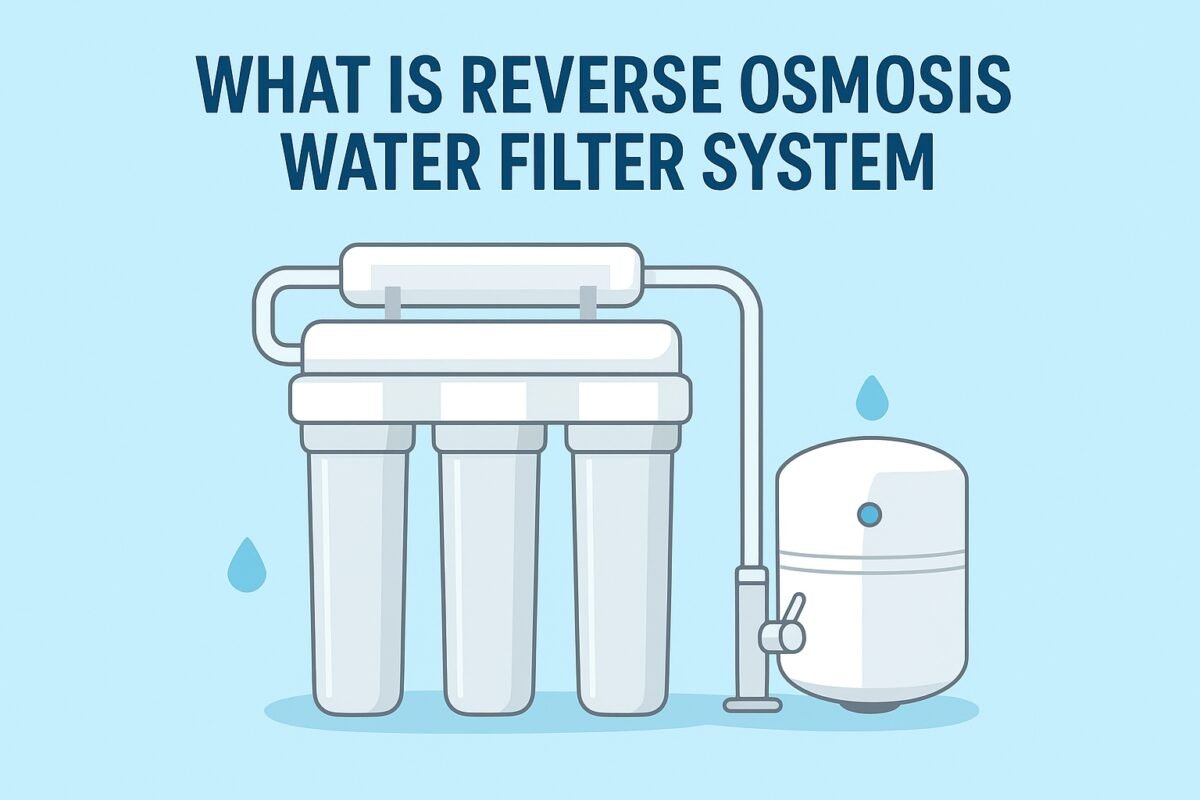
To answer what is reverse osmosis water filter system technically: reverse osmosis (RO) is a pressure-driven separation process. Feed water is first pretreated through sediment and carbon filters to remove large particles and chlorine. Then the pretreated water is pressurized across an RO membrane. Clean water (permeate) passes through the membrane while a concentrated reject stream (brine) carries away the dissolved contaminants. Finally, a post-filter (often carbon) polishes the water before dispensing.
Key components in a typical household RO system:
- Sediment prefilter(s) — protect membrane from sand, rust, and particulate matter.
- Carbon prefilter(s) — remove chlorine and organics that would damage the membrane.
- RO membrane — the heart of the system, removing dissolved solids.
- Storage tank — holds purified water for on-demand use.
- Post-filter / remineralizer (optional) — polishes taste or adds healthy minerals back.
Understanding these parts helps you maintain the system and troubleshoot issues like reduced flow or off tastes.
What Does an RO System Remove — and What It Doesn’t
A clear answer to what is reverse osmosis water filter system must specify removal performance. RO systems are effective for a wide list of contaminants:
Common contaminants reduced by RO:
- Dissolved salts and TDS (total dissolved solids)
- Heavy metals such as lead, arsenic, and cadmium
- Fluoride and nitrate
- Many pesticides, herbicides, and synthetic organics
- Microplastics and very fine particulates
- A portion of PFAS and other emerging contaminants (depends on membrane type and prefiltration)
Contaminants not fully addressed by RO alone:
- Gases like radon or chlorine in gaseous form (carbon prefilters remove chlorine before the membrane)
- Some volatile organic compounds without proper carbon pretreatment
- Microbial protection is not guaranteed by RO alone if sanitation and maintenance lapse — consider UV for microbiological safety if needed
RO gives you near-drinking-water quality, but combining RO with other targeted treatments yields the most complete protection.
Types of Reverse Osmosis Water Filter Systems
When people ask what is reverse osmosis water filter system, they mean different configurations depending on need. Here are common types:
Under-Sink RO Systems
These are the most common residential units. They fit under a kitchen sink and feed a dedicated faucet, usually offering 3–75 gallons per day (GPD) capacity depending on membrane and tank.
Countertop RO Units
Portable units for renters or small kitchens. They perform RO without cabinet installation and often have lower production rates.
Tankless RO Systems
Newer RO designs deliver water on demand without a storage tank, saving space and avoiding stagnant storage. They require consistent feed pressure.
Whole-House RO (Point-of-Entry)
Large, expensive systems that treat all incoming water for an entire home. They are less common due to cost, complexity, and higher water usage, but are used where total dissolved solids or industrial contaminants are especially problematic.
Commercial and Industrial RO
Sized and engineered for high volumes — restaurants, labs, and manufacturing plants use these to meet strict purity requirements.
Each type answers different needs, so think about whether you want drinking water only, or whole-home coverage.
How to Choose the Right RO System for Your Home
Answering what is reverse osmosis water filter system also means helping you pick one. Use this decision path:
- Test your water first.
Get a water quality test measuring TDS, hardness, chlorine, lead, nitrate, and any regional contaminants (PFAS, arsenic). The results tell you whether RO is necessary. - Decide capacity and footprint.
For a family of four, an under-sink RO producing 50–75 GPD with a 3–4 gallon storage tank is common. Consider tankless if you prefer on-demand flow and have steady pressure. - Check feed water pressure and temperature.
RO membranes require adequate pressure (often 40–80 PSI). Booster pumps are available for low-pressure homes. - Choose membrane and prefilters.
Thin-film composite (TFC) membranes are common and effective. Pair with sediment and carbon prefilters appropriate to your source water. - Decide on add-ons: remineralizer, UV, permeate pump.
Remineralization improves taste and adds healthy minerals. UV provides microbiological protection. Permeate pumps increase recovery and reduce wastewater. - Consider maintenance and replacement costs.
Factor in filter change frequency, membrane life, and spare part availability.
Choosing properly reduces headaches later — the test-driven approach is key.
Installation Overview: What to Expect
Most under-sink RO systems are installable by capable homeowners, but here’s a typical outline:
- Install a feed valve on the cold water line.
- Mount the RO unit and membrane housing inside the cabinet.
- Connect prefilters, membrane, and postfilter per the manufacturer’s layout.
- Install the storage tank and dedicated faucet on the sink or countertop.
- Connect drain line via a saddle valve or air-gap fitting to prevent backflow.
- Flush the system fully before first use as instructed.
If you’re uncertain about drilling or drain connections, professional installation prevents leaks and code issues.
Maintenance: Keeping Your RO System Working Well
Proper care answers the practical part of what is reverse osmosis water filter system — it’s not just about hardware, but about upkeep.
Typical maintenance tasks:
- Replace sediment and carbon prefilters every 6–12 months.
- Replace RO membrane every 2–5 years depending on feed water quality.
- Replace post-filters and remineralizers as recommended.
- Sanitize the system and tank annually or per manufacturer instructions.
- Monitor product water TDS with a TDS meter to verify membrane performance.
A small maintenance schedule and a few spare filters on hand prevent downtime.
Troubleshooting Common RO Issues
When users ask what is reverse osmosis water filter system they also wonder about problems. Common issues and quick checks:
- Low output: Check feed water pressure, clogged prefilters, or a full storage tank.
- High TDS in product water: Indicates membrane aging or bypass — replace the membrane and verify seals.
- Bad taste or odor: Replace post-carbon filter and sanitize the tank; flush system thoroughly.
- Leaks: Inspect fittings, O-rings, and tubing; tighten gently and replace damaged parts.
Document dates and symptoms — this makes diagnosing easier and speeds up support.
Environmental & Cost Considerations
RO offers health and convenience benefits, but there are tradeoffs:
- Water waste: Traditional RO systems produce some wastewater (reject). Modern RO units are more efficient and permeate pumps can reduce reject volume. Consider routing reject water to nonpotable uses when safe.
- Energy use: Most household RO units are passive; booster pumps or whole-house systems may use electricity.
- Cost: Initial purchase and installation vary, plus ongoing filter and membrane replacement. Compare total cost of ownership against bottled water expenses and appliance maintenance savings.
Many homeowners find RO cost-effective when factoring long-term bottled water savings and protection of cookware and appliances.
Health & Taste: Remineralization and Perception
RO removes many dissolved minerals, which some people say makes the water taste flat. Two common responses:
- Add a remineralization cartridge that restores small amounts of calcium and magnesium for improved taste.
- Use post-carbon polishing to balance flavor without significantly increasing TDS.
From a health perspective, most essential dietary minerals come from food, not drinking water; remineralizers mainly address taste and pH balance.
Use Cases: Who Should Consider RO?
- Households with elevated TDS or specific dissolved contaminants (lead, fluoride, nitrate) found on test reports.
- Families with infants or immune-compromised members seeking very high purity for formula and drinking.
- Regions with poor municipal water quality or reliance on contaminated wells.
- Foodservice and beverage operations that require consistent water quality.
If your water is already high quality and your main gripe is chlorine taste, a simpler carbon filter may be sufficient — testing guides the decision.
Myths and Facts About RO
- Myth: RO removes all nutrients and is unhealthy.
Fact: RO removes minerals but not in amounts crucial to total dietary intake; remineralization is an option for taste. - Myth: RO water is sterile.
Fact: RO greatly reduces microbes but does not sterilize unless paired with UV disinfection and sanitary design. - Myth: RO is only for industrial use.
Fact: Residential RO units are widespread and designed for safe home use.
Understanding facts prevents fear and helps informed choices.
FAQs (Quick Answers to Common Questions)
Q: How long does an RO membrane last?
A: Typically 2–5 years, depending on feed water quality, prefilter maintenance, and usage.
Q: Can an RO system remove fluoride?
A: Yes — many RO membranes effectively reduce fluoride levels.
Q: Does RO water waste a lot?
A: Older units were less efficient; modern systems and permeate pumps reduce wastewater. The ratio varies by model.
Q: Is RO safe for infants?
A: RO water is safe and often recommended for preparing infant formula when municipal water quality is uncertain; consult local health guidance.
Q: Should I add UV to my RO system?
A: Consider UV if your water has microbial contamination risk (e.g., private well) or if you require extra microbiological safety.
Practical Checklist: Buying & Installing an RO System
- Get a professional water test.
- Choose system type (under-sink, tankless, whole-house) based on needs.
- Verify feed water pressure and plan for a booster pump if necessary.
- Confirm filter and membrane replacement costs.
- Install with a bypass or shutoff valve and drain connection.
- Set calendar reminders for maintenance and filter changes.
- Keep a TDS meter handy to monitor membrane performance.