
RO Water Filter for Home Manufacturer: OEM Sourcing for Private-Label Brands

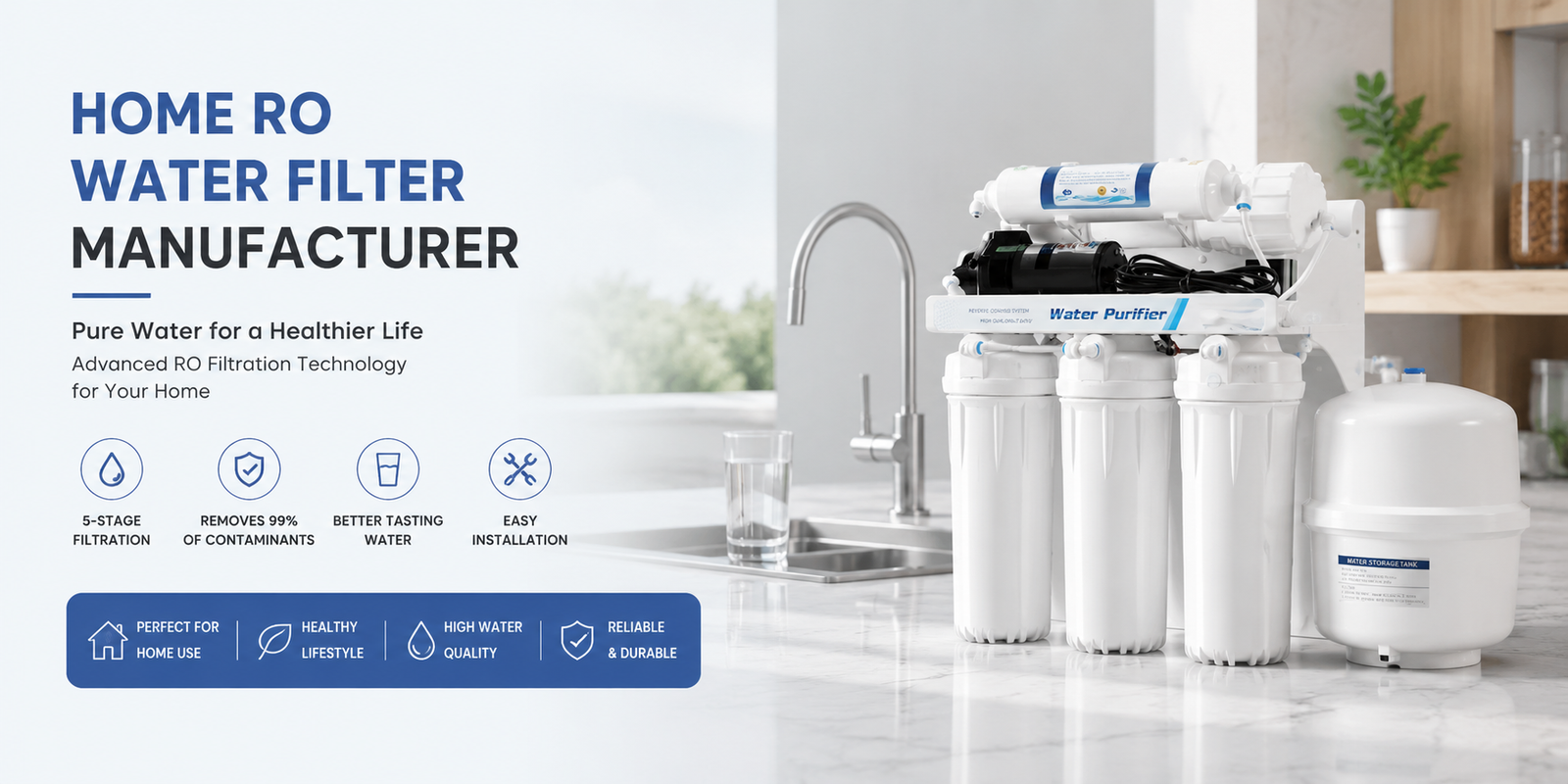
An RO water filter for home manufacturer worth building a private-label program around will show you three things before you send a deposit: named component sources, a written production timeline, and mold/tooling ownership terms. Skip any one of those three and you’re sourcing on trust, not documentation.
Before you commit to a purchase order, confirm:
- Component-level test data — TDS rejection rate and contaminant reduction figures, tied to a stated feed-water concentration, not a rounded marketing percentage
- Named RO membrane and carbon media used at each filtration stage — not a single-line finished-unit spec sheet
- A written production timeline from sample approval to container loading
- Clear mold/tooling ownership for any custom faucet, housing color, or private-label packaging
Buyers who don’t ask for these upfront usually only find out what they bought once the first support tickets come in.
Fast Check Product: https://yourwatergood.com/product/ro-water-purifier/
Manufacturer vs. Trading Company: How to Tell Which One You’re Actually Buying From
A large share of “manufacturer” listings importers find online are trading companies reselling factory output under a different name. That layer adds a markup and removes your ability to request engineering changes.
A real production source answers these without hesitation:
- Which specific RO membrane and carbon block brands ship in the unit
- Whether housing tooling is shared across accounts or dedicated to yours
- How they confirm unit-to-unit consistency across a production run of several hundred pieces
- What lab testing backs the TDS rejection number on their spec sheet, and under what feed concentration it was measured
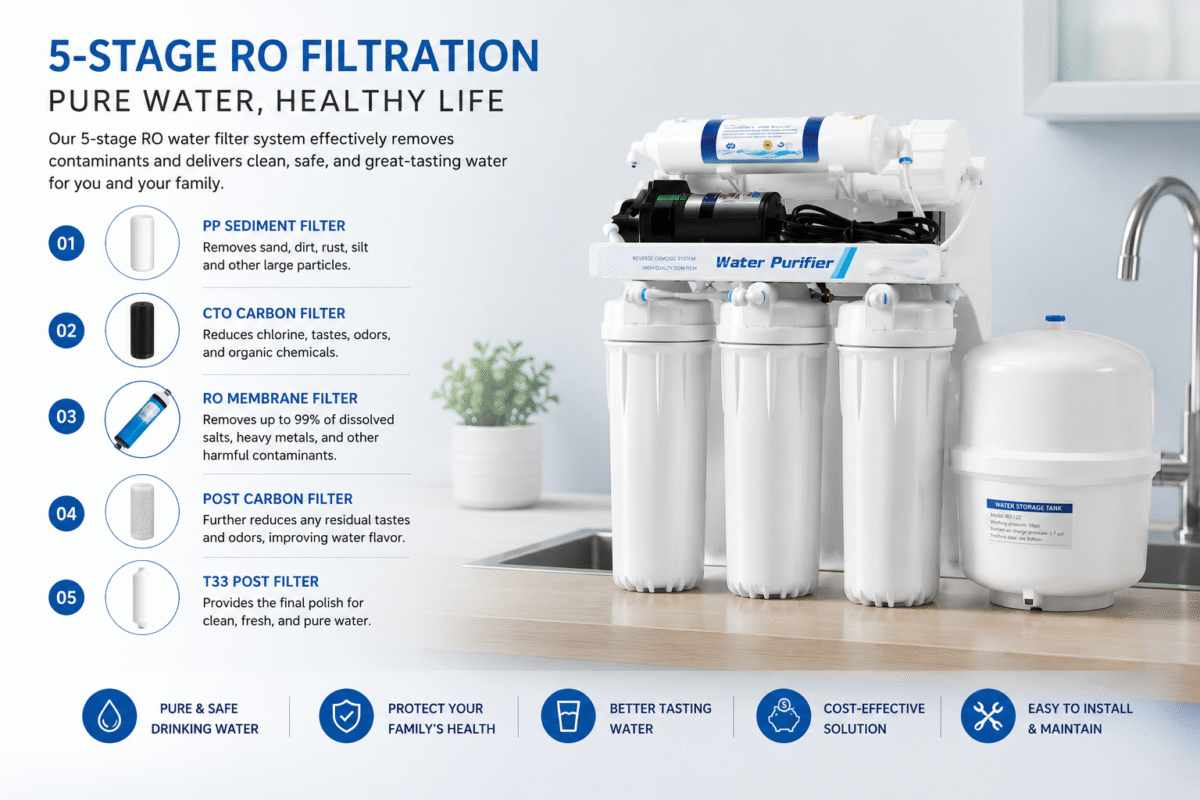
On a standard 5-stage RO water filtration system, that transparency needs to cover the full stack: a fine-graded PP/FPP sediment stage, a compressed-carbon (CTO) stage for chlorine and taste, a secondary polishing stage, the RO membrane itself, and a coconut-shell post-carbon stage for final taste correction. A supplier who can name the media in each of those five filter cartridge positions is quoting you an engineered system. One who can’t is quoting you a box.
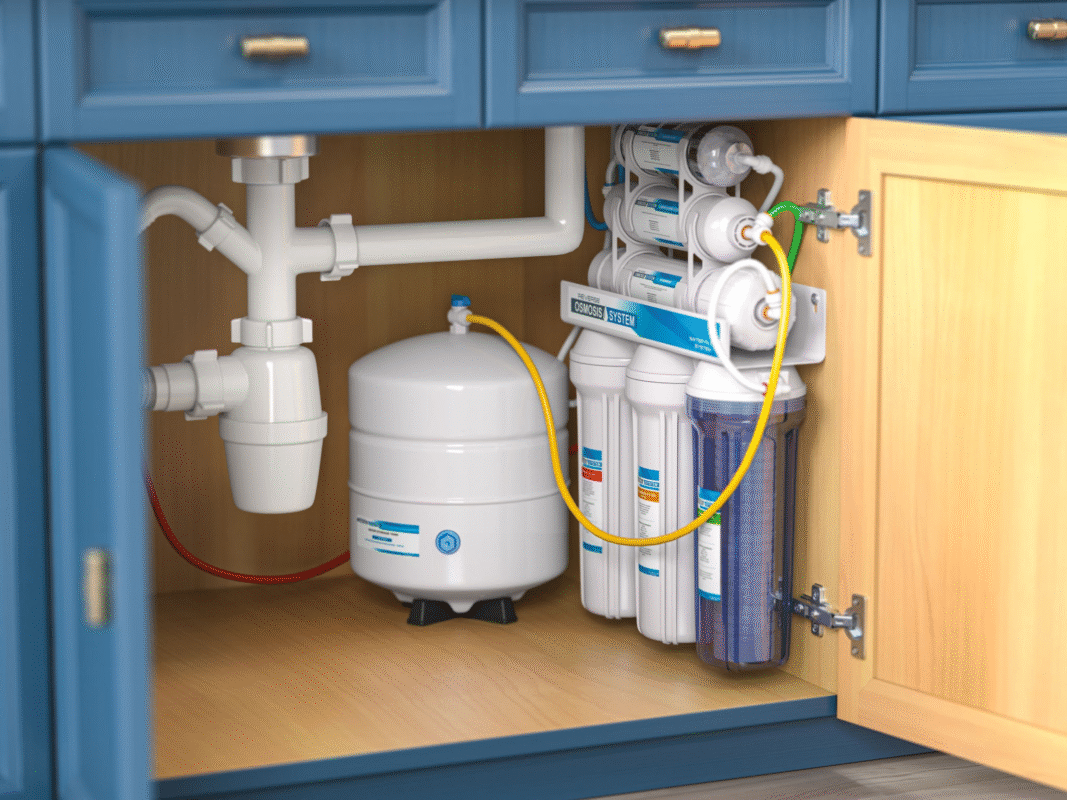
The under-sink RO format specifically leaves little room for shortcuts — a compact housing means an undersized pre-filter cartridge fouls faster than it would in a bigger point-of-entry skid, so replacement-interval numbers need to be tested against the actual enclosure, not borrowed from a larger system’s data sheet.
A production source should also be able to walk you through a realistic order timeline in one conversation: spec confirmation, a sample round, mass production, and a pre-shipment inspection before the container seals. If that sequence takes several emails to piece together, or the dates keep shifting once you ask for them in writing, treat that as a preview of how the rest of the relationship will run — not an isolated scheduling issue.
Private-Label Program Structures: Off-the-Shelf Wholesale vs. Full OEM/ODM
Not every private-label launch needs custom tooling on day one. Knowing which tier you’re actually buying — before you commit to a MOQ — is what keeps a first order from turning into a budget surprise.
| Factor | Off-the-Shelf Wholesale | Full OEM/ODM Support |
|---|---|---|
| MOQ | 30–100 units, existing housing/spec | 300–500+ units for custom tooling |
| Lead Time | 2–3 weeks from stock | 5–8 weeks including tooling and sample approval |
| Mold/Tooling Fee | None — shared housing | One-time fee, amortized once volume threshold is reached |
| Technical Drawing Support | Generic spec sheet only | Full dimensional drawings, cartridge cross-reference data |
| Packaging/Branding | Label overlay only | Custom box, insert cards, private-label faucet marking |
Request a Factory Component Blueprint before you lock in a tier — it shows the actual membrane, carbon, and housing drawings behind each row, instead of a sales sheet’s summary of them.
Sizing a Home RO System for U.S. Feed Water: GPD, GPM, PSI, and TDS
An RO water filter for home manufacturer selling into the U.S. residential channel has to design for two very different feed-water conditions, not one.
Municipal tap water is treated under the EPA’s Safe Drinking Water Act framework for biological safety at the utility level, but the chlorine and chloramine added to meet that standard are also the leading cause of premature membrane and seal degradation downstream. Carbon pre-treatment sized for the actual chlorine load isn’t optional.
Well water introduces a different set of variables — hardness, dissolved iron, and swinging pH show up far more often than on municipal supply. A system engineered only around city-water assumptions will scale or foul within weeks once it’s installed on groundwater.
On the numbers:
- Most home-channel import orders fall in the 400–800 GPD range for tankless under-sink builds — the right number depends on household size and fixture count, not a catalog default.
- GPD is a theoretical 24-hour capacity figure; GPM is what the faucet actually delivers on demand. Spec to GPM if the target household runs multiple fixtures at once.
- Residential feed pressure typically runs 40–85 PSI. Below that range, the system needs a booster pump engineered in from the start, not sold separately as an afterthought.
- TDS rejection should always be quoted against a stated feed ppm — a bare rejection percentage with no reference concentration is a marketing number, not a spec.
The Component Failure Point Warranty Desks See Most
Here’s a detail that never shows up on a quote sheet: the O-ring compound sealing the housing and membrane vessel.
Low-grade O-ring material micro-leaks the moment a unit cycles between a cold well-water feed and a warm utility closet — thermal expansion and contraction open a gap that a dry factory test never catches. The failure shows up in the field, months after installation, as a slow drip that a homeowner reports as “the unit is broken.”
A related issue sits upstream of that: the binder used to compress a carbon-block cartridge. A cheap binder swells slightly once wetted, narrowing the flow channel and pulling entry-side PSI down before water reaches the membrane — quietly shortening the membrane’s service life well below its rated spec.
Get the Warranty-Risk Component Checklist — a one-page rundown of the O-ring, binder, and housing specs that separate a low single-digit return rate from a double-digit one.
What OEM Engineering Support Actually Protects: Margins, Uptime, and Your Brand
None of this is abstract once units are in customers’ homes. It shows up on four specific line items:
- Lower warranty claims — components chosen for consistency instead of unit cost mean fewer failures inside the coverage window
- Operational stability — a membrane and pre-filtration stack matched to the actual feed water holds its rated output instead of degrading early
- Water consistency — unit #1 and unit #500 in a production run need to deliver the same TDS rejection, not a “close enough” spread
- Brand equity protection — a field failure becomes a one-star review against your label, not the factory’s, so engineering support upstream is what keeps that review from happening in the first place
For a brand owner comparing quotes on price alone, these four items are exactly what gets traded away first — and exactly what a customer notices last, usually eighteen months into ownership, well past the point where a cheap unit price still looks like a good decision.
FAQ
1. What MOQ should I expect for a first private-label RO water filter for home order? Off-the-shelf builds typically start at 30–100 units. Custom tooling — a proprietary faucet or housing color — usually needs 300–500 units to justify the mold cost.
2. How long does a first OEM sample take to approve? Plan for one sample round at 2–3 weeks, plus revisions if the spec changes. Full production doesn’t start until the sample is signed off in writing.
3. Can the same 5-stage platform work for both city water and well water customers? Yes, with pre-filtration adjusted. Municipal builds prioritize carbon capacity for chlorine; well-water builds need upgraded sediment stages and, in high-iron regions, oxidative pre-treatment ahead of the membrane.
4. What’s the practical difference between GPD and GPM when comparing supplier spec sheets? GPD is a theoretical 24-hour output number. GPM is the real flow rate at the faucet. Size to GPM if the target household draws water from multiple fixtures at once.
5. What test data should a manufacturer share before I place a deposit? Ask for TDS rejection and contaminant-reduction figures tied to a stated feed concentration, plus the membrane and carbon media specifications — not just a finished-unit summary sheet.
6. What happens if a batch fails incoming QC after it lands in a U.S. warehouse? This needs to be defined in the purchase agreement before production starts — specifically who covers freight on a rework versus a full reship, and the inspection window you have to file a claim.
7. Can I get a technical parameter sheet before placing a deposit? Yes — treat any supplier unwilling to share one pre-deposit as a sourcing risk, regardless of the unit price quoted.
Stop sourcing against a sales sheet and start sourcing against engineering data. Request your Custom OEM Quote, a full Technical Parameter Sheet, and tiered B2B Wholesale Pricing for your next production run from a direct RO water filter for home manufacturer — before your next PO locks you into a spec you haven’t actually verified.