
Commercial Water Filtration Systems — The Complete Guide for Buyers, Facilities Managers, and Operators

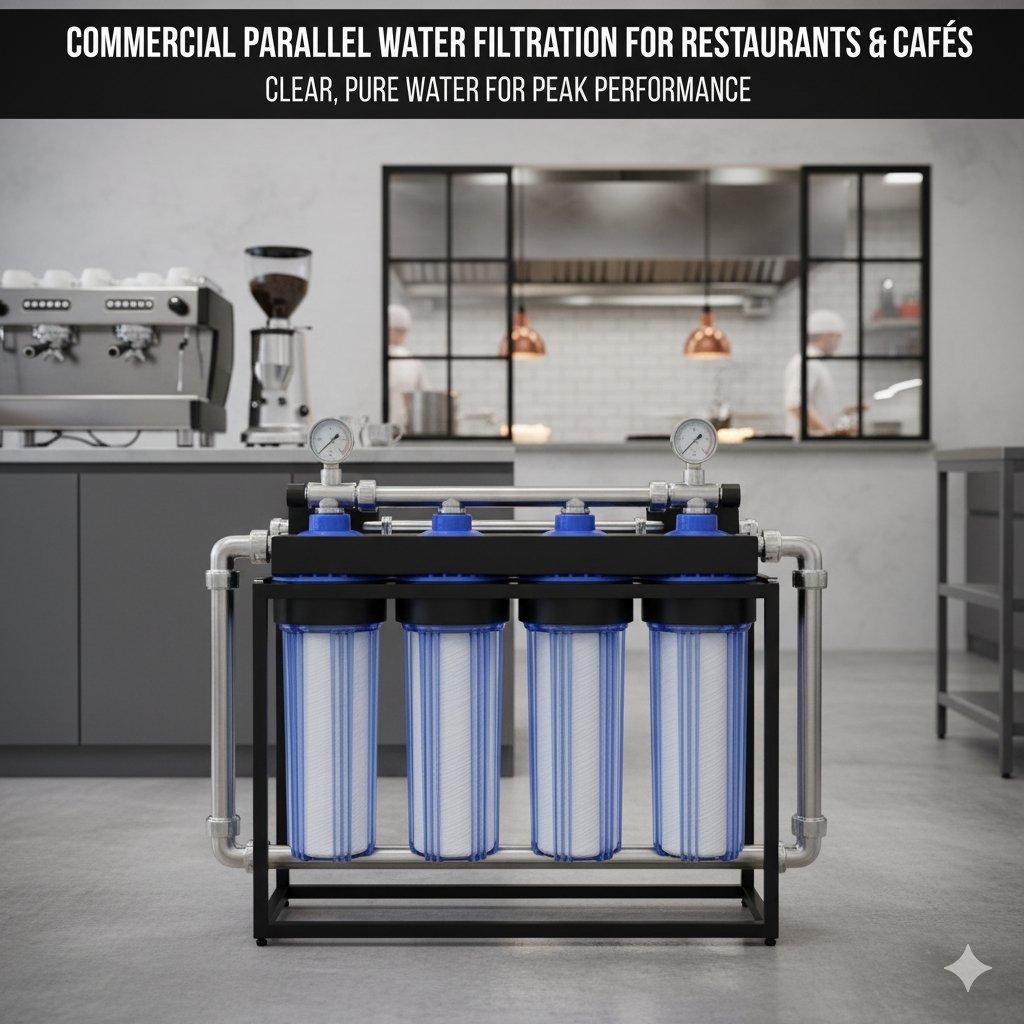
This topic is covered in full in our main guide: Inline Water Filter System for Business — The Complete Guide for Commercial Buyers, Facilities Managers & Owners.
Clean, reliable water is mission-critical for many businesses: restaurants, hotels, cafés, breweries, medical and dental offices, laundries, manufacturing lines, and office campuses all depend on water quality for safety, product consistency, equipment longevity, and regulatory compliance. Installing the right commercial water filtration system requires careful decisions about technology, capacity, redundancy, ongoing service, and total cost of ownership (TCO). This guide walks you step-by-step through technology choices, real-world sizing and costing, procurement and contracting best practices, service models, compliance and certification concerns, and a practical checklist you can use to evaluate vendors and proposals.
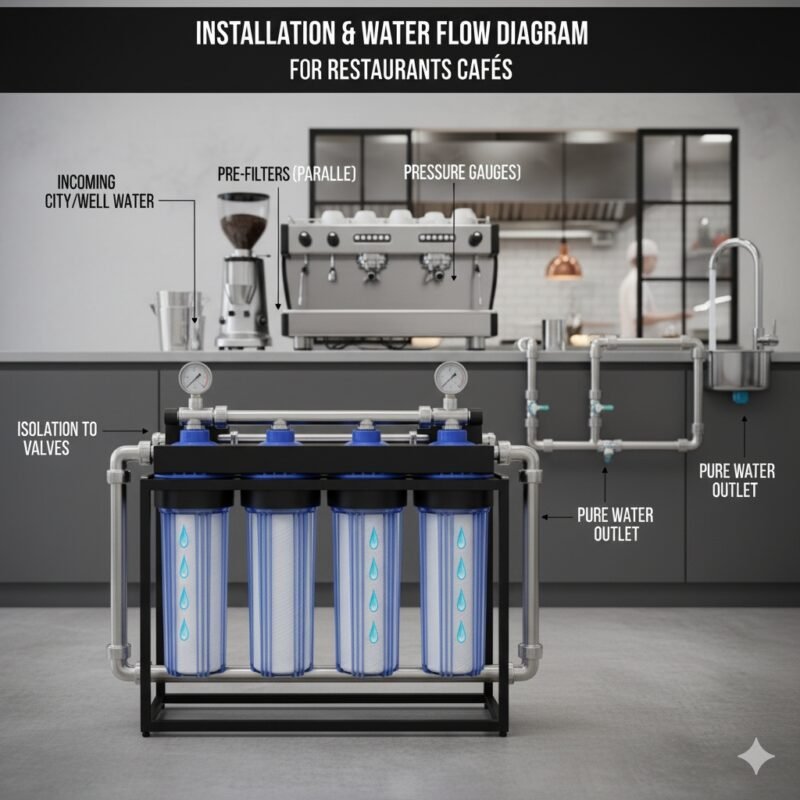
Use this guide as a playbook when you write an RFP, meet with suppliers, or plan a pilot. For a concrete example of a turnkey whole-building solution to benchmark features and specs during vendor conversations, consider reviewing a commercial whole-house product while you compare proposals: 2-stage water filter for business. (yourwatergood.com)
Why businesses need commercial-grade filtration (not residential gear)
Commercial water requirements differ from residential in four important ways:
- Scale and flow. Businesses demand continuous volume and high peak flow (GPM) that residential units aren’t designed to sustain.
- Duty cycle and durability. Continuous operation, aggressive cleaning cycles and heavier particulate loads require industrial-grade pumps, housings and service models.
- Product consistency and liability. For foodservice, beverage, labs or healthcare facilities, water quality directly affects product taste, safety, and compliance — inconsistent water harms brands and can incur fines.
- Serviceability and SLAs. Businesses need fast response times, predictable maintenance windows and spare-part availability — downtime costs money.
Because of these differences, commercial projects are engineered rather than bought off a retail shelf. Expect site surveys, water testing, performance guarantees, and proposals tied to measurable KPIs (e.g., maximum TDS, GPM at X PSI, or iron < Y mg/L).
Types of commercial water filtration systems — which technology for which problem
Commercial filtration is a toolkit. The right selection depends on the water chemistry and the business use-case.
Point-of-use (POU) filters
- Compact under-counter or dispenser units delivering treated water to a single tap or appliance (espresso machine, beverage dispenser). Great for offices, cafés, or labs requiring localized high-quality water without building-wide plumbing changes.
Point-of-entry (POE) / whole-building systems
- Installed where water enters the building to protect all downstream points. Typical for hotels, restaurants, multi-tenant buildings and manufacturing sites that want treated water at every faucet, shower and appliance.
Commercial Reverse Osmosis (RO) systems
- High-capacity RO frames (skids) with pumps, membranes, storage tanks and controls to remove dissolved solids, hardness and many contaminants. Widely used in beverage production, labs, restaurants, laundry operations, and any application requiring low-TDS water.
Ultrafiltration (UF) and Microfiltration (MF)
- Membrane systems that remove particles and microbes without RO’s wastewater footprint — useful as pre-treatment for RO or as a stand-alone for process water.
UV disinfection
- Effective for microbial control in well water or process lines; always installed after adequate pre-filtration to avoid lamp fouling.
Water softeners and antiscalant dosing
- Protect boilers, heat exchangers, and steam equipment from scale; often paired upstream of RO systems.
Hybrid packaged skids
- Commercial packages combine sediment → carbon → softening → UV → RO into a single skid for turnkey installations in restaurants, microbreweries and healthcare facilities.
Start with a professional water test — the single best first step
A lab water analysis drives every other decision. A typical commercial test should measure TDS, conductivity, hardness, pH, chlorine/chloramines, iron, manganese, nitrate, sulfate, turbidity, microbiology (total coliform / E. coli where relevant), and any site-specific contaminants (PFAS, VOCs, heavy metals) identified by local sources or history.
Don’t design a system by guesswork. Professional suppliers or independent labs can collect and analyze samples; vendors should base their proposals on your lab data and list assumptions (feed TDS, temperature, and pressure) used in sizing. This reduces surprises and ensures proposed membranes, media and pre-treatment steps will last as claimed.
Sizing: flow, daily volume, peak demand & redundancy
Correct sizing prevents undersized systems (poor performance) or oversized capital expenditures. Key metrics:
- Peak flow (GPM): Estimate simultaneous draws — kitchens, showers, laundry, HVAC, and manufacturing lines can create high peaks.
- Average and peak day volume (GPD): Important for RO membrane selection and storage sizing.
- Required output quality: Define measurable targets (e.g., permeate TDS ≤ 50 ppm, chlorine < 0.1 ppm, turbidity < 0.2 NTU).
- Pressure & temperature: Ensure site supply pressure meets equipment requirements or include booster pumps.
- Redundancy: For mission-critical sites, specify N+1 pump/membrane redundancy and bypass arrangements so service doesn’t interrupt operations.
Vendors should produce a piping and instrumentation diagram (P&ID) and a sizing worksheet that translates your use case into equipment specs (membrane counts, pump horsepower, tank sizes).
Realistic cost ranges & what moves the needle
Commercial water system costs are broad because capacities and complexity vary dramatically. Use these planning numbers only as starting guardrails — get tailored quotes.
- Small POU commercial units (single appliance / small café): hundreds to low thousands of dollars equipment costs. (Manufacturer catalog examples show small commercial RO and POU solutions in the low-thousands range.)
- Mid-range packaged commercial systems (restaurant / small hotel): $2,000–$25,000. These often include pre-treatment, RO membranes sized for beverage lines, storage tanks and basic controls.
- High-flow or industrial skids (large hotels, beverage plants, manufacturing): $10,000–$100,000+ depending on GPM, redundancy, automation, and waste-management features. Enterprise solutions with staged RO and concentrate reuse can reach six figures.
Installation, electrical work, civil/site prep, permits and commissioning commonly add 20–50% to equipment costs. Always ask vendors to separate equipment, labor, permits and commissioning in their quotes.
(Price references: progressive commercial RO product listings and industry cost guides show a wide spread — use these to sanity-check vendor proposals.)
The RO “waste” problem (and mitigation strategies)
Reverse osmosis produces a concentrate (reject) stream. Simple domestic RO systems often operate at 20–50% recovery — meaning 1–4 gallons of concentrate per gallon of permeate. At commercial scale, untreated concentrate can significantly increase water usage and drain loads. For businesses on metered water or septic systems, that matters.
Mitigation approaches:
- High-recovery membranes and staged RO — increase recovery with careful staging and anti-scaling pretreatment (raises capital cost but reduces waste).
- Permeate pumps & energy recovery devices — improve recovery and reduce backpressure on membranes.
- Concentrate reuse — route reject for irrigation, toilet flushing, or process make-up where local codes allow (requires plumbing and possibly treatment).
- Optimize pretreatment to minimize fouling and allow higher recovery without frequent membrane cleaning.
Ask vendors to model expected permeate-to-reject ratios for your feedwater TDS and design temperature — avoid generic “low-waste” claims without numbers.
Key certifications and third-party testing you should demand
Certifications give customers and regulators confidence. For commercial systems, insist on:
- NSF/ANSI standards relevant to claimed reductions and components (e.g., NSF/ANSI 42/53 for adsorption/health claims; NSF/ANSI 58 for RO systems). Certification confirms independent test protocols and scopes. (NSF)
- Electrical safety approvals (UL/ETL) for pumps and control panels.
- Manufacturer test reports — flow vs. pressure curves, membrane rejection curves at specified conditions, and leak/pressure tests.
- Material declarations (food-contact approvals where applicable).
Don’t accept vague “meets standards” copy — request certificates and lab test reports for the exact assembled SKU you’ll receive (private-label or custom assemblies may require separate listing).
Operations & maintenance (the recurring cost model)
O&M drives lifetime cost. Typical elements to budget:
- Filter and media replacements. Sediment and carbon pre-filters may be monthly to quarterly; RO membranes typically 2–5 years depending on load and pretreatment. Budget both parts and labor.
- UV lamp & sleeve changes. Annually for UV systems.
- Pump and motor service. Bearings, seals and electronics require periodic attention.
- Consumables & chemicals. Antiscalants, disinfectants, softener salt where used.
- Service contracts. Many businesses buy annual service agreements covering scheduled preventive maintenance, emergency response, and replacement parts. Service contracts smooth cashflow and reduce downtime risk.
Ask vendors for a 5-year TCO projection that breaks down estimated filter, membrane and service costs annually — then compare proposals on TCO, not just sticker price.
Procurement strategy: RFP structure and evaluation criteria
A strong RFP produces comparable bids and reduces procurement risk. Include:
- Site information — water test data, peak/average flows, pressure, temperature and floor plan.
- Performance requirements — specific contaminant limits, required GPM at X PSI, acceptable recovery ratios, redundancy and bypass requirements.
- Deliverables — equipment list (brands/models), P&ID, wiring diagrams, installation scope (who supplies freight, permits, civil work) and commissioning procedure.
- Testing & acceptance — on-site acceptance tests (TDS sample, flow test), and criteria for sign-off.
- Warranty & SLAs — define warranty duration, response times for critical failures, and escalation steps.
- Spare parts & consumables — list of recommended spares, lead times and pricing.
- Total cost — separate equipment, installation, first-year consumables and 5-year O&M.
- References & case studies — ask for similar installations in the same industry and region.
Evaluate proposals on technical fit, documented test results, lifecycle cost, local service capability and contract terms — not only lowest initial price.
Vendor selection & installation best practices
- Prefer vendors that perform on-site surveys before final proposals rather than quoting from photos or descriptions.
- Inspect P&IDs and control logic — automated flush cycles, alarms, and auto-failover are valuable in commercial settings.
- Require factory acceptance testing (FAT) for complex skids when practical; it reduces field commissioning issues.
- Plan for commissioning and operator training — knowledgeable on-site staff reduces future service calls.
- Use licensed contractors for plumbing and electrical — certifications and permits protect you.
Include acceptance testing in the payment schedule — with final payment tied to passing defined tests.
Service models: in-house vs vendor-managed
You can operate systems two ways:
In-house maintenance
- Pros: lower long-term cost if you have qualified staff; full control.
- Cons: requires trained technicians, spare-part inventory and disciplined preventive maintenance.
Vendor-managed service
- Pros: guaranteed SLAs, predictable costs, less internal burden. Vendors often combine equipment sale with service contract for continuity.
- Cons: recurring cost and dependency on vendor reliability.
Hybrid models (train internal staff + vendor for annual service/critical support) are common for mid-size businesses.
Case studies & practical examples
- Coffee shop chain (3 locations): small POU RO units for espresso lines + centralized softening to protect boilers. Capital: modest; O&M: monthly pre-filter swaps, annual membrane change per aggregated usage; ROI via fewer machine failures and consistent coffee taste.
- Boutique hotel: whole-building sediment → carbon → UV protection + point-of-use RO at kitchen bars. Capital: mid-range; value: guest satisfaction and lower linen/fixture staining.
- Microbrewery: high-capacity RO skid for process water producing consistent product across batches; paired with CIP (clean-in-place) compatible pumps and local service contract.
Vendor catalogs and commercial product listings illustrate price bands and common configurations — use them to validate vendor quotes rather than as definitive pricing.
Common pitfalls and how to avoid them
- No water testing before purchase. Leads to underspecified pretreatment and premature membrane failure.
- Ignoring peak flow needs. Undersized storage or pumps produce low pressure at critical times.
- Skipping redundancy. Single points of failure cost more in downtime than extra upfront spend on spares.
- Not accounting for reject water. Unexpected sewer or septic loads produce increased bills or compliance issues.
- Vague warranty & acceptance criteria. Define measurable acceptance tests and clear remedies for underperformance.
Avoid these by insisting on test data, P&IDs, acceptance testing, and clear contractual SLAs.
Quick checklist to use with vendors
- Provide lab water test and site utility details.
- Request P&ID and control narrative.
- Get flow guarantees (GPM at X PSI) and TDS/permeate quality guarantees.
- Ask for expected membrane life (gallons or years) and replacement pricing.
- Confirm recovery ratio and projected reject volume (GPD).
- Verify local service capability and spare-part lead times.
- Insist on FAT or site acceptance tests and tie final payment to passing them.
- Compare 5-year TCO across proposals, not just capex.
Conclusion — buy performance, not promises
A commercial water filtration system is an operational asset. The right purchase balances performance, lifecycle cost, and risk. Start with a water test, define measurable performance goals, insist on documented test data and certifications (NSF where applicable), and evaluate proposals on total cost of ownership and service model quality. For quick reference or to benchmark technical specs during evaluation, review commercial whole-house product listings to compare capacity, staging, and maintenance schedules — for example, a business-grade whole-house unit you can use as a technical comparison during supplier discussions: 2-stage water filter for business. (yourwatergood.com)