
5-Stage Reverse Osmosis Water Filter: The Buying Guide

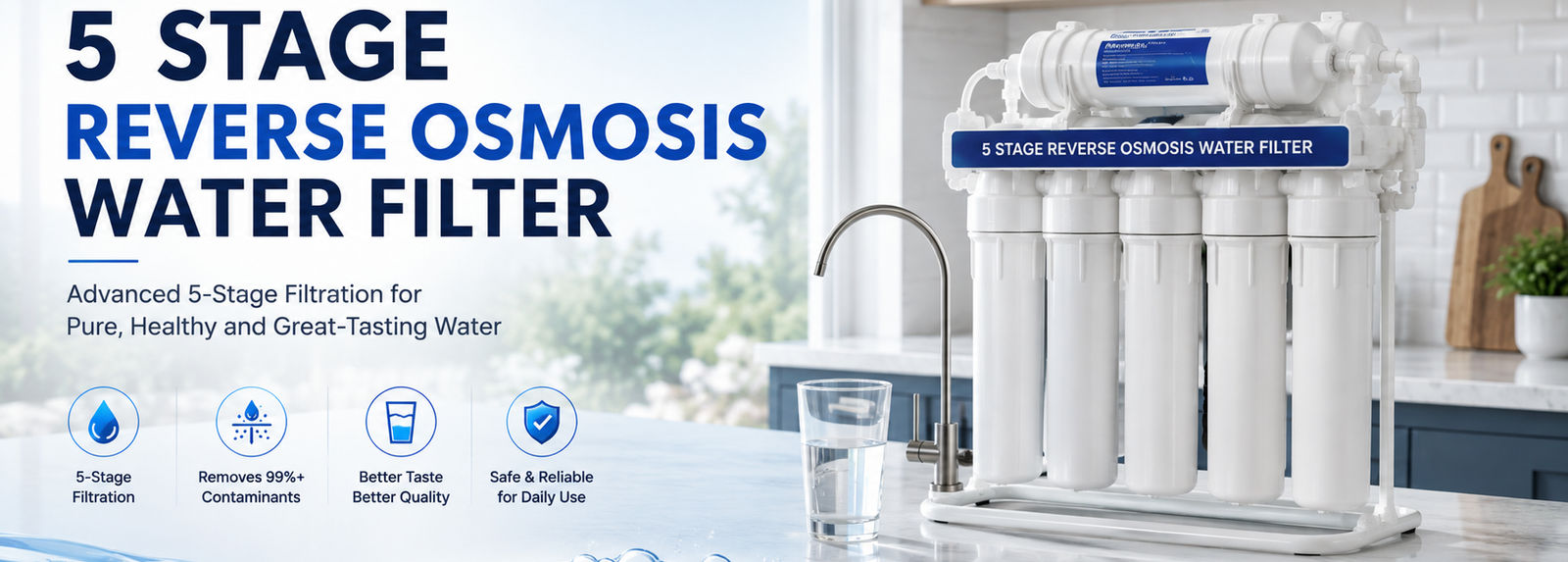
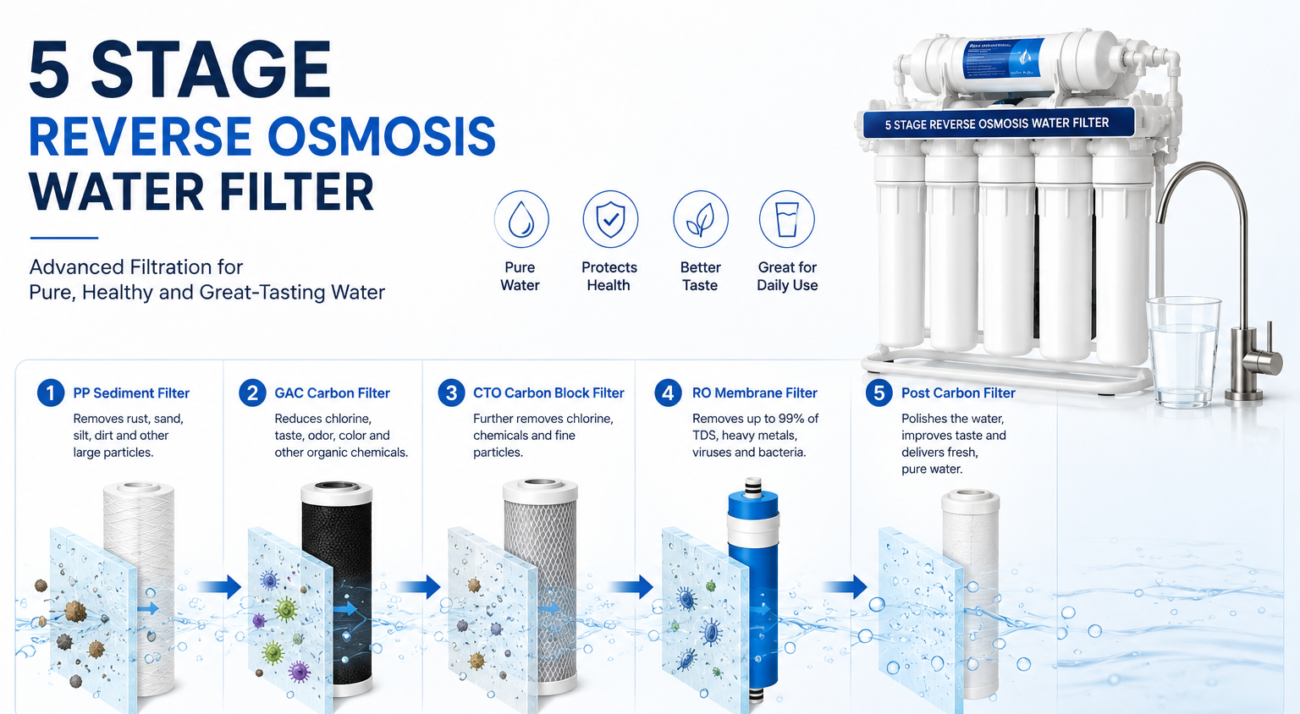
If you’ve already decided a 5-stage reverse osmosis water filter is what you want, the question isn’t “what is RO” anymore — it’s which capacity, tank size, and configuration actually fits your household. Briefly: RO filtration pushes water through five stages, ending in a membrane fine enough to remove most dissolved solids. If you want the full breakdown of what each stage does and whether RO is the right category for you at all, that’s covered in our intro guide. From here, this page assumes you’re past that and picking a model.
What actually separates a good pick from a bad one:
- GPD capacity — matched to your household’s actual usage, not the biggest number on the box
- Storage tank size — or lack of one, if you’re considering a tankless design
- Real filter replacement costs — not just the sticker price of the unit
- Install requirements — under-sink space, water pressure, drain access
- What’s actually true vs. marketing — covered in the myth section below, because a lot of buying decisions get made on bad information
Fast Check Product: https://yourwatergood.com/product/5-stage-ro-water-filter-for-home-busines/
How to Pick the Right GPD Capacity
GPD (gallons per day) measures how much filtered water a system can produce over 24 hours — not how “strong” the filtration is. A 400 GPD and an 800 GPD unit using the same membrane grade remove the same contaminants; the higher number just refills faster.
As a general framework — confirm the exact rating against the specific model you’re comparing:
| Household / Use Case | Typical GPD Range | Notes |
|---|---|---|
| 1–2 people, light use | 400 GPD | Standard under-sink footprint, slower refill |
| 3–4 people, regular cooking use | 600 GPD | The most common residential pick |
| 4+ people or frequent simultaneous draws | 800 GPD | Faster recovery between uses |
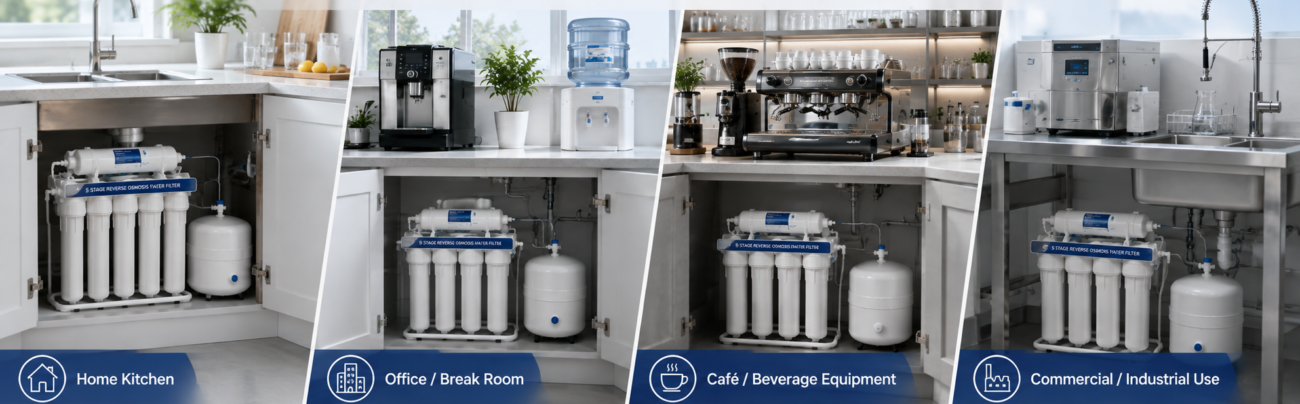
| Small office or single-tap business use | 600–800 GPD | For multi-station commercial setups, see our business-specific page |
Oversizing isn’t harmful, but it’s often paying for refill speed you’ll never notice. Undersizing is the more common mistake — running out of stored water mid-dinner-prep because the tank can’t refill fast enough.
Storage Tank Size: What You Actually Need
Most 5-stage systems store filtered water in a 3–4 gallon pressurized tank under the sink, since the membrane produces water slower than a tap runs. A few things worth checking before you buy:
- Usable capacity is lower than the tank’s rated size — pressure tanks typically deliver less than their full volume before pressure drops noticeably.
- Tankless designs exist and filter on demand, trading a smaller footprint for a slower fill rate at the tap.
- Under-sink clearance matters more than people expect. Measure before you buy, not after it arrives.
What This Actually Costs
Two separate numbers matter here, and sellers tend to only advertise one of them:
- Unit price — the upfront cost of the system itself.
- Filter replacement cost — sediment and carbon filters typically get replaced every 6–12 months; the RO membrane lasts longer, often several years, depending on your water quality and usage.
A cheaper unit with expensive, frequently-replaced filters can cost more over three years than a pricier system with a better filter lifespan. When you’re comparing models, ask for the replacement filter price, not just the box price.
If you’re specifically trying to work out payback period against bottled water spending, that math is covered separately on our cost and ROI page rather than repeated here.
Pre-Purchase Checklist
Before you check out, confirm:
- GPD rating matches your household or business usage pattern
- Tank size fits your actual under-sink clearance
- Filter replacement cost and interval are disclosed up front, not buried in fine print
- Drain and water line access exist where you plan to install it
- Warranty length and what it actually covers
- Whether a UV sterilization stage is available as an add-on — worth asking about specifically if you’re on well water, since it’s typically a build option rather than standard
- Whether the seller provides install and troubleshooting support after purchase
Myth vs. Reality
Myth: “0 ppm TDS on the meter means the best possible water.” Reality: it means the membrane is doing its job removing dissolved solids — including minerals. It’s a sign the system is working, not a quality score to chase for its own sake.
Myth: “RO water is unhealthy because it strips out minerals.” Reality: the mineral contribution from drinking water is small next to what you get from food. If mineral content matters to you personally, look for a model with a remineralization stage rather than avoiding RO altogether.
Myth: “A bigger GPD number always means a better system.” Reality: it means a faster refill rate. Filtration quality comes down to the membrane and filter stages, not the GPD figure by itself.
Myth: “All 5-stage systems are basically the same, so buy the cheapest one.” Reality: filter media quality, membrane brand, and tank build quality vary a lot between budget and mid-range units — and it usually shows up in filter lifespan and leak rate, not day-one performance.
Myth: “You need a plumber to install one.” Reality: most systems are designed for a straightforward DIY install with basic tools in under two hours. A plumber is a fine option if you’d rather not do it yourself — it’s a preference, not a requirement.
FAQ
What size RO system do I need for a family of 4? 600 GPD is the most common fit for a household that size with regular cooking and drinking use. 800 GPD makes sense if multiple people draw water at the same time often.
How often do I need to replace the filters? Sediment and carbon filters typically need replacement every 6–12 months. The RO membrane usually lasts longer — often several years — depending on your incoming water quality.
Do I need a booster pump if my water pressure is low? If your incoming pressure is below roughly 40 PSI, a booster pump helps the membrane perform at its rated output. Check your home’s water pressure before buying if you’re unsure.
What’s the difference between a 400 GPD and 800 GPD system? Refill speed, mainly. Both remove the same contaminants at the same filtration grade — the higher number just means the tank refills faster after use.
Can I install this without a plumber? Yes, in most cases. It’s a common DIY project with basic tools, though hiring a plumber is a reasonable choice if you’d rather not work on your water line.
Is a storage tank necessary, or can I get a tankless system? Both exist. A tank buffers filtered water for faster tap delivery; a tankless design saves space but delivers water more slowly on demand.
Can I add UV sterilization to my system? On many systems, yes — it’s usually offered as a build option rather than a standard inclusion, and it’s worth asking about directly if you’re on well water.
Ready to Compare Models
If your household is dealing with hard water scale, chlorine taste, or you’ve just decided bottled water isn’t worth the cost anymore, the next step is matching GPD and tank size to your actual usage — not the biggest spec on the page.
For a health-specific breakdown (PFAS, lead, baby formula water), see our dedicated guide. For a commercial or small-business setup, see our business page instead of this one.
You can check current specs and the UV add-on option on our 5-stage reverse osmosis water filter product page.