
What Is The Best Under Sink Water Filter — How To Choose, Test, And Buy With Confidence

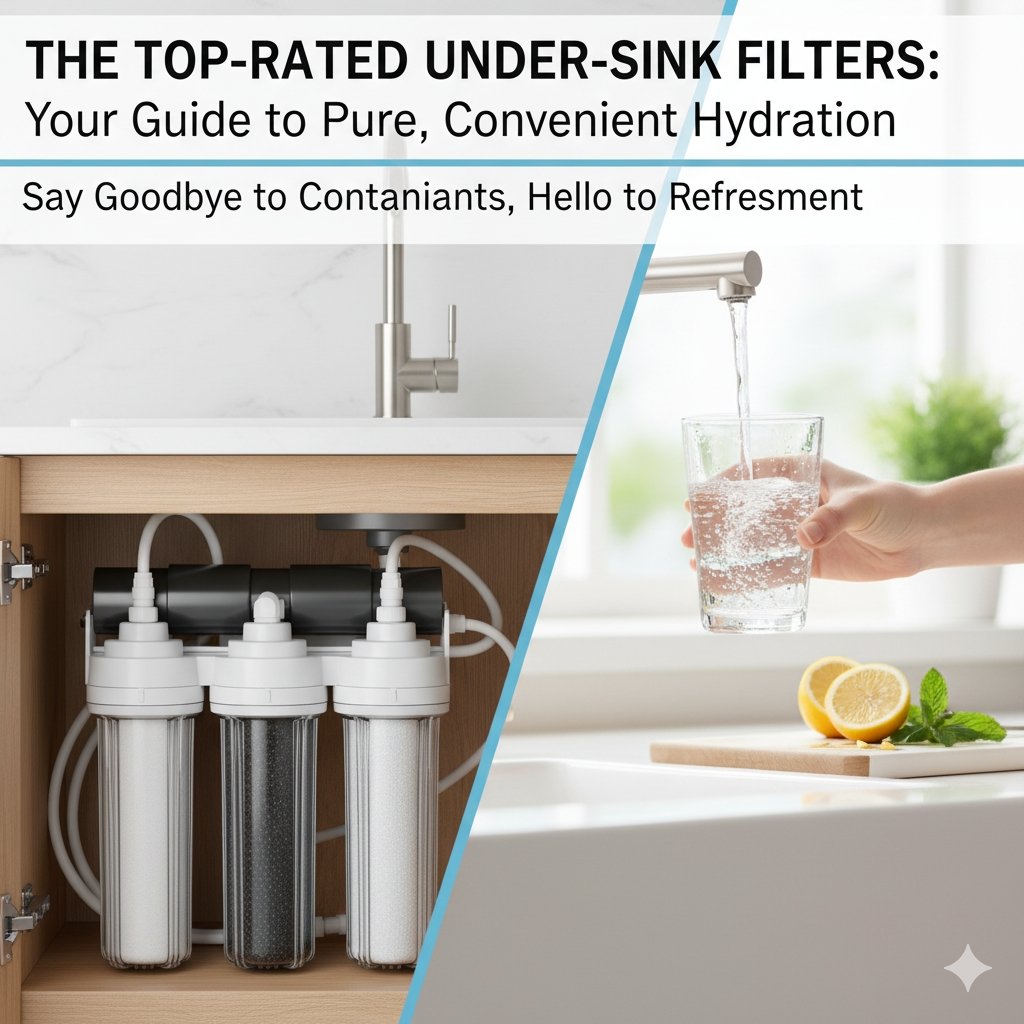
When you ask what is the best under sink water filter, what you’re really asking is: which system will give you the cleanest, safest, and most cost-effective drinking water for your household? The truthful and useful answer begins with two words: test first. Different contaminants demand different treatment technologies, and the “best” under-sink solution is the one that matches your water quality, budget, space, and maintenance tolerance.
This 3,000-word article walks you through the full decision journey. You’ll learn how to test and interpret your water, the strengths and limits of common under-sink technologies (carbon-only, reverse osmosis, ultrafiltration, remineralizers, UV), what certifications to insist on, installation and maintenance realities, environmental tradeoffs, and a practical buying checklist. After reading, you’ll be able to short-list 2–3 certified models and confidently pick the best under-sink water filter for your needs. For model specs and product catalogs, you can compare offerings at https://yourwatergood.com/.
Quick summary (one sentence)
The best under-sink water filter is the one that is certified to remove the contaminants present in your water report, fits your flow and space requirements, has transparent replacement costs, and is backed by clear third-party testing and warranty support.
1. Why “best” depends on your water — test before you buy
If you buy any under-sink filter without a water test you risk two problems: overspending on capabilities you don’t need, or under-protecting against real hazards. Start here:
- Municipal customers: download your Consumer Confidence Report (CCR) from your water supplier. It lists regulated contaminants and typical concentrations.
- Private well owners: a certified laboratory test is essential — include bacteria (coliform/E. coli), nitrates, lead, arsenic, hardness, TDS, iron, and pesticides if relevant.
- Home test kits: useful for quick checks (hardness strips, chlorine, lead screens), but not a replacement for lab testing when health decisions hinge on results.
Record exact concentrations and note episodic issues (seasonal turbidity, metallic taste after storms). Those numbers are the core input to answering what is the best under sink water filter for you.
2. Under-sink filter types: what they remove and when each is best
Under-sink systems vary widely. Below are the main types and real-world use cases.
A. Activated carbon under-sink filters (single or multi-stage)
What they remove: chlorine, taste and odor, many VOCs and certain herbicides/pesticides, some lead (if carbon block rated for lead).
Best when: your mains water shows chlorine taste/odors or low-level organics; CCR shows no serious dissolved metals or very high TDS.
Pros: low cost, easy installation, no wastewater, minimal maintenance.
Cons: limited against dissolved salts, nitrates, fluoride, and certain heavy metals unless specifically certified.
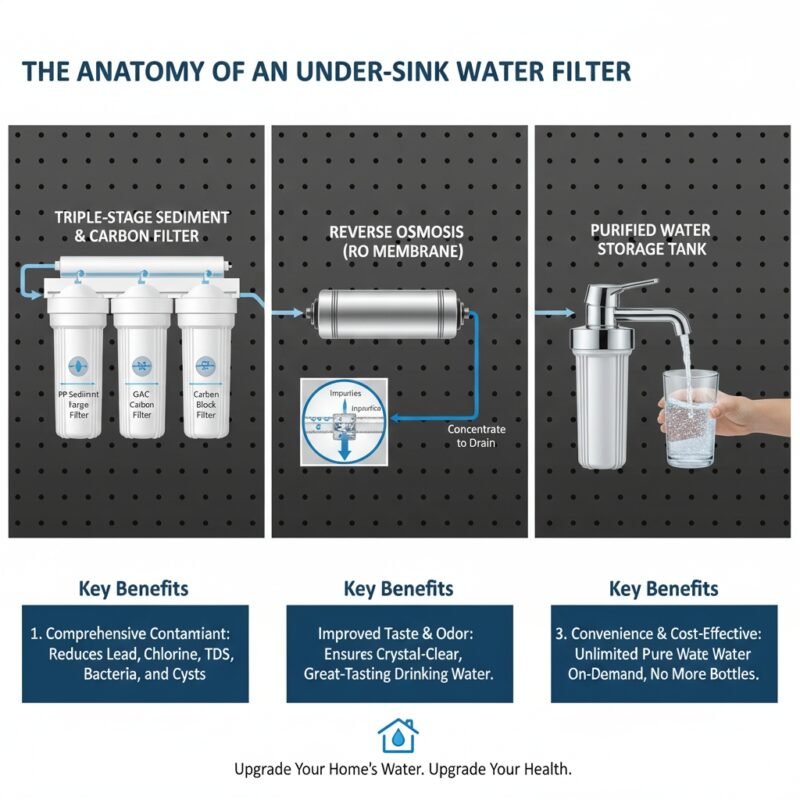
B. Reverse Osmosis (RO) under-sink systems
What they remove: broad spectrum — TDS, heavy metals (lead, arsenic in many cases), fluoride, nitrates, many VOCs and PFAS (often combined with carbon stages).
Best when: test shows high TDS, heavy metals, fluoride, nitrates, or PFAS; you want maximum POU protection.
Pros: comprehensive contaminant reduction, reliable when maintained.
Cons: wastes some water (variable recovery), removes minerals (optional remineralization available), higher upfront & maintenance costs, slower flow (storage tank recommended).
C. Ultrafiltration (UF) under-sink systems
What they remove: suspended solids, cysts (Giardia), some bacteria (depending on pore size), turbidity.
Best when: water has turbidity/particulates or you want microfiltration without RO-level TDS removal.
Pros: no wastewater, effective particulate barrier.
Cons: doesn’t remove dissolved contaminants (salts, fluoride, etc.).
D. UV disinfection (as an add-on)
What it removes: inactivates bacteria, viruses, and protozoa when water is clear (pre-filtration required).
Best when: well water or any supply with microbial risk; use only after sediment and carbon stages.
Pros: chemical-free microbial protection.
Cons: no chemical/ion removal; requires electricity and lamp replacements.
E. Remineralizers & pH adjustment stages
What they do: add back calcium/magnesium or raise pH to improve taste and reduce mild acidity associated with RO.
Best when: you choose RO but dislike the flat taste or low mineral content of pure RO water.
3. Matching test results to technology — a quick decision map
Use this cheat-sheet to map test findings to under-sink choices:
- Chlorine/taste/odor only → carbon block under-sink.
- Lead or arsenic detected → RO or carbon block certified to NSF/ANSI 53 for lead/arsenic removal.
- High TDS / multiple dissolved minerals → RO (with remineralizer if desired).
- Bacteria / microbiological concerns → prefilter + UV (RO may help but is not the sole microbial solution).
- PFAS detected → RO + PFAS-targeted carbon or PFAS-certified media.
- Hardness only → water softeners (POE) + POU carbon or RO for drinking water.
This mapping helps you rule out whole categories of under-sink systems quickly and focus on practical, certified options.
4. Certifications and performance proof you must insist on
Marketing claims are meaningless without verification. When deciding what is the best under sink water filter, demand evidence:
- NSF/ANSI 42 — aesthetic effects (chlorine, taste/odor).
- NSF/ANSI 53 — health-related contaminant reduction (lead, VOCs, cysts).
- NSF/ANSI 58 — reverse osmosis system performance.
- NSF/ANSI 401 — emerging contaminants.
- NSF/ANSI 61 — materials safety (no harmful leaching).
- WQA Gold Seal — manufacturer quality assurance.
Ask the seller for model-specific certificates (not just company marketing) and independent lab reports if you need PFAS or special contaminant removal. A certified RO or carbon block that matches your test concentrations is the core of a trustworthy purchase.
5. Flow, capacity and household needs
Under-sink systems are POU — they serve a single tap. Think about:
- Household size: Families of 1–2 can use simpler carbon or small RO systems. Families of 4+ may want an RO with a larger storage tank or a high-flow carbon system if only taste/odor is the issue.
- Dispense speed: RO systems are slower; a storage tank (commonly 2–4 gallons) gives instant flow at the faucet. Higher-end RO systems with permeate pumps deliver faster fill rates.
- Water usage patterns: If you cook frequently or fill bottles, factor in daily volume and recovery rates (for RO).
- Space under the sink: RO tanks and pumps occupy significant space; measure before short-listing models.
6. Installation: DIY vs professional
Most under-sink filters are DIY-installable, but there are tradeoffs:
- DIY pros: lower cost, many kits include clear instructions and push-fit connectors.
- Professional pros: guaranteed plumbing code compliance, clean drain saddles for RO reject, proper pump/electrical installs (if UV or booster pump present), and easier warranty support.
If you’re unsure about plumbing or want worry-free setup, pay for a pro. For renters or limited plumbing, consider countertop or faucet-mount options (not under-sink but useful alternatives).
7. Maintenance realities — schedules and costs
Maintenance often determines real-world satisfaction and long-term cost. Typical schedules:
- Carbon prefilter (under-sink carbon): replace every 6–12 months (frequency depends on throughput and contaminant load).
- RO prefilters (sediment and carbon): replace every 6–12 months.
- RO membrane: replace every 2–5 years depending on feed water and usage.
- Post-filter polishing cartridge: replace every 6–12 months.
- UV lamp (if present): replace annually.
Replacement cost range: expect $50–$300 per year depending on system and usage. When comparing models, get exact part numbers and current replacement prices — a cheap unit with expensive proprietary cartridges can cost more over 5 years than a pricier, user-serviceable system.
8. Environmental tradeoffs — RO waste and cartridge disposal
If sustainability matters to you, evaluate:
- RO wastewater: older RO units waste more water (ratios like 4:1). Modern high-efficiency units can achieve 1:1 to 2:1 waste ratios, especially with permeate pumps. Consider reclaiming reject water for toilets or irrigation if local code permits.
- Cartridge waste: replacement cartridges are plastic. Ask manufacturers about recycling programs. Pleated washable cartridges reduce disposables in some setups.
Balance human health and convenience with water stewardship when selecting a system.
9. How to evaluate vendor claims and reviews
- Prefer independent third-party tests and NSF/WQA certifications.
- Read recent user reviews but focus on maintenance and reliability comments (leaks, filter availability, customer support).
- Watch for vague language like “removes up to X%” without certified conditions; these are often cherry-picked claims.
- Ask for lab reports if vendors claim PFAS or specialty contaminant removal.
A trustworthy seller will share documents and replacement-part details without hesitation.
10. Cost comparison: 5-year total cost of ownership (TCO)
When asking what is the best under sink water filter, consider TCO, not just sticker price. Example rough TCO bands:
- Basic carbon under-sink: $100–$300 upfront; $30–$100/year in cartridges. 5-year TCO ≈ $250–$800.
- Mid-range under-sink RO: $400–$900 upfront; $50–$200/year. 5-year TCO ≈ $650–$1,900.
- High-end RO with pump & remineralizer: $900–$1,500 upfront; $100–$300/year. 5-year TCO ≈ $1,400–$3,000.
Real numbers depend on local cartridge prices and how often you replace items. Factor in installation costs if you plan to hire a pro.
11. Common scenarios and recommended under-sink solutions
Below are typical real-world cases with recommended under-sink choices.
Scenario 1: City water with chlorine taste/odor only
Recommendation: Multi-stage carbon under-sink (carbon block or CTO) — low cost, no wastewater, and great taste. Replace cartridges per schedule.
Scenario 2: Older home with lead concerns
Recommendation: Under-sink RO or a carbon block certified to NSF/ANSI 53 for lead. RO offers broader protection for other dissolved metals as well.
Scenario 3: High TDS and multiple dissolved contaminants
Recommendation: Under-sink RO with prefiltration and remineralization if desired.
Scenario 4: Well water with microbial risk but low dissolved contaminants
Recommendation: Sediment prefilter + UF/UV under-sink combination. UV after prefiltration inactivates microbes; UF helps remove particulates.
Scenario 5: PFAS detected
Recommendation: RO combined with activated carbon stage designed for PFAS; insist on lab-verified PFAS removal data.
12. Installation tips and best practices
- Measure cabinet space including tank diameter and height.
- Install a dedicated faucet for filtered water to avoid cross-contamination.
- For RO, ensure a proper drain saddle and check local codes.
- Use shut-off valves and a bypass if possible for easy service.
- Flush new filters per instructions before using.
- Keep a spare set of high-wear cartridges on hand.
These small steps reduce headaches and improve system longevity.
13. Troubleshooting common under-sink issues
- Low flow at faucet: clogged prefilter, tank pressure low (for RO), or valve issue. Replace filters and check tank pressure.
- Bad taste: exhausted carbon post-filter — replace.
- High TDS on RO product: membrane failure or bypass — replace membrane and test feed TDS.
- Leaks: tight fittings, re-seat O-rings, inspect housings for cracks. Turn off water and repair immediately.
Document maintenance dates and part numbers to speed troubleshooting conversations with support.
14. How to choose the best model — short checklist
- Use your water test as the primary input.
- Match technology to contaminants (see decision map).
- Insist on certifications (NSF/ANSI 42/53/58) for your target contaminants.
- Compare 5-year TCO including replacement parts.
- Check flow & storage for RO systems.
- Verify replacement part availability (local and online).
- Measure cabinet space and confirm fit.
- Decide DIY vs pro install.
- Ask for model-specific lab data for PFAS/special claims.
- Plan maintenance calendar and buy spares.
This checklist reduces buyer’s remorse and helps you pick the best under-sink water filter for your home.
15. Example shortlist (archetypes to research)
Below are archetype descriptions to help you shortlist models. Replace brand names with certified models matching your water test.
- Budget carbon POU: 2-stage under-sink carbon block; best for chlorine/taste. Low cost, easy cartridge swaps.
- Versatile RO POU: 4-5 stage under-sink RO (sediment, carbon, membrane, post-carbon, remineralizer). Best for broad contaminant reduction.
- High-flow carbon polish: multi-cartridge carbon arrangement designed for faster dispensing (no RO). Good for families who reject RO due to waste.
- UF + UV POU: ultrafiltration combined with UV for microbial risk without RO-level TDS removal.
For model specs and certified product lists, consult reputable catalogs like https://yourwatergood.com/ and cross-check certifications.
16. Post-install verification and retesting
After installation, retest your drinking water within 2–4 weeks to confirm contaminant reductions. Use the same lab or comparable testing method as your baseline to ensure results are comparable. Keep certificates, test results, and invoices — they help with warranty claims and future resale.
17. Frequently Asked Questions (short answers)
Q: Do under-sink filters remove fluoride?
A: Only specific technologies — mainly RO — reduce fluoride effectively. Look for NSF/ANSI 58 performance data.
Q: How long do under-sink filters last?
A: Cartridges: 6–12 months typical; RO membranes: 2–5 years. Exact life depends on water quality and usage.
Q: Is under-sink RO safe for daily drinking?
A: Yes. RO produces very low contaminant water; remineralizers can improve taste. Most diets supply needed minerals.
Q: How much space does an RO take?
A: Plan for the membrane housing and a 2–4 gallon tank — measure before purchase.
18. Final recommendation — a balanced answer to “what is the best under sink water filter”
There is no single universally “best” under-sink water filter. The best choice is an evidence-based match between your water test, the contaminants you must remove, and practical constraints (space, budget, maintenance). For most municipal users with taste/odor concerns, a certified carbon block under-sink filter is the best value. For homeowners facing dissolved contaminants (lead, arsenic, nitrates, PFAS, high TDS), an under-sink RO system with certified performance and a remineralizer often provides the best long-term protection. If microbial contamination is the concern, pair prefiltration with UV or UF stages.
Follow the decision checklist in section 14, insist on certifications, and retest after installation. That approach will identify what is the best under sink water filter specifically for your household.