
How Much Does A Water Filtration System Cost — Complete Pricing Guide & Ownership Calculator

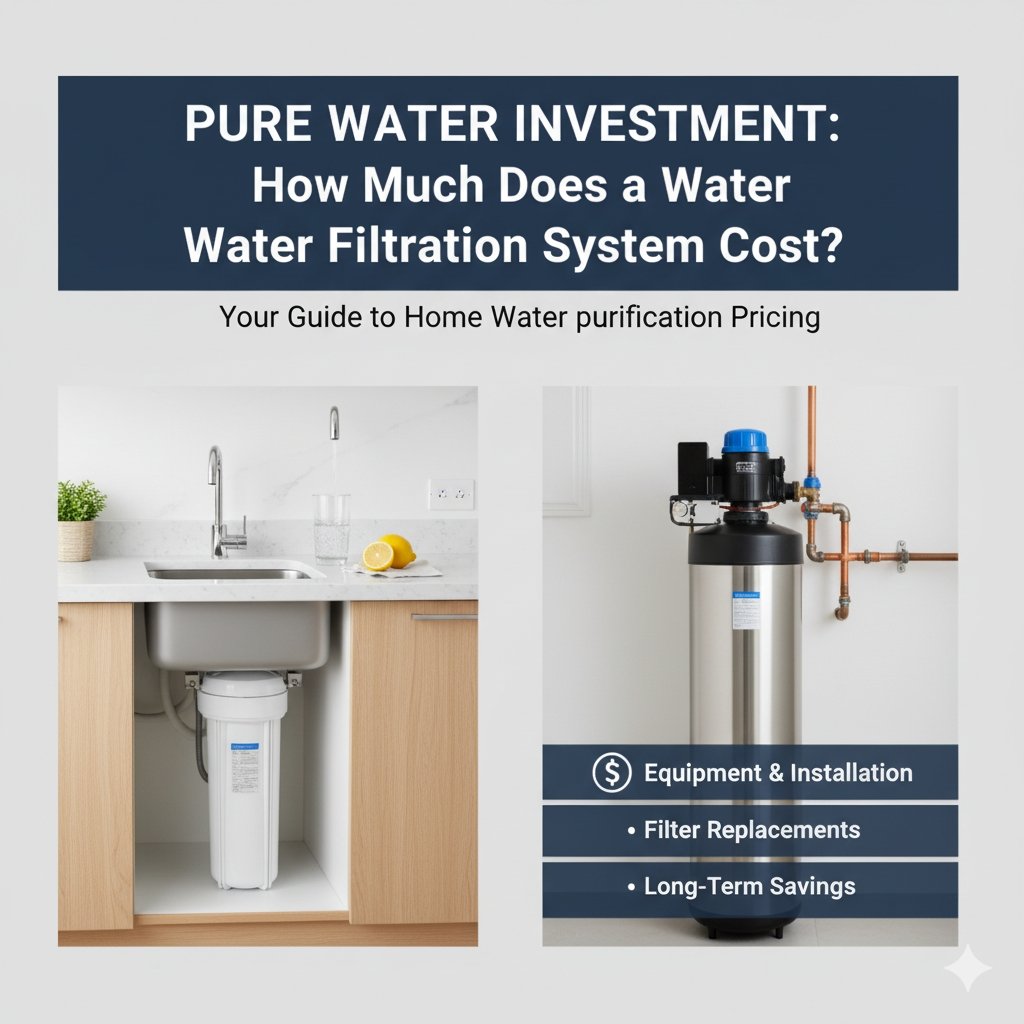
When you search “how much does a water filtration system cost” you probably expect a single number. The reality is messier: price depends on the type of system, your water quality, house size, installation complexity, and how long you plan to own the equipment. This article gives a clear, actionable answer — not a vague range — by breaking down costs into categories (equipment, installation, consumables, service), providing sample budgets for common scenarios, showing how to calculate 5- and 10-year total cost of ownership (TCO), and offering tips to reduce surprises. There’s also a simple ownership calculator you can use mentally to estimate your own cost. For product specs and certified models to compare, check product catalogs such as https://yourwatergood.com/shop/
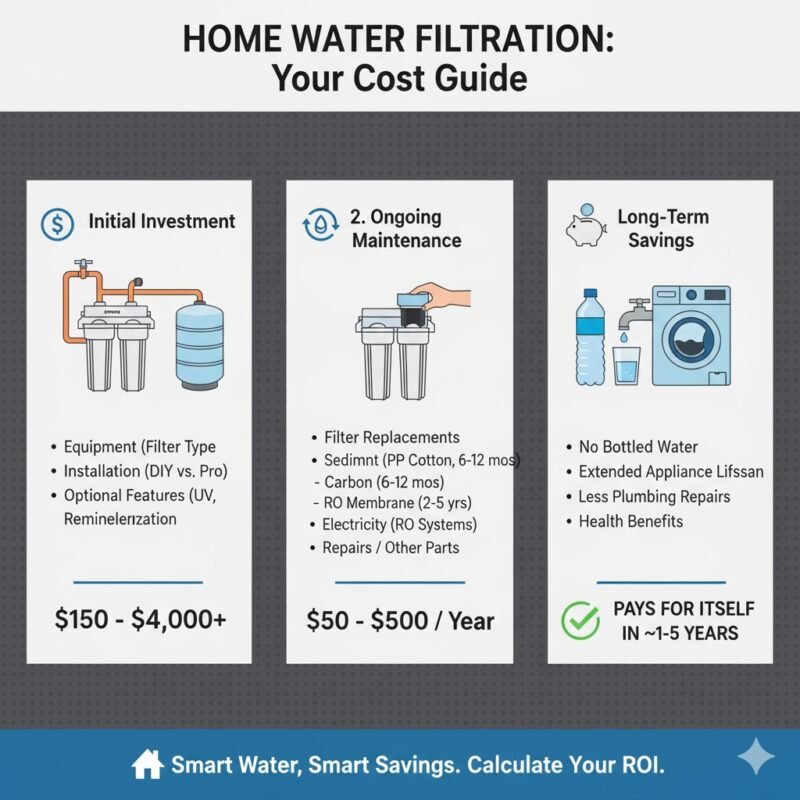
Quick summary
- Basic point-of-use (POU) systems (pitcher, faucet, countertop): $20–$300 upfront; low ongoing cost.
- Under-sink systems (carbon or RO): $150–$1,500 upfront; $50–$300/yr in consumables.
- Whole-house systems (POE): $800–$8,000+ installed depending on media and features; $100–$1,200/yr maintenance.
- Whole-house RO: $15,000–$50,000+ installed — rare and expensive.
- Expect to calculate 5- to 10-year TCO when choosing; upfront cost is only part of the story.
1. Overview: the components of cost
Every water filtration solution involves a mix of the following cost components:
- Equipment cost — the price of the filter unit(s), tanks, valves, membranes, and any ancillary hardware.
- Installation cost — plumbing, electrical work (for pumps or UV), permits, and labor.
- Consumables & media — replacement cartridges, membranes, softener salt, and specialty media.
- Energy & ancillary operating costs — electricity for UV lamps or booster pumps.
- Service / maintenance — professional annual servicing, warranty repairs, or media change-outs.
- Disposal / recycling — removal and responsible disposal of spent media or cartridges (sometimes small, sometimes nontrivial).
- Hidden costs — pre-treatment upgrades (iron removal, water softening), wastewater handling (for RO), and retrofits to accommodate a system.
When someone asks “how much does a water filtration system cost,” you should ask: which of these components apply to the system you have in mind? This guide walks you through each component and shows realistic numbers.
2. Price bands by system type (straightforward ranges and what they buy)
A. Basic point-of-use (POU) — pitchers, faucet mounts, countertop filters
- What you get: Simple carbon block or small multi-stage cartridges. Improve taste, reduce chlorine and some metals (limited).
- Upfront cost: $20–$300. Higher end includes branded countertop multi-stage systems.
- Annual consumables: $10–$100.
- Who benefits: Renters, low-risk municipal water, or people wanting a low-cost taste/odor improvement.
B. Under-sink carbon or ultrafiltration (PUO POU)
- What you get: Under-sink housing, carbon block cartridges or UF module; better flow and capacity than pitchers.
- Upfront cost: $100–$600.
- Annual consumables: $30–$150.
- Who benefits: Households wanting consistent drinking water quality without RO complexity.
C. Under-sink Reverse Osmosis (RO) systems
- What you get: Multi-stage system (sediment → carbon → RO membrane → storage tank → post-filter); high contaminant reduction.
- Upfront cost: $300–$1,500 (basic to feature-rich).
- Installation cost: $0–$400 (DIY to professional).
- Annual consumables: $50–$300 (pre-filters, post-filters; membrane replacement every 2–5 years).
- Notes: Add $50–$400 for permeate pump, remineralizer, or UV if desired.
D. Whole-house basic (sediment + carbon)
- What you get: Large carbon vessel and pre-sediment filter; treats all home taps for chlorine taste/odor and protects plumbing.
- Upfront cost (equipment + install): $800–$3,000.
- Annual consumables: $50–$300 (cartridge swaps or occasional media replacement).
- Who benefits: City water customers wanting better showers and appliance life.
E. Whole-house with softener (POE softener + carbon)
- What you get: Ion-exchange softener plus carbon vessel. Reduces hardness and chlorine.
- Upfront cost: $1,500–$4,000 installed.
- Annual consumables: $50–$300 (salt and occasional resin replacement).
- Notes: Some municipalities regulate brine discharge; factor compliance costs.
F. Iron/manganese removal & specialty media
- What you get: Greensand, catalytic carbon, or oxidizing media with control valve and backwash.
- Upfront cost: $1,200–$6,000 depending on complexity and dosing needs.
- Annual consumables: $100–$800 (media replacement, oxidant costs).
- Who benefits: Well owners with staining, metallic taste, or pipe fouling.
G. UV disinfection (POE)
- What you get: UV chamber + ballast; requires sediment prefiltration.
- Upfront cost: $900–$3,000 installed.
- Annual consumables: $50–$200 (lamp + sleeve cleaning).
- Who benefits: Well water users or systems where microbial risk exists.
H. Whole-house reverse osmosis (rare, specialized)
- What you get: Large-scale RO for an entire house. High-purity water but massive cost and wastewater.
- Upfront cost: $15,000–$50,000+.
- Annual consumables: High (membranes, energy, maintenance).
- Notes: Only for specialized needs; most homeowners instead use POE prefiltration + POU RO.
3. Installation: why labor and permitting can double small systems’ price
Installation complexity is often the largest variable that surprises buyers.
- Under-sink DIY: Simple valve kits and push-fit plumbing can keep installation cost near zero. However, poor installation risks leaks and voided warranties.
- Professional installs: For whole-house systems expect professional labor to account for 20–50% of the installed price. Complex installs requiring multiple trades (plumber + electrician + inspector) can add $500–$2,000.
- Permits & inspections: Local codes sometimes require permits for POE or electrical work (UV/booster pumps). Add fees of $50–$500 depending on jurisdiction.
- Retrofitting: Older homes may need pipe upgrades, pressure regulators, or space modifications that add hundreds or thousands to the job.
When estimating “how much does a water filtration system cost,” always get itemized quotes showing equipment, labor, permits, and warranty coverage.
4. Consumables and service: the long tail of ownership costs
Consumables are the recurring costs that determine real affordability.
- Cartridges: Sediment & carbon cartridges: $10–$100 each depending on size and brand. Frequency: every 3–12 months.
- RO membranes: $50–$300 every 2–5 years depending on quality.
- UV lamps: $50–$200 annually (lamp replacement and sleeve cleaning).
- Softener salt: $50–$200 per year depending on water hardness and household size.
- Specialty media (PFAS, arsenic): $200–$1,000+ when replacement is required every few years.
- Professional service visits: $100–$400/visit if you pay for annual check-ups.
To estimate annual running costs: total expected consumable costs divided by replacement cycles + any planned service visits. For a typical whole-house + POU RO setup, budget $200–$800/year.
5. How to calculate 5- and 10-year Total Cost of Ownership (TCO)
Use a simple formula:
TCO (N years) = Upfront equipment + Installation + Σ(annual consumables + annual service + energy) for N years + Replacement events (membranes, major media)
Example — modest whole-house + under-sink RO scenario:
- Equipment & install: $3,000
- Annual consumables & service: $400/year
- Membrane replacement year 4: $200
- 5-year TCO = 3,000 + (400 × 5) + 200 = $4,200
- 10-year TCO = 3,000 + (400 × 10) + (membrane replacement year 8: $200) = $7,200
This simple exercise reveals that annual costs dominate over time, so a slightly higher-quality system with lower consumables might be cheaper over 10 years.
6. Sample budgets for common homeowner profiles
Scenario 1 — City apartment, taste/odor only
- System: Under-sink carbon block
- Upfront: $250 (unit) + $0–$150 install (DIY/pro)
- Annual consumables: $50
- 5-yr TCO ≈ $500–$800
Scenario 2 — Suburban family, hard water + chlorine
- System: POE softener + whole-house carbon + POU under-sink RO for drinking
- Upfront: $3,200 installed
- Annual consumables: $300 (salt + cartridges + RO filters)
- 5-yr TCO ≈ $4,700
Scenario 3 — Rural well, iron & microbial concern
- System: Sediment + iron removal tank + UV + POU RO
- Upfront: $6,500 installed
- Annual consumables: $600 (media, UV lamp, RO filters)
- 5-yr TCO ≈ $9,500
These examples match realistic homeowner choices and show how complexity drives cost.
7. Hidden costs to plan for (don’t be surprised)
- Pre-treatment: High iron, hydrogen sulfide, or sediment may require dedicated prefilters or oxidizers. Budget $500–$3,000+.
- Drain & wastewater handling: RO reject water or backwash needs proper drains. Permits or pump-installed drains can add $200–$1,500.
- Energy: booster pumps and UV use electricity (small, but factor in for whole-house pumps).
- Water reuse plumbing: To reuse RO reject water for toilets/laundry, you may need additional plumbing and check local codes.
- Testing: Post-installation water testing costs $50–$300 per panel — always recommended to validate performance.
Include a contingency of 10–15% in any budget to handle these surprises.
8. Ways to reduce the cost without compromising performance
- Buy only what your water test requires. Don’t overbuy a whole-house RO if carbon plus a POU RO will solve your needs.
- Stage filtration: Use a POE sediment prefilter to protect smaller, cheaper POU cartridges and membranes — this reduces replacement frequency and cost.
- Choose standard, serviceable parts: Avoid proprietary cartridge systems with high recurring prices.
- Shop for filters in bulk: Buying replacement cartridges as a multi-pack reduces per-unit cost.
- Use a service contract wisely: Compare price of DIY servicing vs service plan that includes parts. Sometimes a plan is cost-effective for busy households.
- Consider energy-efficient upgrades: Permeate pumps and modern membranes reduce water waste and long-term utility costs.
A targeted, evidence-based approach saves money over time.
9. Financing, warranties, and value propositions
- Financing: Many vendors offer 12–60 month financing. Financing smooths cash flow but increases total cost through interest. Compare APR vs discount for upfront pay.
- Warranties: Equipment warranties often 1–5 years; extended warranties may cost extra but provide peace of mind for high-cost installs.
- Service guarantees: Look for installers who include a performance guarantee or post-install testing. This reduces risk that the installed system won’t meet specs.
Make sure to read warranty fine print — some warranties require annual professional service to stay valid.
10. Environmental considerations and cost tradeoffs
- Water waste: RO systems produce reject water. With high-efficiency systems and permeate pumps, waste can be minimized — but it exists. Consider whether reusing reject water for non-potable uses is safe and permitted.
- Disposable cartridges: Plastic waste accumulates; ask vendors about recycling programs. Some manufacturers accept spent cartridges for recycling.
- Softener salt: Salt discharge can affect septic and municipal systems and may be banned in some municipalities. Salt-free alternatives may cost more initially but avoid brine issues.
When estimating cost, account for environmental compliance costs if any local regulations apply.
11. How to get accurate quotes (practical steps)
- Test your water: municipal CCR or a certified lab test.
- List issues to solve: taste, lead, hardness, iron, microbes, PFAS.
- Shortlist system archetypes: POE sediment/carbon, softener, UV, RO, etc.
- Request three itemized quotes: equipment, labor, permits, warranty.
- Ask for consumable pricing: exact part numbers and costs for replacement filters/membranes and recommended intervals.
- Confirm post-install testing: ensure vendor will retest and show results.
- Check references: visit completed jobs or read local reviews.
Itemized quotes are the only way to answer “how much does a water filtration system cost” for your home precisely.
12. Quick decision flowchart (one page)
- Do you have a current water test? → If no, get tested.
- Is there microbial contamination? → If yes, consider UV + prefilters.
- Is there high TDS, lead, fluoride, or nitrates? → If yes, include POU RO.
- Is hardness causing scale? → Add POE softener.
- Are you on municipal water with chlorine taste only? → Consider whole-house carbon + POU carbon.
- Estimate equipment + install + 5-yr consumables using ranges above.
This flowchart helps you quickly estimate the likely cost band.
13. Final checklist before you pay
- Did you get at least three itemized quotes?
- Does the solution match your water test and priorities?
- Are replacement part numbers and prices disclosed?
- Does the installer include a post-install performance test?
- Do you understand the 5- and 10-year TCO?
- Are permits and environmental compliance included?
If any item is unchecked, pause and request clarification to avoid surprises.
14. Closing recommendations
When asking “how much does a water filtration system cost,” keep the focus on value over sticker price. A cheap system with high recurring costs or a system that is not matched to your water quality will cost you more in the long run. Conversely, an appropriately chosen system sized to your needs and paired with sensible maintenance can be cost-effective and protect your family for years.
Start by testing your water, shortlist systems that address the specific contaminants the test reveals, request itemized quotes, and calculate a 5- to 10-year total cost of ownership. For model specs and to compare certified products, visit catalogs like https://yourwatergood.com/ and match certification documents to your water report before buying.
If you use the steps and example budgets in this guide, you’ll answer “how much does a water filtration system cost” with a precise number for your home — and you’ll budget realistically for ownership, not just purchase.