
What does cotton do in a water filter — The complete, practical guide to sediment media, “PP cotton”, and why it matters

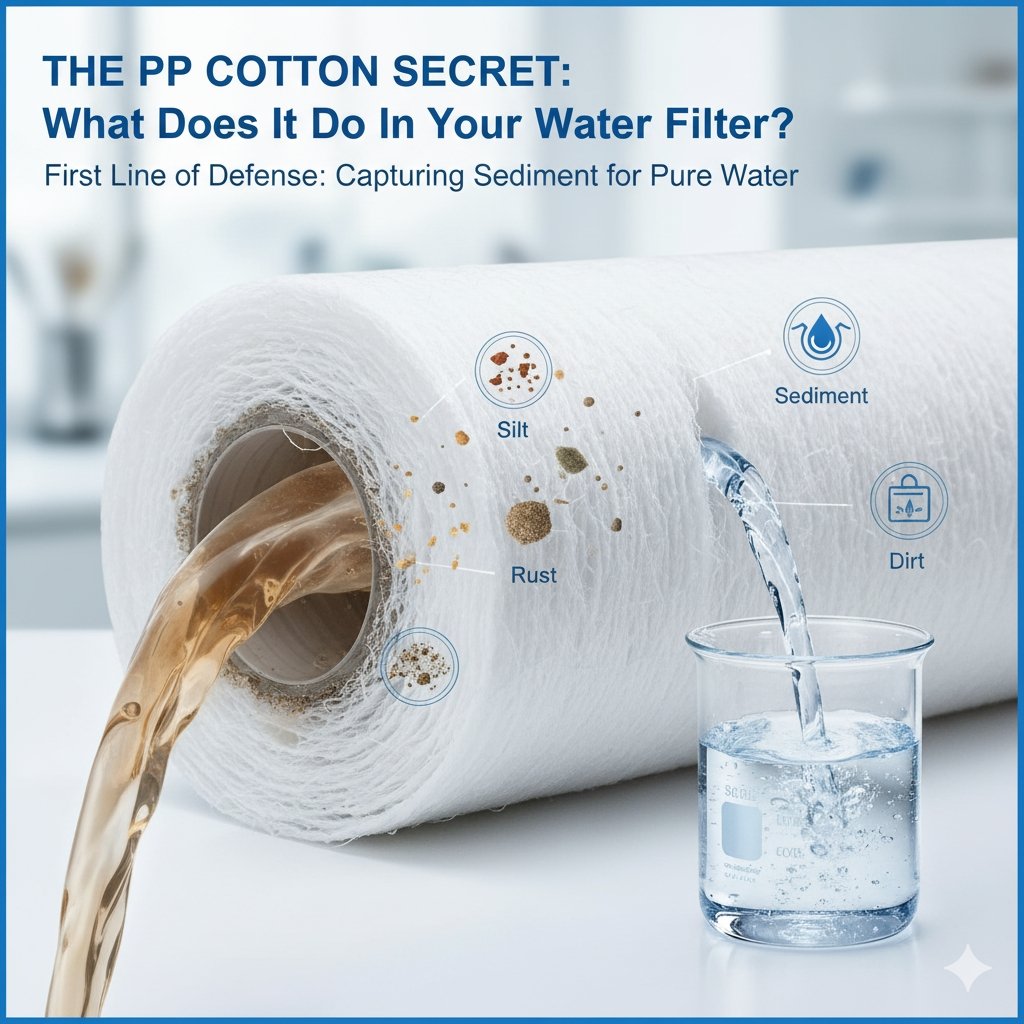
If you’ve ever asked what does cotton do in a water filter, you probably noticed short, inexpensive filters labeled “cotton,” “PP cotton,” or “sediment cotton” and wondered whether they’re meaningful or just marketing. This deep-dive answers that question straight away, then shows you how these filters work, how they differ from other sediment technologies, how to size and maintain them, when they’re the right choice (and when they’re not), and practical tips for getting the most life and protection out of your whole system. I’ll also explain the common confusion between natural cotton, cellulose, and polypropylene (PP) “cotton” cartridges so you won’t buy the wrong thing for your water. If you want a comparison product for whole-house installations while you read, see a practical option here: https://yourwatergood.com/shop/
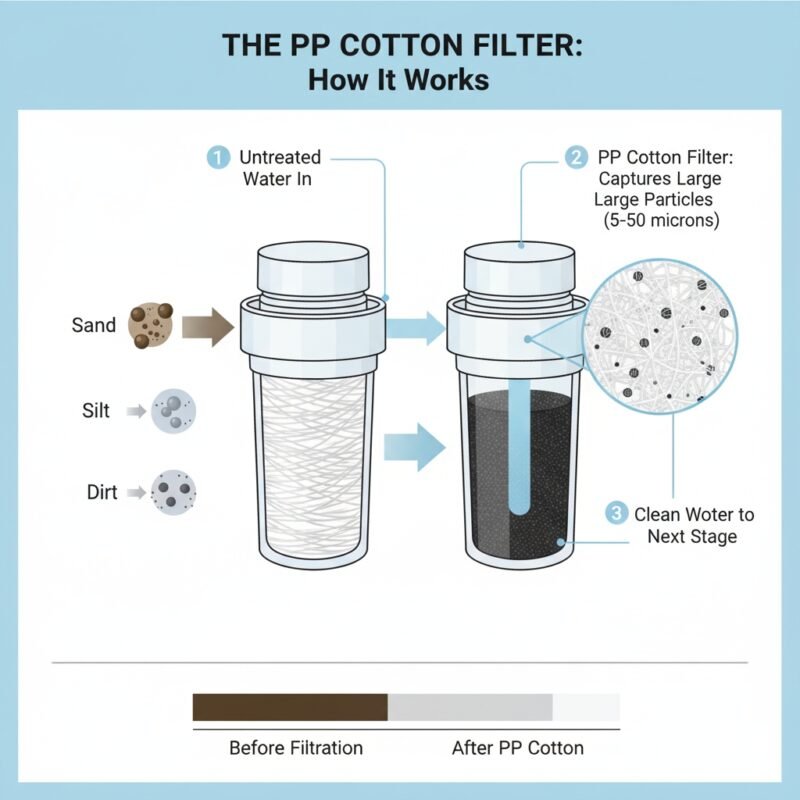
1. Short answer: what does cotton do in a water filter?
In one sentence: “Cotton” in common water-filtering parlance is a sediment prefilter whose primary job is to trap particles — sand, rust, silt, and other visible debris — to protect downstream media (carbon, membranes) and appliances, maintain flow, and extend the life of more expensive components.
Key functions:
- Remove visible and sub-visible particulates (reduces turbidity).
- Protect downstream cartridges and membranes from clogging and abrasion.
- Improve water clarity and reduce sediment deposits in taps, coffee machines, and ice makers.
- Lower maintenance cost by taking the brunt of particulate load.
That’s the essential role. The rest of this guide elaborates on how different “cotton” types accomplish that, why you care about micron ratings and depth vs surface filters, and how to choose and maintain the right cartridge for your system.
2. The language confusion: “cotton,” cellulose, and PP cotton — what’s what?
Before we go further, clear terminology prevents bad buys.
- Natural cotton / cellulose fibers: actual plant-derived cellulose used historically in some low-cost filters and specialty lab applications. They can trap particles but are less chemically stable and less common in modern potable water filters due to biodegradability and shorter life.
- Cellulose (paper-like) media: manufactured from plant fibers; sometimes used in low-cost filters. Better than raw cotton for controllable performance but still less durable than synthetics for many applications.
- Polypropylene (PP) “cotton” / PP filter / PP spun: In many product descriptions (especially from Asian suppliers), “PP cotton” refers to polypropylene spun or melt-blown sediment cartridges. These look and feel cottony but are entirely synthetic. They are chemically stable, inexpensive, and extremely common in modern sediment filtration. For the rest of this guide, when I say cotton in the context of household and whole-house filters, I’m usually referring to polypropylene sediment media unless I explicitly say “natural cotton” or “cellulose.”
Why this matters: polypropylene filters resist bacterial growth better, tolerate chlorine, have predictable micron ratings, and last longer than natural fibers — which is why the market favors them.
3. How a cotton/PP sediment filter actually removes particles — depth vs surface filtration
There are two primary ways filters capture particles: surface (screen) filtration and depth filtration.
- Surface (screen) filtration: Think of a tea strainer or a mesh. Particles larger than the mesh openings are trapped on the surface. Good for coarse screening but clogs quickly when fine silt is present. Examples: fine mesh screens, some cartridge housings.
- Depth filtration (the common “cotton” approach): Here, water weaves through a thick bed of fibrous material (spun or melt-blown polypropylene). Particles are captured throughout the substrate rather than only on the face. Depth filters trap a wide range of particle sizes and have far higher dirt-holding capacity for their footprint.
PP spun or melt-blown “cotton” cartridges are depth filters. Mechanisms that capture particles in depth filters include:
- Inertial impaction — larger particles bounce into fibers.
- Interception — particles following streamlines touch fibers and stick.
- Diffusion — very tiny particles deviate and collide with fibers (important at submicron sizes).
- Straining — particles bigger than the smallest pore are blocked.
Because of this multi-mechanistic capture, depth-style PP filters last longer and provide consistent reduction for a range of particle sizes.
4. Micron ratings: pick the right fineness for the job
Micron ratings are the shorthand for particle size performance. But beware: micron rating standards vary, so use them as a guide rather than gospel.
- Common micron ratings: 50 µm, 25 µm, 10 µm, 5 µm, 1 µm, 0.5 µm. Lower numbers trap finer particles but clog faster.
- Nominal vs absolute rating:
- Nominal (commonly used for PP filters) means the filter will capture a certain percentage (e.g., 85%) of particles at that size.
- Absolute (used for critical filtration) means the filter captures essentially 99.9% of particles at that size. Most household PP cartridges are nominal.
- Choosing a rating:
- If your problem is visible sand or rust, start with a 10–50 µm sediment cartridge.
- For finer silts, coffee flecks, or to protect membranes, use 1–5 µm.
- For protection of RO membranes prefilters often use 1–5 µm to help ensure membrane longevity.
Rule of thumb: size up (choose coarser) if your water has heavy particulate loading — you’ll change filters more often but avoid choking smaller cartridges. Consider a staged approach: coarse sediment (10–50 µm) upstream, then finer “cotton” closer to critical equipment.
5. Types of PP (polypropylene) “cotton” cartridges and their form factors
You’ll find several common styles:
- Spun PP cartridges (depth-spun): Made by winding polypropylene fibers to create a graded density from outside-in. They’re excellent for depth filtration and common in 10″/20″ housings.
- Melt-blown PP cartridges: Manufactured by extruding polypropylene melt to make a fibrous matrix. They can have graded densities for improved dirt-holding and are common in many sediment applications.
- Pleated cartridges (polypropylene or polyester): These use pleated sheets for high surface area; they’re often washable and have long life for particulate but may be less effective for submicron capture compared to depth-spun media.
- Capsule-style inline PP filters: Compact cartridges for inline fridge or under-sink installs; they use similar PP media but in small form.
When buying, match cartridge length (10″ vs 20″), diameter, and end fitting to your housing. A 20″ cartridge has roughly double the media and life of a 10″ one at similar conditions.
6. Where cotton/PP fits in a typical treatment train (why order matters)
A typical effective multi-stage setup uses sediment (cotton) early to protect downstream stages:
- Coarse sediment (50–20 µm): Removes large sand and rust.
- Fine sediment (10–1 µm): Polishes and removes smaller solids.
- Activated carbon (GAC or carbon block): Removes chlorine, taste, odor, VOCs.
- Specialty media (PFAS, arsenic) or softening if needed.
- RO / UF / membranes for dissolved salts or microbial removal where required.
Installing cotton first increases contact time for downstream media to focus on chemical or dissolved contaminant removal—not clogging with particles. For RO, sediment prefiltration to 1–5 µm is crucial to prevent premature membrane fouling.
7. Performance trade-offs: pressure drop, flow, and dirt-holding capacity
When you compare sediment cartridges, consider:
- Initial pressure drop: A very fine cartridge can add noticeable ΔP (pressure loss) to your plumbing at high flows. Check rated flow vs ΔP at that flow.
- Dirt-holding capacity: Thicker, longer, or denser cartridges hold more dirt and last longer between changes.
- Flow vs retention: Pleated high-surface-area cartridges deliver high flow with moderate particulate removal; depth-spun cartridges capture a broad size range but can have higher ΔP at high flow.
- Lifecycle cost: Cheaper short-life cartridges may cost less upfront but more in replacements and annoyance. A 20″ high-capacity PP filter often pays for itself in reduced replacement frequency.
For whole-house use, err toward larger cartridges or parallel banks to keep ΔP low and maintenance intervals reasonable.
8. Installation and practical placement tips
- Point-of-entry (POE) vs point-of-use (POU): For whole-home sediment protection, install PP cartridges at POE in a 10″ or 20″ housing. For a fridge or coffee machine, use an inline capsule filter near the appliance (POU).
- Use pressure gauges: Put a gauge before and after the cartridge housing to monitor ΔP. A rising differential pressure signals a clog and the need for replacement. This is one of the most reliable diagnostics.
- Install a bypass: For POE systems install a bypass valve so you can service filters without shutting down the entire house.
- Orientation and accessibility: Mount housings so you can remove cartridges easily. Leave 3–6 inches clearance below for removal and drainage.
- Pre-filtering staging: If you have heavy particulate load (well water after storms), start with a coarse prefilter (50 µm) then step down to finer cartridges.
- Avoid freeze and heat: PP cartridges are for cold potable water; avoid exposing them to freezing temperatures or hot water lines.
9. How often to replace cotton/PP cartridges — realistic schedules
Replacement frequency depends entirely on water quality and usage. Typical ranges:
- Municipal water (low turbidity, moderate chlorine): sediment cartridges may last 6–12 months depending on rating and household use. A coarse 10–20 µm prefilter may go longer.
- Well water or high turbidity: replacements might be monthly or even more often after events like heavy rains.
- Inline fridge filters (low flow, low load): carbon or sediment capsules can often last 6–12 months.
Best practice:
- Start with the manufacturer’s rated gallons as an estimate, but use pressure differential and taste/clarity as practical triggers.
- When ΔP increases by 25–50% from baseline or when you see visible sediment downstream, replace the cartridge.
- Label each cartridge with install date and expected next-change month to avoid forgetting.
10. Common mistakes and how to avoid them
Mistake 1 — Using too fine a cartridge as the first stage: result = rapid clogging and frequent changes. Fix: start coarse, then step down.
Mistake 2 — Ignoring ΔP: you might let a clogged cartridge run until it fails or causes low pressure. Fix: install two pressure gauges and monitor regularly.
Mistake 3 — Buying the wrong length or end-cap style: you’ll be surprised at how many cartridges won’t fit housings. Fix: verify housing dimensions and end fittings before ordering replacements.
Mistake 4 — Assuming “cotton” = cotton: natural cotton products are rare and degrade; prefer PP spun or melt-blown for potable water.
Mistake 5 — Not protecting downstream media: skipping sediment before carbon or RO dramatically shortens the life of those expensive elements.
11. Cotton vs other sediment options: pleated, ceramic, and backwashing filters
- Pleated filters: Long life, high surface area, often washable, excellent for high-surface applications (like well pumps). Good when sediment is moderate, and you want fewer replacements.
- Ceramic filters: Very fine filtration and long life; often used in specialty POU systems for microbes. Ceramic can be cleaned but is brittle and not ideal for high-flow POE without large housings.
- Backwashing multi-media filters: Best for heavy loads in POE setups. They use sand, anthracite, and garnet layers and periodically backwash to dump collected solids. Great for well water with frequent turbidity spikes; they scale up beyond simple PP cartridge solutions.
Choose PP “cotton” for moderate loads with tight footprints; choose pleated or backwashing for heavy loads or when you want long intervals between manual replacement.
12. Microbial considerations — does cotton remove bacteria?
Short answer: not reliably as a disinfection method. Sediment filters can trap bacteria physically if the pore size is small enough (submicron), but they do not inactivate microbes. Relying on a sediment cartridge for microbial safety is risky.
If you have microbial concerns:
- Use ultrafiltration (UF) or UV disinfection downstream of good sediment filtration.
- For POE microbial protection, choose systems designed and certified for microbiological control, not just PP cotton.
- If a sediment cartridge becomes loaded and remains wet for extended periods, it can actually become a habitat for bacterial growth — that’s another reason to change filters promptly.
13. Testing performance and validating your purchase
How to validate your cotton/PP cartridge is doing its job:
- Visual checks: reduced visible particles and clearer water.
- Pressure differential monitoring: a stable low ΔP indicates good flow and likely adequate porosity. Sudden spikes indicate clogging.
- Turbidity meters: if you want objective measurements, test inlet and outlet turbidity (NTU) before and after the cartridge. A significant drop demonstrates effectiveness.
- Post-install lab sampling: for high-stakes installs (e.g., businesses), send pre- and post-filter samples to a certified lab for particulate analysis and include the results in commissioning.
For home systems, practical signals (clarity, ΔP, taste) are often sufficient; for commercial or regulated applications, get lab verification.While PP cotton is great for basic sediment, choosing a commercial water filtration system restaurant owners can trust is essential for protecting expensive high-volume equipment.https://yourwatergood.com/commercial-water-filtration-system-restaurant/
14. Environmental & disposal considerations
Spent PP cartridges are mostly plastic and used media. Best practices:
- Check manufacturer recycling programs — some brands take back cartridges.
- Remove free water and pack waste for disposal per local guidance. Some communities have special streams for filter media with adsorbed contaminants; if the spent media contained hazardous adsorbates (heavy metals or organics), follow local hazardous waste rules.
- Reduce waste by choosing longer-life pleated elements when appropriate.
Avoid burning or dumping spent cartridges in the environment.
15. Buying checklist — choose the right cotton filter for your system
Before buying, confirm:
- Material: polypropylene (PP) spun or melt-blown (preferred) vs cellulose or raw cotton (avoid for potable POE).
- Length & diameter: confirm 10″ vs 20″ vs slim inline fit.
- Micron rating and nominal/absolute type.
- Graded density (outside-in) for longer dirt-holding life, if available.
- Manufacturer-rated gallons or life estimate and expected ΔP at your flow.
- Compatibility with your housing or inline connectors.
- Availability of replacements and subscription options.
- Price vs life: calculate cost per year, not just upfront price.
- Warranty / support and whether the cartridge is NSF-listed for particulate reduction (if applicable).
This checklist keeps purchases practical and prevents frequent returns.
16. Practical example set-ups
Example A — City home with occasional rust
- POE 20″ housing: Stage 1: 50 µm coarse PP; Stage 2: 5 µm PP fine; Stage 3: carbon block. Replace Stage 1 and 2 every 6–12 months; carbon every 6–12 months.
Example B — Well with seasonal turbidity
- Backwashing multimedia filter at POE + 10″ pleated sediment as polishing + UF or UV if microbes are a concern. Pleated element cleaned quarterly; backwash schedule based on turbidity.
Example C — Under-sink filter for ice maker
- Inline PP 5 µm capsule followed by small inline carbon taste filter. Replace capsule and carbon every 6–12 months depending on ice usage and visible particulate.
These are starting templates — always size by measured flow and local water profile.
17. When you should NOT rely on cotton / PP filters alone
- If your water has high dissolved contaminants (salts, PFAS, nitrates) — cotton won’t help.
- If microbial safety is an issue — use UV/UF or boil water advisories.
- If you need scale control for very hard water — use a softener or other scale treatment.
- If you have a continuous high-flow commercial process requiring long intervals between service — consider backwashing media or cartridge banks with automatic switching.
Use cotton/PP as a necessary but rarely sufficient element of a robust treatment plan.
18. Practical maintenance calendar and quick checks
- Monthly: visual leak check, taste/clarity check; note any pressure changes.
- Quarterly: inspect ΔP; replace coarse prefilter if needed.
- Every 6–12 months: replace fine PP cartridge and carbon cartridge per usage and manufacturer guidance.
- Annually: flush housings, check O-rings, sanitize the housing if needed (follow manufacturer instructions).
- Event-driven: after heavy rains or construction, check for increased turbidity and replace earlier.
Label housings with install dates and expected next-change date. Little habits prevent big problems.
19. Final decision checklist — is cotton/PP the right first step for you?
Ask yourself these quick questions:
- Do you see visible particles, sand, or rust? → Yes: sediment (cotton/PP) needed.
- Is your goal to protect downstream carbon or RO? → Yes: use a PP prefilter sized appropriately (1–5 µm for RO).
- Is your main issue dissolved contaminants or hardness? → No: cotton alone won’t fix this.
- Do you want a low-cost, easily replaceable option? → Yes: PP spun cartridges are ideal.
- Do you need lab-certified health claims? → Not with PP; get certified cartridges/media for heavy metals or PFAS.
If most answers point to protection and particulate reduction, polypropylene “cotton” is an effective, inexpensive foundation for a larger treatment strategy.
20. Closing: practical guidance you can act on today
- If you haven’t tested your water, start there — the right sediment cartridge choice depends on particle size and turbidity.
- If you’re protecting carbon or RO, use a staged approach: coarse → fine PP “cotton” → carbon → membranes.
- For whole-house installs, use 20″ graded PP cartridges for better dirt-holding and lower ΔP.
- Monitor pressure differential and replace cartridges on schedule — don’t wait for taste complaints or visible sediment.
- Consider pleated or backwashing alternatives if turbidity is high or replacement frequency is burdensome.
Remember: what does cotton do in a water filter? It’s the inexpensive workhorse that keeps the rest of the system running. Treat it as protection, not as the complete treatment — and your carbon cartridges, membranes, appliances and water quality will thank you.https://yourwatergood.com/product/whole-house-water-filtration-system-for-home/.