
The Ultimate Investment: Why Every Property Needs a Water Filter for Home Main Line

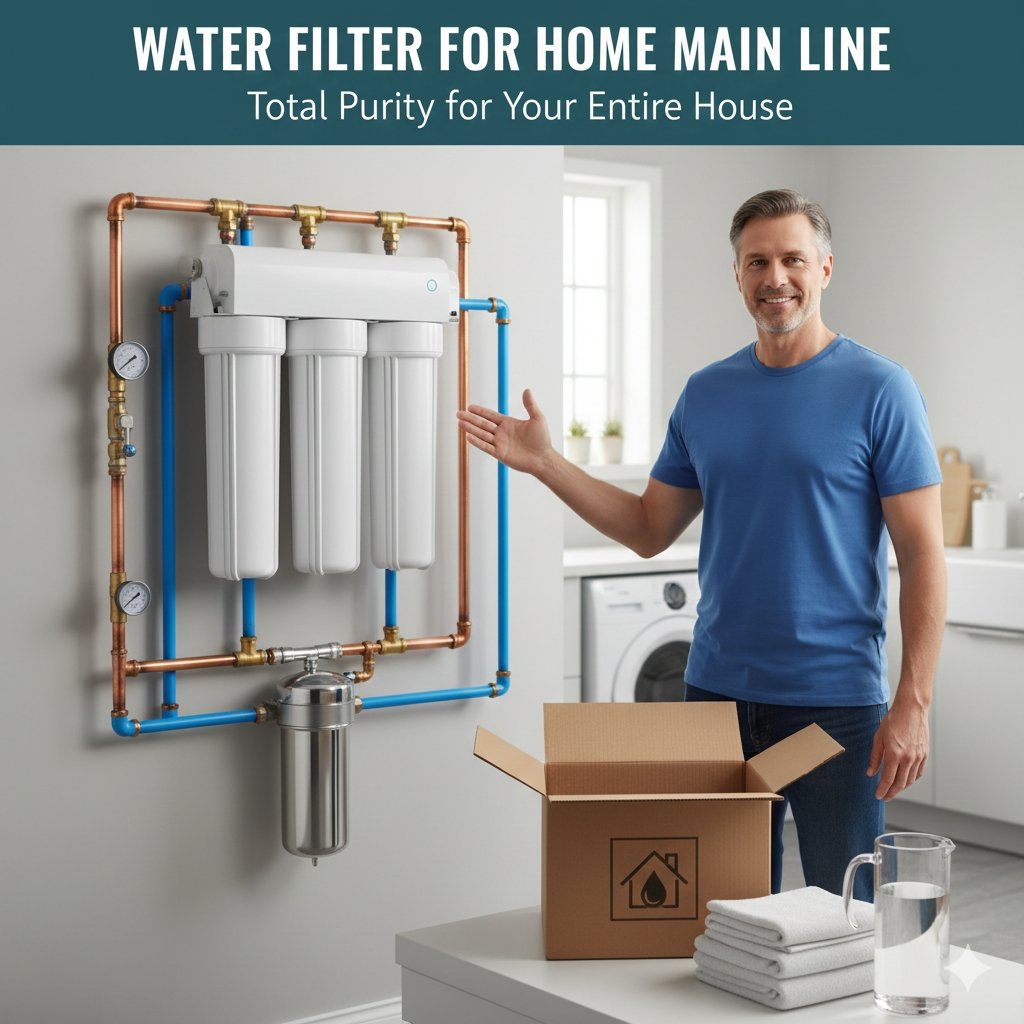
This topic is covered in full in our main guide: Main Line Water Filter for Home: The Complete Guide to Whole-Home Protection.
Water is the silent engine of our daily lives. It wakes us up in the morning shower, it cleans the clothes we wear, it cooks our food, and it hydrates our bodies. Yet, most homeowners and small business owners rarely think about the quality of their water until there is a problem. We assume that because it comes from the city tap, it is perfect.
The reality, however, is often different. While municipal water is treated to be free of deadly bacteria, it still travels through miles of aging infrastructure before it reaches your property. Along the way, it can pick up rust, sediment, and retain harsh chemical disinfectants like chlorine.
This is where the concept of a water filter for home main line comes into play. Unlike a simple pitcher in your fridge, this system acts as a fortress gatekeeper for your entire building. In this extensive guide, we will explore why installing a filtration system at the main entry point is one of the smartest decisions you can make for your health, your home’s value, and your business’s reputation.2-stage whole house water filter for homes.
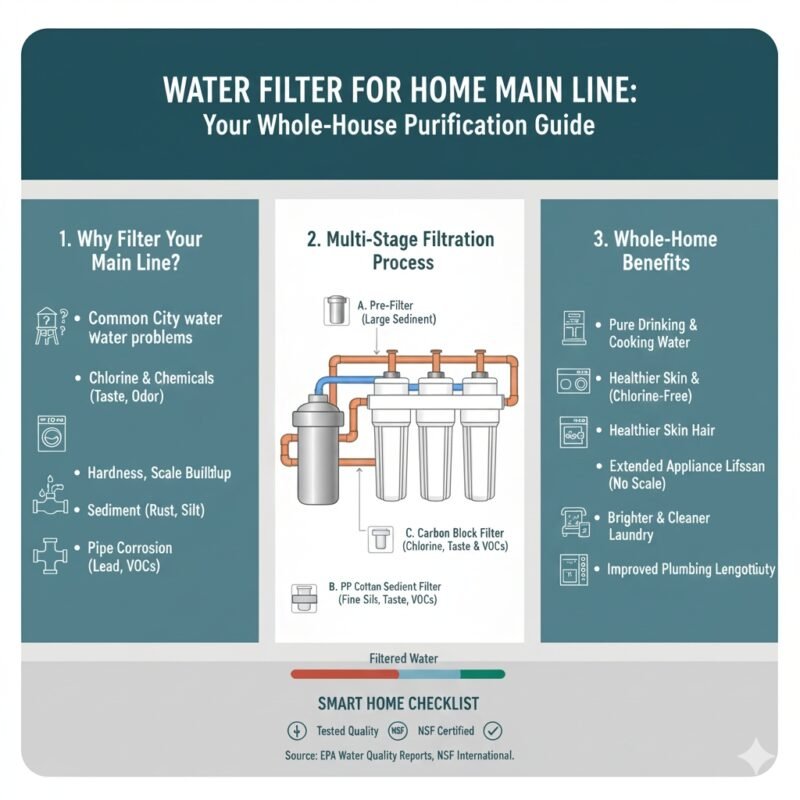
What Exactly is a Water Filter for Home Main Line?
To understand the value, we must first define the technology. In the water industry, this is known as a “Point of Entry” (POE) system.
A standard under-sink filter is a “Point of Use” (POU) system; it only cleans the water at that specific faucet. In contrast, a water filter for home main line is installed on the main water pipe where it enters your house or commercial building—usually in the basement, garage, or utility closet—before the water heater and before the pipes branch off to different rooms.
This means that once the system is installed, every drop of water in the building is filtered.
- The water you brush your teeth with.
- The water you shower in.
- The water your washing machine uses.
- The water filling your toilet tanks.
It is a comprehensive solution that treats water not just as a beverage, but as a utility that impacts your infrastructure and hygiene.
The Hidden Problems in Municipal Water
Why would you need such a robust system if you are on city water? The answer lies in the limitations of municipal treatment.
1. The Chlorine Dilemma
Cities use chlorine or chloramines to disinfect water. This is necessary for public health, but it has side effects. Chlorine is a strong oxidant.
- Taste and Smell: It makes water taste like a swimming pool.
- Showering: Many people prefer showering in water without a chlorine smell.
- Inhalation: When you take a hot shower, chlorine vaporizes. You actually inhale more chlorine in a 10-minute shower than you would by drinking a gallon of the same water.
2. The Aging Infrastructure (Sediment)
Many cities rely on cast iron pipes laid down 50 to 100 years ago. As these pipes degrade, they release rust flakes and sediment into the water supply. A water filter for home main line captures this physical debris before it can enter your home’s plumbing.
3. Hardness and Scale
While filtration and softening are technically different, many main line systems include conditioning stages to prevent calcium and magnesium from forming scale. Scale buildup ruins water heaters, clogs showerheads, and leaves spots on glass.
The Components of an Effective Main Line System
When shopping for a water filter for home main line, you aren’t just buying a box; you are buying a multi-stage defense system. Understanding these stages helps you choose the right quality.
Stage 1: The Sediment Pre-Filter (PP Cotton)
This is the unsung hero of the system.
- Material: Polypropylene (PP) Cotton.
- Function: It acts as a physical net. It traps sand, dirt, rust, and algae.
- Importance: If you do not have a high-quality PP cotton filter at the start, the expensive carbon filters in the next stage will get coated in mud and fail within weeks. At YourWaterGood, we emphasize that this pre-filter is the guardian of your entire investment.
Stage 2: Activated Carbon
Once the dirt is removed, the water flows through a large bed of Activated Carbon.
- Function: Chemical adsorption. The porous carbon traps chlorine, chloramines, volatile organic compounds (VOCs), pesticides, and herbicides.
- Result: This is what removes the chlorine taste and smell.
If you are looking for a system that perfectly integrates these stages into a high-flow, durable package, we highly recommend the Whole House Water Filtration System for Home. It is engineered to handle the rigorous demands of modern households and small commercial spaces, ensuring that you never experience a drop in water pressure while enjoying pristine water quality.
Benefits for Homeowners: Beyond Drinking Water
Investing in a water filter for home main line yields returns that go far beyond a glass of water.
1. Protecting Your Appliances
Your water heater, washing machine, and dishwasher are expensive appliances. Sediment buildup at the bottom of a water heater reduces its efficiency and lifespan. Chlorine dries out the rubber seals and gaskets in your dishwasher, leading to leaks. Filtered water extends the life of these machines significantly.
2. A Better Shower
By removing harsh chemicals like chlorine at the entry point, your showers no longer smell of chlorine.
3. Cleaner Clothes
Sediment in water can make whites look dingy over time. Chlorine can fade colors. Washing clothes in filtered water helps fabrics last longer and stay brighter.
Commercial Spotlight: Why Small Businesses Need This
If you operate a cafe, a small restaurant, or a boutique hotel, a water filter for home main line is not a luxury—it is a business necessity.
The Coffee Shop Reality
Coffee is 98% water. You can buy the most expensive beans and the best espresso machine, but if your water is full of chlorine, your coffee will taste bitter and acrid.
- Flavor Profile: Carbon filtration neutralizes the water, allowing the delicate notes of the coffee bean to shine.
- Machine Protection: Espresso machines have tiny solenoid valves that clog easily with sediment. A main line filter acts as a firewall, stopping dirt from ever reaching your expensive equipment.
The Restaurant Experience
Imagine serving a customer a glass of ice water that smells like bleach. It immediately lowers their perception of your food quality. Crystal clear, odorless water is a hallmark of a high-quality dining establishment. Furthermore, using filtered water for soups, stocks, and baking ensures consistent flavor profiles.
For business owners, we recommend checking out the robust solutions at YourWaterGood to find a system that matches your required flow rate and volume.
Installation: What You Need to Know
Installing a water filter for home main line is a significant project. While it is possible for a skilled DIYer, we generally recommend professional installation to ensure it is done correctly.
Location Matters
You need to find where the main water line enters the building. This is usually near the water meter. You need a dry space that is accessible for future maintenance (changing filters).
The Importance of a Bypass Valve
This is a critical installation detail. You must install a “bypass loop.” This is a plumbing configuration that allows you to turn off the water flow to the filter while still allowing water to flow to the house.
- Why? If you need to change the filters, or if the system ever leaks, you can simply open the bypass valve and still have running water (albeit unfiltered) while you service the unit.
Maintenance: Keeping the System Running
A water filter for home main line is a low-maintenance device, but it is not “no maintenance.”
Filter Replacement Schedule
- Pre-Filter (PP Cotton): Every 3 to 6 months.
- Sign to change: A noticeable drop in water pressure throughout the house. This means the filter is doing its job and is full of sediment.
- Carbon Filter: Every 6 to 12 months.
- Sign to change: The return of chlorine taste or smell in the water.
Sanitization
Once a year, when changing the main cartridges, it is good practice to sanitize the housings with a mild bleach solution to ensure no bacteria biofilm has grown inside the canisters.
Cost vs. Value: Is It Worth It?
When you search for a water filter for home main line, you will see prices ranging from $200 to over $1000. It is important to view this as a long-term infrastructure investment.
The Cost of Not Filtering
- Bottled Water: A family of four can spend $500+ a year on bottled water.
- Plumbing Repairs: Replacing a water heater due to sediment buildup costs $1000+.
- Appliance Replacement: Faucets and showerheads clogged with grit need replacing.
A whole house system typically pays for itself within 2 years through savings on bottled water and appliance longevity, not to mention the unquantifiable health benefits.
Comparing Main Line Filters to Other Options
To ensure a water filter for home main line is the right choice for you, let’s compare it to the alternatives.
vs. Water Softeners
- Softener: Removes calcium and magnesium (hardness). It does not remove chlorine, taste, or chemicals. It creates “slippery” water.
- Main Line Filter: Removes dirt and chemicals. It improves health and taste.
- Verdict: Ideally, you want both if you have hard water. Install the filter before the softener to protect the softener resin from chlorine damage.
vs. Reverse Osmosis (RO)
- RO: Removes 99% of everything, including minerals. It is usually installed under the kitchen sink for drinking only because it is too slow to treat the whole house.
- Main Line Filter: Treats the whole house but leaves healthy minerals in the water.
- Verdict: The perfect combination is a Whole House Water Filtration System for Home for bathing and laundry, paired with a dedicated under-sink RO unit for drinking and cooking. This gives you the best of both worlds.
Common Myths About Main Line Filters
Myth 1: They reduce water pressure. Fact: A properly sized system will not reduce pressure. If you have a large home with 3 bathrooms, you simply need a system rated for a higher flow rate (e.g., 15 Gallons Per Minute). Pressure only drops if the filters are clogged and need changing.
Myth 2: They are maintenance-free. Fact: Any system that traps dirt must be cleaned or changed. “Maintenance-free” usually means “effective for a short time and then useless.”
Myth 3: They remove healthy minerals. Fact: Unlike RO systems, standard whole house carbon/sediment filters do not remove calcium or magnesium. Your water retains its healthy mineral content.
Environmental Impact
Choosing a water filter for home main line is a green choice.
- Plastic Reduction: It eliminates the need for single-use plastic bottles.
- Energy Efficiency: By preventing scale and sediment buildup in your water heater, the heater operates more efficiently, using less gas or electricity to heat your water.
- Appliance Waste: By extending the life of washing machines and dishwashers, fewer large appliances end up in landfills.
Conclusion: Take Control of Your Water
We live in an era where we are increasingly conscious of what we put in our bodies. We buy organic food, we exercise, and we take vitamins. Yet, we often overlook the substance we use most: water.
Installing a water filter for home main line is the most effective way to take control of your water supply. It provides a shield against the uncertainties of municipal infrastructure, ensuring that your family or your customers enjoy water that is clean, clear, and chemical-free.
Whether you are a homeowner looking to protect your plumbing, or a cafe owner striving for the perfect cup of coffee, the solution starts at the source.
Visit YourWaterGood today to explore our range of high-capacity filtration systems. From durable PP cotton pre-filters to comprehensive whole-house units, we have the expertise to help you purify your water supply.
Frequently Asked Questions (FAQ)
Q: Will a water filter for home main line remove lead? A: Standard carbon filters reduce lead, but they may not remove it entirely if levels are very high. If lead is a major concern (e.g., your home has lead pipes), look for a filter specifically certified for lead removal, or supplement your whole house system with an under-sink Reverse Osmosis system for drinking water.
Q: Can I install this if I am on well water? A: Yes, but you need to test your water first. Well water often has different issues than city water, such as iron, sulfur (rotten egg smell), or bacteria. You may need specialized filters (like an iron filter or UV sterilizer) in addition to the standard sediment/carbon setup.
Q: How do I choose the right size? A: You need to know your “Peak Flow Rate.” Basically, how many bathrooms do you have?
- 1–2 Bathrooms: A system rated for 10–12 GPM (Gallons Per Minute) is usually sufficient.
- 3+ Bathrooms: Look for a system rated for 15–20 GPM to ensure no pressure drop when multiple showers are running.
Q: Does the system waste water? A: No. Unlike salt-based softeners or Reverse Osmosis systems which have a backwash or brine cycle, a standard cartridge-based water filter for home main line does not waste a single drop of water. All water entering the unit is filtered and sent to your taps.
Q: Can I change the filters myself? A: Absolutely. Most modern systems are designed with user-friendly housings. You typically turn the bypass valve, press a pressure-relief button, unscrew the housing with a provided wrench, swap the cartridge, and screw it back on. It takes about 10 minutes.