Optimizing Equipment Lifespan and Beverage Consistency in Commercial Foodservice

This topic is covered in full in our main guide: Commercial Water Filtration System for Restaurant Costs: What Actually Drives the Price and the Payback.
For operators in the hospitality, restaurant, and specialty coffee sectors, water is not a utility; it is your primary raw ingredient and the single largest variable affecting equipment depreciation. Ignoring feed water chemistry leads directly to scaled boiler elements, aborted ice machine harvest cycles, and inconsistent flavor profiles that damage brand reputation. Partnering with a dedicated engineering team at yourwatergood.com ensures your facility moves away from reactive maintenance and toward predictable, high-ROI operational expenditures (OPEX).
Executive Sizing & Selection Criteria (Actionable Briefing):
- Audit Municipal vs. Well Feed Chemistry: Never install capital equipment without testing your local water. Municipal supplies often utilize chloramines that degrade standard membranes, while well water introduces variable iron and hardness that require aggressive pre-treatment.
- Match GPM to Peak Draw: Size your system based on the simultaneous peak Gallons Per Minute (GPM) demand of all connected equipment (espresso machines, ice makers, steam ovens), not average daily usage, to prevent dangerous pressure drops.
- Calculate TCO Over 5 Years: Do not base procurement on initial CAPEX. Factor in the cost of consumable filter replacements, energy draw, and the eliminated cost of emergency descaling service calls.
- Implement Blending Valves: For coffee and tea extraction, pure RO water is too corrosive and lacks flavor-binding minerals. Specify systems with precision bypass valves to dial in the exact Total Dissolved Solids (TDS) required.
Navigating EPA Baselines and Commercial Hospitality Demands
The United States Environmental Protection Agency (EPA) sets a framework for safe drinking water, but “safe for human consumption” does not equate to “optimal for commercial equipment.” Municipal treatment facilities frequently dose water with heavy chlorine or chloramines to prevent biological growth in city pipes. While this meets EPA mandates, these oxidative chemicals will permanently destroy thin-film composite membranes and impart harsh, astringent flavors to fountain beverages and coffee.
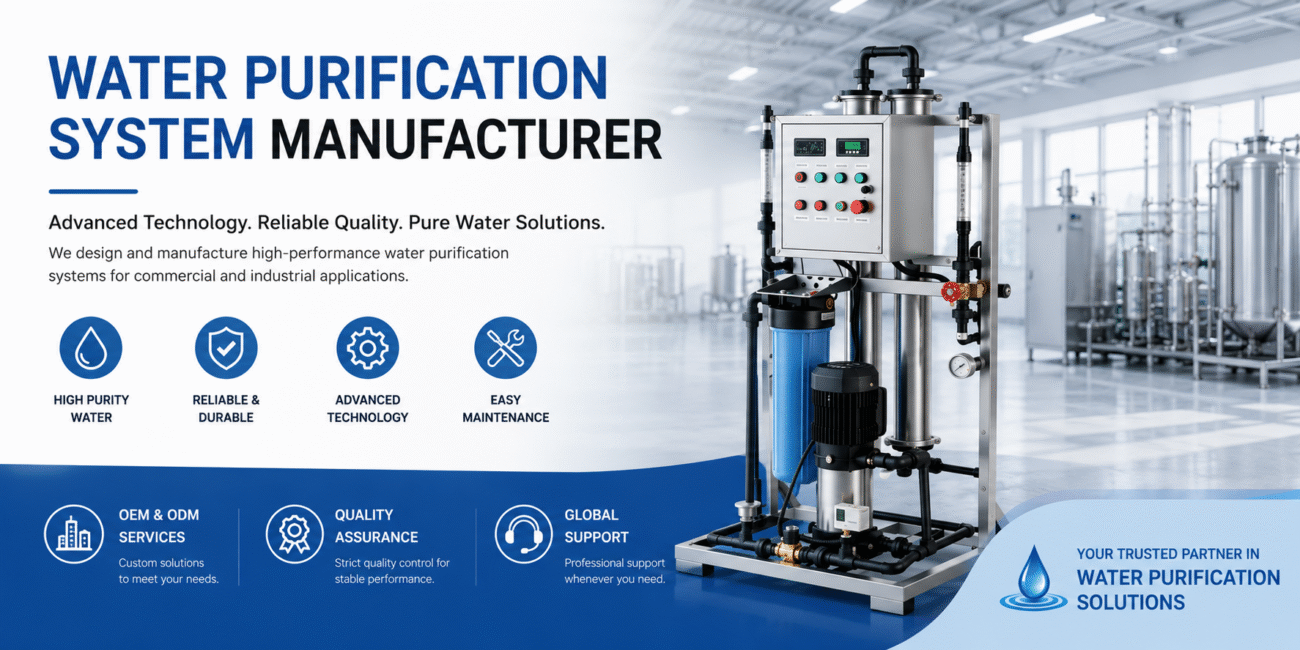
Furthermore, municipal water hardness fluctuates seasonally. Pushing this untreated water directly into a $15,000 espresso machine operating at 9 bars (roughly 130 PSI) guarantees rapid calcium carbonate scaling. To protect these investments, procuring a dedicated water purification machine for business is a mandatory baseline for any serious food and beverage operation.
By stripping the feed water down to a blank slate, managers eliminate the seasonal fluctuations of the municipal grid. This guarantees that a franchise location in Los Angeles produces the exact same cup of coffee or fountain soda as a location in New York.
Engineering the Perfect Extraction: Systems for Coffee Shops and Cafes
Specialty coffee is a game of microscopic precision. Coffee is 98% water; if the water chemistry is flawed, the extraction yield will be poor, regardless of the quality of the roasted bean. High alkalinity acts as a buffer, neutralizing the desirable bright acids in coffee, resulting in a flat, muddy cup. Conversely, water with zero TDS lacks the mineral content (calcium and magnesium) necessary to bind to flavor compounds during the extraction process.
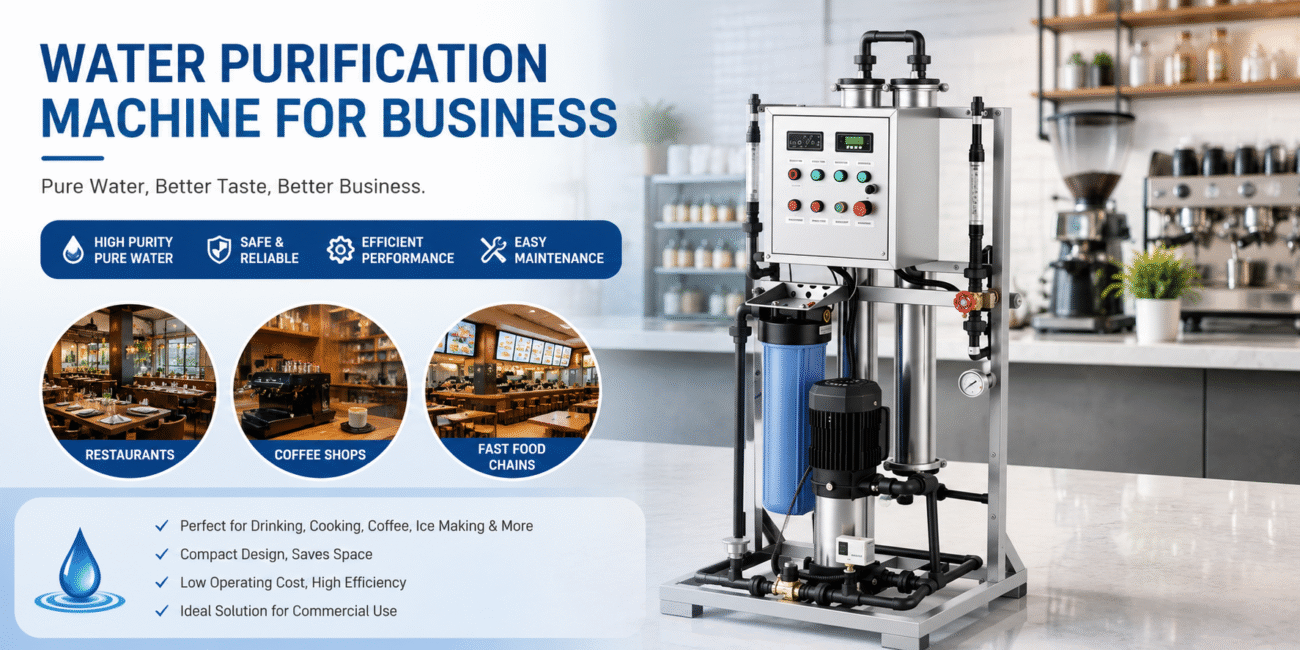
This is why an off-the-shelf residential filter is entirely inadequate for a commercial cafe. Operators need a customizable water purification system for small business that allows for precise mineral blending. By running raw water through a commercial RO membrane, you remove the unpredictable municipal baseline. You then utilize a precision needle valve to bypass a calculated percentage of carbon-filtered water back into the RO permeate, achieving the Specialty Coffee Association’s target of 150 ppm TDS.
Beyond flavor, the ROI of this system is realized in equipment uptime. A busy cafe cannot afford a boiler failure at 8:00 AM on a Tuesday. Proper filtration ensures the heating elements remain pristine, maximizing heat transfer efficiency and lowering the electrical draw of the machine.
Field Engineer Insight: Most cafe owners monitor their system’s pressure gauge but ignore the permeate flow rate. If you notice your RO system’s production rate dropping while the feed PSI remains constant, you are likely experiencing chloramine breakthrough. Standard activated carbon blocks exhaust rapidly when exposed to municipal chloramines. Once exhausted, the chloramine oxidizes the RO membrane, physically opening the pores and allowing raw TDS to pass through. For municipal cafe setups, always specify catalytic carbon pre-filters to protect the membrane investment.
Defending Capital Kitchen Equipment: Ice Makers and Combi Ovens
In a full-service restaurant environment, the volume of water processed daily is immense. Ice machines and combi-steam ovens are particularly vulnerable to poor water quality. An ice machine functions by freezing water in layers; pure water freezes first, pushing dissolved solids out. If the feed water is hard, these solids precipitate as scale on the evaporator plates. This scale insulates the plates, increasing the freeze cycle time, driving up electrical costs, and ultimately causing the harvest cycle to fail.
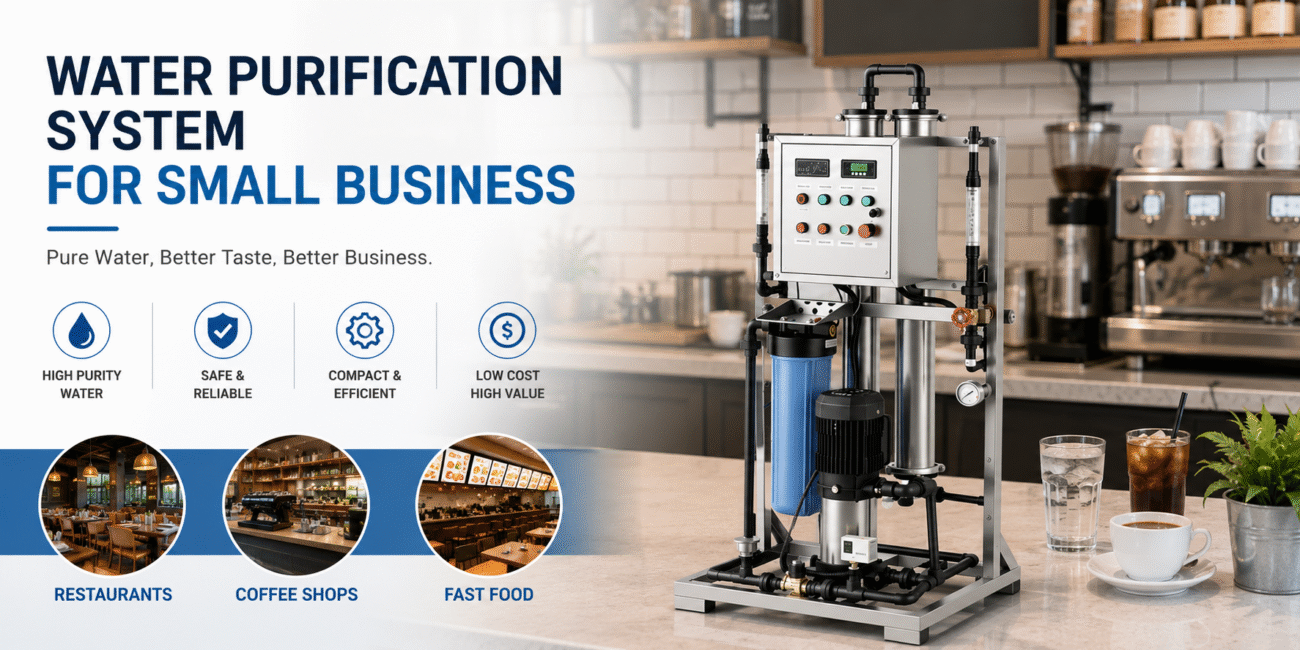
Deploying a high-capacity commercial water filtration system restaurant is the most effective preventative maintenance strategy a general manager can execute. By feeding pure water to the ice machine, the freeze times remain mathematically consistent, and the resulting ice is crystal clear, harder, and melts slower in the customer’s glass.
Similarly, combi ovens utilize flash steam generation. Injecting high-TDS water onto a superheated element creates instant scale buildup, which will eventually crack the heating element due to localized overheating. The CAPEX of replacing a combi oven boiler far exceeds the cost of implementing proper filtration upfront. When sizing these systems, it is critical to evaluate the manufacturer’s specified flow rates. A standard commercial kitchen may require a system capable of delivering sustained bursts of 3 to 5 GPM at 60 PSI to satisfy the sudden draw of multiple appliances simultaneously.
Point-of-Use Solutions for Dedicated Beverage Stations
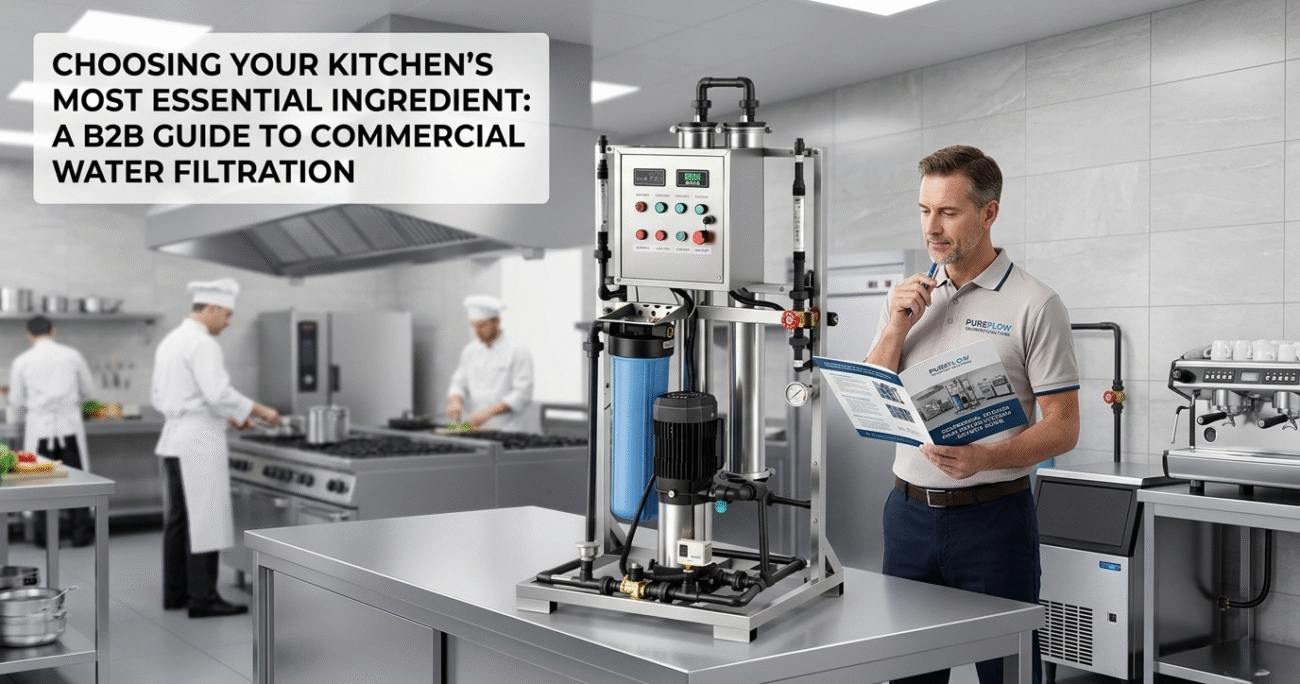
While a centralized commercial RO skid is ideal for whole-kitchen protection, some architectural layouts or leased spaces make running new PEX tubing from a back room to the front counter impossible. In these scenarios, localized Point-of-Use (POU) filtration is required to protect specific high-value assets.
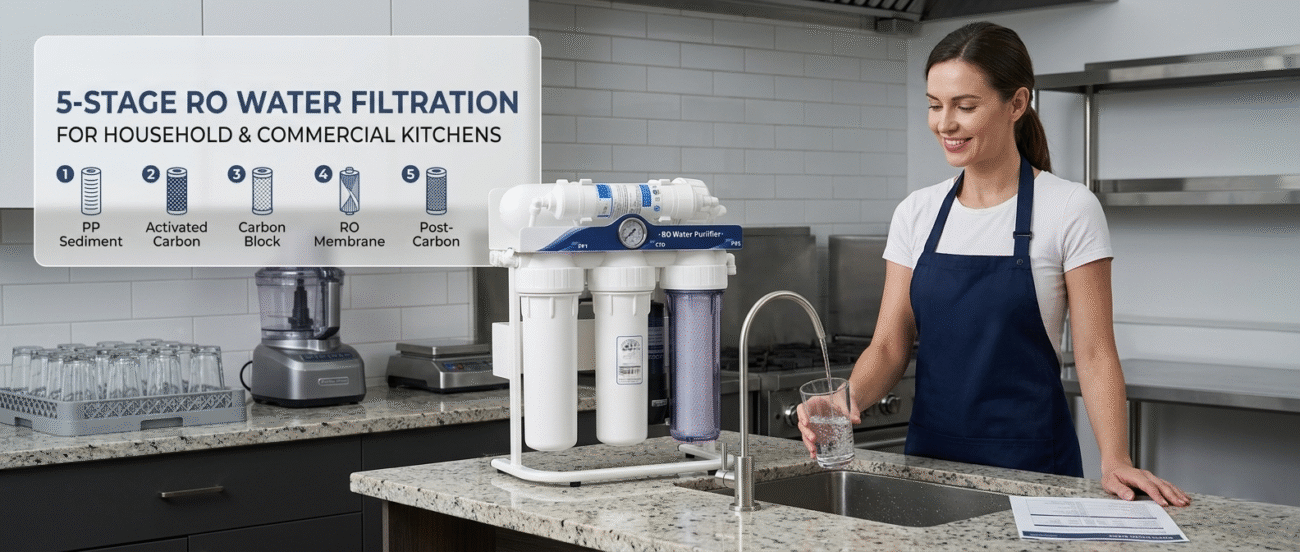
For a dedicated under-counter application—such as a single high-end espresso machine, a specialized tea brewing station, or a breakroom ice dispenser—a heavy-duty 5 stage ro water filter offers an excellent balance of footprint and performance.
This multi-stage approach ensures layered protection. The initial sediment filtration removes suspended solids that would otherwise blind the carbon blocks. The carbon stages strip the organics and halogens, while the RO membrane does the heavy lifting of TDS removal. Finally, a remineralization cartridge (the fifth stage) injects a controlled amount of calcium and magnesium back into the water to prevent the aggressive RO water from leaching brass and copper from the espresso machine’s internal components. This localized approach allows small businesses to achieve commercial-grade water chemistry without the need for extensive facility modifications.
Consolidating Your Supply Chain with a Direct Partner
In the highly competitive food and beverage industry, vendor consolidation is a proven strategy for reducing OPEX and streamlining facility management. Relying on fragmented suppliers—buying filters from one distributor and membranes from another—leads to mismatched maintenance schedules and unpredictable equipment behavior.
Procurement directors achieve the highest ROI by partnering directly with a true water purification system manufacturer. A direct manufacturing partner understands the exact hydraulic tolerances of their systems. They provide accurate preventative maintenance schedules based on your specific daily gallon usage, ensuring filters are swapped exactly when their capacity is reached, rather than relying on arbitrary calendar dates.
Furthermore, a direct relationship guarantees immediate access to proprietary technical support and wholesale replacement parts. When an operator standardizes their locations with equipment engineered by a singular source, training internal maintenance staff becomes vastly more efficient, and the total cost of ownership across the franchise footprint drops significantly.