Strategizing High-ROI Commercial Water Purification and Industrial Filtration for Plant Operations

Facility managers and procurement engineers know that raw water quality directly dictates operational expenditure (OPEX). Whether you are pulling from a variable municipal grid or a high-TDS well, inadequate feed water leads to membrane fouling, boiler scaling, and product inconsistencies. Partnering with a proven engineering team like yourwatergood.com ensures that your capital equipment is designed not just for immediate filtration, but for decades of low-maintenance, high-efficiency operation.
Executive Sizing & Selection Criteria (Actionable Briefing):
- Establish Precise Feed Water Metrics: Never size a system without a comprehensive recent water analysis detailing Total Dissolved Solids (TDS), silica, iron, and pH.
- Calculate True Capacity Needs: Size your system based on peak Gallons Per Minute (GPM) demand, not just daily averages, to prevent pump short-cycling and premature wear.
- Factor in Pre-treatment Necessity: Municipal water requires aggressive chlorine removal to protect thin-film composite membranes, whereas well water demands iron and manganese oxidation.
- Evaluate Total Cost of Ownership (TCO): Weigh the initial CAPEX against the OPEX of consumable filters, anti-scalant chemicals, and electrical draw over a 10-year lifecycle.
- Demand Open-Source Components: Specify non-proprietary PLCs, pumps, and membrane housings to avoid supplier lock-in and ensure supply chain resilience.
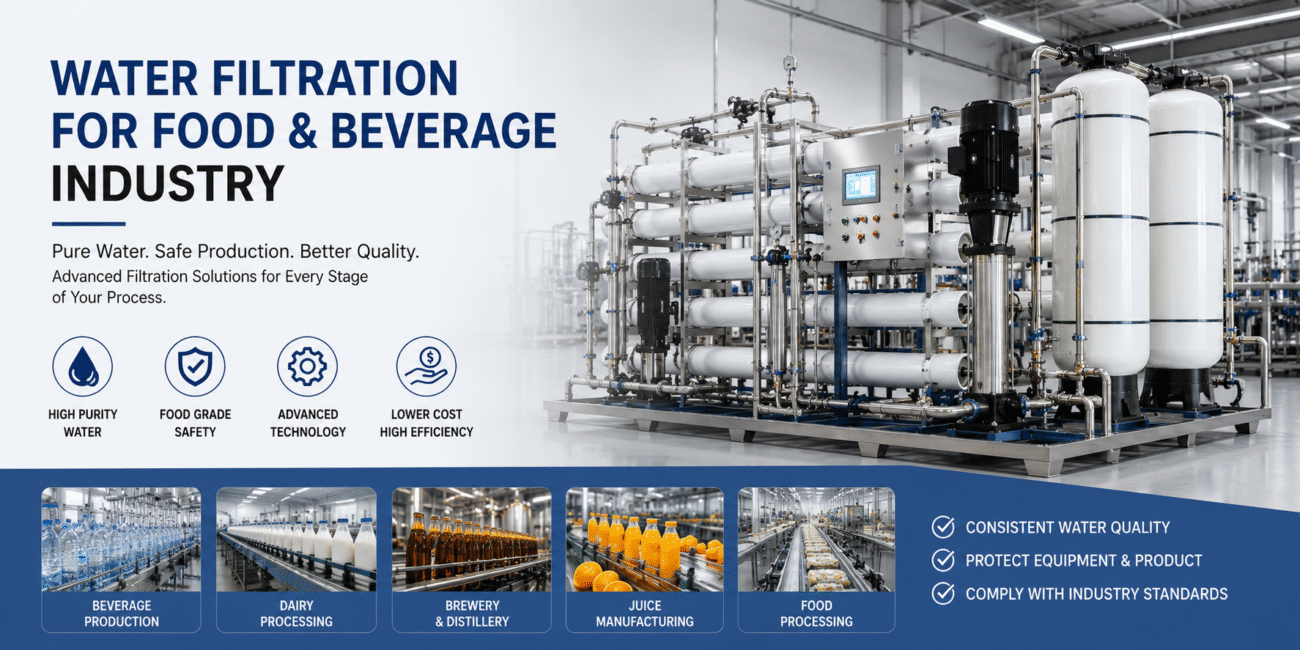
Standardizing Quality: water filtration for food and beverage industry
In the food, beverage, and commercial hospitality sectors, water is your primary raw ingredient. The baseline for safety in the United States is established by the EPA’s Safe Drinking Water Act, but mere compliance is insufficient for high-volume production. Trace elements like chloramines, hardness minerals, and seasonal organics alter flavor profiles, impact carbonation retention, and cause inconsistent batches across different plant locations.
When engineering water filtration for food and beverage industry, the focus shifts from basic safety to absolute uniformity. A commercial-grade setup must reliably strip all dissolved solids to a near-zero baseline. From there, specific minerals can be dosed back into the product water to achieve a proprietary flavor profile.
Furthermore, ignoring proper filtration leads to catastrophic scaling inside steam boilers and heat exchangers. A 1/16-inch layer of scale can increase boiler fuel consumption by up to 15%. Implementing the correct pre-treatment and membrane filtration eliminates this variable, translating directly to reduced utility costs and zero unplanned downtime.
Ready to standardize your production water? > [Request a Custom Quote & Technical Datasheet Here]
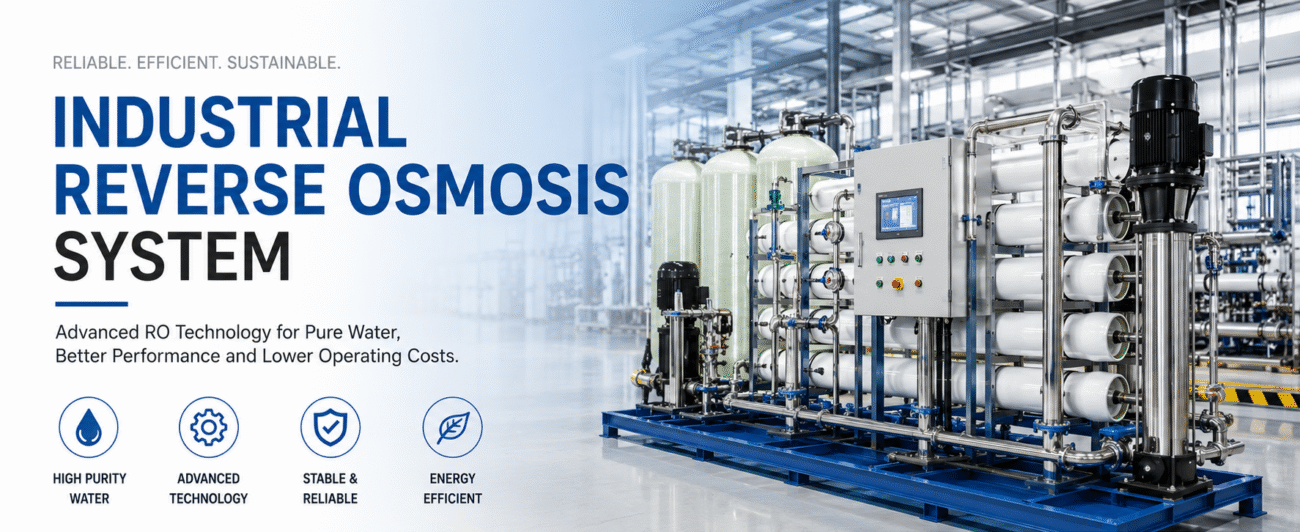
Scaling Heavy Manufacturing with an industrial reverse osmosis system
Industrial facilities—ranging from chemical processing plants to power generation—require aggressive, continuous water purification. An industrial reverse osmosis system operates as the central nervous system of plant utility water.
One of the most critical engineering considerations is the feed water source. Municipal tap water is generally biologically safe but carries high levels of chlorine or chloramines, which will permanently degrade RO membranes within hours if not properly neutralized via activated carbon or sodium bisulfite injection. Conversely, utilizing well water requires a completely different pre-treatment skid. Well water frequently exhibits high levels of iron, manganese, and hydrogen sulfide, alongside fluctuating silt density indices (SDI). Pushing raw well water directly into high-pressure pumps running at 200 to 400 PSI will result in rapid mechanical failure and irreversible membrane plugging.
By configuring the exact pump curve, membrane array (e.g., 4×4 or 8×4 configurations), and flow rates (ranging from 50 GPM up to 1000+ GPM), a properly specified system reduces wastewater reject rates and maximizes permeate recovery.
Field Engineer Insight: Most procurement managers look at the pressure drop across the membrane array to determine when to clean. However, field engineers know that early-stage biofouling often masquerades as inorganic scaling. If your feed water is from a well source with high silica, generic anti-scalant dosing will fail. You need a specialized polymer dosed at precisely 3-5 ppm, combined with a Variable Frequency Drive (VFD) pump. The VFD ensures constant GPM during start-up, preventing the sudden “water hammer” pressure spikes that physically telescope and destroy membrane leaves.
Partnering with Elite industrial reverse osmosis system manufacturers
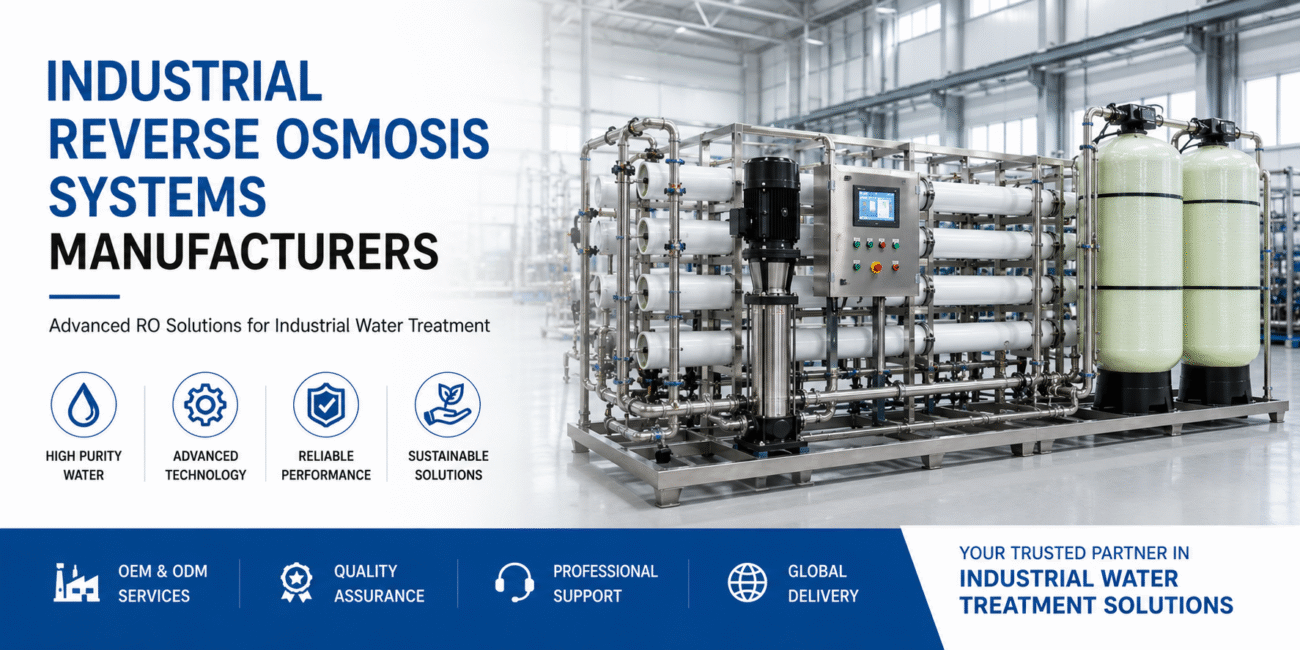
Selecting the equipment is only half the equation; selecting the builder determines your long-term success. The market is saturated with assemblers who simply bolt off-the-shelf parts together on a painted carbon steel frame. True industrial reverse osmosis system manufacturers engineer skids from the ground up to withstand harsh industrial environments.
When auditing a manufacturer, demand specific construction standards. High-pressure piping should be fully welded 316L stainless steel, while low-pressure pre-treatment lines should utilize Schedule 80 PVC or CPVC. Control panels must be NEMA 4 or NEMA 4X rated and UL-listed for the US market to ensure electrical compliance and safety in washdown environments.
A manufacturer’s value is proven in their PLC programming. Superior systems feature automated membrane flush cycles upon shutdown, which purges concentrated brine from the pressure vessels. This single automated feature extends membrane life by up to 30%, drastically altering the OPEX calculation over a five-year period.
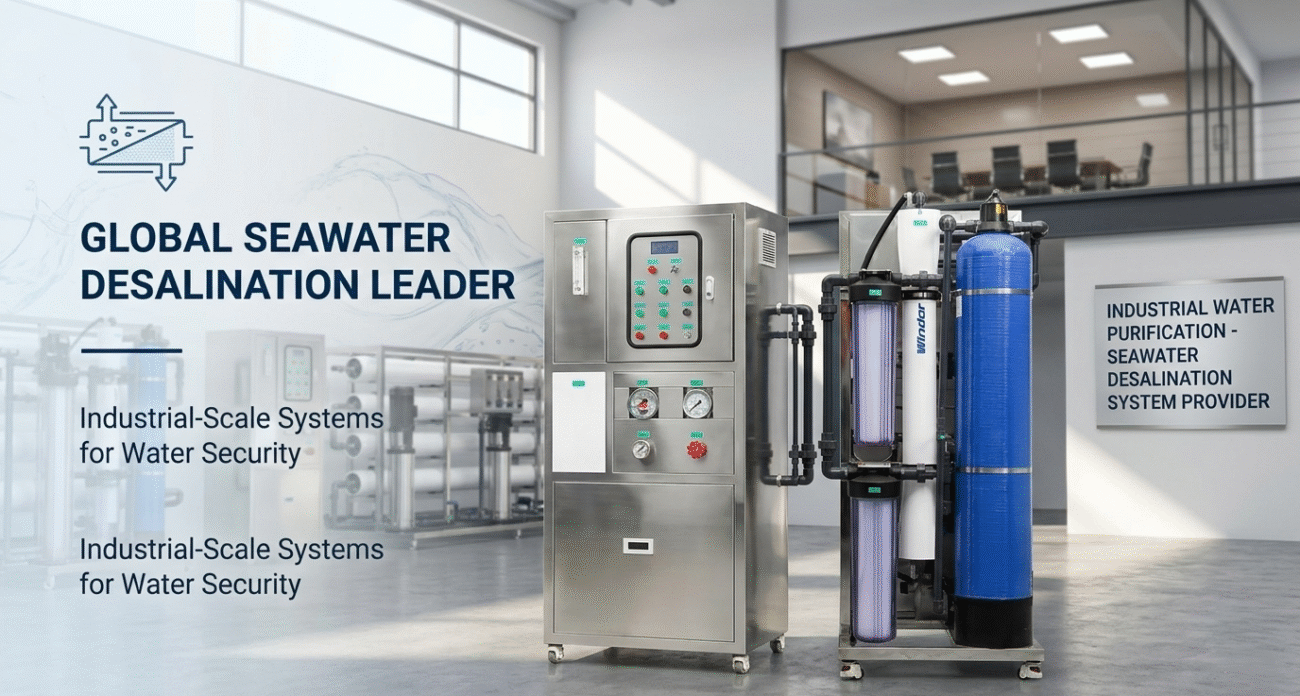
Coastal & Off-Grid Operations: Securing a seawater desalination system provider
For facilities operating on coastlines, offshore rigs, or in extreme water-scarce regions, treating brackish or seawater is the only viable option for securing a water supply. Treating water with TDS levels exceeding 35,000 ppm requires radically different engineering tolerances than standard freshwater RO.
Choosing the right seawater desalination system provider is a critical risk-management decision. Because seawater systems must operate at extreme pressures—often between 800 and 1200 PSI—standard stainless steel will rapidly corrode due to high chloride concentrations. Expert providers construct these systems using specialized Duplex or Super Duplex stainless steel for all high-pressure wetted parts.
Furthermore, the electrical draw of generating 1000 PSI is massive. Modern, high-ROI desalination skids incorporate Energy Recovery Devices (ERDs). An ERD captures the hydraulic energy from the high-pressure reject brine stream and transfers it back to the feed stream. This technology cuts the electrical OPEX of the desalination process by up to 40%, transforming what was once an energy-prohibitive process into a financially viable utility solution for resorts, coastal processing plants, and marine operations.
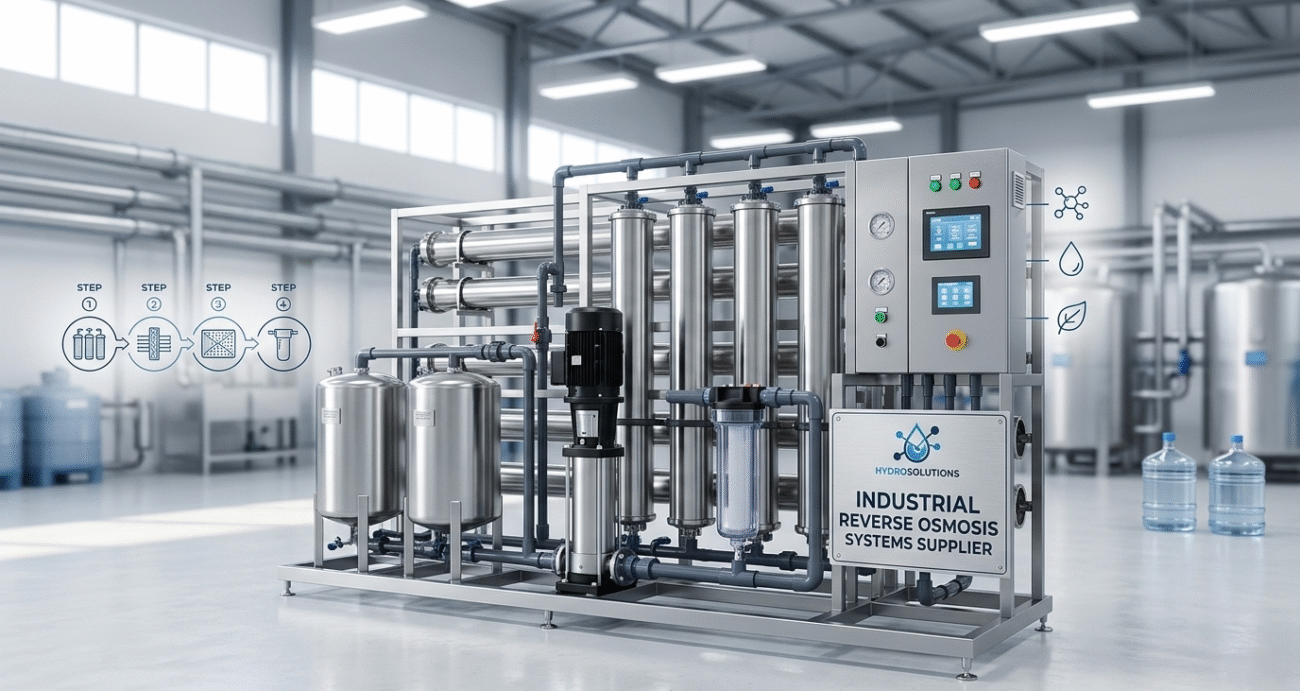
Securing Your Supply Chain with a Proven industrial reverse osmosis systems supplier
In the B2B space, downtime is measured in thousands of dollars per hour. Your relationship with your equipment vendor does not end at commissioning; it begins there. Relying on a dependable industrial reverse osmosis systems supplier ensures that you have immediate access to replacement membranes, high-pressure pump rebuild kits, and proprietary anti-scalant chemistries.
Procurement strategies must account for lead times. An integrated supplier maintains domestic inventory of critical wear parts—such as pump seals, RO membranes, and PLC contactors. Standardizing your plant’s water treatment hardware with a single, reliable supplier allows your maintenance team to streamline their preventive maintenance schedules and reduce the capital tied up in localized spare parts inventory.