
The Ultimate Blueprint for Restaurant Water Filtration: Maximizing ROI and Brand Consistency in the US

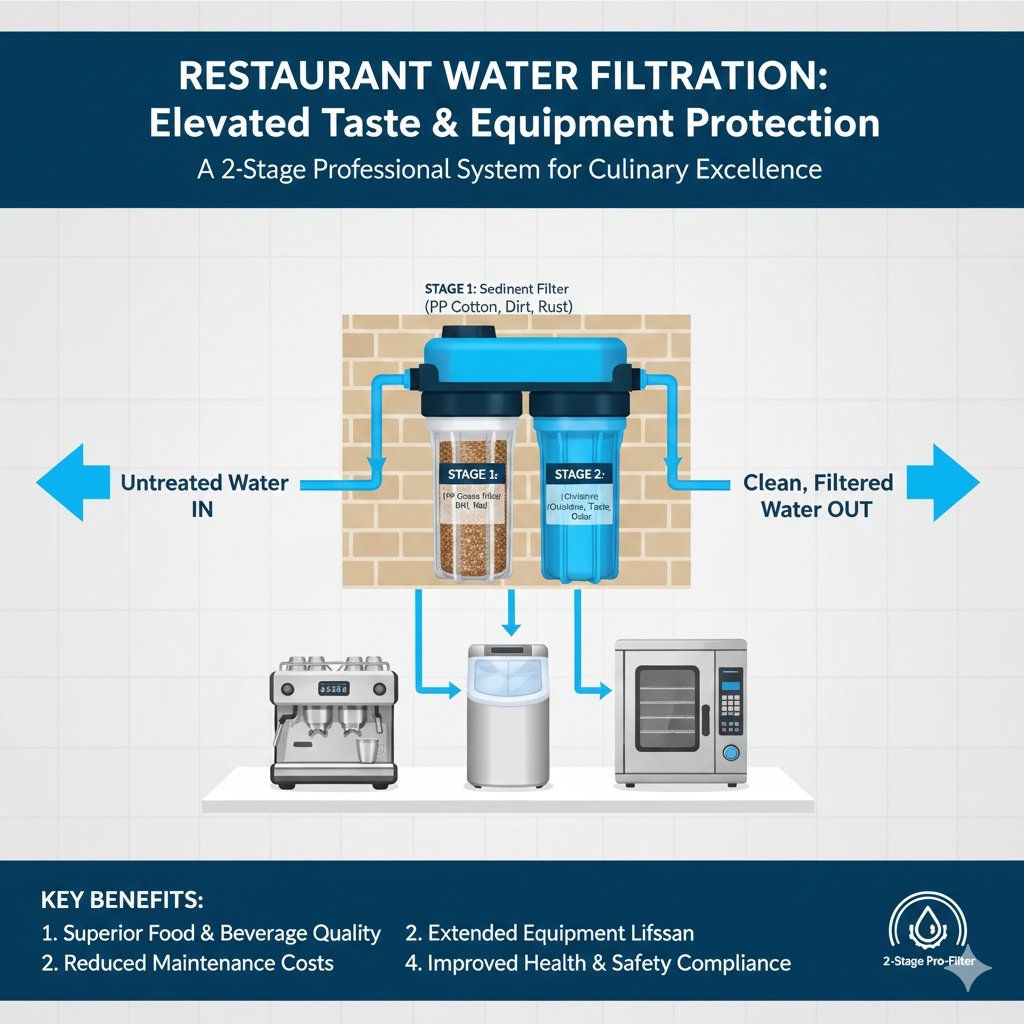
In the highly competitive landscape of the American food and beverage industry, operational efficiency and product consistency are the foundational pillars of profitability. Small business owners, from the proprietors of bustling urban cafes to the operators of rustic farm-to-table dining establishments, meticulously source premium coffee beans, organic produce, and artisanal proteins. Yet, the most heavily utilized and fundamental ingredient in any commercial kitchen—water—is frequently left to the unpredictable fluctuations of aging municipal infrastructure or unmonitored private well systems.
Implementing a high-performance restaurant water filtration architecture is no longer an optional luxury or a secondary consideration; it is a critical infrastructural strategy. Water acts as the universal solvent in your high-end espresso machine, the core component of your ice production, and the base of your culinary broths. Without a robust defensive barrier, raw, untreated water acts as a silent, destructive force that accelerates capital equipment depreciation, inflates utility overhead, and severely compromises the sensory experience of your menu. This comprehensive B2B guide explores the economic, operational, and technical imperatives of deploying an advanced restaurant water filtration solution, ensuring your capital assets are protected, your brand reputation remains uncompromised, and your long-term return on investment is fully secured.https://yourwatergood.com/product/5-stage-ro-water-filter-for-home-busines/
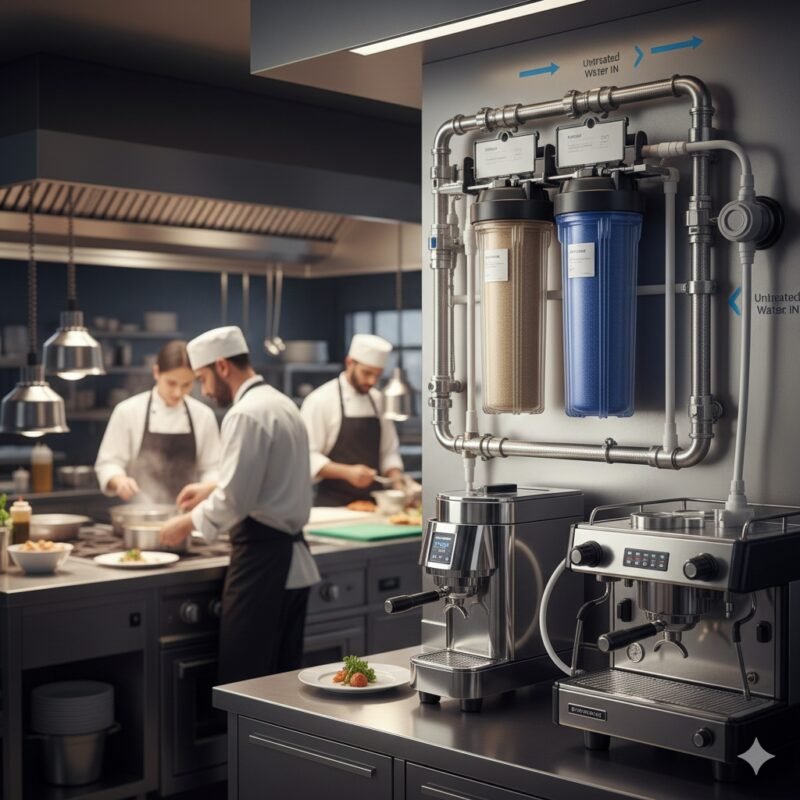
Navigating America’s Hidden Water Crisis: Regional Challenges and EPA Standards
The United States boasts incredibly diverse geology, which directly dictates the chemical and physical makeup of the groundwater and municipal supplies drawn by commercial businesses. A generic, one-size-fits-all approach to commercial facility management inevitably fails because the contaminants threatening a diner in the Midwest are vastly different from those jeopardizing a seafood establishment on the coast. A professionally specified restaurant water filtration system must be precisely tailored to combat these specific regional profiles.
Regional Vulnerabilities in US Well and Municipal Water
- The Midwest (Heavy Metals and Agricultural Runoff): Restaurants and farm-to-table operations relying on well water in the Midwestern agricultural belt frequently face alarming concentrations of nitrates from fertilizer runoff, alongside trace heavy metals and severe rust from aging iron well casings. Nitrates are not just a severe health compliance hazard; they aggressively corrode internal copper piping and brass fittings in commercial heating equipment, severely shortening the lifespan of expensive espresso boilers and steam ovens.
- Texas and the Southwest (Extreme Mineral Hardness): Drawing from deep limestone aquifers, the water in Texas, Arizona, and surrounding Southwestern states is notoriously hard. This water is heavily laden with dissolved calcium and magnesium. When introduced into commercial boilers or combi-ovens, these dissolved minerals rapidly precipitate under heat into dense, rock-like scale. This scale chokes internal water lines, thermally insulates heating elements, and requires relentless, aggressive descaling maintenance.
- Coastal Regions (Sediment and Silt Intrusion): Small businesses operating along the Eastern Seaboard, the Pacific coast, or the Gulf Coast often battle fine sand, abrasive silt, and organic matter infiltrating their well systems or aging municipal lines. These microscopic abrasive particulates act exactly like liquid sandpaper. As they flow through your plumbing, they destroy precision valves, score commercial rotary pumps, and prematurely blind finer carbon filter media.
Aligning with the EPA Drinking Water Standards Framework
The Environmental Protection Agency (EPA) establishes a rigorous National Primary Drinking Water Regulations framework that dictates the maximum allowable levels of specific contaminants, ranging from microorganisms to industrial organic chemicals. While municipal water treatment facilities treat water to meet these legal baselines at the plant, the journey through miles of deteriorating, century-old city pipes can easily reintroduce lead, rust, and bacterial contaminants before the water ever reaches your commercial tap.
Furthermore, for businesses operating independently on private wells, the immense burden of EPA compliance falls entirely on the restaurant owner. A multi-stage restaurant water filtration setup guarantees that your establishment not only meets but exceeds the EPA standards framework. This proactive operational approach provides a legally compliant, biologically safe, and sensorially superior product to your patrons, effectively shielding your business from severe liability and health department citations.
The Economic Engine: ROI Analysis and Capital Equipment Protection
For the pragmatic B2B operator, every capital expenditure must yield a definitive, measurable Return on Investment (ROI). The financial justification for investing in high-grade restaurant water filtration is primarily found in its ability to drastically reduce operational downtime and exponentially extend the lifecycle of your most expensive kitchen assets.
Shielding High-Value Assets: Espresso Machines and Ice Makers
A high-specification commercial espresso machine or a high-yield industrial ice maker requires a massive capital outlay for any small business. These precision machines operate continuously under high heat and intense pressure, making them exceptionally vulnerable to untreated local water.
- The True Cost of Scale: When hard water is heated, the resulting mineral scale permanently coats boiler walls and internal temperature probes. This scale is a highly effective thermal insulator. To reach the required brewing temperature for specialty coffee, the machine must draw significantly more electricity to push heat through the scale barrier, instantly driving up your daily utility overhead. Eventually, the overworked heating element will overheat and burn out entirely, resulting in thousands of dollars in emergency repair costs and crippling lost revenue during peak morning service.
- The Mechanics of Premium Ice: Commercial ice machines rely on pure water freezing at a specific, uniform rate. High mineral and sediment content disrupts this process, resulting in cloudy, brittle ice cubes that melt rapidly, unnecessarily diluting premium cocktails and craft sodas. Furthermore, scale buildup on internal evaporator plates causes ice to stick during the harvest cycle, leading to severe mechanical jams, broken gears, and expensive emergency service calls.
Mitigating Rust, Nitrates, and Particulate Damage
In older US commercial properties or rural restaurants running on aging well systems, rust flakes and elevated nitrate levels represent a constant, insidious threat. When rust or well sand enters the narrow, precision flow restrictors of a batch coffee brewer or a sophisticated soda fountain dispenser, it causes immediate mechanical blockages. Nitrates further accelerate the rapid oxidation of internal metal components.
A dedicated restaurant water filtration system intercepts these abrasive and corrosive materials entirely before they enter your machinery. By preventing the deep scoring of solenoid valves and protecting sensitive internal diaphragms, the filtration system ensures that your equipment operates smoothly through the most demanding culinary shifts, securing your ROI day after day.
Brand Reputation and the Science of Culinary Consistency
In the quick service, fast-casual, and fine dining sectors, long-term brand equity is built primarily on the inviolable promise of a reliable, consistent customer experience. A patron expects their signature pour-over coffee, fountain beverage, or delicate culinary broth to taste exactly the same on a Tuesday afternoon as it does on a bustling Friday night.
Eradicating Chemical Odors and Unwanted Flavors
Municipalities across the US rely heavily on chlorine and chloramines to sanitize public water lines and prevent bacterial outbreaks. While highly effective for public health disinfection, these harsh chemical sanitizers leave a distinct, medicinal odor and a bitter, lingering aftertaste in the water. If your foundation ingredient smells and tastes like a public swimming pool, it will immediately mask the delicate flavor notes of your premium roasted coffee beans, alter the hydration profile of your baking dough, and ruin complex culinary reductions.
The Standardized Sensory Profile
By implementing a specialized restaurant water filtration architecture, you utilize high-capacity carbon adsorption technology to permanently strip away these volatile organic compounds, chemical sanitizers, and natural off-tastes (such as the sulfur smell frequently common in private well water). This creates a perfectly neutral, standardized water profile. Regardless of seasonal algae blooms in local reservoirs, heavy rain events affecting turbidity, or sudden shifts in well water chemistry, your culinary and beverage output remains dependably excellent. This unwavering consistency is the bedrock of your Brand Reputation, safeguarding consumer trust and fostering intense customer loyalty.
Strategic Architecture: POE vs. POU Filtration Systems
A critical, foundational decision in commercial facility management is determining exactly where the filtration hardware should physically occur within the building’s plumbing infrastructure. Understanding the strategic, operational difference between Point of Entry (POE) and Point of Use (POU) is absolutely essential for maximizing the operational efficiency and the ongoing maintenance budget of your restaurant water filtration program.
Point of Entry (POE): The Facility Perimeter
A POE system is installed directly at the main water line where it enters the commercial building from the street or the well pressure tank.
- Operational Role: This setup acts as the primary, heavy-duty defensive shield for the entire facility. It is absolutely crucial for businesses on well water to utilize POE for bulk sediment removal, heavy iron oxidation, and large-scale particulate capture. This protects standard plumbing corridors, high-temp dishwashers, mop sinks, and public restrooms from severe mineral staining and flow-restricting blockages.
- Efficiency Limitations: While vital for basic infrastructure protection, treating the massive volume of water used to wash kitchen floors or flush commercial toilets to the exacting, ultra-pure standards required for drinking water is a severe, unsustainable waste of your expensive premium filtration media and maintenance budget.
Point of Use (POU): The Precision Extraction
A POU system is installed directly at the terminal equipment—tucked neatly under the beverage counter, mounted directly behind the commercial ice maker, or plumbed strictly into the espresso machine water line.
- Operational Role: POU systems provide ultra-fine, targeted purification exactly where the water is going to be consumed by a paying customer or integrated into a premium recipe.
- Commercial Advantage: By restricting premium filtration media (such as expensive sub-micron carbon blocks or delicate reverse osmosis membranes) strictly to revenue-generating beverages and culinary stations, a POU restaurant water filtration setup maximizes the lifespan of your precision filter cartridges. This drastically lowers your annual maintenance overhead and ensures absolute peak purity exactly where it matters most for your product quality.
The Hybrid Commercial Strategy
The most successful, economically efficient, and forward-thinking small restaurants and cafes in the US employ a hybrid plumbing architecture. They install a rugged, high-capacity POE system to handle bulk sediment and facility-wide hard water scaling issues, combined seamlessly with precision POU systems at the beverage and cooking stations to polish the water to absolute culinary perfection.
Material Science Mastery: The Role of a Specialized pp cotton household water purifier company
The physical durability, structural integrity, and kinetic resistance of a commercial filter are just as important as its chemical purification capabilities. In a high-volume restaurant environment, the filtration media is subjected to relentless, punishing kinetic stress from fluctuating municipal water pressure. This is precisely where the advanced material science of a dedicated pp cotton household water purifier company becomes a paramount business asset.
High-PSI Endurance in American Commercial Kitchens
American commercial plumbing systems often operate at incredibly high Pounds Per Square Inch (PSI) to meet the simultaneous, heavy demand of multiple fixtures running at once—from high-pressure pre-rinse sprayers to automated dishwashing bays. Substandard, generic, or cheaply imported filters can easily suffer from “blow-by” (where water forces its way around the filter seal) or undergo complete structural collapse under these intense commercial PSI spikes. When a filter physically fails, it allows raw, concentrated sediment to instantly bypass the housing and destroy your sensitive downstream equipment.
As a specialized and industry-leading pp cotton household water purifier company, our manufacturing focus is firmly fixed on structural resilience. Polypropylene (PP) cotton filters must be engineered utilizing a rigorous, proprietary thermal melt-blown manufacturing process. This creates a deeply intertwined, nearly indestructible physical matrix. This advanced material science ensures the filter cartridge is completely capable of withstanding extreme commercial PSI fluctuations and hydraulic hammer effects without tearing, channeling, or deformation.
Depth Filtration for Maximum GPM Output
In a fast-paced restaurant or cafe, speed directly equates to revenue. A filtration system must never act as a bottleneck, restricting the critical Gallons Per Minute (GPM) required to quickly fill large coffee urns, boil massive pasta pots, or supply a continuously running multi-valve soda fountain during peak lunch service hours.
High-density PP cotton filters utilize advanced graduated depth filtration technology. This means the filter is designed with variable density zones—trapping coarse rust and large sand particles on the looser outer layers, while simultaneously catching microscopic silt and fine organic matter near the tightly bound, dense core. This intelligent engineering ensures maximum sediment holding capacity, drastically extending the life of the filter, while concurrently maintaining the high GPM flow rates that American hospitality operators absolutely demand for uninterrupted service.
For reliable sourcing of these resilient materials in the US, smart business owners prioritize ordering directly from manufacturers who profoundly understand these exact pressure dynamics. Establishing a supply line through a dedicated platform like www.yourwatergood.com ensures you are receiving the heavy-duty filtration technology required to keep small businesses running flawlessly.
Spotlight: The Ultimate High-Flow Solution for US Businesses
When selecting the terminal POU stage for your comprehensive restaurant water filtration architecture, Reverse Osmosis (RO) remains the undisputed, gold standard technology for eliminating total dissolved solids, heavy metals, microscopic cysts, and persistent chemical contaminants that standard carbon filters simply cannot physically catch.
For cafe, bakery, and restaurant operators seeking an advanced system that perfectly bridges high commercial output with manageable, user-friendly, and low-cost maintenance, the 5-Stage RO Water Filter for Home and Business stands as the premier, uncompromising choice.
Engineered specifically to meet and exceed the rigorous, high-volume demands of the US market, this system provides exceptional GPM delivery alongside unparalleled, laboratory-grade purity. Because it is designed from the ground up for versatile, high-demand applications, it serves as an absolutely ideal, low-maintenance solution for both the heavy, punishing daily use of a commercial kitchen and the demanding, pristine standards of a luxury private residence.
By integrating this specific, high-performance unit into your restaurant water filtration layout, you definitively guarantee that your business is protected by the absolute highest tier of water purification technology available on the market today. We highly recommend browsing our complete catalog to secure this exact system and explore a wide range of commercial solutions.
Proactive Maintenance: The US Operator’s Guide
A restaurant water filtration system is a hardworking, vital piece of industrial machinery. To guarantee continuous ROI, protect your warranties, and prevent unexpected, catastrophic downtime, facility managers and restaurant owners must transition away from a mindset of reactive emergency repairs to a strict culture of proactive, scheduled maintenance.
Monitoring GPM Flow Rates and PSI Differentials
Your absolute first line of operational defense is monitoring the kinetic pressure of your plumbing system. We highly recommend that your professional installer includes analog pressure gauges directly integrated into the plumbing line both before and after your primary sediment filter housings.
- A healthy, freely flowing system will show a minimal PSI differential between the inlet gauge and the outlet gauge.
- If the post-filter PSI drops significantly during active operation, it is a definitive, unignorable indicator that the pre-filters—sourced from your trusted pp cotton household water purifier company—have successfully trapped their absolute maximum capacity of well silt, mineral scale, or municipal rust. They require immediate replacement to rapidly restore your kitchen’s required operating GPM and prevent immense strain on your downstream booster pumps.
Strategic Cartridge Replacement Schedules
- Sediment and Carbon Pre-Filters: In a high-volume US restaurant setting, these cartridges should be visually evaluated on a monthly basis and typically replaced every three to six months. Waiting until the water flow physically slows down at the tap means the filters are already severely over-saturated, placing severe, unnecessary mechanical strain on your system’s internal seals and machinery.
- Reverse Osmosis Membranes: With proper, strict adherence to timely pre-filtration maintenance, a commercial RO membrane can effectively perform at peak efficiency for up to two years. Facility managers should utilize a handheld Total Dissolved Solids (TDS) meter on a weekly basis to objectively verify that the membrane’s mineral rejection rate remains firmly within your desired, strict specification for brewing specialty coffee or freezing clear ice.
- Routine System Sanitization: Every single time a filter change is performed by staff or a technician, the internal plastic housings and O-rings should be thoroughly sanitized and lubricated to comply with stringent local health department regulations and strictly prevent any dangerous bacterial biofilm accumulation.
FAQ: Strategic Insights for American Restaurant Owners
Q: Will adding a comprehensive restaurant water filtration setup negatively impact the GPM at my high-volume soda fountain during a rush? A: Not if the system is properly engineered and specified for your specific peak demand. Professional commercial-grade systems utilize oversized plumbing porting, high-flux filter media, and highly pressurized hydrodynamic storage tanks (specifically for RO applications) to ensure that your required GPM is always instantly available on demand, effortlessly keeping up with the most chaotic lunch rushes without pressure drops.
Q: If my cafe is located in a major metropolitan city and operates on treated municipal water, do I really still need heavy-duty commercial filtration? A: Absolutely. While municipal city water leaves the municipal treatment plant legally meeting minimum EPA standards, it must aggressively travel through miles of deteriorating, often century-old subterranean infrastructure. Frequent water main breaks, sudden municipal pressure drops, heavy pipeline rust, and seasonal chlorine dosing spikes make municipal water highly unpredictable. A robust commercial filter is your only physical, reliable guarantee of quality and sensory consistency directly at the tap.
Q: Why should I prioritize sourcing my filters directly from a specialized pp cotton household water purifier company rather than ordering from a general, broadline restaurant supply catalog? A: Specialization directly equates to superior material science and product longevity. A dedicated pp cotton household water purifier company focuses exclusively on the complex physics of fluid dynamics and particulate filtration. Our manufactured products offer significantly higher sediment holding capacities, vastly superior PSI resistance, and drastically extended operational lifespans compared to the generic, cheaply made, white-labeled filters typically found buried in broadline food service catalogs.
Conclusion: Secure Your Infrastructure and Elevate Your Brand
In the incredibly fast-paced, high-stakes US food service and hospitality industry, you simply cannot afford to leave your most critical, fundamental, and voluminous ingredient entirely to chance. Variable, untreated, and unpredictable water quality acts as a hidden, aggressive tax on your small business. It covertly drives up your daily utility costs, relentlessly destroys your expensive capital equipment from the inside out, and constantly undermines the hard-earned consistency of your carefully crafted menu.
Implementing a professional, appropriately sized, and technologically advanced restaurant water filtration architecture is a decisive, highly strategic maneuver that immediately secures your operational uptime, heavily protects your bottom line, and elevates your culinary offerings. By proactively partnering with true material science experts and utilizing advanced purification technology, you effectively transform a massive potential operational liability into a definitive, profitable competitive advantage. Do not let hidden scale buildup, unseen abrasive rust, or harsh, medicinal chemical odors compromise your hard-earned brand reputation.
Are you ready to permanently optimize your restaurant’s water infrastructure and secure your capital investments? Explore our highly comprehensive range of commercial and residential purification solutions today at www.yourwatergood.com. From heavy-duty, high-capacity whole-facility pre-filtration systems to our elite, high-GPM RO purifiers ideally suited for small businesses, we provide the robust, reliable technology required by demanding American business owners. Protect your expensive equipment, perfect your culinary product, and secure your financial ROI by upgrading your water system today.