
The Professional Blueprint for Off-Grid Hospitality: Implementing a High-Performance restaurant well water chlorine filtration system

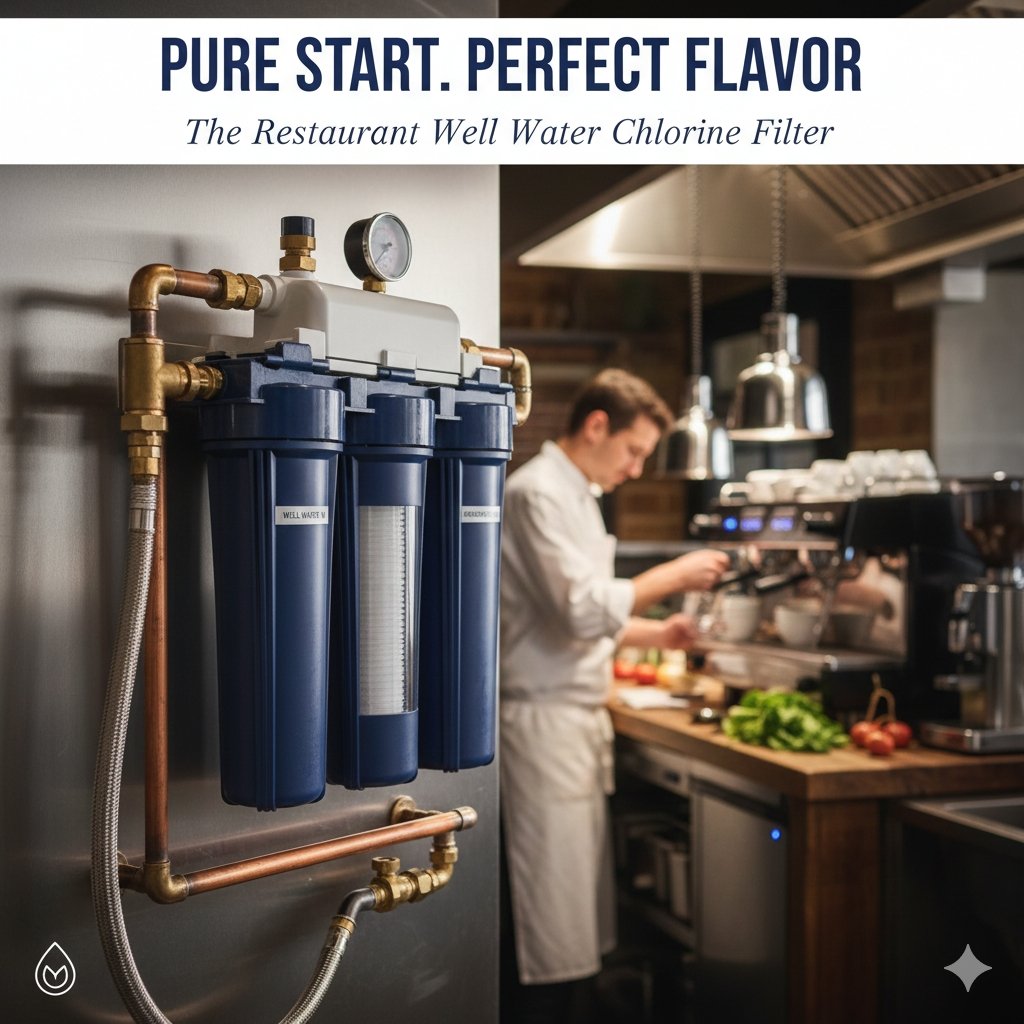
In the modern culinary landscape, the “farm-to-table” movement and the rise of boutique rural hospitality have led many establishments to operate outside the reach of municipal water grids. While the charm of a remote bistro or a vineyard-side cafe is undeniable, the infrastructure requirements are significantly more complex. When a property relies on a private well, the responsibility for water safety and quality shifts entirely to the business owner. Specifically, the management of disinfection byproducts and the removal of necessary chemical additives requires a specialized restaurant well water chlorine filtration system.
For the facility manager or the restaurant proprietor, water is not just a utility—it is a critical ingredient. It defines the clarity of the ice, the aroma of the coffee, and the efficiency of the dishwashing cycle. However, well water presents unique challenges, often requiring chlorination for safety, which subsequently ruins the sensory experience of the dining room. This guide provides a professional deep-dive into the strategic necessity and technical implementation of a high-capacity restaurant well water chlorine filtration system.https://yourwatergood.com/product/whole-house-water-filtration-system-for-business/.
The Paradox of Well Water Chlorination in Food Service
Many restaurant owners who transition to well water are surprised to find that they need to add chemicals to their “natural” source. Because private wells are not monitored by a city utility, they are susceptible to bacterial contamination from groundwater runoff or seasonal changes. To ensure the safety of the public and comply with health department regulations, many establishments utilize a “shock” chlorination method or a continuous chlorine injection system.
While chlorine is an effective disinfectant, it is a culinary disaster. Chlorine is a highly reactive oxidant that interacts with everything it touches. In a commercial kitchen, this creates three primary problems:
- Aromatic Interference: Chlorine has a distinct, “bleachy” odor that is easily detected by customers. In a fine-dining setting, these fumes can mask the delicate bouquet of an expensive wine or the subtle notes of a gourmet soup.
- Flavor Alteration: When chlorine reacts with organic compounds in coffee beans or tea leaves, it produces “chlorophenols,” which have an incredibly low taste threshold. Even a tiny amount can make a premium espresso taste bitter or medicinal.
- Chemical Volatility: During cooking, chlorine can react with various food proteins, potentially altering textures or colors in ways that compromise a chef’s signature dishes.
The solution is a point-of-entry restaurant well water chlorine filtration system that allows the chlorine to do its job of sanitizing the well and the main storage tank, but then strips it away before the water enters the kitchen’s plumbing.
The Infrastructure of Defense: Components of the System
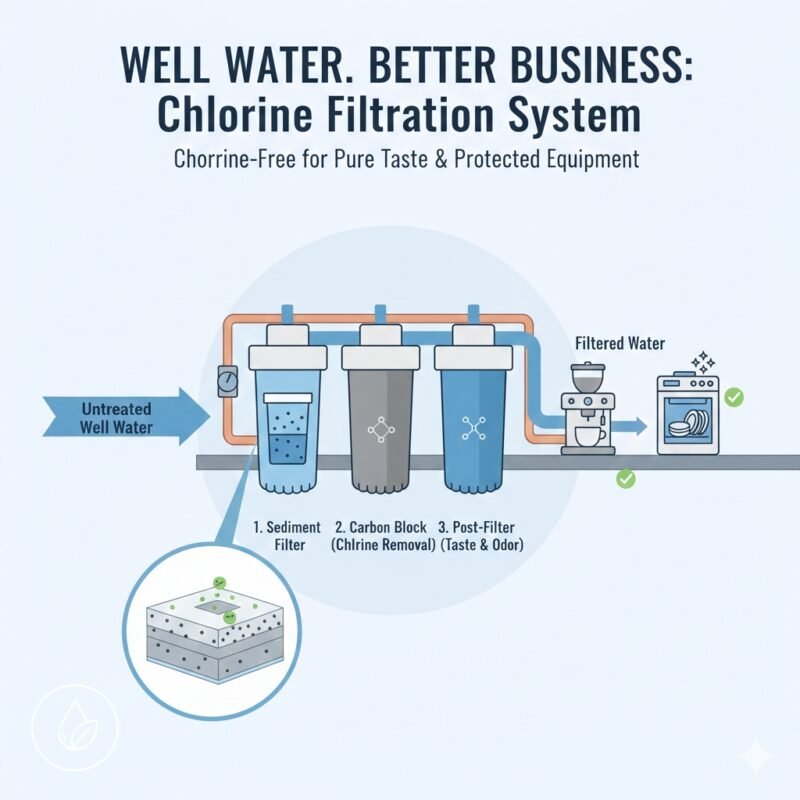
A professional restaurant well water chlorine filtration system is not a single filter; it is a multi-stage process engineered for high-volume demand. Unlike a residential unit, a restaurant system must handle the peak flow rates of a lunch rush where multiple faucets, dishwashers, and ice machines are operating simultaneously.
The First Guard: The Sediment Pre-filter
Well water often carries high levels of silt, sand, and oxidized iron. These physical particulates can quickly clog sensitive carbon filters. As a specialized pp cotton household water purifier company, we have engineered high-density melt-blown polypropylene (PP) cartridges to serve as the “heavy-duty” shield for these systems.
- Depth Filtration: PP cotton traps debris throughout its entire cross-section, ensuring that the water entering the chlorine-removal stage is physically clear.
- Asset Longevity: By removing grit at the point of entry, the PP cotton stage prevents the “sandblasting” effect that ruins commercial faucet valves and dishwasher seals.
The Core Stage: Activated Carbon Block
The heart of the restaurant well water chlorine filtration system is the activated carbon stage. Carbon is uniquely suited for chlorine removal through a process called adsorption. For a business, we recommend high-density carbon blocks over granular carbon because they provide a larger surface area and prevent “channeling,” where water finds a path around the media without being treated.
Asset Protection: Why Your Equipment Needs This System
Beyond the plate and the glass, the economic health of a restaurant is tied to the lifespan of its mechanical assets. Unfiltered, chlorinated well water is a silent killer of commercial machinery.
Safeguarding Commercial Dishwashers and Boilers
Chlorine is highly corrosive to certain metals and elastomers. In high-temperature environments like a commercial dishwasher or a steam boiler, chlorine becomes even more aggressive.
- Seal Degradation: Many commercial appliances use rubber O-rings and gaskets that can become brittle and crack when exposed to consistent levels of chlorine.
- Stainless Steel Pitting: While stainless steel is “stainless,” high concentrations of chlorine can lead to localized pitting corrosion, especially in the interior of a steamer or a combi-oven.
By implementing a Whole House Water Filtration System for Business, property owners can mitigate these risks. This professional-grade system is designed to provide the massive throughput needed for a commercial kitchen while ensuring that every drop of water—from the prep sink to the dishwasher—is free of chlorine and corrosive sediment.
The Role of the pp cotton household water purifier company in Commercial Reliability
In the B2B sector, reliability is the only metric that matters. When a filter fails, the kitchen stops. As a leading pp cotton household water purifier company, our manufacturing process for sediment filtration is focused on structural integrity.
Melt-Blown Technology for High-Volume Use
Traditional string-wound filters often allow “bypass” once the pressure increases during a busy shift. Our specialized PP cotton filters are thermally bonded. This means they do not use chemical binders that can break down, and they maintain their micron-rating even when the restaurant’s water demand is at its peak.
- Thermal Resilience: Well water temperatures can fluctuate. PP cotton remains stable across a wide range of temperatures, ensuring consistent performance.
- High Dirt-Holding Capacity: This is critical for restaurants on wells. When a heavy rainstorm increases groundwater turbidity, a low-quality filter will clog instantly, shutting down the kitchen. Our industrial-grade PP cotton can hold pounds of sediment while maintaining flow.
The Economic ROI: Calculating the Value of Pure Water
For a small business owner, the purchase of a restaurant well water chlorine filtration system is a strategic investment. The return on investment is found in three primary categories:
| Category | Savings Without Filtration | Savings With Professional Filtration |
| Equipment Maintenance | High cost of descaling and seal replacement. | 60% reduction in emergency service calls. |
| Beverage Profits | Loss of customers due to “bad coffee” complaints. | Increased sales of high-margin coffee and tea. |
| Energy Efficiency | High (scale and sediment act as insulators). | Optimized thermal transfer in heaters. |
| Labor Costs | Time spent polishing “spotted” glasses. | Significantly reduced cleanup time. |
A single emergency plumbing call on a weekend can cost more than the annual maintenance of a professional filtration system. By being proactive, the business owner secures their cash flow.
Installation and Maintenance Best Practices for Facility Managers
To ensure the restaurant well water chlorine filtration system remains effective, a professional installation and a rigorous maintenance schedule are required.
Strategic Placement and Bypass Loops
A professional system should always be installed with a three-valve bypass loop. This allows the restaurant to continue operating on unfiltered water for emergency cleaning while the filters are being changed, ensuring that the kitchen never has to close for routine maintenance.
Monitoring Chlorine Breakout
In a restaurant setting, we recommend a simple weekly chlorine test at the furthest point of use. If the test reveals trace amounts of chlorine, it indicates that the carbon blocks have reached their adsorption capacity and must be replaced immediately to protect the equipment and the menu.
Frequently Asked Questions (FAQ) for B2B Procurement
Q: Does the system remove the iron found in many wells? A: A standard restaurant well water chlorine filtration system focuses on chlorine and physical sediment. If your well has high levels of “clear water iron,” you may need an additional oxidation stage before the sediment and carbon filters. However, our high-density PP cotton filters are excellent at catching “red water iron” (oxidized rust flakes).
Q: How will this affect my coffee machine’s warranty? A: Most commercial espresso machine manufacturers require specific water quality standards to maintain a warranty. Using a professional system helps you meet these standards by removing the chlorine and particulates that cause most machine failures.
Q: Can I use a residential-sized filter for my small cafe? A: We strongly advise against it. Residential filters are designed for the flow of a single household. A cafe, even a small one, has a much higher instantaneous demand. Using a residential unit will lead to massive pressure drops and frequent clogs.
Q: Why choose YourWaterGood over a local hardware store brand? A: As a specialized pp cotton household water purifier company focusing on the US and European markets, we understand the specific plumbing standards and high-volume needs of the hospitality industry. Our components are industrial-grade, not consumer-grade.
Conclusion: Elevate Your Business with YourWaterGood
Water is the silent partner in every successful restaurant. It is the foundation of your flavors and the protector of your infrastructure. For those operating on private wells, the implementation of a restaurant well water chlorine filtration system is the ultimate mark of a professional operation. It represents a commitment to quality that your customers will taste in every cup of coffee and see in every sparkling glass.
Don’t let the limitations of your well water dictate the quality of your menu. By leveraging the advanced material science of a dedicated pp cotton household water purifier company, you can achieve city-grade purity with off-grid charm.
Secure your restaurant’s future today. Explore the Whole House Water Filtration System for Business at www.yourwatergood.com and discover how a customized filtration strategy can protect your assets and delight your guests.