
Under Sink Water Filter: The Ultimate Solution for Clean and Safe Drinking Water at Home

Why Under Sink Water Filter Systems Are Essential for Safe and Clean Drinking Water
Under sink water filter systems have become an essential addition to modern households seeking safe and clean drinking water. Even with advances in municipal water treatment, tap water often still contains various contaminants such as chlorine, heavy metals, sediment, and microorganisms. These impurities can negatively impact the taste, odor, and overall safety of your water, posing potential health risks to you and your family. An under sink water filter system provides an effective and convenient solution by delivering purified water directly from your kitchen faucet, ensuring that the water you drink and cook with is of the highest quality.
This article offers a thorough exploration of under sink water filters, covering their design, functionality, and the benefits they bring to your home. You will learn about the different types of filters available, including sediment filters, activated carbon filters, and reverse osmosis units, and understand how each targets specific contaminants. Maintenance and installation tips will also be discussed to help you keep your system running efficiently and prolong its lifespan.
Whether you are considering installing your first under sink water filter or upgrading an existing setup, this comprehensive overview will provide valuable insights. By understanding how these systems work and what to look for in a high-quality product, you can make an informed choice that meets your household’s unique needs. Ultimately, investing in an under sink water filter enhances the safety, taste, and clarity of your water, contributing to better health and peace of mind.
What Is an Under Sink Water Filter?
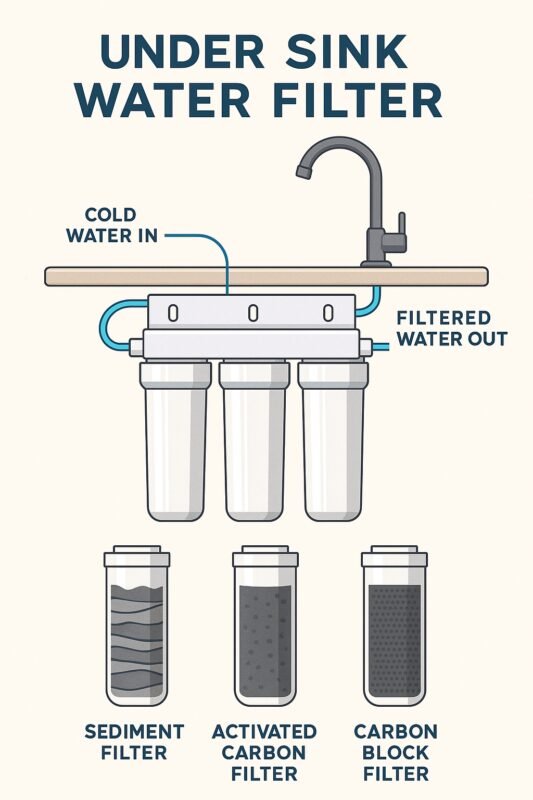
An under sink water filter is a filtration device installed beneath your kitchen sink, connected to your water supply line. It treats the water before it reaches your drinking faucet, removing unwanted contaminants and impurities to deliver cleaner, better-tasting water. Unlike countertop filters or pitcher filters that occupy counter space or treat only small volumes, under sink filters offer a seamless, space-saving, and high-capacity solution ideal for everyday family use.
Because it treats water at the point of use but below the sink, it doesn’t interfere with your main water supply to other parts of the house. The purified water is dispensed through a dedicated faucet, allowing you to switch between filtered and regular tap water easily.
How Do Under Sink Water Filters Work?
Under sink water filters typically utilize multiple filtration stages, each targeting specific contaminants:
- Sediment Filtration: The first stage usually involves a sediment filter that removes larger particles like sand, rust, and dirt. This step protects downstream filters and extends their life.
- Activated Carbon Filtration: Carbon filters are widely used to adsorb chlorine, volatile organic compounds (VOCs), pesticides, herbicides, and odors that affect water taste and safety.
- Membrane Filtration (RO or UF): Many advanced systems employ reverse osmosis (RO) or ultrafiltration (UF) membranes to remove dissolved solids, heavy metals such as lead and mercury, fluoride, nitrates, and even microorganisms including bacteria and viruses.
- Mineralization (Optional): Some systems include a post-filter that adds back beneficial minerals to improve taste and provide health benefits.
Together, these stages deliver clean, safe, and great-tasting water right from your kitchen faucet.
Common Types of Under Sink Water Filters
1. Sediment Filters
Sediment filters are essential in the filtration chain. They physically trap particles like rust, sand, and sediment suspended in water. These filters prevent clogging and damage to the more sensitive carbon or membrane filters that follow. Typically made from polypropylene, these filters have micron ratings ranging from 1 to 10 microns, indicating their filtration precision.
2. Activated Carbon Filters
Activated carbon filters are the workhorses of most water purification systems. They remove chlorine, chloramine, many organic compounds, unpleasant tastes, and odors. Carbon works through adsorption, attracting molecules onto its surface. There are two main forms:
- Granular Activated Carbon (GAC): Loose carbon granules with good surface area.
- Carbon Block: Compressed carbon with tighter filtration capabilities.
3. Reverse Osmosis (RO) Filters
RO systems push water through a semipermeable membrane under pressure, filtering out dissolved salts, heavy metals, fluoride, nitrates, and many other contaminants. RO filters typically provide the highest level of purification but may waste some water during the process. These systems often come with a storage tank due to the slower filtration rate.
4. Ultrafiltration (UF) Filters
UF membranes filter out bacteria, cysts, and suspended solids but usually allow dissolved minerals to pass through. They do not require electricity or produce wastewater, making them an energy-efficient alternative to RO.
5. Ceramic Filters
Ceramic filters remove bacteria and protozoa through tiny pores, often combined with activated carbon to enhance contaminant removal. They have a long lifespan and are easy to clean.
Benefits of Installing an Under Sink Water Filter
Space-Saving and Convenient
By fitting neatly under your sink, these filters free up valuable counter space and keep your kitchen clutter-free. The dedicated faucet allows easy access to filtered water without interrupting your regular water supply.
Superior Water Quality
Multi-stage filtration effectively removes sediments, chlorine, heavy metals, microorganisms, and other harmful substances. This leads to water that tastes better, smells fresher, and is safer for cooking, drinking, and making beverages like coffee and tea.
Cost-Effective and Environmentally Friendly
By providing clean water on demand, under sink filters reduce or eliminate the need for bottled water, helping cut plastic waste and save money in the long run.
Easy to Maintain
Most modern systems have replaceable cartridges that are simple to change, often without professional help. Filter life can range from 6 months to 2 years depending on usage and filter type.
Protect Household Appliances
Filtered water reduces mineral buildup and scale, which can extend the lifespan of kettles, coffee makers, dishwashers, and plumbing fixtures.
What to Consider When Choosing an Under Sink Water Filter
Understand Your Water Quality
Every water source is different. Testing your tap water for contaminants like chlorine, lead, hardness, and microbial content will help identify the filtration needs. Some areas have higher sediment levels, while others have issues with dissolved solids or chemical pollutants.
Filtration Technology
Decide whether you want a simple carbon filter for taste and odor improvement or a more advanced RO or UF system for comprehensive purification. Consider if you want mineralization features or UV sterilization options.
Flow Rate and Capacity
Check the system’s flow rate to ensure it can meet your household demand without significant delays. Typical under sink filters produce between 0.5 to 2 gallons per minute.
Installation Requirements
Some systems require professional installation, while others offer DIY-friendly kits. Ensure the unit fits your cabinet space and is compatible with your plumbing setup.
Filter Replacement Frequency and Cost
Regular maintenance is essential. Understand the expected lifespan of filters and the cost of replacements. Some brands offer subscription services to deliver replacement cartridges on schedule.
Installation and Maintenance Tips
- Installation Location: Install the unit under the kitchen sink close to the cold water supply. Leave enough space to access the filters easily.
- Water Pressure: Ensure your home water pressure meets the filter’s specifications, especially for RO systems requiring higher pressure.
- Routine Replacement: Change filters as recommended to maintain water quality and system performance.
- Sanitize Components: Periodically clean filter housings and faucet to prevent bacterial growth.
- Monitor Water Quality: Watch for changes in taste, odor, or flow rate that could indicate filter exhaustion.
Addressing Common Misconceptions
- “RO water is stripped of all minerals and unhealthy.”
While RO removes many minerals, most people obtain essential minerals from food, not water. Some systems add mineral cartridges to restore beneficial minerals and improve taste. - “Installing a filter reduces water pressure significantly.”
High-quality under sink filters are designed to minimize pressure loss. Proper installation and maintenance ensure consistent flow. - “Filter systems are too complicated to maintain.”
Many modern filters have quick-change cartridges and clear instructions, making maintenance easy for homeowners.
The Future of Under Sink Water Filtration
Innovations continue to improve filter efficiency, reduce waste, and incorporate smart technology. Some modern systems now include digital monitoring of filter life and water quality, ensuring users never miss a replacement. Compact designs and eco-friendly materials are becoming standard, aligning with growing environmental awareness.
The Importance of Maintenance and Timely Filter Replacement for Under Sink Water Filters
Proper maintenance is crucial to ensure that your under sink water filter system continues to perform at its best and provide safe, clean water over time. Neglecting regular upkeep can lead to clogged filters, reduced flow rates, diminished filtration effectiveness, and even bacterial growth inside the system. Understanding the importance of timely filter replacement and routine maintenance will help you maximize the lifespan of your filter and safeguard your family’s health.
Why Filter Replacement Matters
Filters work by trapping contaminants, sediments, and chemicals from your water. Over time, these trapped substances accumulate and saturate the filter media. When a filter is saturated, it can no longer efficiently remove impurities and may start to release contaminants back into the water. This not only compromises water quality but also puts strain on the filter system, potentially damaging internal components.
How Often Should You Replace Filters?
Replacement intervals vary depending on the filter type, water quality, and household usage:
- Sediment filters typically need replacement every 3 to 6 months.
- Activated carbon filters last between 6 to 12 months.
- Reverse osmosis membranes usually require replacement every 2 to 3 years.
- Ultrafiltration and ceramic filters have longer lifespans but still need periodic inspection and cleaning.
Regularly checking manufacturer guidelines and keeping track of installation dates ensures you don’t miss critical replacement times.
Signs It’s Time to Replace Your Filter
- Noticeable drop in water flow or pressure.
- Changes in water taste or odor.
- Cloudy or discolored water.
- Visible sediment in filtered water.
- Alerts from smart filter monitoring systems (if applicable).
Routine Maintenance Tips
- Clean filter housings during cartridge replacement to prevent bacterial buildup.
- Sanitize the faucet and connections to maintain hygiene.
- Inspect O-rings and seals to prevent leaks.
- For RO systems, flush the membrane periodically as recommended.
Maintaining your under sink water filter system ensures continued delivery of high-quality water and protects your investment in clean drinking water.
Conclusion
Under sink water filters provide an effective, convenient, and affordable way to enhance your home’s drinking water quality. By understanding your water’s needs and choosing the right system, you can enjoy clean, great-tasting water every day while protecting your family’s health and the environment. Whether you require basic chlorine removal or advanced multi-stage purification, there is an under sink water filter designed to meet your needs.
Investing in one is a smart step towards better hydration, improved cooking, and overall wellness.