
Water Filter System for Home: PP Cotton and Anti-Scale Filtration for Everyday Families

Why a Water Filter System for Home Matters
A water filter system for home is no longer considered a luxury but a necessity for modern families. As urban populations grow and industrialization continues, municipal water supplies often carry traces of chlorine, sediment, heavy metals, and other impurities. While public treatment facilities reduce many risks, tap water may still contain contaminants that impact taste, appearance, and long-term health. For households with children, elderly members, or anyone with sensitive skin, these concerns become even more pressing.
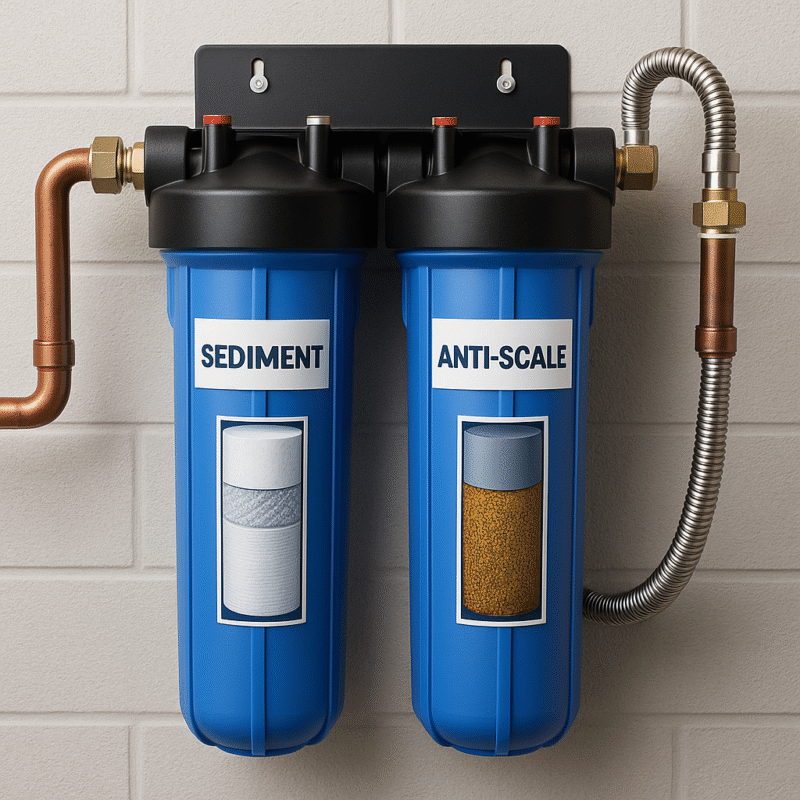
Installing a whole house water filter system with a PP cotton filter and an anti-scale filter provides a comprehensive solution. This two-stage combination is effective at trapping sediment and preventing scale buildup, ensuring clean, safe water for cooking, bathing, laundry, and everyday hydration.
The Growing Importance of Water Quality at Home
Clean water is central to nearly every household activity—from preparing meals to washing clothes, taking showers, and maintaining appliances. Yet, several challenges compromise water quality:
- Sediment and Rust: Older pipelines may release particles that cloud water and damage plumbing.
- Chlorine and Byproducts: Added for disinfection but often leaving unpleasant taste and odor.
- Scale and Hard Minerals: Calcium and magnesium deposits that reduce appliance efficiency.
- Potential Contaminants: Trace amounts of lead, pesticides, or industrial chemicals in some areas.
Without a protective system in place, these contaminants circulate through every faucet and shower. A whole house water filter system for home addresses this problem by filtering water at the entry point, ensuring every tap dispenses cleaner, safer water.
What Makes PP Cotton and Anti-Scale Filters Effective?
1. The Role of PP Cotton Filters
PP cotton filters—often the first stage in a two-stage system—are crafted from melt-blown polypropylene fibers. Their purpose is to capture large particles such as:
- Sand and silt
- Rust flakes from old pipes
- Dirt and suspended solids
With filtration ratings as fine as 5 microns, PP cotton filters protect both your plumbing and the second-stage filter from premature clogging.
2. How Anti-Scale Filters Work
The anti-scale filter in the second stage is designed to reduce hardness minerals (calcium and magnesium) that lead to scale. Unlike traditional water softeners that replace calcium and magnesium ions with sodium, many modern anti-scale filters use food-grade polyphosphates or advanced filtration media. They:
- Prevent scale from bonding to pipes and appliances
- Reduce buildup in kettles, dishwashers, and water heaters
- Help maintain consistent water pressure and flow
- Extend appliance lifespan while reducing maintenance costs
Together, these two filters create a balanced system—removing sediment first, then tackling scale and hardness issues.
Key Benefits of a PP Cotton + Anti-Scale Water Filter System for Home
Cleaner, Safer Water Throughout the House
Filtering water at the main supply line ensures that every sink, shower, and appliance receives the same protection. Families no longer need to rely on individual tap filters or pitchers.
Improved Taste and Odor
By reducing chlorine and sediment, water becomes fresher for drinking and cooking. Coffee, tea, and soups taste more natural, without chemical aftertastes.
Appliance Protection and Energy Savings
Scale buildup is a leading cause of reduced appliance efficiency. A water filter system for home prevents deposits on heating elements, lowering energy consumption and avoiding costly repairs.
Healthier Skin and Hair
Bathing in water treated by a PP cotton and anti-scale system means less exposure to harsh chemicals and minerals, which can dry skin or cause irritation.
Eco-Friendly and Cost-Effective
By reducing the need for bottled water, households save money while minimizing plastic waste. Maintenance is also simple, requiring only periodic filter changes rather than chemical refills.
How a Two-Stage Water Filter System for Home Works
The process of filtration is straightforward yet highly effective:
- Stage One – PP Cotton Sediment Filter
- Water passes through the polypropylene cotton layer.
- Sediment, dirt, and visible particles are trapped.
- This stage prevents clogging of the second filter and protects plumbing.
- Stage Two – Anti-Scale Filter
- The pre-filtered water flows into the anti-scale cartridge.
- Hard minerals are neutralized or prevented from binding.
- Chlorine residues and odors are also reduced.
The result is cleaner, fresher, and more stable water for the entire household.
Comparing with Other Filtration Options
When choosing a water filtration system for your home, it helps to understand how different options stack up. Each method has its own strengths and weaknesses, and the right choice depends on your family’s water quality needs, budget, and lifestyle.
Pitcher Filters
Pitcher filters are among the most affordable and portable filtration options. They are easy to use—just fill the container, wait for the water to pass through the filter, and pour. However, they only handle one container at a time. Their limited capacity means frequent refilling, which can be inconvenient for families.
Faucet-Mounted Filters
These filters attach directly to your kitchen faucet. They are simple to install without professional help and provide filtered water instantly. Despite the convenience, they can only filter water from one faucet. Their limited flow rate makes them less suitable for households that need larger volumes of filtered water for cooking, bathing, and laundry.
Under-Sink Filters
Under-sink water filters are installed beneath the kitchen sink and provide high-quality purified water directly from a dedicated tap. They are excellent for drinking and cooking purposes, delivering superior purity compared to faucet or pitcher filters. The drawback is that they only cover one outlet and do not filter the water used in showers, washing machines, or other household taps.
Whole House PP Cotton + Anti-Scale Filter
For families seeking complete home coverage, a whole house filter that combines a PP cotton sediment stage with an anti-scale filter is a highly practical solution. It ensures that every faucet, shower, and appliance in the home benefits from cleaner water. This system reduces sediment, chlorine, and scale, protecting plumbing and extending the life of appliances. While the initial cost is higher and installation may require professional help, the long-term benefits—better water quality, healthier skin, and lower maintenance costs—make it a strong choice for most households.
Whole House Reverse Osmosis Systems
At the top end of the spectrum are whole house reverse osmosis (RO) systems. They provide extremely high purity, removing not just sediment and chlorine but also dissolved salts and heavy metals. This makes them ideal for families living in areas with very poor water quality. However, they are more complex to install, require higher maintenance, and typically waste more water compared to other systems. They also come with a significantly higher price tag, which may not be practical for every household.
Conclusion
While pitchers, faucet-mounted filters, and under-sink systems are suitable for light or single-point use, they cannot match the convenience and comprehensive coverage of a whole house PP cotton + anti-scale water filter system. For most families, this option strikes the best balance between cost, performance, and simplicity—providing safe, great-tasting water throughout the entire home without the complexity of a full reverse osmosis setup.
Installation Considerations
- Placement: Install at the main water inlet line, usually near the shut-off valve.
- Space Requirements: Ensure clearance for filter changes.
- Pressure Needs: Confirm system compatibility with your home’s water pressure.
- Professional vs. DIY: While many homeowners can handle installation, professional support ensures optimal setup.
Maintenance Schedule for Long-Term Performance
| Component | Replacement Interval |
|---|---|
| PP Cotton Sediment Filter | Every 3–6 months |
| Anti-Scale Filter Cartridge | Every 6–12 months |
Tips:
- Monitor water clarity and flow rate—reduced pressure often signals a clogged filter.
- Keep spare cartridges on hand to avoid interruptions.
- Follow manufacturer guidelines for flushing the system after replacements.
Signs Your Water Filter System Needs Attention
- Noticeable reduction in water flow
- Return of chlorine odor or metallic taste
- Scale reappearing on faucets or appliances
- Discolored water during use
Addressing these signs promptly ensures continuous protection for your family.
Why Families Choose This Two-Stage Setup
Families often choose a PP cotton + anti-scale water filter system for home because it:
- Provides comprehensive coverage without overcomplication
- Protects appliances and plumbing infrastructure
- Offers healthier, fresher-tasting water
- Delivers cost-effective performance compared to bottled water or whole-home RO systems
Practical Tips for Maximizing Value
- Pair your filter system with periodic water testing.
- Keep a log of filter changes for accountability.
- Educate family members on recognizing flow changes.
- Consider transparent filter housings to visually track sediment accumulation.
- Budget annually for cartridge replacements—less costly than appliance repairs.
Understanding the Science Behind Water Filtration
When considering a water filter system for home, it helps to understand how filtration science works. Filtration isn’t just about trapping particles—it’s a complex process involving physical barriers, chemical adsorption, and sometimes even biological neutralization.
- Mechanical Filtration: The PP cotton filter relies on a dense network of fibers that physically block sediment. Think of it as a sieve, only with microscopic precision.
- Chemical Treatment: Anti-scale filters often use polyphosphates that form protective layers around hardness minerals, preventing them from forming scale.
- Flow Optimization: Systems are designed to maintain water pressure while ensuring contaminants are effectively reduced.
- Layered Protection: Some families add optional carbon blocks or UV sterilizers after the basic two-stage setup for even greater safety.
By combining these methods, a water filter system for home ensures that both visible and invisible threats to water quality are minimized.
Real-Life Impact on Daily Household Activities
Many families notice an immediate difference once their water filter system for home is installed. The benefits extend to nearly every routine task:
- Cooking and Beverages: Soups, teas, and coffees taste cleaner. Chlorine odors no longer interfere with flavor.
- Bathing: Showers feel gentler, and skin no longer dries out as quickly.
- Laundry: Clothes maintain brighter colors, and fabric feels softer without mineral buildup.
- Dishwashing: Glasses and cutlery no longer show water spots, reducing the need for polishing.
- Appliance Performance: Dishwashers and washing machines run more efficiently without scale deposits clogging their systems.
These everyday improvements collectively raise the standard of living, proving that water quality is more than just a health issue—it’s a lifestyle upgrade.
Cost Comparison: Filter System vs. Bottled Water
Many households rely on bottled water because they don’t trust tap water. But the costs add up quickly.
- Average bottled water cost per family per year: $600–$1,200
- Annual filter replacement cost for a two-stage system: $100–$200
- Upfront installation cost: $300–$700
Within the first two years, most families find that their water filter system for home has already paid for itself. Beyond the financial savings, they enjoy the convenience of unlimited filtered water without heavy lifting, storage, or plastic waste.
Environmental Advantages of a Whole House System
A water filter system for home doesn’t just benefit the family—it helps the planet. Bottled water production consumes vast resources in terms of plastic manufacturing, transportation, and disposal. According to environmental studies, the average American uses nearly 167 disposable water bottles per year, most of which are not recycled effectively.
By switching to a home system:
- Plastic waste is drastically reduced.
- Fewer greenhouse gases are emitted from transporting bottled water.
- Municipal waste systems experience less strain from discarded bottles.
Thus, every household adopting a filtration system contributes to a greener, more sustainable future.
Addressing Common Myths About Home Water Filtration
Despite the clear benefits, some misconceptions still prevent families from investing in a water filter system for home:
- “Tap water is already safe.”
While municipal treatment reduces risk, aging pipes and regional contaminants often affect quality before water reaches your home. - “Filters remove essential minerals.”
The PP cotton and anti-scale system targets harmful particles and scale, not beneficial minerals like calcium and magnesium in their natural form. - “Maintenance is too complicated.”
In reality, cartridge changes take less than 15 minutes and typically happen twice a year. - “It lowers water pressure.”
A properly sized system maintains consistent flow. Reduced pressure usually signals a filter nearing replacement time.
By clearing up these myths, more families can confidently make informed decisions about water safety.
Tips for Choosing the Right Size and Model
Not all water filter systems for home are created equal. Before purchasing, consider:
- Household Size: A large family requires a system with a higher flow rate.
- Water Source: Homes on municipal supply may prioritize chlorine reduction, while those on well water may need sediment-heavy protection.
- Budget: Higher-end models may include transparent housings, multi-stage filters, or optional add-ons like UV sterilizers.
- Space Availability: Some homes require compact systems due to limited basement or utility room space.
Consulting with a water filtration professional ensures the chosen model fits your household’s specific needs.
The Future of Home Water Filtration
As technology advances, water filter systems for home are becoming smarter and more efficient. Trends include:
- Smart Sensors: Systems that monitor water quality in real time and send alerts when a filter needs replacing.
- Eco-Friendly Cartridges: Filters made from biodegradable or recyclable materials.
- Advanced Media: New anti-scale compounds that extend lifespan without using salt or chemicals.
- Compact Modular Designs: Allowing homeowners to upgrade or expand systems easily.
These innovations make home water filtration not just a protective measure, but an evolving solution that adapts to modern needs.
Extended Conclusion
A water filter system for home with PP cotton and anti-scale filtration represents a smart balance of affordability, performance, and practicality. It tackles everyday challenges like sediment, chlorine taste, and scale buildup while delivering long-term savings and peace of mind.
By safeguarding health, protecting appliances, and supporting environmental sustainability, such systems are more than just plumbing accessories—they are investments in quality living. As awareness grows, more families worldwide are embracing whole house filtration not only as a necessity but as a standard for modern households.
The Long-Term Health and Financial Benefits
Investing in a water filter system for home is both a health decision and a financial one. Cleaner water means fewer contaminants entering your body daily. Meanwhile, preventing scale and sediment damage helps avoid expensive appliance replacements, extending the life of washing machines, dishwashers, and water heaters. Over several years, the savings often outweigh the upfront cost.
Final Thoughts: A Smart Choice for Everyday Families
For households seeking reliable, cost-effective water quality improvement, a PP cotton and anti-scale water filter system for home is an ideal solution. It filters sediment, reduces chlorine, prevents scale, and protects every tap in your home. By prioritizing water quality, you ensure better health, improved comfort, and long-term savings for your entire family.