
The Engineering Standard: Sourcing a Wholesale RO Water Purifier for the US Commercial Market

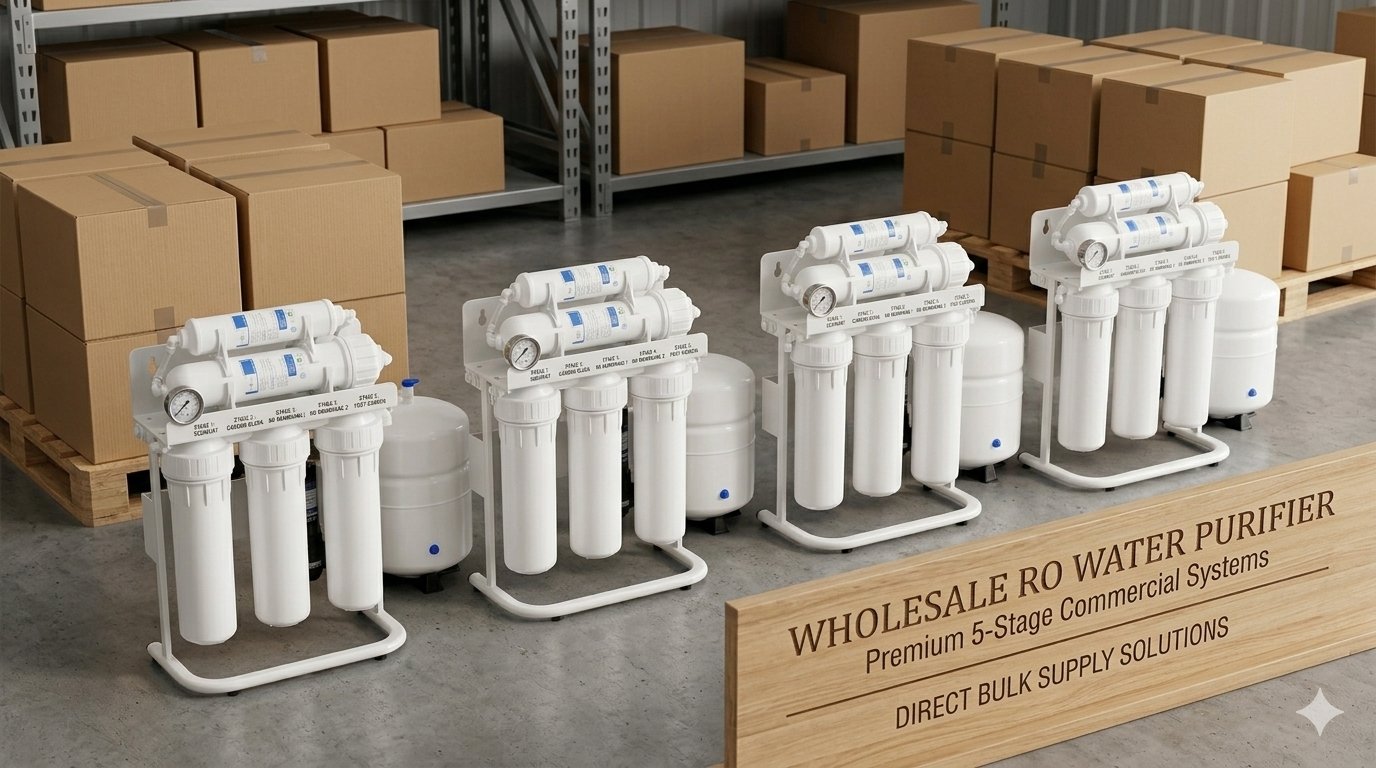
In the competitive landscape of United States commercial plumbing and food service infrastructure, water is not merely a utility; it is the most critical operational variable. From specialty coffee franchises to large-scale hospitality groups, the demand for purified, scale-free water has never been higher. Yet, the US municipal water grid presents severe, localized challenges that instantly overwhelm consumer-grade filtration.
As a senior water treatment engineer and B2B systems consultant representing yourwatergoodcompany—a dedicated water purification solution provider with a deep engineering background—I work directly with regional distributors and facility directors. The reality of the US market is that off-the-shelf imports fail rapidly. Success in this sector requires partnering with a manufacturer that understands advanced material science.
For distributors and procurement directors evaluating a wholesale ro water purifier supply chain, understanding the structural engineering, regional adaptability, and long-term ROI of the equipment is the foundation of a profitable, low-liability business model.
US Regional Municipal Water Challenges: A Geographic Engineering Perspective
To successfully deploy and support a wholesale ro water purifier program across the United States, distributors must recognize that municipal water chemistry is hyper-local. While all public utility districts must comply with the drinking water standard frameworks established by the United States Environmental Protection Agency (EPA)—which dictate maximum allowable safety thresholds—these regulations apply to the water as it leaves the treatment facility. The EPA framework does not account for the severe contamination occurring within subterranean distribution networks.
An engineered system must be capable of adapting to these distinct geographic realities:
The Midwest: Legacy Grids and Heavy Metal Particulates
In established Midwestern manufacturing hubs, the subterranean infrastructure relies heavily on aging, deteriorating cast-iron mains. As water travels through these legacy grids, it undergoes severe secondary pollution. Commercial facilities in these zones battle continuous fluctuations in heavy metal particulates, aggressive rust, and exceptionally high sediment loads. A system deployed here requires aggressive, high-capacity pre-filtration to prevent this heavy particulate matter from instantly blinding the sensitive Reverse Osmosis (RO) membranes or destroying the internal rotary pumps of commercial equipment.
Texas and the Southwest: The Hard Water Scaling Crisis
Distributors supplying the Texas, Arizona, and broader Southwestern markets face a highly aggressive engineering challenge: extreme mineral hardness. Groundwater sources in these regions carry massive concentrations of dissolved calcium and magnesium. When this water enters a commercial boiler, these minerals instantly precipitate out, creating rock-hard scale. For a commercial facility in this region, rigorous scale inhibition is the single most critical factor in preventing total thermal equipment failure.
Coastal Regions: Sediment Infiltration and Chemical Disinfectants
Coastal municipalities frequently manage complex blends of surface water and groundwater, requiring aggressive chemical disinfection protocols. Facilities in these areas must filter out heavy, fluctuating doses of municipal chlorine and chloramines, which rapidly degrade standard RO membranes. Furthermore, coastal distribution grids often experience micro-sand and silt infiltration during tidal shifts or storm surges, placing immense pressure on pre-filtration staging and causing severe drops in operational flow rates.
ROI and Asset Protection: The Economics of Scale Inhibition
When pitching a wholesale ro water purifier to end-users like restaurant owners or hotel engineers, the value proposition must be rooted entirely in Return on Investment (ROI) and asset risk mitigation. Hard water is an aggressive destroyer of capital investments.
When untreated, heavily mineralized water enters a high-specification commercial espresso machine, a high-capacity commercial ice maker, or an advanced tankless water heater, the dissolved minerals bake onto the internal heating elements. This calcified scale acts as a powerful thermal insulator. As the scale thickens, the equipment must draw exponentially more electrical current to heat the water to the required operational temperature, drastically inflating monthly energy overhead.
Eventually, the scale calcifies moving components, leading to blocked flow restrictors, ruptured boiler tanks, and complete mechanical failure. By implementing an engineered system focused on absolute scale inhibition, business owners dramatically extend the lifecycle of their expensive equipment, slash energy consumption, and eliminate the exorbitant costs of emergency plumbing dispatches. The ROI of an industrial-grade RO system is often realized within months simply by preventing a single espresso machine boiler replacement.
Brand Reputation: The Invisible Metric of Water Quality
Beyond protecting mechanical assets, water chemistry directly dictates commercial brand equity. In the modern hospitality industry, product consistency is paramount.
If a municipal water grid shifts its chemical dosing protocols, and a heavy wave of chlorine reaches a commercial kitchen, every beverage served will carry a flat, medicinal aftertaste. Furthermore, high-mineral water produces cloudy, brittle ice cubes that melt rapidly, diluting premium beverages and ruining the customer experience. A dedicated, commercial-grade filtration barrier ensures that regardless of municipal fluctuations, the water utilized for food and beverage production remains chemically perfect, safeguarding the brand’s reputation and online customer reviews.
Architectural Strategy: POE vs. POU Systems
For B2B contractors designing facility layouts, choosing the correct architectural strategy dictates long-term maintenance overhead:
Point of Entry (POE) – Whole Facility Filtration
A POE system treats all water entering the building immediately after the main municipal meter. This comprehensive strategy ensures that every tap, commercial dishwasher, prep sink, and ice machine receives treated, scale-free water. While POE systems represent a larger initial capital expenditure, they drastically reduce maintenance complexity. Facility managers only need to monitor one centralized staging area, providing universal protection and ensuring high, consistent flow rates throughout the entire building.
Point of Use (POU) – Terminal Filtration
A POU strategy places specialized systems directly in front of specific pieces of equipment. While the initial hardware costs are lower, POU systems in a busy commercial environment require tracking multiple, disparate filter replacement schedules. If a maintenance cycle is missed on a terminal filter, that specific piece of equipment is instantly exposed to aggressive water. POU is highly effective for dialing in exact extraction chemistry for specialty coffee but requires meticulous, documented maintenance logging to prevent failure.
Advanced Material Science: The PP Cotton Shield Advantage
The operational durability of any commercial RO system is entirely dependent on the structural integrity of its internal materials. In high-flow environments, delicate RO membranes and ion exchange resins are highly susceptible to fouling from heavy sediment, rust, and chlorine.
At yourwatergoodcompany, our core engineering philosophy is built on advanced material science. We engineer our commercial systems with proprietary, ultra-dense PP (Polypropylene) cotton pre-filters designed to act as an impenetrable protective shield.
Even under extreme, continuous commercial flow rates, our industrial-grade PP cotton intercepts aggressive municipal sediment and pipe scale before it can reach the sensitive core membranes downstream. In a wholesale ro water purifier application, this specific staging architecture is your greatest selling point. It maximizes the lifespan of the most expensive filtration media, guarantees uninterrupted service during peak operational hours, and drastically lowers the total cost of ownership for the end-user.
Commercial Grade vs. Residential Grade: A Technical Comparison
A critical error many distributors face is end-users attempting to utilize residential-grade hardware in a commercial setting to save upfront costs. This inevitably leads to catastrophic pressure failures. As a B2B supplier, you must educate your clients on why true commercial engineering matters:
| Technical Specification | True Commercial-Grade RO Systems | Standard Residential-Grade Systems |
| Flow Rate Capacity (GPM) | Sustains continuous high GPM without pressure drops, allowing multiple heavy-draw appliances to operate simultaneously. | Cannot support simultaneous commercial draws; leads to severe pressure loss and equipment starvation. |
| Membrane & Resin Durability | Engineered to withstand heavy chlorine degradation and constant, high-volume processing cycles. | Standard media that quickly channels, fouls, and degrades under commercial water volumes. |
| Control Valve Reliability | Heavy-duty brass or industrial composite valves designed for millions of operational cycles in high PSI environments. | Light-duty plastic manifolds prone to micro-cracking, leaking, and internal bypass under continuous strain. |
Facility Manager’s Maintenance Guide
To ensure long-term reliability and minimize warranty claims, distributors should provide their end-users with strict technical monitoring protocols:
- Pressure Drop Monitoring (PSI): Install mechanical pressure gauges immediately before and after the primary PP cotton pre-filter housing. Monitor the PSI differential. A significant drop in PSI indicates the pre-filter has successfully captured a massive load of municipal sediment and requires immediate replacement to prevent starving the downstream booster pumps.
- System Integrity Audits: Visually inspect all high-pressure quick-connect fittings and heavy-duty composite housings weekly to ensure continuous integrity under high municipal PSI.
- Flow Rate (GPM) Verification: Periodically measure the product water GPM at the storage tank output. If the GPM falls below the operational minimums required by the commercial equipment manufacturer, it signals membrane fouling that must be addressed immediately.
Frequently Asked Questions (FAQ) for B2B Procurement
Q: Will installing a heavy-duty commercial RO system cause a severe pressure drop to our kitchen equipment? A: A poorly sized system will cause restriction. However, a properly engineered commercial platform utilizes integrated booster pumps and appropriately sized accumulators. This ensures the system matches the building’s incoming municipal PSI and meets the maximum theoretical GPM demand of all equipment running simultaneously, ensuring zero noticeable pressure loss.
Q: What is the wastewater ratio of these industrial systems, and will it inflate utility overhead? A: Legacy systems were inefficient, but modern commercial-grade membranes utilize advanced internal recirculation pump architecture. These high-efficiency systems drastically reduce the wastewater ratio, recovering the vast majority of the water processed and keeping municipal utility bills highly optimized.
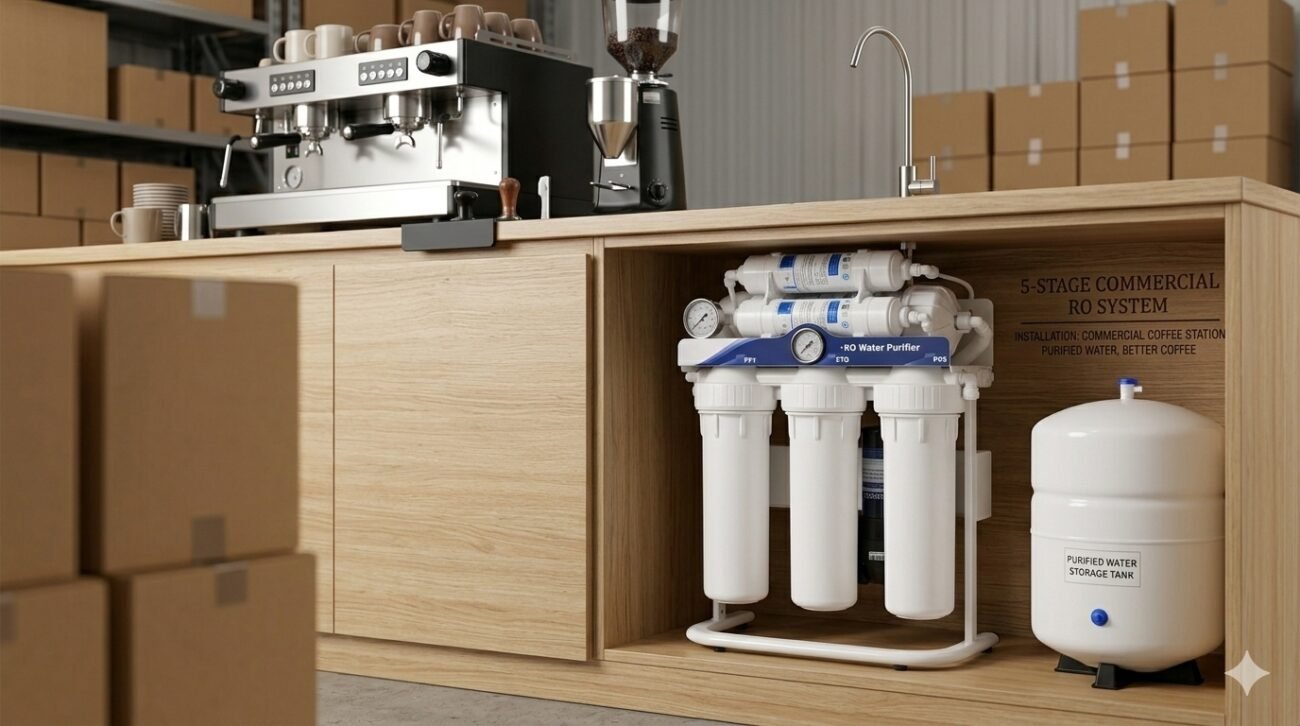
Q: Commercial kitchen real estate is highly restricted. Do these systems require a massive installation footprint? A: Modern engineering prioritizes highly compact, vertical-footprint designs. High-capacity systems can be wall-mounted directly under service counters, nested alongside ice makers, or installed in remote utility closets to preserve valuable prep space.
Elevate Your Supply Chain Strategy Today
In the B2B water treatment sector, your reputation is entirely dependent on the reliability of the equipment you supply. Partnering with a manufacturer that prioritizes material science, high GPM capabilities, and rigorous pre-filtration architecture is the only way to secure long-term commercial contracts and eliminate warranty liability.
For distributors and operations directors ready to upgrade their inventory with uncompromising engineering, we strongly recommend evaluating our ideal commercial/residential softening solution meeting high US standards, high flow, low maintenance cost. This platform is explicitly designed for the rigorous demands of the US market.
Take absolute control of your procurement strategy. Connect with the yourwatergoodcompany engineering team today to Request a Custom Quote and secure your reliable wholesale ro water purifier supply chain.