
Crystal-Clear Sip: The Complete Guide to 5 Stage RO Water Filter for Homeowners

A five-stage reverse osmosis (RO) water filter is one of the most popular and effective point-of-use solutions for producing high-quality drinking water at the kitchen sink. It delivers near-pure water by combining mechanical sediment filtration, activated carbon polishing, the RO membrane itself, and post-polishing stages that restore taste. This guide explains how a 5-stage RO system works, when it’s the right choice, realistic costs, installation and maintenance steps, performance expectations, troubleshooting, and a practical buyer’s checklist so you make a confident purchase that meets your household’s water needs.
If you’re comparing options as you shop, you can review a consumer-ready RO system for specifications and maintenance expectations here: https://yourwatergood.com/product/ro-water-purifier/.
Quick overview: what “5-stage RO” means
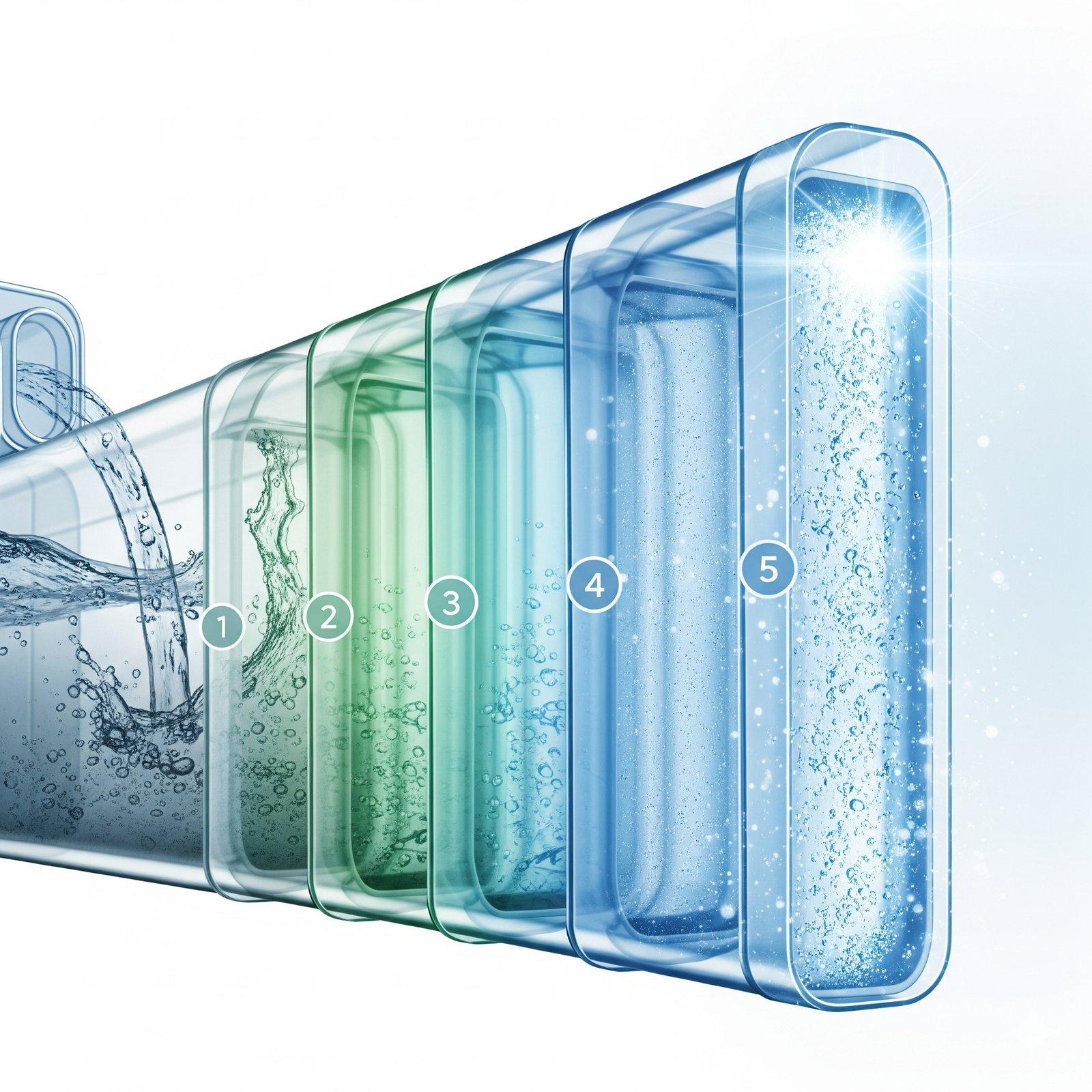
A typical five-stage RO system arranges filtration in this order:
- Stage 1 – Sediment pre-filter (PP cotton): removes sand, rust, and large particulates to protect downstream filters and the RO membrane.
- Stage 2 – Carbon block or granular activated carbon (GAC): reduces chlorine and organics that foul and damage RO membranes; improves taste and odor.
- Stage 3 – RO membrane (semipermeable): the core stage that rejects dissolved salts, heavy metals, fluoride (depending on membrane), nitrates, and many organic compounds; it produces permeate (product water) and concentrate (waste).
- Stage 4 – Post-carbon polish (activated carbon): polishes the permeate, removing any residual tastes and delivering a clean mouthfeel.
- Stage 5 – Mineral or alkaline cartridge (optional in some designs): reintroduces beneficial minerals or adjusts pH for taste and health preference; some systems place the mineral stage before the final polish or combine polishing and remineralization.
Terminology varies by manufacturer, but the architecture above is the most common “5-stage” layout for residential under-sink RO systems.
Why homeowners choose 5-stage RO systems
A five-stage RO system strikes a practical balance:
- Broad contaminant removal: RO membranes remove many dissolved contaminants that carbon alone cannot (TDS, lead, arsenic, fluoride, nitrates, some PFAS, etc. — verify with membrane data).
- Appliance- and drinking-water protection: Pre-filters extend membrane life by blocking sediment and chlorine.
- Improved taste: Post-carbon polishes and mineral stages ensure water tastes fresh, not flat.
- Compact footprint: Under-sink installations put the system out of sight while supplying a dedicated faucet.
- Affordability and maintainability: Compared with whole-house RO or point-of-entry RO, a 5-stage under-sink unit offers high-quality drinking water with reasonable installation and operating costs.
For many families, it’s the right compromise between performance and convenience.
What each stage does — deeper look
Stage 1: Sediment pre-filter
Purpose: capture particulates (sand, silt, rust).
Why it matters: sediment would clog carbon and quickly foul the membrane. A clean 5–10 µm polypropylene (PP) sediment cartridge is standard. Replace intervals depend on feedwater quality.
Stage 2: Carbon pre-filter (GAC or carbon block)
Purpose: remove chlorine, chloramines (if catalytic carbon is present), volatile organics, and improve taste.
Why it matters: chlorine damages the RO membrane. Carbon also reduces tastes and odors that would otherwise carry through to the final product.
Stage 3: Reverse osmosis membrane
Purpose: the membrane is the workhorse — it rejects dissolved inorganic solids and many organic compounds.
Key performance metrics: percent rejection (e.g., 95–99% TDS reduction), permeate flow rate (GPD — gallons per day), salt passage, and operating pressure requirements. Membrane choice governs what contaminants are reduced and at what efficiency.
Stage 4: Post-carbon polish
Purpose: remove trace tastes or odors from storage tank permeate and provide final polishing before the faucet.
Why it matters: RO permeate can pick up tastes from the tank; the post-carbon ensures a clean, pleasant flavor.
Stage 5: Mineral / alkaline cartridge (optional)
Purpose: add back trace minerals (calcium, magnesium) and/or increase pH slightly for taste and mouthfeel.
Why it matters: pure RO water can taste flat; remineralization addresses that and some consumers prefer slightly alkaline finished water. Note: mineral cartridges do not replace the RO membrane’s contaminant removal role.
Is a 5 stage RO system overkill for my home?
Consider a 5-stage RO if any of the following are true:
- Your tap water has elevated TDS, unpleasant mineral taste, or dissolved contaminants like lead, nitrate, arsenic, or fluoride that need reduction.
- You want laboratory-grade drinking water for baby formula, cooking, or brewing specialty beverages.
- You prefer a dedicated faucet and want to avoid bottled water purchases.
- Your municipal water is safe but you value the extra reassurance and taste improvement.
A 5-stage RO is probably unnecessary if your municipal water is very low in TDS, you already have a whole-house treatment for contaminants, or you only want basic chlorine removal (a single carbon filter does that cheaper). For many households with ordinary tap water issues (chlorine taste and occasional impurities), the hybrid approach — whole-house sediment/carbon + point-of-use RO — is very effective.
Performance expectations — what it will remove and what it won’t
RO membranes remove:
- Dissolved salts and minerals (reduces TDS significantly).
- Heavy metals (lead, cadmium, etc., depending on membrane and system design).
- Nitrates and many inorganic ions.
- Many organic contaminants, pesticides, and some PFAS (performance varies — request data).
- Bacteria and viruses are generally rejected by RO but good pre-filtration and sanitization practices are necessary.
RO systems do not:
- Permanently remove gases that can pass through membranes in some conditions (though downstream carbon often handles tastes).
- Replace whole-house treatment if you need clean water for bathing or appliances (RO treats only a single point).
- Eliminate the need for periodic maintenance and membrane care.
Always ask for the system’s third-party test data (NSF/ANSI 58 for RO systems is common) and confirm removal rates for the contaminants you care about.
Sizing and choosing the right RO membrane and tank
Key sizing variables:
- Household demand: How many people and daily gallons of drinking water? Typical under-sink RO units range 50–100 GPD; higher-end residential units and commercial models go above 100 GPD.
- Peak flow expectations: RO produces water slowly compared to faucet flow; storage tank size determines available immediate dispense volume. Typical tank sizes are 2–4 gallons (usable volume ~1–1.5 gallons).
- Feed pressure and temperature: RO performance improves with higher pressure and warmer temperature (within spec). If your household pressure is low, you might need a booster pump.
- Recovery ratio and wastewater: Lower-cost systems may have 3:1 or 4:1 waste:product ratios (i.e., 3–4 gallons waste per gallon product); high-efficiency designs or permeate pumps can reduce waste to 1:1 or better. Consider wastewater and local water costs.
If you want continuous higher flow or multiple RO outlets, select higher GPD membranes and larger storage tanks or consider a whole-home engineered solution.
Expected costs — purchase, installation, and operation
Purchase price (U.S. residential ballpark)
- Basic 5-stage under-sink RO systems (equipment only): $200–$600.
- Mid-range units with mineral cartridge and better membrane: $400–$900.
- Premium systems (high recovery, smart monitoring, better aesthetic faucet): $800–$1,500+.
Installation
- DIY: $0–$150 (if you install yourself and have basic plumbing skills).
- Professional install: $100–$300 depending on local labor rates and whether a dedicated faucet hole or countertop drill is needed.
Operating costs (annual)
- Filters and membrane replacement: Pre-filters (sediment & carbon) typically replaced every 6–12 months; RO membrane every 2–5 years depending on feed water and usage. Annual consumable cost usually $80–$250.
- Water waste: Factor water usage — at a 4:1 ratio, producing 1 gallon of RO water uses 5 gallons of feed water. If water is metered and expensive, this matters economically.
To compare offers, compute a 5-year total cost of ownership: purchase + installation + five years of filter/membrane replacements + estimated water waste cost.
Installation overview — what to expect
A standard under-sink 5-stage RO installation involves:
- Mounting the filter assembly under the sink or in available cabinet space.
- Connecting the cold water feed via a saddle valve or dedicated feed line, with a feed water shutoff.
- Installing the storage tank on the cabinet floor or an adjacent space.
- Running the dedicated faucet line to the countertop or pre-drilled hole; mount the included faucet and connect with tubing.
- Plumbing the drain line with an air gap assembly to the sink drain (mandatory in many jurisdictions) to safely discharge reject water.
- Sanitizing and flushing the system per manufacturer instructions and verifying leak-free operation.
If you’re not experienced with plumbing or local code, hire a licensed plumber to ensure proper drain arrangements, leak prevention, and warranty compliance.
Maintenance schedule and best practices
A sensible maintenance routine keeps the system healthy and the water high-quality:
- Every 6–12 months: Replace Stage 1 & 2 pre-filters (sediment and carbon). Frequency depends heavily on feedwater quality and household use.
- Every 2–4 years: Replace RO membrane (check performance via TDS readings or manufacturer guidelines).
- Every 6–12 months: Replace Stage 4 post-carbon polish if present.
- Every 12 months (or per manufacturer): Sanitize the system and replace storage tank bladder if needed.
- As needed: Replace mineral/alkaline cartridge (capacity depends on manufacturer).
- Monitor: Keep a TDS meter to verify membrane performance — rising TDS in permeate often signals membrane wear or a need for replacement.
Use OEM replacement parts when possible to ensure fit and performance. Keep a maintenance log with dates and parts replaced so you can track costs and intervals.
Troubleshooting common issues
Low or no flow from faucet
- Check feed water shutoff, tank pressure (bladder tanks need ~6–7 psi pre-charge), clogged filters, or a fouled membrane. Replace pre-filters as first step.
High TDS in product water
- Likely membrane failure or end-of-life. Check pre-filter condition, feed pressure, and consider membrane replacement.
Continuous drain flow or tank never fills
- Check feed water pressure and valve operation. Faulty automatic shutoff valve or blocked tank check valve could be culprits.
Bad taste or odor in RO water
- New system? Flush thoroughly per instructions. For ongoing issues, replace post-carbon or mineral cartridge and sanitize the tank and lines.
Leaks
- Tighten fittings, inspect tubing for kinks or cuts, replace quick-connect fittings if necessary, and ensure proper hose clamps.
If basic fixes don’t resolve the issue, consult manufacturer support or a qualified service technician.
Wastewater (concentrate) concerns & mitigation strategies
RO systems generate a concentrate stream — the reject water that carries the rejected contaminants. Strategies to reduce perceived waste:
- High-recovery membranes and permeate pumps: raise recovery rates and lower waste.
- Reuse reject water: divert to toilet flushing, laundry, or irrigation where sanitary and local codes allow. Simple storage containers make reuse practical for gardening.
- Install a booster pump: higher feed pressure often improves recovery and membrane efficiency.
- Optimize pre-treatment: clean pre-filters and good feedwater quality reduce fouling and improve recovery.
Be mindful of local regulations when routing reject water — some areas prohibit reuse into potable systems, sewer cross-connections, or non-approved irrigation.
Health & taste considerations — remineralization
Pure RO permeate is low in dissolved minerals, which some people find flat. Remineralization cartridges add small amounts of calcium and magnesium to improve taste and slightly increase alkalinity. Health perspectives vary: most people obtain essential minerals from food, so RO water being low in minerals is not inherently dangerous for typical diets. If you or your family have specific nutritional concerns, consult a healthcare professional.
Comparing common configurations and upgrades
- 5-stage standard vs upgraded membrane: Upgrading to a higher rejection membrane or one certified for PFAS/lead can improve safety for specific contaminants but often increases cost.
- Permeate pump vs booster pump: Permeate pumps improve recovery without electrical energy; booster pumps increase feed pressure to improve membrane flux (booster pumps require power).
- Smart monitoring: Some modern RO systems include TDS sensors and Wi-Fi alerts for filter change reminders — useful for busy households.
- Whole-house vs point-of-use: If your concern is health-related contaminants in all household water, consider whole-house solutions; for drinking and cooking, RO at the sink is efficient and cost-effective.
Match features to objectives — don’t pay for upgrades you won’t use.
Buying checklist — what to verify before purchase
- Third-party certification (NSF/ANSI 58) for RO systems and any additional certifications for specific claims.
- Membrane performance data (percent rejection for TDS and contaminants of concern).
- GPD rating & tank size that match your household needs.
- Feed pressure & temperature requirements; include booster pump if your pressure is low.
- Waste-to-product ratio or recovery rate; consider low-waste designs if water conservation matters.
- Filter replacement schedule and ongoing cost estimates.
- Faucet style and compatibility with your countertop (or plan a pre-drilled hole).
- Warranty, customer support, and availability of replacement parts.
- Installation requirements and whether you’ll DIY or hire a pro.
- Optional features: remineralization, UV sterilization (if microbiological safety is a concern), smart monitoring.
Use this checklist to compare quotes and calculate a 3–5 year total cost of ownership.
Environmental & sustainability notes
RO systems’ main environmental footprint is their water use. Reduce impact by choosing high-recovery models, reusing reject water for appropriate purposes, and selecting long-life components. Recycle spent filter housings and consider manufacturers with responsible packaging or take-back programs for used cartridges.
Real-world use cases and scenarios
- Family of four with city water and occasional chlorine taste: a basic 5-stage RO with remineralization delivers consistently great drinking water, reduces bottled water purchases, and costs modestly to operate.
- Well water with high TDS or occasional well contamination: 5-stage RO helps for drinking water, but well owners should address well source issues and consider whole-house pre-treatment (sediment, iron removal, UV) before RO.
- Homebrew and specialty coffee enthusiasts: consistent low-TDS water or tuned remineralized water improves flavor consistency and extraction control.
- Small apartments or rentals: compact 5-stage RO systems that mount neatly under the sink provide a strong value proposition compared with bulk water delivery.
Frequently asked questions (short answers)
Q: How long does an RO membrane last?
A: Typically 2–5 years depending on feedwater quality, pre-filtration, and usage patterns.
Q: Is RO water safe for infants?
A: RO water can be used for infant formula, but guidelines vary by country — always follow pediatrician or health authority advice regarding mineral content and preparation.
Q: Can RO remove PFAS?
A: RO reduces many PFAS compounds effectively, but removal efficiency varies by molecule and membrane type — request manufacturer or third-party test data for targeted PFAS reduction.
Q: Do I need a separate faucet?
A: Most under-sink RO systems install a dedicated faucet; some integrate with refrigerator lines but best practice is a dedicated dispensing faucet for final polished water.
Closing: is a 5-stage RO worth it?
For households seeking high-quality drinking water with broad contaminant removal, a 5-stage RO system is a robust, proven choice. It removes many contaminants that carbon filters cannot, produces excellent tasting water, and is economical compared with ongoing bottled water purchases or larger whole-home RO systems. Evaluate feedwater test results, consider water waste and operating costs, and choose a reputable unit with clear certification and accessible replacement parts.
If you want to compare real product specs and maintenance schedules as you shop, see a consumer RO purifier example here: https://yourwatergood.com/product/ro-water-purifier/. Use manufacturer performance data and the checklist above to compare alternatives and select the system that best fits your household’s water goals.