
The Strategic Household Upgrade: Maximizing ROI with an Inline under sink water filter

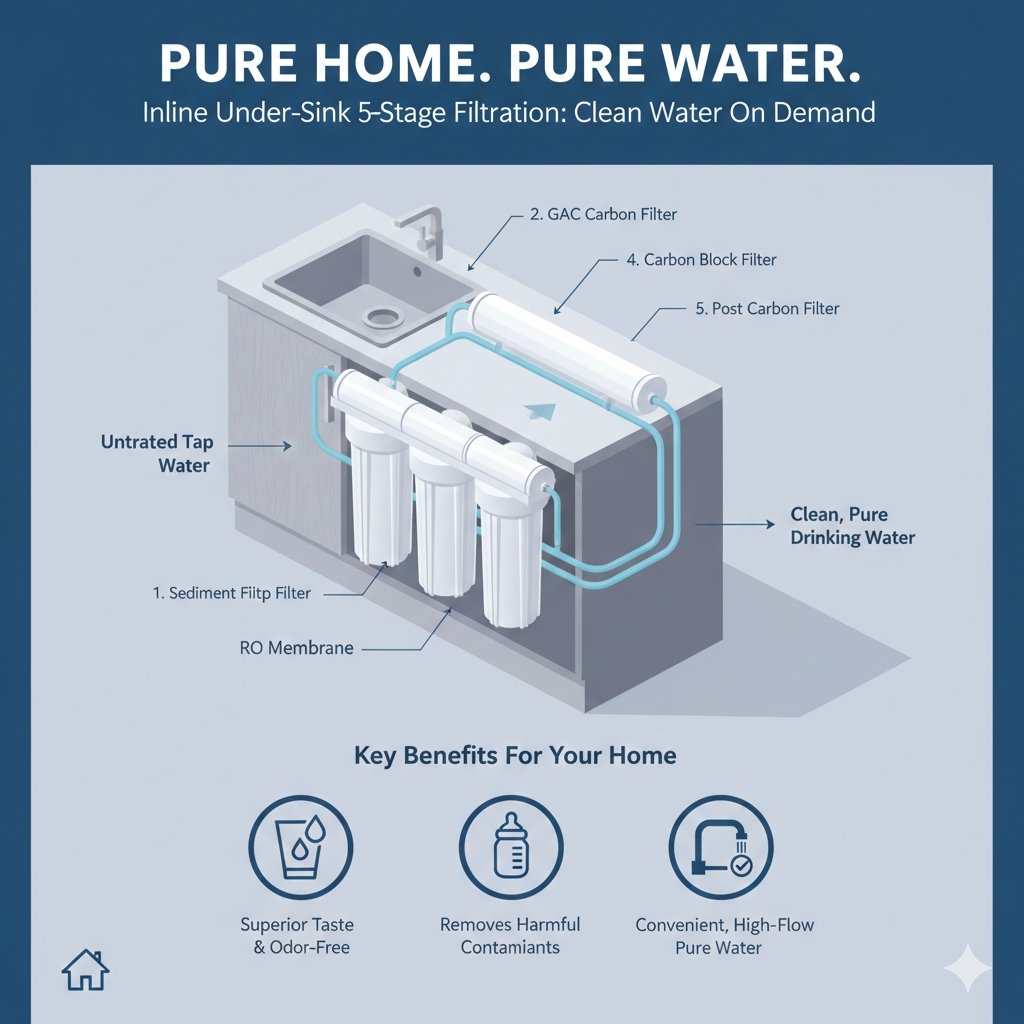
This topic is covered in full in our main guide: The Strategic Household Upgrade: Maximizing ROI with an Inline under sink water filter.
Clean drinking water at the kitchen sink is one of those household conveniences most people take for granted—until the coffee tastes off, the ice maker gets cloudy, or a delicate espresso machine starts to clog. Inline sink filters (also called in-line filters) are among the simplest, most cost-effective ways to improve water at a single tap or appliance without the footprint of a full under-sink reverse-osmosis system. This guide explains what inline sink filters are, how they work, where they make sense, how to pick the right model, installation and maintenance best practices, realistic cost expectations, and troubleshooting tips so your next purchase performs reliably for years.
If you want a point-of-use purification option with broader contaminant removal (for drinking water specifically), consider pairing an inline filter with a point-of-use RO system—for example, this consumer RO purifier is a useful reference while you compare specs: 5-stage RO water filter for home.
What is an inline sink filter?
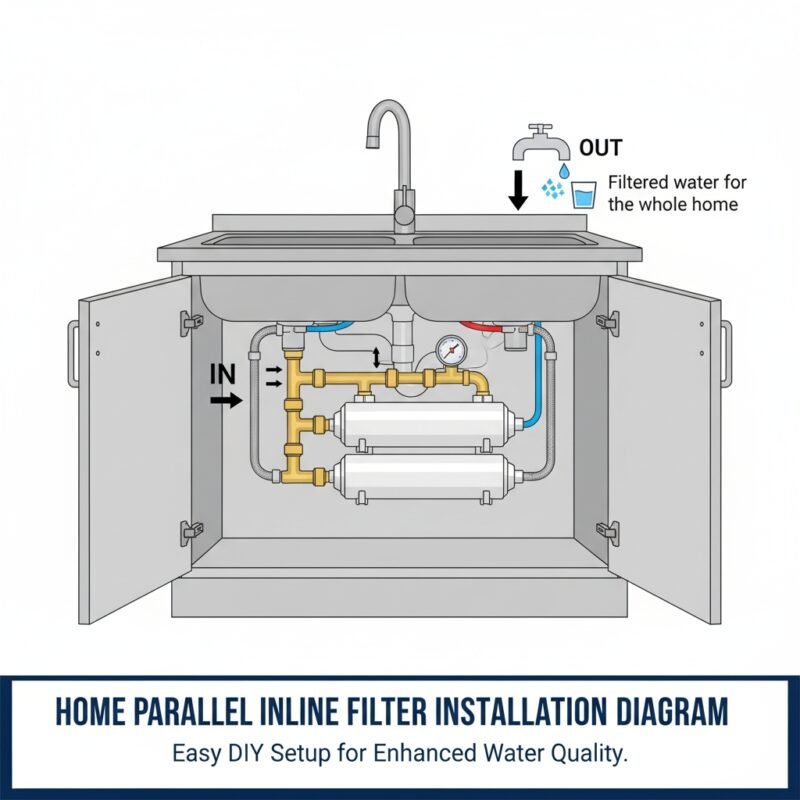
An inline sink filter is a compact filtration module installed directly in a water line—often the cold-water feed to a dedicated filtered faucet, an icemaker, a refrigerator, or a coffee machine. Unlike under-sink housings that contain replaceable cartridge assemblies, inline modules are usually self-contained and either disposable (replace the whole inline unit) or serviceable via twist-off caps or quick-swap cartridges.
Key characteristics:
- Small form factor — typically a short cylindrical or capsule-shaped unit that connects to 1/4″ to 3/8″ tubing.
- Point-of-use orientation — treats water for a single outlet.
- Low complexity — no storage tank and minimal plumbing.
- Quick connect fittings or barbed ends for easy installation.
Because they are compact and inexpensive, inline filters are popular for refrigerator water lines, ice makers, coffee machines, and situations where space is at a premium.
What do inline sink filters remove?
Not all inline filters are created equal. The contaminant removal depends on media type and design. Typical inline filter media and their performance:
- Sediment (PP melt-blown or spun polypropylene): removes sand, rust and large particulates. Useful as a pre-filter to protect downstream media or appliances.
- Granular activated carbon (GAC): reduces chlorine taste and odor, some organic compounds, and improves overall taste. GAC is common in low-cost inline units.
- Carbon block: denser than GAC and provides better particulate removal and improved adsorption efficiency for some VOCs and metals.
- Inline carbon + ion-exchange blends: some units combine carbon with ion-exchange resin for softening or partial heavy metal reduction.
- Inline microporous membranes: specialized inline units can include a small membrane element for sub-micron particulate control or as the last stage in a multi-stage point-of-use chain.
- Specialty media (KDF, catalytic carbon): reduce chlorine/chloramine more effectively and can help control certain metals and biological growth in the housing.
When shopping, match the media to the contaminant or nuisance you want to address: taste/odor and chlorine → carbon; sediment → PP cartridge; specific metals → certified carbon block or specialty media; TDS reduction and heavy metals like arsenic → point-of-use RO or certified cartridge.
Typical use cases for inline sink filters
Inline sink filters are ideal when you need localized improvement or appliance protection:
- Refrigerator water and ice lines. Inline filters protect icemakers and improve ice clarity and taste.
- Coffee and espresso machines. They protect boilers, pumps and reduce off-flavors that affect extraction.
- Dedicated drinking tap. If you install a small filtered tap, an inline module is less intrusive than a full RO with tank.
- RV, tiny home, and tight-cabinet installs. Space-constrained environments benefit from compact inline modules.
- Pre-filtration for small point-of-use systems. Inline units can be the first stage before a countertop RO or polishing cartridge.
Inline filters are not intended to replace whole-house protection or high-capacity point-of-use RO when broad contaminant removal is required for health reasons.
Inline vs under-sink vs RO — choose the right tool
Make decisions by scope, performance and cost:
- Inline filter: Best for low-cost, space-limited applications, and for improving taste/odor or protecting an appliance. Low capacity and limited contaminant range.
- Under-sink multi-stage filter: A better choice when you want more robust contaminant reduction (sediment + carbon + specialty media) and longer filter life. May include larger housings and user-replaceable cartridges.
- Under-sink RO: Best when you require dissolved solids reduction (TDS), fluoride, nitrate, or broad heavy metal removal. RO systems usually include a storage tank and deliver higher-quality drinking water but require more space and produce wastewater.
Often a combined approach is ideal: a small whole-house sediment/carbon system for plumbing and appliances, an inline filter for a specific appliance, and a point-of-use RO for drinking water. The small RO referenced earlier is a technical benchmark if you are considering combining RO with inline or under-sink media: 5-stage RO water filter for home.
How inline sink filters are designed (what to look for)
When evaluating inline filters, pay attention to these design details:
- Connection type and size. Check whether the filter uses 1/4″ or 3/8″ quick-connect fittings, barbed ends for tubing, or compression fittings. Make sure they match your existing lines.
- Flow rate (GPM) and pressure rating. Ensure the filter’s rated flow and pressure fit your application. For example, refrigerator supply lines often handle 0.5–1 GPM; coffee equipment may need higher instantaneous flow.
- Micron rating or media specification. If you need sediment removal, verify micron ratings (e.g., 5 µm, 1 µm). Carbon blocks often list adsorption capacity and target contaminants.
- Serviceability and replacement ease. Disposable cartridge units are simple but create more waste; twist-off or replaceable cartridge designs save cost and landfill over time.
- Materials and potable water compliance. Look for FDA food-contact materials, and claims of NSF/ANSI certification where relevant (NSF 42 for taste/odor is common).
- Mounting brackets and physical size. A small bracket and clear orientation markings (flow direction arrows) simplify installation.
- Bypass capability. Some inline filters allow a simple bypass valve so you can change filters without shutting down the appliance.
A well-designed inline unit balances performance, serviceability and compatibility with existing plumbing.
Installation: a practical, step-by-step walk-through
Inline filters are often installed by homeowners, but if you are unsure, hire a plumber. Here’s a safe DIY approach:
Tools & materials you’ll need: adjustable wrench or tubing cutter, Teflon tape (if needed), mounting screws/anchors, drip tray if under counters, and the correct tubing (1/4″ or 3/8″) or fittings.
- Shut off water. Turn off the cold water supply to the appliance or sink line you will modify. Relieve pressure by opening the faucet.
- Select the installation location. Place the filter on the cold-water feed upstream of the appliance. Ensure the filter housing fits and the tubing runs straight to avoid kinks.
- Cut the tubing. Use a proper tubing cutter to make clean, square cuts. Avoid crushing or deforming tubing ends.
- Attach fittings. Push-fit lines into quick-connect fittings or slide tubing over barbed fittings and secure with clamps. If compression or threaded fittings are used, apply Teflon tape per manufacturer instructions.
- Mount the filter. Use the supplied bracket to fasten the filter to a solid backing—cabinet wall or framing—ensuring the filter points in the correct flow direction.
- Turn water on slowly and check for leaks. Inspect all joints and fittings. Tighten if needed but don’t over-tighten plastic fittings.
- Flush per instructions. Many carbon-based inline filters require flushing for several minutes to remove fines. This step is important to prevent carbon dust and to prime the filter media.
- Document the install date. Note the date for filter replacement scheduling.
If you’re installing for an appliance with built-in fittings (e.g., fridge), follow appliance manufacturer guidance to avoid voiding warranties.
Maintenance and replacement schedules
Inline filters have smaller media volumes than under-sink cartridges, so replacement intervals are shorter. Typical schedules:
- Sediment-only inline filters: Replace every 3–6 months depending on water quality.
- Carbon inline filters: Replace every 6–12 months depending on chlorine load and flow.
- High-capacity carbon block inline filters: May last 9–12 months in low-chlorine areas.
- Appliance-specific inline filters (ice maker or coffee machine): Follow manufacturer-recommended intervals—some require more frequent changes due to boiler or flavor sensitivity.
Replacement triggers:
- Reduced flow rate at the appliance (a strong indicator).
- Noticeable taste or odor returning.
- Manufacturer-specified time or gallon capacity reached.
Best practices:
- Keep spare filters on hand to avoid downtime.
- Record replacement dates and the brand/model of the installed filter to ease future orders.
- Flush new filters thoroughly per instructions to avoid carbon fines or initial discoloration.
Cost expectations (what you’ll pay)
Inline filters are attractive for their low upfront cost but do factor in recurring replacements.
- Equipment cost (filter only): Many inline cartridges range from $15 to $60 each depending on media and brand. Specialty or high-capacity carbon-block inline filters can be $40–$90.
- Installation: DIY installs cost nothing beyond basic tools; professional installation runs $60–$150 depending on local labor rates and complexity.
- Annual replacement expense: Budget $30–$200 per year depending on usage and filter life. For multi-appliance protection (fridge + coffee machine), multiply accordingly.
- Total cost of ownership: Inline filters are one of the lowest-cost point-of-use options when you need localized protection. For full drinking water purification, RO or under-sink multi-stage systems have higher upfront and operating costs.
When comparing options, calculate the annualized replacement cost per gallon if you want apples-to-apples comparisons with under-sink cartridges or RO consumables.
Choosing a brand and avoiding marketing traps
Brands often make broad claims about “removing contaminants.” Ask for specifics:
- Which contaminants does the filter reduce, and by what percentage?
- Is there an NSF/ANSI certification for the claims (e.g., NSF 42 for chlorine taste/odor)?
- What is the filter’s rated capacity in gallons or published flow vs pressure curve?
- Are replacement cartridges available and reasonably priced long-term?
Beware:
- Vague claims like “removes contaminants” without a list or test reports.
- Proprietary replacement cartridges that are significantly more expensive without clear performance benefits.
- Overly long change intervals for small inline cartridges—most will need more frequent service than larger housings.
A credible vendor will provide a datasheet with the target contaminants, replacement schedule, flow specs and material safety statements. If you plan to market performance on a site or label, obtain third-party lab test reports.
Troubleshooting common inline filter problems
Low flow: Usually an exhausted filter or clogged sediment. Replace or inspect pre-filter.
Leaks at fittings: Check tubing cut quality and push-fit seating; re-seat or replace O-rings; replace clamps on barbed fittings.
Taste or odor persists after install: Carbon requires flushing; run several gallons through the filter. If issue persists, check upstream contamination or select a higher-capacity carbon block.
Air in line / sputtering: Typical after installation; purge the line and ensure fittings are fully seated.
Filter blows off under pressure: Confirm pressure rating; ensure proper mounting and correct flow direction. For systems with pressure spikes, consider adding a pressure regulator.
If leaks or failures persist, shut off water and consult product support or a plumber.
When inline filters are NOT the right choice
- You require certified removal of lead, fluoride, nitrates, or other health-related contaminants—these often demand larger cartridges, certified point-of-use systems, or RO.
- You want whole-house improvement for showers and appliances—inline filters treat only a single tap.
- Your water has heavy sediment loads, iron, or very high chlorine—inline media may foul rapidly; consider pre-filtration or larger housings.
- You need long life between changes—inline units generally require more frequent replacement due to small media volume.
For significant contaminant removal or whole-home protection consider under-sink multi-stage systems or professional whole-house filtration.
Buying checklist (simple and practical)
Before you buy an inline filter, confirm:
- Application — fridge, coffee, dedicated faucet, or other.
- Connection compatibility — tubing size and connector type.
- Rated flow & pressure — fits appliance demands.
- Contaminants targeted — taste/odor, sediment, or specific metals.
- Replacement interval & cost — know annualized costs.
- Mounting options — bracket and orientation.
- Material safety & certifications — NSF/ANSI claims where relevant.
- Stock availability of replacements — look up part numbers and supply sources.
- Warranty & support — manufacturer returns and assistance.
This checklist helps you avoid buying a product that doesn’t fit your needs.
Pairing inline filters with point-of-use RO (when it makes sense)
Inline filters are excellent pre-filters or appliance-specific solutions but will not reduce dissolved solids the way RO does. If your priority is drinking water purity (lead, fluoride, nitrates or low TDS), pair an inline filter (for taste/particulate control) with a point-of-use RO system at the sink. A typical approach:
- Inline sediment or carbon pre-filter → point-of-use RO → post-polish inline carbon (optional).
- Or keep an inline filter on an appliance and install an under-sink RO for drinking water only.
For technical comparisons, reference products like the RO purifier linked here can help you match membrane specs and maintenance schedules when configuring combined systems: 5-stage RO water filter for home.
Environmental and sustainability considerations
Inline disposable filters create more waste than longer-life cartridge housings. If sustainability matters to you:
- Choose replaceable cartridge designs rather than fully disposable inline capsules when possible.
- Recycle used filter housings when manufacturers offer take-back or recycling programs.
- Consider long-life carbon block housings with washable pre-filters upstream.
- Factor the environmental cost of frequent shipping when buying small inline cartridges online—bulk ordering reduces shipping footprint.
For commercial or heavy-use contexts, investing in larger housings and replaceable cartridges usually reduces waste and total cost.
Final thoughts — who should choose inline sink filters?
Inline sink filters are a practical, low-cost tool for targeted water quality improvement. Choose inline modules when you have a single appliance or tap that needs protection or when space prohibits an under-sink installation. They are particularly compelling for refrigerator lines, espresso machines, and quick appliance protection. For broader drinking water purification, pair inline modules with a certified point-of-use RO or opt for an under-sink multi-stage filter.
Before you buy: test your water, confirm the contaminants you want to remove, check flow and connection compatibility, and plan for replacement costs. When chosen and maintained correctly, inline filters deliver clear, immediate benefits—better tasting water, longer appliance life, and fewer maintenance headaches.
Frequently Asked Questions (brief)
Q: How long will an inline filter last?
A: Typically 3–12 months depending on media, flow and water quality. Check manufacturer specs.
Q: Can I install an inline filter on my fridge ice line?
A: Yes—many refrigerators use 1/4″ tubing and accept inline modules. Follow appliance and filter manufacturer instructions.
Q: Do inline filters remove lead?
A: Only if they use a certified carbon block rated for lead reduction. Confirm NSF/ANSI 53 or other applicable certification.
Q: Are inline filters DIY-friendly?
A: Yes; most use push-fit or barbed fittings and are straightforward to install with basic tools.