
How To Choose: Do I Need Ro Water Purifier?

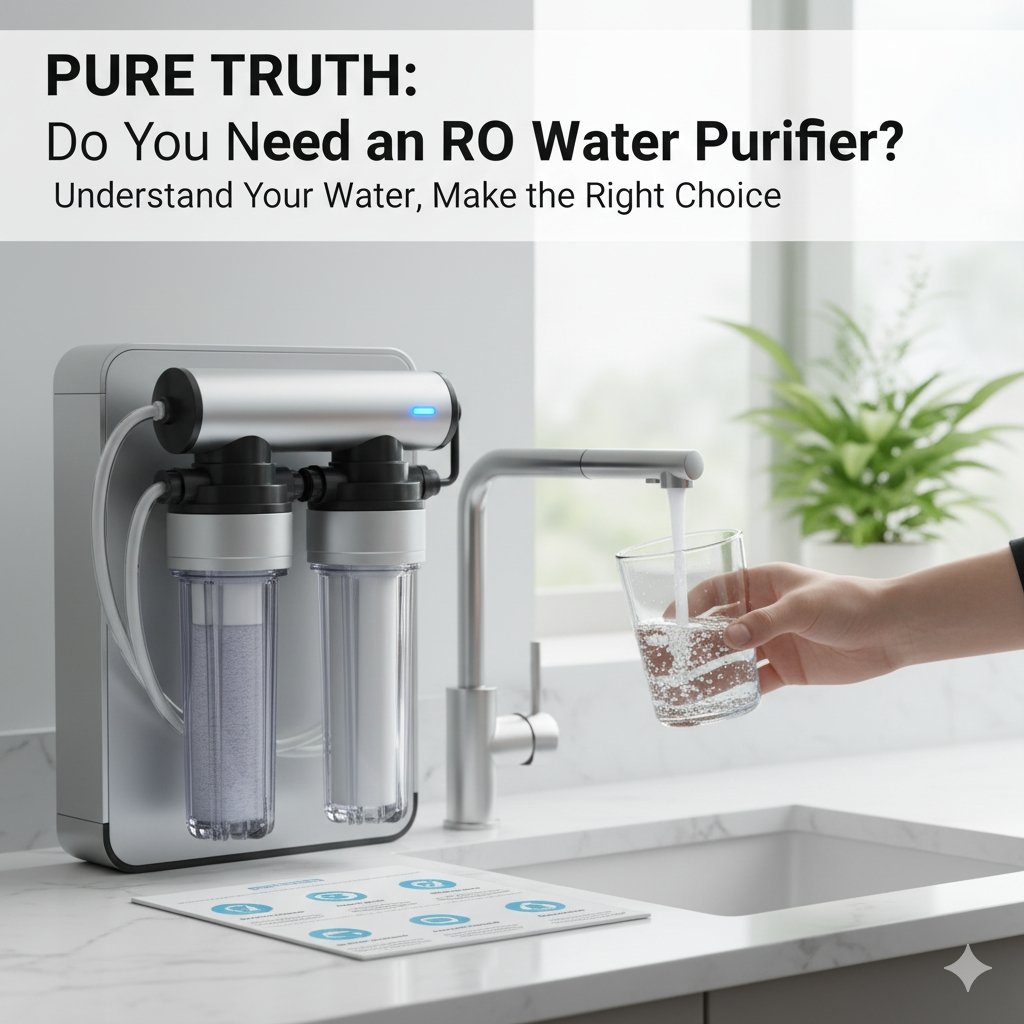
This topic is covered in full in our main guide: Do I Need RO Water Purifier? Practical Answers, Tests & Recommendations.
Introduction
When homeowners ask the practical question “do i need ro water purifier”, they are really asking whether reverse osmosis (RO) fits their water quality needs, budget, household habits, and environmental preferences. This article walks you through an evidence-based, step-by-step process to decide whether RO is the right choice for your home. It explains what RO removes and what it does not, compares RO with alternatives, outlines installation and maintenance realities, covers costs and environmental tradeoffs, and offers a clear decision checklist you can follow today. Wherever helpful, I point to practical examples and verification steps you can implement immediately.YourWaterGood.
1.What reverse osmosis is and how it works
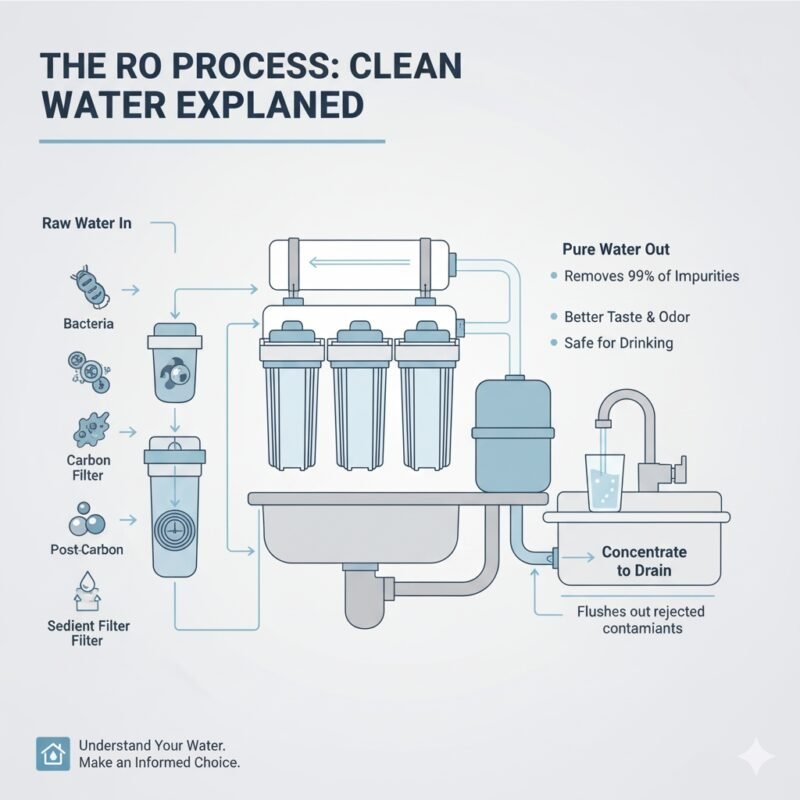
Reverse osmosis is a membrane-based filtration technology that forces water through a semi-permeable membrane to separate dissolved solids and many contaminants from water molecules. An RO system is normally multi-stage: a sediment prefilter to trap particles and protect downstream components, an activated carbon prefilter to remove chlorine and organics that could damage the membrane, the RO membrane itself which rejects dissolved salts and many organic and inorganic contaminants, and a post-filter to polish taste. Some systems include a remineralization or pH balancing stage to restore desirable trace minerals. Many under-sink RO systems also include a pressurized storage tank so drinking water is available on demand.
RO membranes remove contaminants by size and chemical mechanism; dissolved ions, many heavy metals, and a range of organic molecules are rejected. RO works best when feed water is prefiltered—sediment, chlorine, and turbidity shorten membrane life if not addressed. Typical household RO systems are point-of-use (POU) under-sink units; whole-house RO systems exist but are rare due to cost and complexity.
2.What RO removes — the list and the limits
Reverse osmosis is particularly effective for dissolved and ionic contaminants. Common constituents RO reduces significantly include:
- Total Dissolved Solids (TDS), which is a broad indicator of mineral content.
- Dissolved heavy metals such as lead and, in many configurations, arsenic.
- Fluoride and nitrates.
- Many volatile organic compounds (VOCs) and a subset of PFAS chemicals when combined with carbon stages.
- Some pesticides and herbicides, depending on size and chemistry.
However, RO is not a silver-bullet for all problems. It does not disinfect in the chemical sense; it reduces microbes mainly by physical separation but should not be relied upon as the only line of defense where biological contamination is present. RO removes beneficial minerals as well as problematic ones, which some people consider a taste or nutritional downside. That is why many modern RO systems add a remineralization stage. Additionally, RO produces a reject or concentrate stream containing the removed contaminants, which is discharged to drain and must be considered in environmental and wastewater planning.
3.When RO is most useful — trigger conditions
RO becomes a high-priority option when water testing shows one or more of the following:
- High TDS (commonly considered above 500–700 mg/L), which affects taste and appliance scaling.
- Detectable lead or heavy metals at levels concerning for long-term exposure.
- Fluoride at concentrations you wish to reduce.
- Elevated nitrates, especially for households with infants.
- Presence of certain PFAS compounds at concentrations where targeted media or RO would reduce exposure.
- A desire to stop buying bottled water because of cost or sustainability concerns.
If any of these conditions appear on your municipal CCR or private well lab report, consider RO as a primary or complementary technology. For many families without these issues, RO is technically capable but not necessarily cost-effective compared to targeted carbon filtration for taste and odor.
4.Alternatives to RO — when simpler is better
Not every home needs RO. Consider these alternatives:
- Activated carbon (GAC or carbon block) is ideal for chlorine, disinfection byproduct tastes, and many VOCs. It’s low-cost and easy to maintain. If your water test shows only chlorine taste or minor organic residues, high-quality carbon filtration can be sufficient.
- Ultrafiltration and microfiltration remove suspended solids, turbidity, and cysts; useful as pre-treatment or when particulates and protozoan cysts are the concern.
- UV disinfection is the right choice for clear water with microbial contamination: it inactivates bacteria, viruses, and protozoa but does not remove chemical contaminants.
- Water softeners (ion exchange) protect appliances and pipes from hardness but do not remove dissolved contaminants like lead or nitrates.
- Specialized adsorption media target specific contaminants such as arsenic or PFAS and sometimes perform similarly to RO for those contaminants if designed for the task.
Matching the treatment to the contaminant is almost always more cost-effective than buying the most aggressive system without data.
5.Test first, buy second — practical steps to get accurate data
The single most important step in answering “do i need ro water purifier” is testing. For municipal systems, obtain the Consumer Confidence Report (CCR) from your water supplier; it lists regulated contaminants and typical concentrations. For private wells, use a certified laboratory to run a full panel that includes bacteria, nitrates, lead, arsenic, pH, hardness, TDS, and suspect organics if your area is near agricultural or industrial sources. DIY test kits are useful for quick screening but are not a replacement when health-relevant contaminants might be present.
When you have a report, record the specific concentrations and note whether values exceed or approach health-based thresholds. That data will guide whether RO is necessary or if a less intensive approach suffices.
6.Reading a water report — what matters On a lab report, prioritize the following:
- Health-based contaminants: lead, arsenic, nitrate, and regulated VOCs.
- TDS and hardness: indicate mineral load and scaling risk.
- Microbiological presence: coliforms or E. coli indicate a microbial problem that requires disinfection.
- Emerging contaminants: PFAS or region-specific chemicals that may need specialized removal.
If a value is present but well below health advisory levels, weigh the cost and benefits of removal. For example, a trace amount of an analyte may not justify RO when a carbon filter or other targeted media solves the problem at lower cost.
7.Real-world scenarios — practical recommendations
Scenario A — City water with chlorine but low TDS: Use a whole-house carbon or under-sink carbon block for drinking water. RO is unnecessary here.
Scenario B — Private well with high TDS and detected nitrates: Under-sink RO plus whole-house sediment pre-filtration is often the best balance.
Scenario C — Older home with lead plumbing: Point-of-use RO certified for lead reduction at kitchen and child-care taps protects ingestion exposure.
Scenario D — Confirmed microbial contamination: Pair RO only after prefiltration and consider UV as the primary disinfection step.
These scenarios show that RO shines when dissolved contaminants are the problem; it is overkill for taste/odor-only issues.
8.Installation options — countertop, under-sink, and whole-house
Most households choose under-sink RO systems because they are compact, cost-effective, and serve the primary drinking tap. Countertop RO exists for renters but is less common. Whole-house RO is technically possible but expensive, uses more water, and requires complex plumbing and wastewater handling; it is rarely recommended for typical residential use.
Installation can be DIY for many under-sink kits, but professional installation avoids plumbing errors, ensures proper drain connections for RO reject water, and supports warranty claims. If your feed water requires pre-treatment (iron, hydrogen sulfide, or very high TDS), consult a water treatment professional for appropriate pre-treatments before the membrane.
9.Maintenance and care — practical calendar
Routine maintenance keeps RO systems performing:
- Sediment prefilter: replace every 3–12 months depending on turbidity.
- Carbon prefilter: replace every 6–12 months.
- RO membrane: replace every 2–5 years depending on feed water and usage.
- Post-filter and remineralizer: replace every 6–12 months.
- Storage tank: sanitize annually per manufacturer instructions.
- UV lamp (if present): replace annually; clean quartz sleeve as needed.
A maintenance calendar and bulk purchase of filters can reduce the risk of lapses that impair performance.
10.Cost considerations — upfront and ongoing
An under-sink RO system typically costs between $400 and $1,200 for quality units, with professional installation adding $100–$400 in many markets. Annual consumables (filters and membrane amortized) often run $50–$200. Over five years, a reasonable total cost of ownership ranges from roughly $700 to $2,400 depending on usage, parts cost, and whether you reuse RO reject water for non-potable chores.
Compare RO costs against bottled water: for many families, RO becomes cost-competitive within a few years and provides continuous access to treated water without recurring delivery logistics.
11.Environmental tradeoffs and mitigation
RO produces a reject stream — older units had poor recovery ratios, but modern systems and booster/pump accessories greatly improve efficiency. Consider these mitigation strategies:
- Select high-efficiency RO models.
- Install a permeate pump or booster pump to improve recovery.
- Reuse reject water for non-potable purposes like toilet flushing or irrigation where safe and permitted.
- Recycle used cartridges when manufacturer programs exist.
Balancing human health priorities with water conservation is a practical, solvable challenge when planned in advance.
12.Health, taste, and remineralization
RO water tastes very pure and clean; some people describe it as flat because trace minerals are removed. Remineralization cartridges add calcium and magnesium back for a more familiar mouthfeel and to increase alkalinity slightly. From a nutritional perspective, drinking water is rarely the primary source of essential minerals in a balanced diet, but remineralization addresses taste preferences and may reduce mild acidity concerns.
13.Certification and proof — what to ask sellers
When evaluating systems, demand:
- NSF/ANSI 58 certification for RO systems.
- Model-specific performance data and independent lab reports.
- Clear replacement intervals and pricing for consumables.
- Warranty details and local support options.
Never accept vague claims; insist on documentation for the exact model and serial number when possible.
14.Case studies — three short household examples
Case 1: Urban condo with chlorine taste. Solution: under-sink carbon block and faucet polish filter. Avoided RO cost.
Case 2: Farm home with high TDS and nitrate. Solution: under-sink RO + whole-house sediment prefilter, improving taste and safety.
Case 3: Century home with lead traces. Solution: POU RO certified for lead at kitchen and child’s rooms; replaced suspect fixtures.
These examples show how testing leads to different practical solutions.
15.Special situations — well water, iron, and pH
High iron fouls membranes; pretreatment such as oxidation, iron filtration, or greensand media is required before RO. Low pH water may require neutralization to protect plumbing. Consult a water quality professional in complex feedwater situations.
16.Buying tips — comparing models and vendors
- Prioritize third-party test data over marketing.
- Compare five-year total costs, not just sticker prices.
- Check replacement filter availability and pricing.
- Look for transparent waste/recovery ratios.
- Review warranty terms and service options.
17.Post-install verification — always retest
After installing an RO, retest drinking water within 2–4 weeks to confirm reductions. Use the same lab or method to ensure comparable results. Keep documentation for warranty or performance disputes.
18.Common FAQs (concise)
Q: Will an RO remove bacteria and viruses? A: RO membranes block many pathogens but are not a guaranteed disinfection method alone; pair with UV for microbiological safety.
Q: Is RO water unhealthy long term? A: No. A balanced diet supplies necessary minerals. Remineralizers are available for taste.
Q: Do all RO systems waste a lot of water? A: Efficiency varies. Modern systems can be quite efficient; older models waste more.
A deeper look at common contaminants that drive the RO decision
To decide whether RO is necessary, understand the common contaminants people discover and why they matter.
Lead and heavy metals
Lead contamination often originates from old plumbing, brass fittings, or lead-soldered joints in older homes. Short-term exposure to high lead levels can cause acute symptoms, but the more serious concern is chronic exposure: cognitive development in children, cardiovascular effects, and other systemic impacts. RO membranes are highly effective at reducing dissolved lead when paired with appropriate prefilters and certified cartridges. If your water test shows detectable lead, especially above the EPA action level or local guidelines, point-of-use RO or certified lead-specific filters at drinking taps are recommended.
Arsenic and other dissolved toxins
Arsenic appears in groundwater in certain geological regions and poses a significant long-term health risk. Some forms of arsenic are effectively reduced by RO; however, treatment effectiveness depends on arsenic speciation and prefiltration. When arsenic is present, consult a water quality specialist about the correct media or RO configuration and insist on lab-verified removal data for the system you consider.
Nitrates and agricultural runoff
Nitrate contamination is a common problem in agricultural regions and can be dangerous for infants. RO reduces nitrates effectively whereas many carbon filters do not. If your well test shows elevated nitrates, RO is commonly the recommended point-of-use solution to protect infant formulas and vulnerable household members.
High TDS and mineral taste
High total dissolved solids (TDS) can impart a metallic or salty taste and indicate mineral loading such as sodium, sulfate, and other ions. While high TDS is sometimes more of an aesthetic issue than an acute health risk, it can be corrosive to appliances and affect the taste of beverages and cooking. RO significantly lowers TDS and improves palatability and appliance longevity when used in combination with whole-house pre-filtration.
PFAS and emerging contaminants
Per- and polyfluoroalkyl substances (PFAS) are a class of persistent chemicals that have received attention for potential health effects. Not all RO systems remove PFAS equally; some RO membranes combined with carbon-based pre- or post-treatment are effective. If your region tests positive for PFAS, choose systems with documented PFAS removal and independent lab verification.
Microbial contamination
If testing identifies coliforms or E. coli, the immediate concern is microbial contamination. RO membranes can provide some physical separation of microbes, but they are not a standalone disinfection method because of possible bypass, membrane integrity concerns, or system faults. Combining RO with UV treatment or chlorination provides a layered defense for microbial safety.
Real consumer scenarios — three short case studies
Case 1: City apartment with chlorine taste but low TDS
A family in a city apartment had noticeable chlorine taste and occasional chemical odor. Their CCR showed regulated contaminant levels below health thresholds but high seasonal chlorination. They chose a point-of-use activated carbon system with a carbon-block under-sink filter and a faucet-mounted polish filter. Cost was modest, installation was DIY, and they avoided the higher cost and maintenance of RO — an ideal outcome because RO would have been overkill for their needs.
Case 2: Rural well with high TDS and nitrates
A rural household discovered TDS above 800 mg/L and measurable nitrates in their annual well test. Furnaces and kettles scaled more quickly, and the taste was noticeably mineral. An under-sink RO with pre-sediment filtration and a dedicated remineralization stage gave them drinking water that was safe and palatable. They also installed whole-house sediment pre-filtration to protect appliances — combining POE and POU yielded the best balance.
Case 3: Older home with suspected lead plumbing
An older home showed trace lead during a targeted test. The family installed an under-sink RO certified for lead reduction on the kitchen tap and replaced the most suspect fixtures. They used the kitchen as the primary source for drinking and cooking water and relied on whole-house sediment and carbon to protect plumbing and showers. Their child’s pediatrician recommended quick action; the POU RO addressed ingestion risk effectively.
How to read your water report and what triggers RO
Interpreting a water report requires understanding which values are immediate health concerns versus aesthetic issues. Values that commonly trigger consideration of RO include:
- TDS above 500–700 mg/L (taste and appliance concerns often start here)
- Lead above detection or approaching action levels
- Nitrate levels above 10 mg/L (EPA standard)
- Presence of arsenic above 10 ppb
- Documented PFAS compounds at levels of concern
If your CCR or lab report lists any of these, RO or a certified targeted technology should be seriously considered.
Choosing between countertop, under-sink, and whole-house RO
Most homeowners opt for under-sink RO systems because they balance performance with cost and convenience. Countertop RO systems exist for renters or those unwilling to modify plumbing, but they often have smaller capacities and are less common. Whole-house RO systems are rare due to expense, water waste, and complexity; they are only practical in unusual situations like severely contaminated municipal sources or specialized industrial-adjacent properties where all water must be treated.
The role of remineralization and pH adjustment
Because RO strips minerals, water may taste flat or more acidic. Many RO systems include a remineralization cartridge that adds calcium and magnesium back to improve flavor and slightly raise pH. Some users prefer the neutral mineral profile of RO water and supplement minerals through diet; others prefer remineralized RO water for taste. For households concerned about acidic water affecting plumbing or zinc coils, consider a post-RO pH-balancing stage.
Installation guide: DIY vs professional
DIY installation is feasible for competent homeowners and for many under-sink RO kits, but professional installation has advantages:
- Ensures correct drain saddle and leak prevention
- Confirms electrical requirements for booster pumps or UV units
- Verifies correct pressure and flow for optimal membrane performance
- Often includes system start-up checks and first post-install test
If you lack plumbing experience or want a warranty-backed install, hiring a professional is worth the cost.
Maintenance schedule: a practical calendar
- Sediment prefilter: replace every 3–12 months depending on feed water turbidity
- Carbon prefilter: replace every 6–12 months
- RO membrane: replace every 2–5 years depending on feed water and TDS
- Post-carbon and remineralizer: replace every 6–12 months
- Storage tank sanitation: annually or per manufacturer guidance
- UV lamp (if present): replace annually; clean quartz sleeve as needed
Keeping a maintenance calendar and buying replacement cartridges in bulk can save money and ensure continuous protection.
Cost breakdown and sample budgets
Here are approximate cost ranges and a sample five-year budget for a typical under-sink RO system:
- Upfront purchase: $400–$1,200
- Professional installation: $100–$400 (one-time)
- Annual consumables: $50–$200 (filters, membrane amortized)
- Electricity (small, if using booster pump or UV): $5–$50/year
- Total five-year cost: roughly $700–$2,400 depending on usage and parts
Compare this to bottled water or delivery costs, which can be surprisingly high for a family and often make RO cost-effective over time.
Environmental mitigation strategies
If you choose RO but worry about water waste, there are strategies to reduce environmental impact:
- Choose high-efficiency RO units with better recovery ratios
- Install a permeate pump or booster to improve efficiency
- Reuse reject water for non-potable purposes (toilet flushing, irrigation) if safe and local code allows
- Select vendors with take-back or recycling programs for cartridges
Being mindful of these mitigations helps balance human health needs with environmental responsibility.
How to choose brands and verify claims
Not all RO systems are equal. When evaluating models, request:
- Model-specific NSF/ANSI 58 certification documents
- Independent lab reports showing removal efficiency for contaminants in your test report
- Clear guidance on filter change intervals and replacement part pricing
- Warranty terms and local support availability
Check online reviews but prioritize third-party test data over promotional claims.
Comparing RO to bottled and bulk water delivery
Many families weigh RO against bottled water or jugs delivered to the home. While bottled water can be convenient, it is expensive, creates plastic waste, and often lacks transparent testing compared to certified RO systems. Bulk delivery reduces handling but still involves recurring costs and storage. For many households, RO provides a lower total cost over time, better immediate availability, and more transparent control over water quality.
Common myths and misconceptions
Myth: RO water completely demineralizes you and is unhealthy
Fact: RO reduces minerals in water, but a balanced diet provides necessary minerals. Remineralization stages exist for those concerned about taste or trace minerals.
Myth: RO removes everything including microbes always
Fact: RO membranes block many contaminants but are not a guaranteed disinfection method; combine with UV if microbes are a concern.
Myth: All RO systems waste huge amounts of water
Fact: Efficiency varies. Modern RO units can achieve much better recovery ratios than early models, and system design and pumps improve efficiency.
Post-install testing and validation
After installation, retest your drinking water within 2–4 weeks to confirm contaminant reductions. Use the same lab that performed initial tests to ensure consistency. Keep documentation and serial numbers to support warranty or performance claims if the system fails to meet specifications.
Advanced options: dual-tap systems and smart monitoring
Some homeowners install dual-tap setups to provide filtered RO water at the kitchen and still allow untreated water for other uses. Smart RO systems with leak detection, filter-change reminders, and remote monitoring can provide convenience and peace of mind. These features add cost but reduce human error in maintenance.
A homeowner’s quick decision framework
Step A: Test or retrieve your CCR. Step B: If TDS, lead, arsenic, nitrates, or PFAS are present — strongly consider RO. Step C: If only taste/odor issues exist — carbon is usually sufficient. Step D: If microbes are detected — pair RO with UV or choose disinfection-first approach. Step E: Calculate TCO and environmental mitigations and decide.
Frequently asked questions (expanded)
Q: Can RO water be used for baby formula?
A: Many pediatricians recommend using water free from nitrates and lead for infant formula. If your water test shows these contaminants, RO-treated water is a strong option. Check guidelines for mineral content and consult your pediatrician for specific recommendations.
Q: Will RO water corrode my pipes?
A: RO water is slightly more aggressive due to lower mineral content but in typical household plumbing this is not a major corrosion driver. If concerned, use a remineralization stage or pH adjuster post-RO.
Q: Can I install RO on well water with iron?
A: Iron fouls membranes if present at significant concentrations. Pretreatment with iron removal media or an oxidizing filter is required before RO. Test for iron and consult a specialist for appropriate pre-treatment.
Conclusion and final recommendation
When people ask “do i need ro water purifier”, the best answer starts with testing. RO is a powerful, versatile, and proven technology for reducing dissolved contaminants and improving drinking water quality when such contaminants are present. It is not a universal necessity: for many municipal users, carbon filtration suffices. The right approach is evidence-based: test, map contaminants to technologies, weigh costs versus benefits, and verify with certifications and post-install testing. If you choose RO, plan for maintenance, consider environmental mitigations for reject water, and include a remineralization option if you prefer a fuller taste.
compare RO models at YourWaterGood and review their specifications. Start by matching your water report with model certifications and replacement costs, then choose a reputable installer or verify that the DIY kit provides clear instructions and warranty support. Remember: an informed decision today prevents headaches later. Test, choose, install, and retest — and you’ll answer “do i need ro water purifier” with confidence and clarity.