
Water Filter for Hard Water: A Complete Guide to Solving Your Water Quality Issues

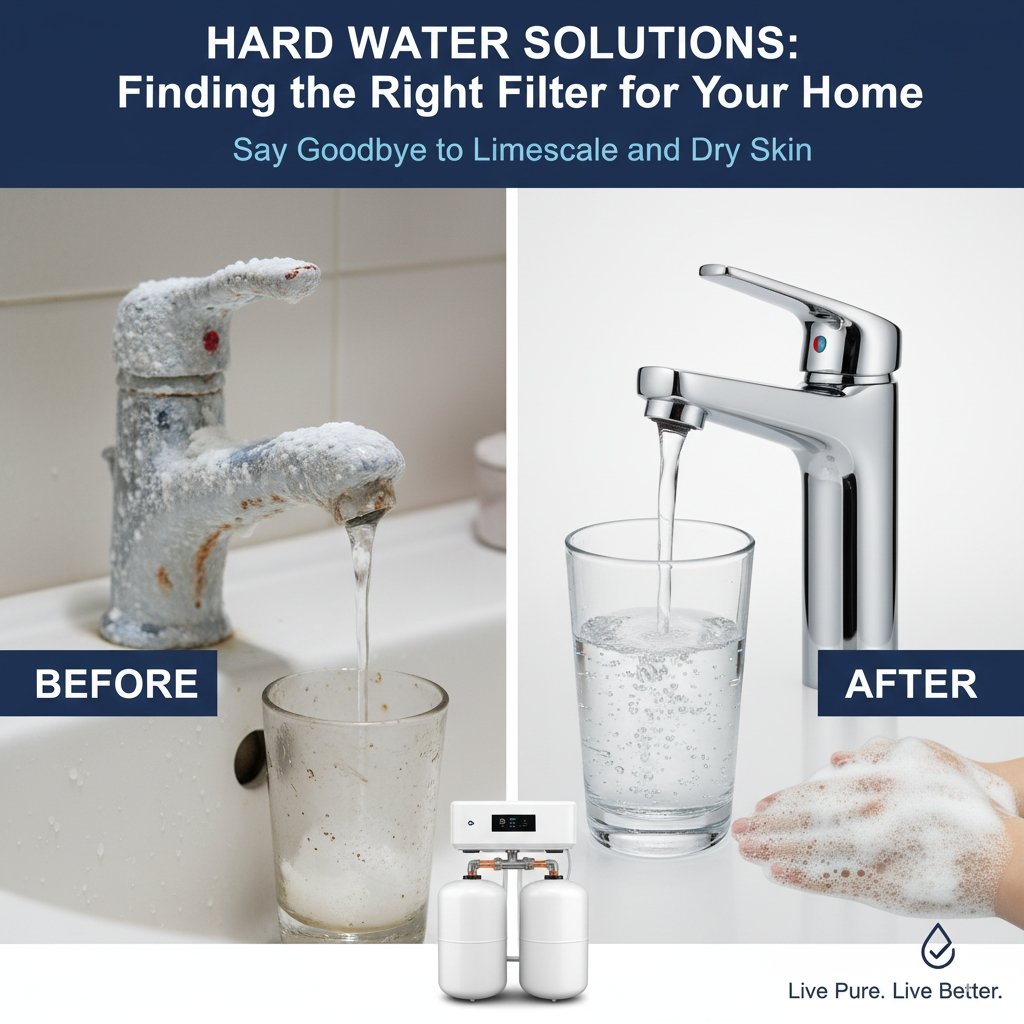
This topic is covered in full in our main guide: Water Filter for Hard Water — What Works, What Doesn’t, and How to Choose the Right System.
Hard water is a common problem in households across the world, and it can affect everything from the appearance of your clothes to the efficiency of your appliances. If you’ve been dealing with mineral deposits, soap scum, or cloudy dishes, it’s time to consider installing a water filter for hard water. This comprehensive guide will walk you through everything you need to know about water filters for hard water, including how they work, the different types available, and how to choose the best solution for your home. Along the way, we will introduce you to trusted sources where you can find high-quality water filters to tackle your hard water problems. For more information and to shop for products, check out Your Water Good and visit the shop for a wide selection of filtration options.YourWaterGood&our product range.
What is Hard Water and Why Is It a Problem?
Before we dive into the details of water filtration systems, it’s essential to understand what hard water is and why it causes so many issues.
Understanding Hard Water
Hard water contains high levels of dissolved minerals, primarily calcium and magnesium. These minerals are picked up as water passes through limestone, chalk, and other mineral-rich areas. The higher the concentration of these minerals, the harder the water becomes.
Water hardness is measured in grains per gallon (gpg) or milligrams per liter (mg/L). Water is generally considered “hard” when it exceeds 7 gpg or 120 mg/L of hardness. In some regions, water hardness levels can go much higher, causing significant problems in homes.
The Problems Caused by Hard Water
The issues caused by hard water are widespread and can affect multiple areas of your daily life, including:
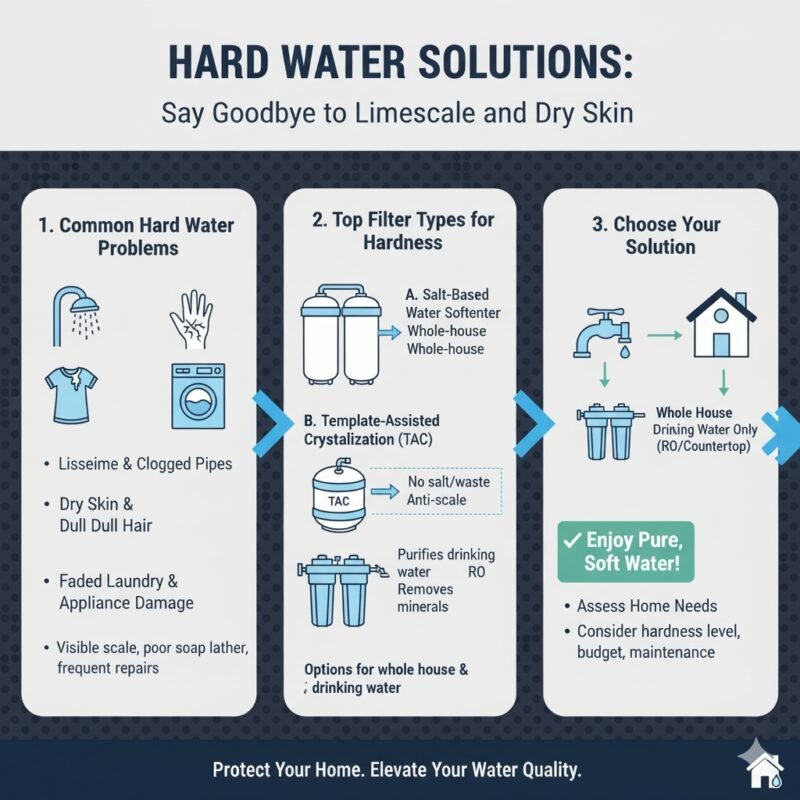
- Scale Build-Up: Hard water minerals precipitate out of solution when heated, forming scale deposits inside pipes, water heaters, and appliances. Over time, this scale build-up can reduce water flow and damage appliances.
- Decreased Appliance Efficiency: Appliances like dishwashers, washing machines, and water heaters struggle to work efficiently with hard water, leading to higher energy consumption and more frequent repairs.
- Soap and Detergent Issues: Hard water reacts with soap, reducing its ability to lather and forming soap scum. This leads to less effective cleaning and more residue on surfaces, clothing, and even your skin.
- Clogged Pipes: The accumulation of calcium and magnesium inside pipes and plumbing fixtures can cause clogs, reducing water flow and eventually requiring costly plumbing repairs.
- Dry Skin and Hair: Many people find hard water leaves skin feeling dry and hair harder to manage.
Clearly, hard water can be a serious problem that affects both the functionality of your home and the quality of life for its inhabitants. Installing a water filter for hard water can help alleviate these issues and provide cleaner, softer water.
Types of Water Filters for Hard Water
There are several types of water filters available that can address the issues caused by hard water. The most common solutions are water softeners, reverse osmosis (RO) systems, and various filtration cartridges. Below, we’ll explore each of these options in detail, outlining how they work, their benefits, and their potential drawbacks.
1. Water Softeners: The Most Common Solution for Hard Water
Water softeners are the most popular and effective solution for hard water problems. They use a process called ion exchange to remove calcium and magnesium ions from the water, replacing them with sodium or potassium ions.
How Water Softeners Work
A water softener typically consists of a resin tank filled with small beads that are charged with sodium or potassium ions. When hard water passes through the tank, the calcium and magnesium ions are exchanged for sodium or potassium ions, effectively softening the water. Once the resin beads become saturated with minerals, the system goes through a regeneration cycle, during which the beads are recharged with salt or potassium.
Pros of Water Softeners
- Highly Effective: Water softeners are the most effective way to remove hardness minerals and prevent scale build-up.
- Improved Water Quality: Softened water feels better on the skin, lathers soap more effectively, and extends the lifespan of your appliances.
- Prevents Scale: Soft water helps prevent the scale build-up that can clog pipes, damage water heaters, and reduce appliance efficiency.
Cons of Water Softeners
- Salt Dependency: Traditional salt-based water softeners require regular salt refills, which can be an added ongoing cost.
- Sodium Addition: If you have concerns about sodium intake, you may want to consider potassium-based systems or install a reverse osmosis system for drinking water.
- Regeneration Wastewater: The regeneration process uses a lot of water, which may be a concern in areas with water restrictions.
Water softeners are a great solution for homes with high levels of hardness. If you’re considering a water softener, you can find excellent options at Your Water Good.
2. Reverse Osmosis (RO) Systems: High-Performance Filtration for Drinking Water
Reverse osmosis systems are commonly used for point-of-use filtration, such as at the kitchen sink, but they can also be used in whole-house applications to address hard water and other water quality issues. These systems use a semi-permeable membrane to remove a wide range of contaminants, including calcium and magnesium.
How Reverse Osmosis Works
An RO system forces water through a membrane that blocks contaminants larger than water molecules, including hardness minerals. The filtered water is then collected in a storage tank, while the waste water (which contains the contaminants) is flushed away. RO systems are highly effective at removing a broad range of impurities, including minerals, heavy metals, chlorine, and more.
Pros of Reverse Osmosis
- Highly Effective: RO systems remove up to 99% of dissolved solids, including calcium and magnesium, providing exceptionally clean water.
- Versatility: RO systems can be installed as point-of-use units for specific taps or as point-of-entry systems for the entire home.
- Improved Taste: The filtration process improves the taste of water by removing contaminants like chlorine and other chemicals.
Cons of Reverse Osmosis
- Wastewater: RO systems waste a significant amount of water during the filtration process (typically 3-4 gallons of waste water for every gallon of purified water).
- Limited Flow Rate: RO systems are typically slower than other filtration methods, making them less ideal for high-flow demands.
- Cost and Maintenance: RO systems tend to be more expensive upfront and require regular maintenance, such as replacing filters and membranes.
While not typically the first choice for whole-house filtration, RO can be a great addition for addressing hard water at the point-of-use or providing high-quality drinking water. Explore our RO systems at Your Water Good Shop.
3. Water Filter Cartridges: A Simple and Affordable Option
For those looking for a more affordable and straightforward solution, water filter cartridges are another option for addressing hard water. These filters are often used in pitcher filters, under-sink filters, or whole-house filtration systems. While they don’t directly soften water, they can help reduce mineral build-up and improve water quality.
How Water Filter Cartridges Work
Water filter cartridges typically use materials like activated carbon or KDF (Kinetic Degradation Fluxion) to filter out contaminants. Some multi-stage filters combine sediment filtration, activated carbon filtration, and other media to provide more comprehensive treatment.
Pros of Water Filter Cartridges
- Inexpensive: Filter cartridges are typically less expensive than water softeners or RO systems.
- Easy to Replace: Cartridges are simple to replace and often come in standard sizes that can be easily swapped out.
- Low Maintenance: These filters require minimal maintenance and typically last for several months before needing replacement.
Cons of Water Filter Cartridges
- Limited Softening: Water filter cartridges do not soften water in the traditional sense, so they may not completely resolve hard water issues.
- Frequent Replacement: Depending on water usage and quality, you may need to replace the cartridges every 3-6 months.
Water filter cartridges are a great starting point for those who want to reduce the effects of hard water without committing to a more complex system.
4. Salt-Free Water Conditioners: A Chemical-Free Alternative
Salt-free water conditioners are becoming increasingly popular as an alternative to traditional water softeners. These systems use Template Assisted Crystallization (TAC) technology to modify the structure of hardness minerals, preventing them from forming scale deposits.
How Salt-Free Water Conditioners Work
Salt-free conditioners use specialized media to crystallize calcium and magnesium ions, transforming them into harmless microcrystals that won’t stick to surfaces. This process reduces scale build-up without using salt or chemicals.
Pros of Salt-Free Water Conditioners
- No Salt: These systems don’t require salt, making them ideal for those on low-sodium diets or in areas with water softener discharge restrictions.
- Low Maintenance: Salt-free systems require little maintenance and don’t produce waste water like traditional softeners.
- Environmentally Friendly: With no brine discharge or chemicals, salt-free systems are an eco-friendly alternative.
Cons of Salt-Free Water Conditioners
- Limited Effectiveness: While salt-free conditioners can reduce scale, they don’t fully remove calcium and magnesium from the water.
- Not Suitable for High Hardness: In areas with extremely hard water, salt-free systems may not be as effective as traditional softeners.
Salt-free water conditioners can be an excellent option for homes that want to reduce scale build-up without the added expense or environmental concerns of salt-based systems.
How to Choose the Right Water Filter for Hard Water
Choosing the right water filter for hard water depends on several factors, including:
- Water Quality: Test your water to determine the hardness level and any other contaminants (e.g., iron, chlorine). This will help you decide which treatment options are necessary.
- Treatment Goals: Decide whether you need a full water softener to address all aspects of hardness, or if a more targeted solution, like an RO system or salt-free conditioner, will suffice.
- Budget: Water filters vary in price. Consider the initial cost of the system as well as the ongoing maintenance costs, such as filter replacements or salt refills.
- System Size: Consider the size of your home and water usage. Larger homes with more occupants may require a larger system or multiple units.
- Maintenance Requirements: Some systems require more maintenance than others. Ensure you choose a system that fits your lifestyle and willingness to maintain it.
To explore the best options for your home, visit Your Water Good for information on available products and solutions.
Conclusion
Dealing with hard water doesn’t have to be a constant struggle. By choosing the right water filter for hard water, you can prevent scale build-up, improve the efficiency of your appliances, and enjoy cleaner, softer water throughout your home. Whether you opt for a traditional water softener, a reverse osmosis system, or a salt-free conditioner, there are solutions available that will suit your needs and budget. Don’t let hard water affect your quality of life — take action today and invest in a water filter that works for you.
For more options and to shop for water filtration systems, head to YourWaterGood and browse the wide range of solutions at our product range.