
Understanding The Price Of Whole House Water Filtration System: real costs, hidden expenses, and how to get the best value

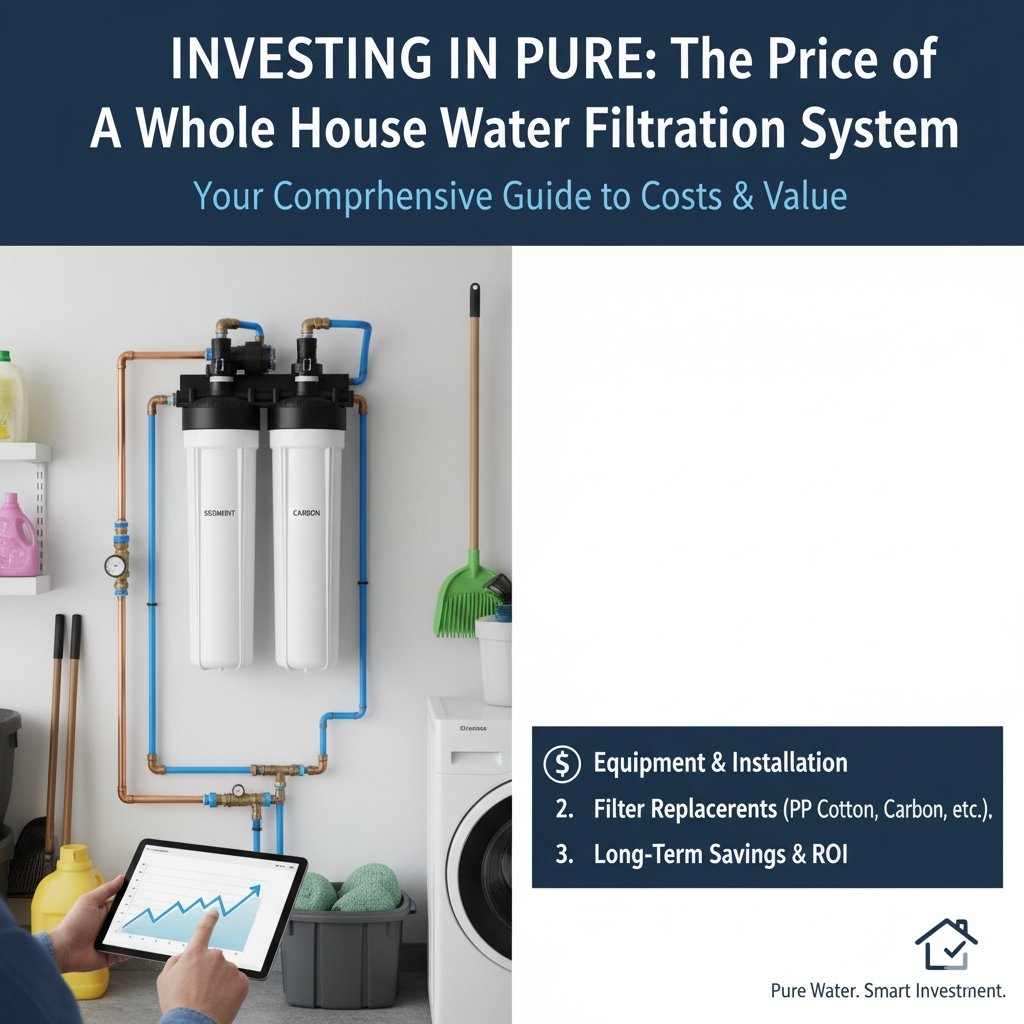
This topic is covered in full in our main guide: How Much Does a Whole House Water Filtration System Cost? — A Complete U.S. Buyer’s Guide.
When homeowners start researching water quality improvements, one of the most common searches is the price of whole house water filtration system — and for good reason. A whole-house system (also called a point-of-entry system) treats every drop of water that enters your home, protecting plumbing, appliances, and clothing. But costs vary wildly depending on technology, home size, water chemistry, installation complexity, and long-term maintenance. This article breaks down everything that drives the price of whole house water filtration system purchases, gives realistic cost ranges and examples, and offers a practical buying checklist so you can make a confident, cost-effective decision.YourWaterGood&our product range.
Overview: what “whole house water filtration system” really means
A whole-house water filtration system sits at the point where municipal or well water enters the property and treats water destined for every tap, fixture, and appliance. These systems are used to remove or reduce sediment, chlorine, hardness, iron, sulfur, organic compounds, or combinations of those depending on the system design.
Because the system protects the whole home, it’s generally larger and more complex than a point-of-use filter under a sink. That complexity is the first reason the price of whole house water filtration system varies so much: you’re not just buying a cartridge — you’re often buying pumps, tanks, multiple media stages, professional plumbing labor, and sometimes electrical work or pre-treatment modules.
Quick summary of typical price ranges (context before detail)
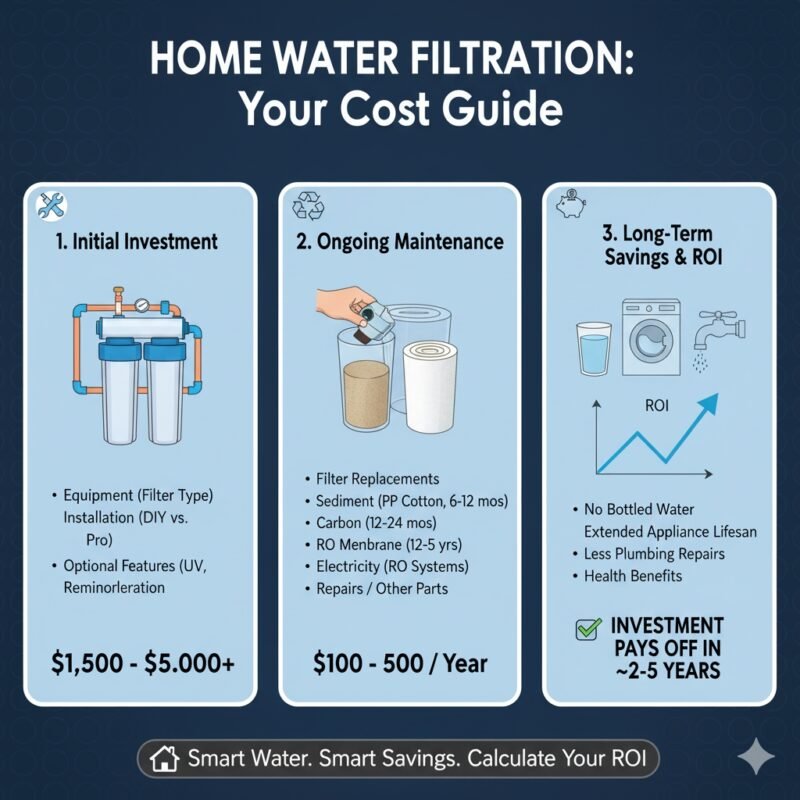
To set expectations up front, here are very broad ranges you’ll encounter in the U.S. market. Prices below combine equipment and professional installation but exclude unusual site work or expensive upgrades.
- Basic sediment + carbon whole-house systems (simple POE filter housings with 10″ / 20″ cartridges): $400 – $1,500.
- Mid-range multi-stage systems (sediment + carbon + catalytic carbon for chloramine / basic softening or scale control): $1,200 – $4,000.
- High-end or specialized systems (certified multi-stage systems, whole-house RO, commercial-grade softening + RO, or complete well-water packages with iron removal): $3,500 – $12,000+.
- Whole-house reverse osmosis or advanced membrane-based POE systems: $6,000 – $30,000+ (rare for residential but used in high-demand or specialty homes).
Those ranges are intentionally wide because the price of whole house water filtration system depends more on the details than the headline. Below we’ll unpack every factor so you can predict where on that spectrum your project will land.
Major cost drivers explained
- Water quality and treatment objectives
The single biggest determinant of cost is what you need the system to remove. Basic sediment and chlorine removal is inexpensive. When you add hardness removal (ion exchange softeners), iron or manganese removal, chloramine treatment, or membrane processes (reverse osmosis), costs rise substantially. Example: treating a municipal supply for taste and chlorine is cheaper than treating high-iron well water that needs oxidation and filtration plus an iron-specific media and regular maintenance. - System type and media
Different technologies have different equipment and media costs:- Sediment cartridges (melt-blown PP, pleated) — inexpensive.
- Activated carbon (GAC or carbon block) — moderate cost; carbon block housings and cartridges add price.
- Catalytic carbon or specialty media for chloramine — higher cost.
- Ion exchange softeners (salt-based) — moderate to high, include resin tanks and control valve.
- Salt-free scale control (TAC or template-assisted crystallization) — variable cost, often mid-range.
- Iron removal systems (greensand, aeration + filtration, Birm, or chemical oxidation) — moderate to high depending on method.
- Whole-house RO or membrane systems — high to very high cost, due to large membranes and high-pressure pumps.
- Capacity and flow rate needs
The system must handle peak household flow (showers + dishwasher + washing machine running concurrently). Homes with multiple simultaneous uses need larger housings, more media, or parallel cartridges, all of which increase cost. - Certifications and testing
Filters or systems with NSF/ANSI certifications (e.g., 42, 53, 58) typically cost more because testing and lab validation add to manufacturer expense. If you need certified reduction claims (for lead, cysts, or RO performance), expect higher prices. - Installation complexity and labor
A simple install (straightforward access to main water line, no cabinet rearrangement) is inexpensive. Complicated installs — replacing old pipes, tying into a hot-water heater, adding electrical or drain hookups, or running new lines through finished basements — increase labor time and cost. Labor costs vary by region and plumber rates; urban areas and high-cost states will be more expensive. - Pre-treatment and ancillary equipment
Many homes need pre-treatment such as sediment or iron filters to protect the main system. Adding a water softener, booster pump (if pressure is low), UV sterilizer (if microbial risk exists), or storage tanks will raise the price. - Maintenance and replacement parts
The initial purchase is only part of lifetime cost. Filter cartridges, carbon replacements, resin regeneration salt, membrane replacements, and periodic service all add ongoing expense. When calculating the real price of whole house water filtration system over time, include 5–10 years of operating costs. - Warranty, service contracts, and vendor support
Systems sold with extended warranties or optional service contracts (annual checkups, cartridge changes) carry a higher upfront price but can save money and headaches over time. - Aesthetics, accessibility, and upgrade options
Custom housings, finished cabinets, or integrated bypass valves and digital controllers add features and cost.
Typical system configurations and their real-world costs
To make the abstract numbers above concrete, here are common whole-house system configurations with realistic price estimates including professional installation. Prices assume typical U.S. residential labor rates and average site complexity.
A. Basic sediment + carbon whole-house combo — $400–$1,500
- Components: two standard 10″ or 20″ housings (sediment + carbon), basic shutoff and bypass valves, standard fittings.
- Use case: municipal water customers who need protection from sediment and chlorine taste/odor but don’t require hardness reduction.
- Ongoing costs: replacement cartridges every 6–12 months ($30–$150/year depending on brand/quality); occasional labor for cartridge replacement if using a service plan.
- Why choose it: lowest price of entry, faster install, immediate taste/odour improvement, protects appliances from sediment.
B. Mid-range multi-stage system (sediment + carbon + scale control or softening) — $1,200–$4,000
- Components: sediment housing, carbon housing or carbon tank, either a salt-free scale control unit or a compact ion-exchange softener, valves and gauges, possibly a small booster pump.
- Use case: homeowners with moderate hardness, some chlorine/chloramine, or those who want an appliance-protecting solution without full RO.
- Ongoing costs: scale-control media replacement every 3–7 years or salt purchases for softeners ($30–$400/year depending on hardness and salt usage).
- Why choose it: balanced performance and cost; reduces scale and improves taste while keeping maintenance manageable.
C. High-end multi-treatment / well-water package (iron removal + softening + carbon + UV) — $3,500–$12,000
- Components: iron removal tank or oxidizing filter, whole-house softener (salt-based), carbon polishing, UV sterilizer (if bacterial risk), larger housings and pre-filters, may include a sediment tank or backwashable filter system.
- Use case: private well owners with iron, manganese, hydrogen sulfide odor, and hardness; municipal customers with very poor feed-water.
- Ongoing costs: replacements and media regeneration; occasional professional servicing; UV lamp replacement annually. Expect $200–$1,000+ per year depending on system complexity.
- Why choose it: comprehensive solution—tackles multiple contaminants and preserves appliances in difficult water conditions.
D. Whole-house reverse osmosis or membrane-based POE systems — $6,000–$30,000+
- Components: large RO membranes, high-pressure pumps, permeate storage tank, pre- and post-filters; may be custom sized for high-demand homes.
- Use case: specialty homes needing very low TDS in all water (rare), medical / lab uses, or estates with specific water needs.
- Ongoing costs: membrane replacement, pump maintenance, higher water waste (unless recovery systems are used), regular pre-filter replacements.
- Why choose it: highest purity across the entire home; expensive and wasteful for most residential uses.
Hidden and one-time extra costs to watch for
- Plumbing upgrades: Replacing corroded fittings, adding shutoffs, or upgrading older galvanized pipe to modern materials adds cost.
- Electrical work: Some systems require a dedicated outlet or hardwired control valves. An electrician’s time should be budgeted separately.
- Permits and inspections: Local codes in some jurisdictions require permits for significant plumbing work; permit fees can add to the price.
- Drain or sewer hookups: Softener regeneration brine or RO waste requires a drain; installing a proper drain connection (with air gap) may be an extra expense.
- Water testing and lab fees: Pre-installation tests and follow-up verification tests cost money but are worth it—expect $50–$300 depending on the depth of testing.
- Site access and labor complications: Crawlspaces, finished basements, or complex routing increase time on the job and labor cost.
- Disposal of old equipment: Old tanks, softeners, or filter housings may require disposal or recycling fees.
Ongoing operating costs you should include in your calculations
When comparing options, don’t just look at the upfront price of whole house water filtration system — calculate lifecycle costs:
- Consumables: Filter cartridges, carbon replacements, softener salt, and any specialty media.
- Example: a mid-range household might spend $100–$400/year on consumables.
- Service & maintenance: Optional annual service visits, valve rebuilds, or emergency calls.
- Example: inspection + annual cartridge change by a pro might run $150–$400/year.
- Energy & water: Regeneration uses water and some softener controllers require electricity; whole-house RO pumps consume electricity.
- Example: RO wastewater could add small increases in municipal water bills unless recovery is used.
- Replacement parts: Valves, O-rings, pump maintenance, and eventual media replacement (resin or membranes).
- Budget for occasional mid-hundreds to low-thousands every few years for major replacements.
How to estimate your real price quickly (workable approach)
- Start with a water test — lab test or municipal CCR. Identify target contaminants.
- Decide treatment objectives — remove chlorine and sediment? Remove hardness? Remove iron? Achieve drinking-water RO quality?
- Get 2–3 local quotes — include equipment and installation. Ask vendors to itemize equipment, labor, pre-treatment, electrical, and permit fees.
- Ask about ongoing costs — request a realistic first-year and five-year operating cost estimate including consumables.
- Check warranty and service — a lower upfront price may cost more if the vendor offers weak support or no local service.
- Plan for contingencies — budget an extra 10–25% for unexpected site work.
Example scenarios with prices and reasoning
Scenario 1 — Urban home on municipal water, concerned about chlorine taste and sediment:
- Solution: 20″ sediment cartridge + 20″ carbon block in twin housings, basic bypass.
- Estimated price: $600–$1,200 installed.
- Rationale: Low hardness, no iron; straightforward install and inexpensive consumables.
Scenario 2 — Suburban home on municipal water, moderate hardness (8 gpg), wants to protect appliances:
- Solution: Sediment → carbon → salt-free scale control (TAC) OR small ion-exchange softener depending on preference.
- Estimated price: $1,500–$3,500 installed (softener higher end due to brine drain and resin tank).
- Rationale: Softening vs scale-control choice determines cost and ongoing salt expense; contractor quotes vary.
Scenario 3 — Rural well with iron (2 ppm), hardness 12 gpg, sulfur odor:
- Solution: Air injection or chemical oxidation + iron filter → sediment → softener → carbon → optional UV.
- Estimated price: $4,000–$12,000+ depending on iron level and media choices.
- Rationale: Multi-stage specialized equipment and possible pre-treatment is costly but necessary.
Scenario 4 — Estate wanting very low TDS for all water and to remove all contaminants:
- Solution: Whole-house RO system with large membranes, high-pressure pumps, pre-filtration, and storage tank—rare and expensive.
- Estimated price: $15,000–$50,000+ depending on capacity and recovery systems.
- Rationale: Whole-house RO is uncommon; high cost for equipment, high energy/wastewater considerations.
Tips to reduce the price without sacrificing performance
- Buy the solution you need, not the one you fear: If sediment and chlorine are your only issue, don’t buy a full softening or RO system.
- Compare materials and media: Higher-grade carbon blocks and filters last longer; they may cost more upfront but save money on replacement frequency.
- Ask for production-run samples and CoAs: Quality media reduces returns and improves performance.
- Bundle installations: If you’re already doing plumbing upgrades, combine jobs to reduce per-hour costs.
- Negotiate service bundles: Some vendors give discounts for prepaid service contracts.
- Consider staged upgrades: Start with filtration for the most pressing problem and add modules (softening, UV, RO) later if needed.
- Shop local for installation: Local plumbers often have better service rates and knowledge of local codes than out-of-area companies.
Choosing a vendor: questions to ask so the quoted price is meaningful
- What specific contaminants will this system address? Ask for measured test numbers or lab reports.
- Can you provide an itemized quote that separates equipment and labor?
- Are the components NSF/ANSI certified? If so, which standards?
- What are the expected annual consumable costs (filters, salt, membranes)?
- How long is the warranty, and what does it cover?
- Do you retain production samples and provide lot-level CoAs?
- Will you provide post-installation water testing to verify performance?
- What is the RMA process and response time for defective parts?
Where to look and useful resources
For product browsing and accessory shopping, manufacturer pages and online stores with clear specs help you compare. If you want to explore options and purchase parts or whole systems, check manufacturer and shopping pages that publish technical details and pricing transparently. Two useful starting points are YourWaterGood and our product range.
Final checklist before you buy
- Get a water test and define the problem precisely.
- Obtain at least three itemized quotes including equipment, installation, permits, and expected consumables.
- Verify certifications and request documented performance data.
- Ask about local service, warranty terms, and retained-sample policies.
- Budget for 5–10 years of operation, including consumables and occasional parts replacement.
- Consider staged upgrades if budget-constrained: solve the most harmful problem first.
Conclusion
The price of whole house water filtration system is not a single number but a range determined by your water’s needs, the technology chosen, installation complexity, and long-term maintenance. Basic systems that remove sediment and chlorine are affordable; comprehensive well-water packages that handle iron, hardness, and bacteria can be expensive but are often necessary. The smartest approach is test-first, specify clearly, get multiple itemized quotes, and evaluate lifetime operating costs rather than only the upfront price. With careful planning you can buy the right whole-house solution that protects your home, improves water quality, and delivers good value over the long run.
If you want to compare specific system components, read product specifications, or explore shopping options for housings, cartridges, or multi-stage systems, begin with manufacturer resources such as YourWaterGood and the shopping pages at our product range.