
Best Water Filtration System for Restaurant: Comparing RO, Softener, and Carbon for Zero-Downtime Kitchens

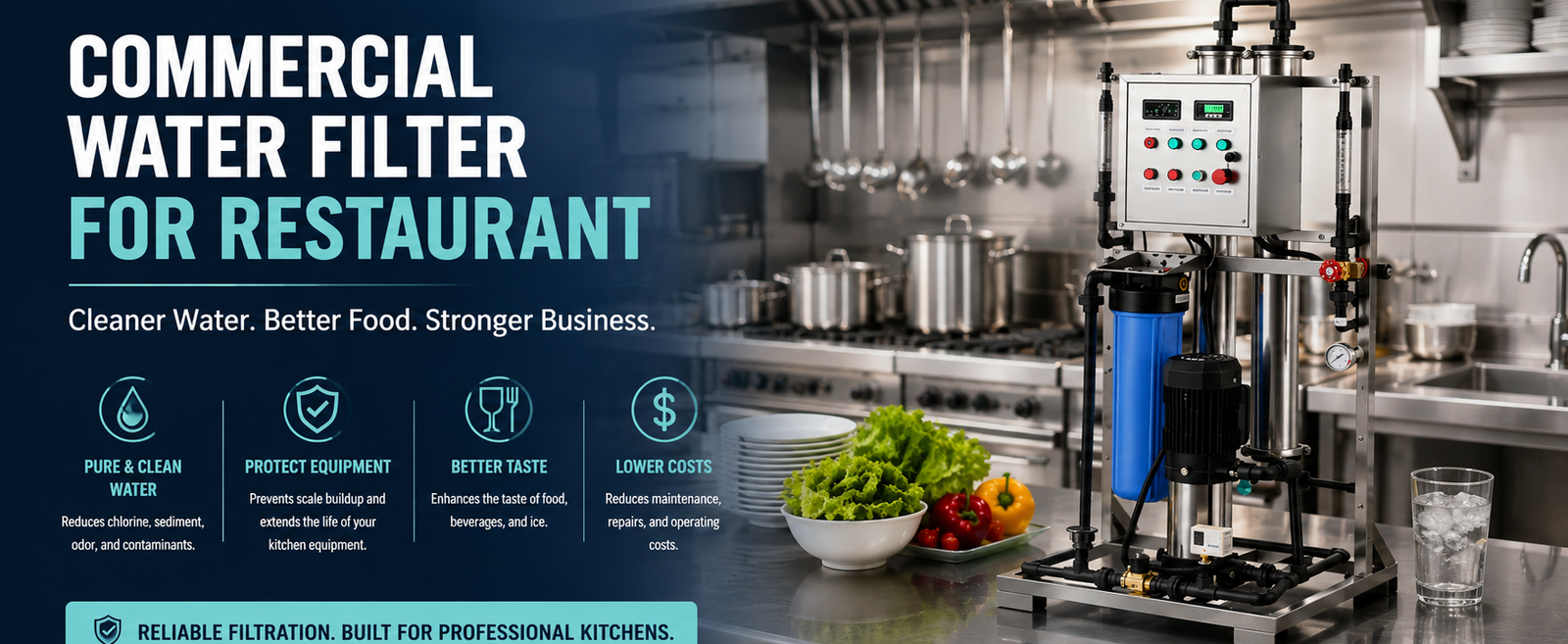
There’s no single “best” water filtration system for every restaurant. The right type depends on your feed water, your equipment mix, and how hard you hit peak service.
What separates a system that protects your kitchen from one that becomes a maintenance headache comes down to five hard specs:
- Peak flow rate (GPM) — output has to hold during your busiest ticket run, not just at rest.
- Feed water chemistry — municipal chlorine/chloramine and hardness call for different pre-treatment than well-water iron and manganese.
- TDS target, not TDS elimination — 0 ppm is rarely the correct number for beverage equipment.
- Cartridge and membrane change intervals — the real driver of your ongoing labor cost.
- Footprint — most commercial kitchens don’t have a spare closet for oversized equipment.
Get these five right, and the “which type” question mostly answers itself.
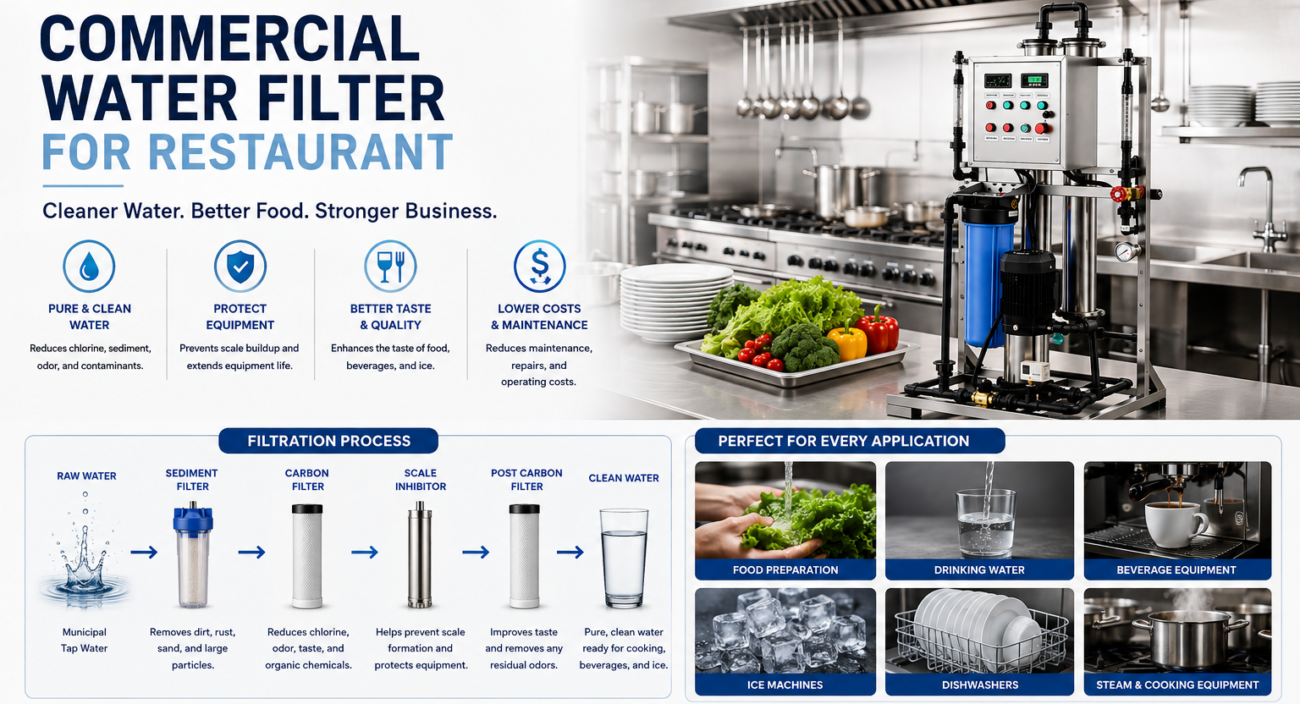
Fast Check Product:https://yourwatergood.com/product/commercial-reverse-osmosis-system/
Reverse Osmosis vs. Water Softener vs. Carbon Filtration: Matching Type to Problem
Every one of these system types solves a different water problem. Get this wrong, and even a well-built commercial water filter for restaurant setup ends up replaced within a year — not because the equipment failed, but because it solved the wrong problem for that kitchen.
| System Type | Solves | TDS / Hardness Reduction | Scale Prevention | Effect on Peak Flow | Typical Restaurant Use |
|---|---|---|---|---|---|
| Reverse Osmosis (RO) | Dissolved solids, most dissolved contaminants | High — RO membranes typically reject 90%+ of TDS | Excellent | Needs correct GPM sizing or output drops under load | Espresso, ice, water/beverage stations |
| Water Softener (Ion Exchange) | Hardness (calcium/magnesium) only | None — doesn’t touch TDS or taste | Excellent for scale, doesn’t address taste/odor | Minimal if sized to peak demand | Steamers, combi ovens, dish machines |
| Carbon / Sediment Filtration | Chlorine taste/odor, sediment | Minimal | None on its own | Minimal | Pre-treatment stage, brew water polish |
| Whole-Building Combo (POE) | All of the above, staged together | Depends on which stages are combined | Excellent | Best for consistent flow across multiple stations | Multi-station kitchens, hotel F&B outlets |
Most restaurants don’t need to pick just one type — they need the right stages stacked in the right order, sized to the equipment they’re actually protecting. A single-station coffee bar and a hotel kitchen running an espresso machine, three ice machines, and a dish pit have almost nothing in common on this table.
Peak-Hour Flow: Why a System That Tests Fine at 9 AM Fails at Noon
A system rated for a given GPM on a spec sheet almost never means that number under load. A lab flow rating is a bench number; peak flow is a kitchen number.
This is where undersized RO units get pulled back out. If your ice machine, espresso group heads, and prep sink all pull at once during a Friday rush, the system has to hold pressure through all three — not just the first one.
Modular commercial RO platforms handle this with configurable output instead of one fixed rating. Ours are field-configured from 250 to 1,000 liters per hour — roughly 0.25 to 1 ton per hour, or about 1.1 to 4.4 GPM of finished water — sized to match, not exceed, your actual peak demand. Oversizing wastes floor space and pre-filter media; undersizing shows up as a guest complaint at 12:15 PM.
Two components matter more than most first-time buyers realize when it comes to verifying flow under load:
- Dual inline flow meters on both the product-water and concentrate-water lines let a technician confirm the system is actually recovering water at the rated ratio — not just producing some output.
- Low- and high-pressure switches and gauges on the feed side shut the system down automatically if inlet pressure drops out of range, protecting the high-pressure pump instead of letting it run dry.
Request a Commercial Kitchen Water Layout Design before you commit to a flow rating on paper — it’s the fastest way to catch an undersized system before it’s installed, not after.
TDS Targets: Why Zero Isn’t the Goal for Coffee, Ice, and Soup Base
Here’s a mistake we see on nearly every “premium” install a first-time buyer specs alone: chasing 0 ppm TDS because it sounds like the cleanest possible water.
It isn’t the right target for a beverage program. Water with no dissolved minerals pulls flat, under-extracted shots from an espresso machine — there’s nothing left for the coffee to extract into. Worse, aggressively pure water is corrosive and will attack a copper boiler over time.
The fix experienced commercial installers use is a bypass/blending setup that holds finished water in the 30–50 ppm TDS range rather than stripping it to zero — enough mineral content for proper extraction and clean ice, still low enough to keep scale off heating elements. An inline water quality monitor on the output side lets kitchen staff confirm the number is actually holding, instead of guessing.
For soup bases and general prep water, the acceptable range is wider — but scale prevention on kettles and steam equipment still matters more than chasing a lab-perfect TDS reading.
Municipal vs. Well-Water Feed: Picking the Right Pre-Treatment Type
City water and well water fail differently, and that changes which system type does the actual work:
- Municipal supply typically needs pre-treatment for chlorine/chloramine taste and odor, plus scale-forming hardness picked up from aging distribution lines — a carbon stage plus RO or softening.
- Well water more often carries iron, manganese, and higher raw hardness, and needs a pre-treatment stage sized for that before it ever reaches an RO membrane — otherwise the membrane fouls early and you’re replacing it every few months instead of every year.
Most commercial-grade RO platforms tolerate a defined feed-water window — for example, tap or groundwater feed up to roughly 800 µS/cm conductivity (in the neighborhood of 400–500 ppm TDS) — before pre-treatment becomes mandatory rather than optional. Confirm your feed water numbers before locking in a system type; a $30 conductivity test saves a callback on a system that was never going to handle your source water.
What’s Inside a Properly Specced Commercial System
If a quote doesn’t itemize components like these, ask why:
- Pre-filter housing + polypropylene (PP) sediment cartridge — first line of defense, typically swapped every 2–4 months
- Inlet solenoid valve + high/low-pressure switch — automatic shutoff protection on the feed line
- High-pressure pump sized to the membrane housing — the component doing the actual separation work
- RO membrane — typically rated for about one year of service life, depending on feed water quality and run volume
- Auto-flush solenoid valve — reduces membrane fouling between production cycles instead of leaving concentrate sitting on the membrane
- Product-water and concentrate-water flow meters — verify recovery rate in real time instead of trusting a nameplate number
- Stainless steel frame and electrical control cabinet — built for a kitchen environment, not a residential utility closet, with roughly 1.1 kW total power draw
A properly configured unit in this class runs roughly 2 ft × 2 ft of floor space and about 4.5 ft tall — small enough for a back-of-house corner, not a dedicated mechanical room. Inlet plumbing typically runs around 1¼-inch, with a ¾-inch finished-water line out — worth confirming against your existing rough-in before ordering.
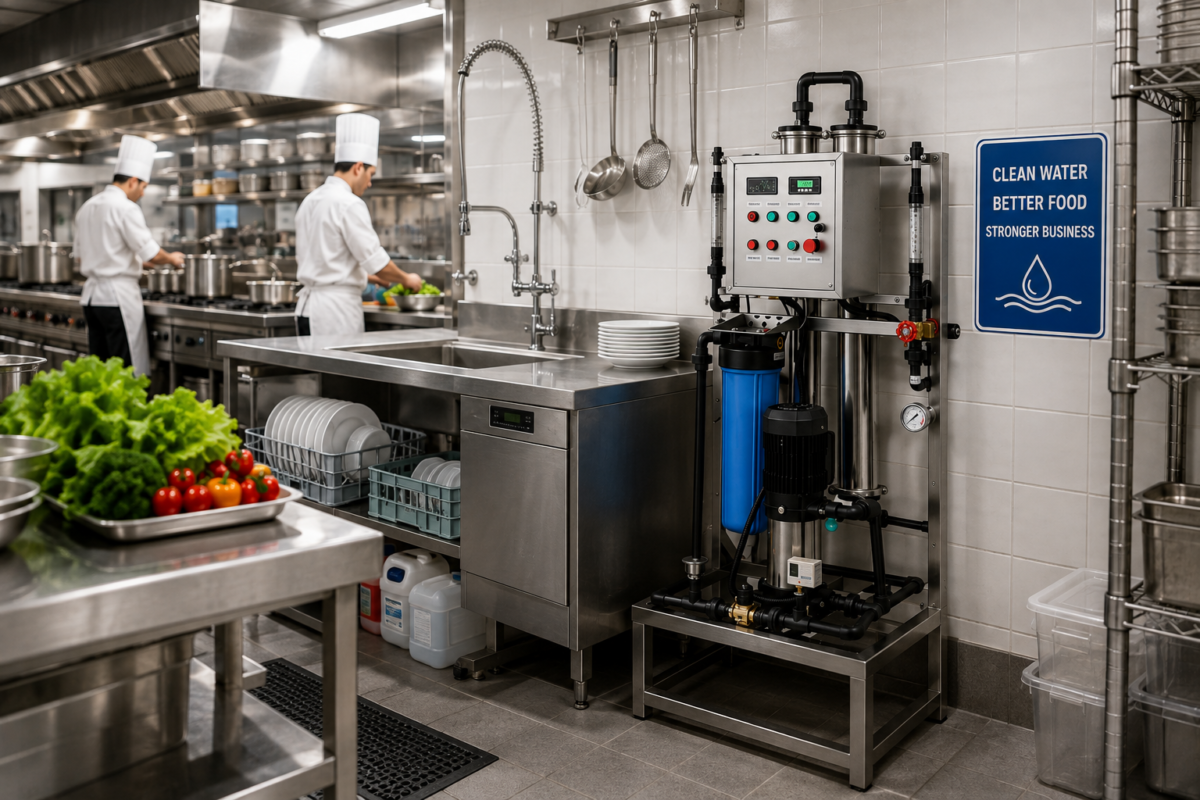
Request a full technical parameter sheet before comparing quotes line by line — a lower unit price with a smaller pump and no auto-flush valve isn’t actually the cheaper system once you factor in early membrane replacement.
How to Vet a Supplier’s System-Type Recommendation
Before signing off on any recommendation, ask the supplier three questions:
- What’s the guaranteed flow rate at my actual peak, not at rest?
- What’s the real annual cartridge and membrane cost — not just the unit price? That belongs in a full cost and ROI breakdown, separate from picking a system type.
- Can you show me the footprint and rough-in drawing before I commit to plumbing changes?
A supplier who can’t answer all three with specifics — not ranges, not “it depends” — probably hasn’t sized equipment for a working kitchen before.
FAQ
What is the best water filtration system for a restaurant? There isn’t one universal answer — it depends on feed water and equipment mix. Reverse osmosis handles dissolved solids for beverage and ice programs; a water softener handles scale on steamers and dish machines; carbon filtration handles taste and odor as a pre-treatment stage.
Do I need reverse osmosis or just a water softener? If your only issue is scale on heating equipment, a softener alone may be enough. If you’re also serving the water directly — coffee, tea, ice, drinking water — RO is usually required for taste and clarity.
What TDS level is best for espresso machines? Most commercial installers target 30–50 ppm TDS, not zero. Water with no dissolved minerals under-extracts and can corrode copper boiler components over time.
How much peak flow (GPM) does a restaurant water filtration system need? It depends on simultaneous demand — ice machine, espresso group heads, and prep sinks running at once. Undersizing shows up as a pressure drop during rush; size to peak demand, not average demand.
How often do commercial RO membranes and cartridges need replacing? Pre-filter cartridges typically need replacement every 2–4 months; RO membranes typically last about one year, depending on feed water quality and volume processed.
Is well water treatment different from city water treatment for restaurants? Yes. Well water more often needs pre-treatment for iron, manganese, and higher hardness. Municipal water more often needs pre-treatment for chlorine/chloramine taste and odor.
How much space does a commercial water filtration system need? A properly configured modular RO unit can fit in roughly a 2 ft × 2 ft footprint, standing about 4.5 ft tall — compact enough for a back-of-house corner rather than a dedicated mechanical room.
Get the Right System Specced for Your Kitchen
Picking the right type is step one. Matching flow rate, TDS target, and footprint to your actual kitchen is what determines whether it holds up during Saturday rush.
Request a custom commercial quote, a technical parameter sheet, or B2B wholesale pricing for your location count — and get a configuration built around your peak demand and TDS target, not a catalog default.