
5 Micron Sediment Water Filter: What It Catches and Where It Fits

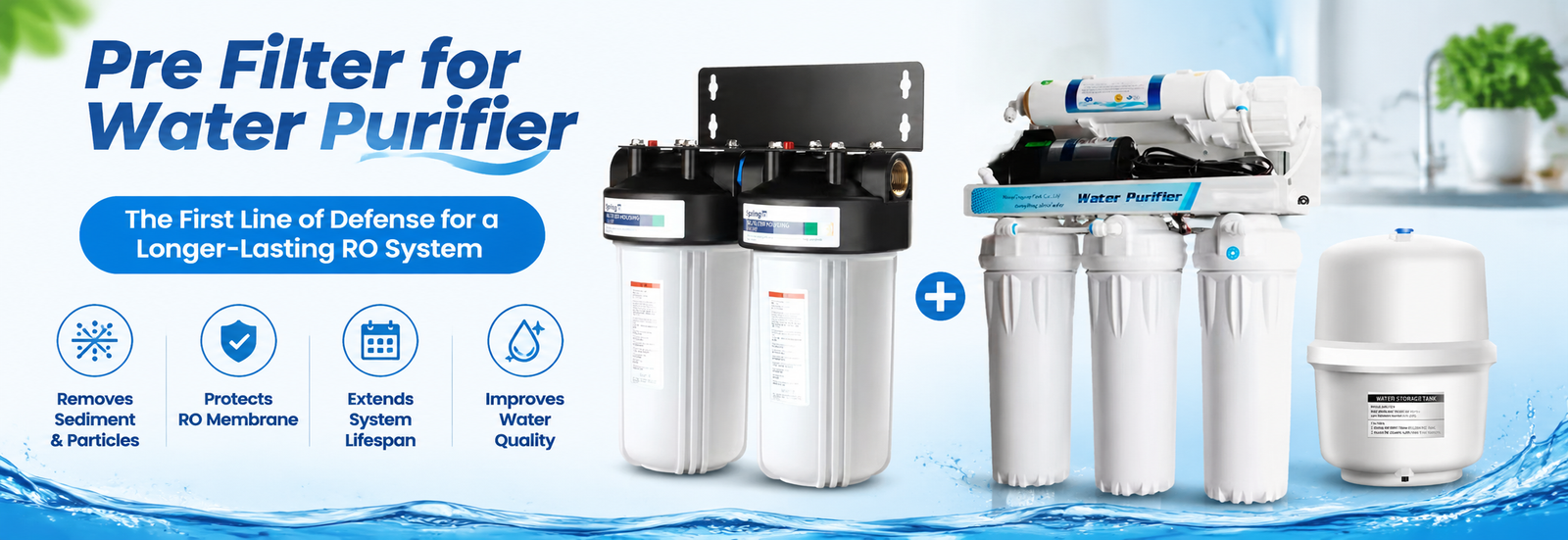
A 5 micron sediment water filter stops particles about 5 microns and larger: silt, fine sand, rust flakes, and the particles that make water look cloudy. It is the most common first stage in home filtration because it catches most of the damaging sediment without clogging as quickly as a 1-micron cartridge.
At a glance:
- Catches: silt, fine sand, rust, scale flakes, cloudiness-causing particles
- Misses: chlorine, hardness, dissolved salts, dissolved iron, microorganisms
- Best position: first stage on city water; second stage after a coarser filter on wells
- Typical life: commonly 3 to 6 months on city water
- Change signal: rising pressure drop or lower flow
How Small Is 5 Microns?
A micron is one-thousandth of a millimeter. A human hair is roughly 50 to 100 microns wide, so a 5-micron cartridge stops particles far smaller than anything you can see individually. Clear-looking water can still carry enough 5 to 20 micron particles to load a cartridge over a few months.
Nominal vs Absolute Ratings
Most PP cotton cartridges are rated nominal: they capture most particles at the stated size, but not every single one. Absolute ratings, used in some specialty cartridges, mean nearly all particles at that size are stopped under test conditions.
For household sediment control, nominal 5-micron PP cotton is the standard and does the job well. It is not a microbial barrier.
Where a 5 Micron Filter Fits
| Position | Role | Notes |
|---|---|---|
| First stage, city water | Main sediment stage | Protects carbon and appliances |
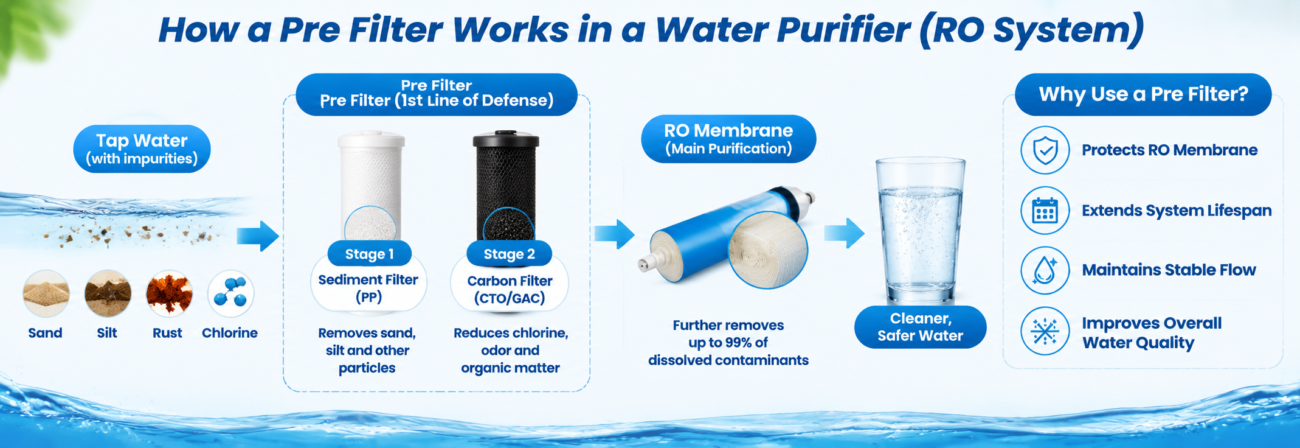
| First stage of RO | Protects carbon pre-filter and membrane | Changed most often of all RO stages |
| After a 20 to 50 micron stage on wells | Second sediment stage | Shares the load with the coarse stage |
| Ahead of a 1 micron cartridge | Takes most of the dirt | Lets the 1-micron stage last longer |
Our sediment water filter article compares all the common ratings.
5 Micron vs 1 Micron
- 5 micron: catches most damaging sediment, loads more slowly, lower pressure drop.
- 1 micron: catches finer particles, loads faster, higher pressure drop.
They work best together: 5 micron first, 1 micron after. See 1 micron sediment water filter.
Melt-Blown PP Cotton
Most 5-micron cartridges are melt-blown polypropylene. Fibers are looser near the outside and tighter toward the core, so large particles stop early and fine particles stop deeper. That spreads the dirt through the wall instead of blinding the surface.
Polypropylene is chemically inert in drinking water and does not add taste.
Choosing Size and Format
The micron rating is only one part of the choice. Match the cartridge to its housing and flow:
- Length: 10-inch or 20-inch. Check the actual length; many “10-inch” cartridges measure about 9.75 inches, and a cartridge too short for its housing lets water bypass the media.
- Diameter: slim (about 2.5 inches) for under-sink and RO systems, 4.5 inches for whole house housings.
- End caps: open-ended cartridges seal against knife edges in the housing; check they seat cleanly.
- Flow: whole house use calls for larger cartridges so pressure stays steady.
5 Micron on Well Water
Well water often carries more and coarser sediment than city water. A 5-micron cartridge alone can load in weeks. Put a spin-down screen or a 20 to 50 micron cartridge ahead of it, and keep a spare on hand for the days after heavy rain or pump work. If cartridges turn orange, dissolved iron is oxidizing in the housing and needs its own treatment.
When to Change It
- Pressure drop: with gauges before and after the housing, change when the difference has grown well past its starting value.
- Flow: showers or the purifier faucet slow down.
- Appearance: the cartridge is brown through to the core.
- Calendar: commonly every 3 to 6 months on city water; check monthly on wells.
If the outside is dark but the inside is clean, the 5-micron cartridge is being asked to do a coarser stage’s job. Add a 20-micron cartridge or spin-down screen ahead.
What a 5 Micron Filter Will Not Do
- Remove chlorine taste: add carbon
- Remove hardness: use a softener
- Remove dissolved iron: oxidize and filter it
- Disinfect: use UV or other disinfection if needed
YourWaterGood 5 Micron Cartridges
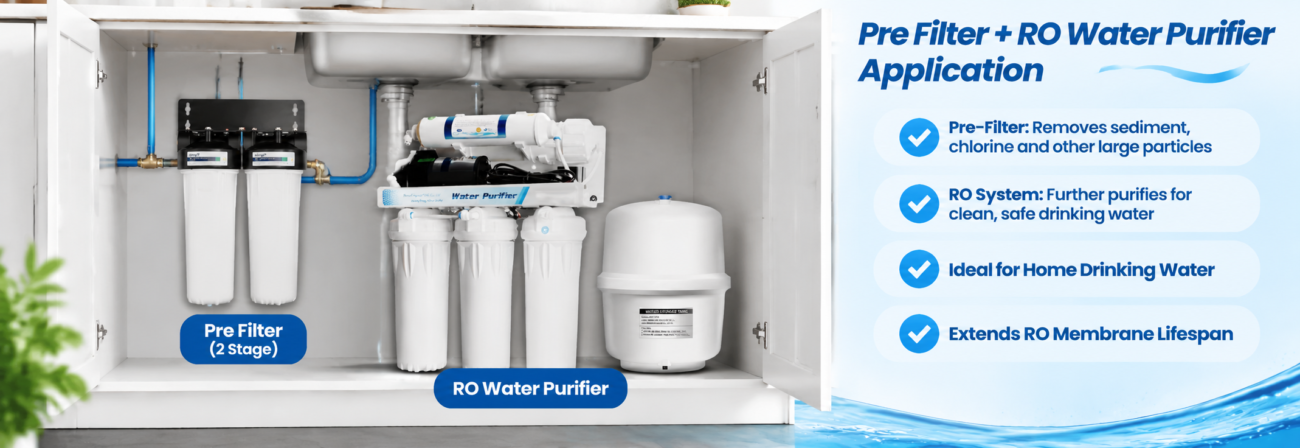
We supply 5-micron PP cotton cartridges in our replacement filter cartridge range. In our 5-stage RO system, the 5-micron PP cotton cartridge is the first stage and is replaced every 3 to 6 months. For its role ahead of RO, see pre filter for water purifier.
For Installers, Property Managers and Brands
5-micron cartridges are the most commonly stocked sediment rating. We supply them in volume, in common lengths and diameters, with spec sheets and wholesale pricing on request.
FAQ
What does a 5 micron sediment filter remove?
Silt, fine sand, rust, scale flakes, and particles that cause cloudiness. It does not remove chlorine, hardness, or dissolved contaminants.
Is 5 micron fine enough for drinking water?
As a first stage, yes. Drinking water systems usually add carbon and sometimes RO after it.
How long does a 5 micron filter last?
Commonly 3 to 6 months on city water, shorter on wells or after main breaks.
Should I use 5 micron or 1 micron?
Use 5 micron first. Add 1 micron after it only if fine particles still get through.
Does a 5 micron filter remove bacteria?
No. A nominal 5-micron sediment cartridge is not a microbial barrier.
Need 5 Micron Cartridges?
Tell us your housing size and water source. We will recommend the right 5 micron sediment water filter cartridges. Installers can request wholesale pricing from YourWaterGood.