Custom Engineering by an Industrial and Commercial Water Filtration System Manufacturer

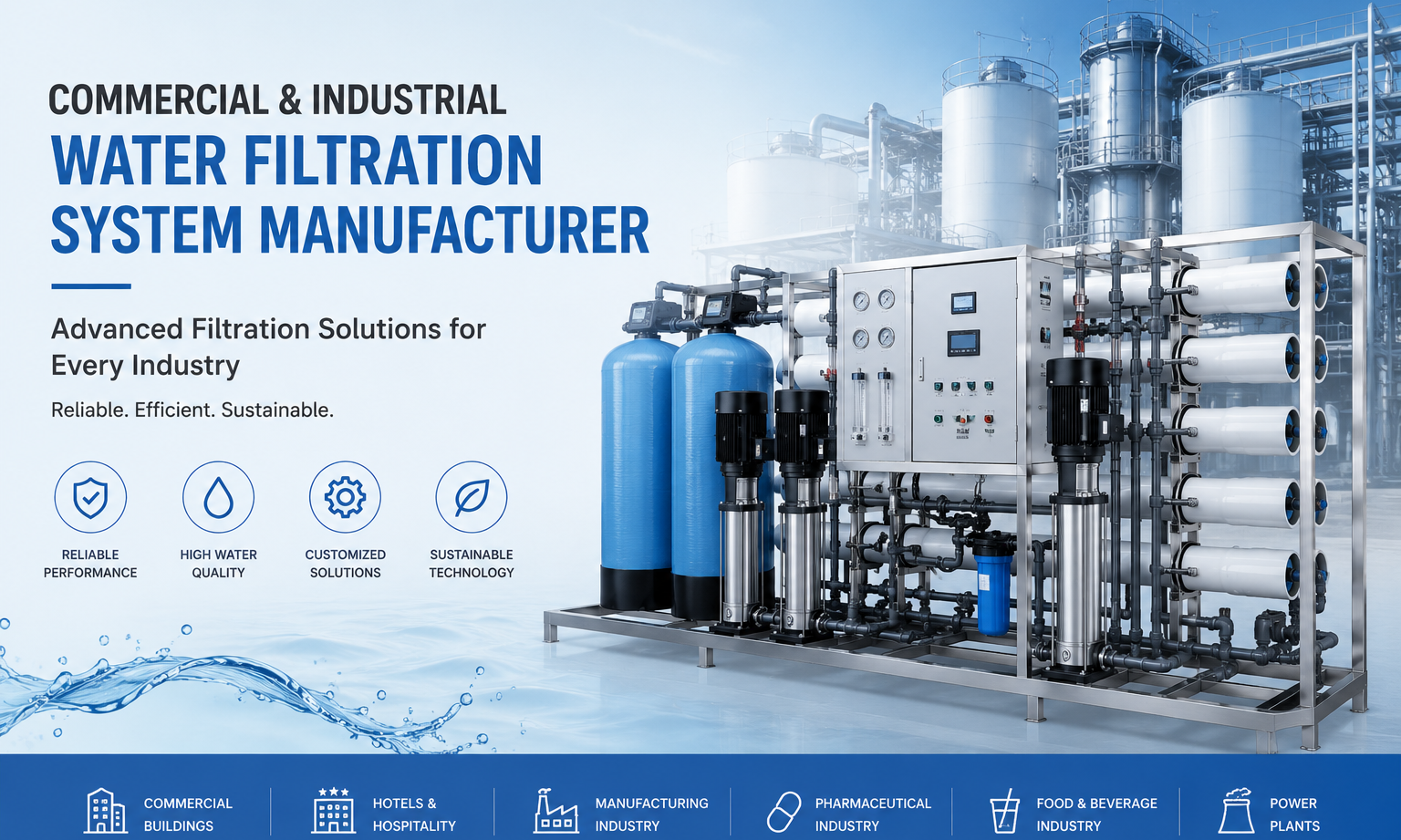
Variable feed water parameters, unmanaged total dissolved solids (TDS) spikes, and heavy metal breakthrough pose immediate financial risks to heavy industrial manufacturing operations. Securing an enterprise-grade commercial water filtration system manufacturer is the baseline requirement for engineering executives who need to insulate complex processing lines from unpredictable supply water qualities.
A top-tier commercial water filtration system manufacturer engineers application-specific, modular Reverse Osmosis (RO) cores that ensure compliance with EPA water quality frameworks. YourWaterGood provides specialized, high-rejection RO systems strictly segmented for industrial manufacturing, commercial hospitality, and high-end residential applications, ensuring absolute zero-scale performance and 99.8% contaminant rejection.
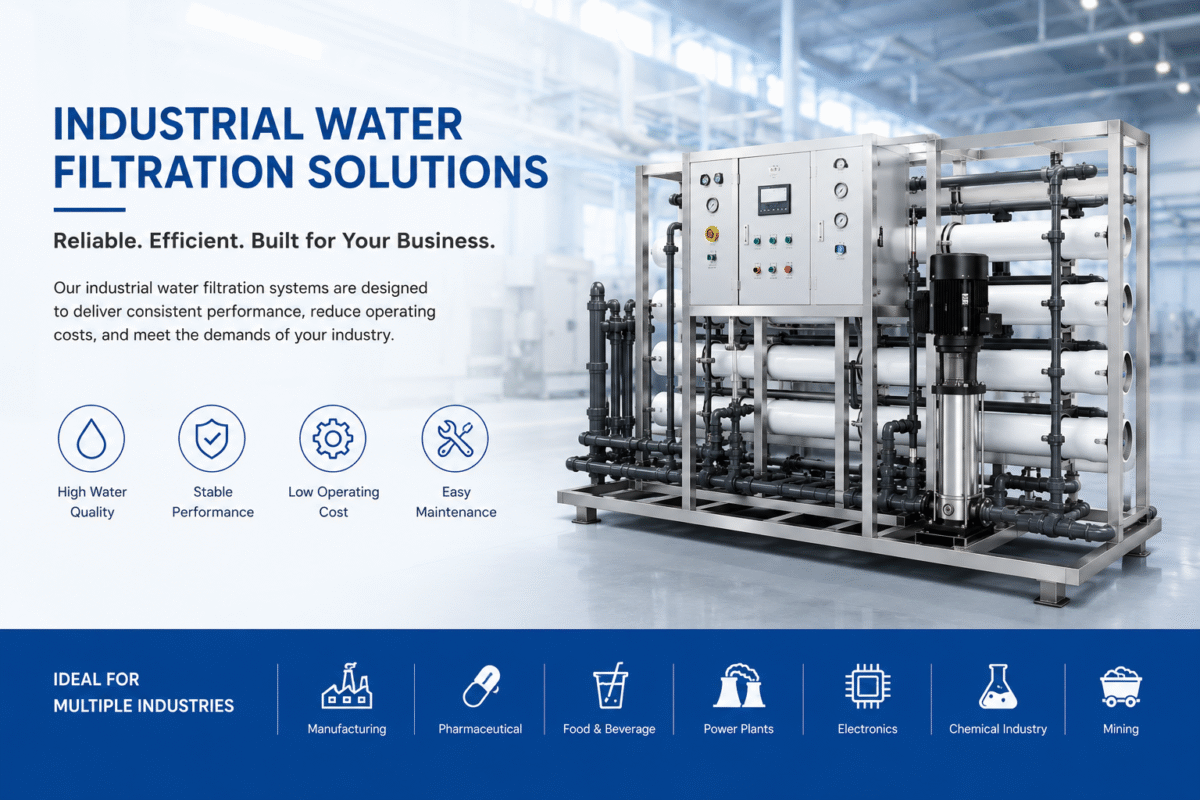
Fast Check Product:https://yourwatergood.com/product/industrial-reverse-osmosis-system/
| System Type | Target Application | Key Technologies | Capacity Range |
| Industrial RO Units | Food & Beverage Plants, Manufacturing | Multi-stage Reverse Osmosis, Anti-scaling | 10,000 – 100,000+ GPD |
| Commercial Restaurant | Coffee Shops, Commercial Kitchens | Dual-stage Carbon + Scale Inhibitors | 500 – 2,500 GPD |
| Whole-House / Residential | Premium Residential, Small Offices | RO Filtration, PP Cotton Pre-filtration | 50 – 400 GPD |
Industrial facilities must evaluate their water treatment asset procurement based on strict mechanical and automated operational safety parameters:
- Continuous Duty Cycle Readiness: System designs engineered for uninterrupted 24/7/365 process water supply under variable input stress.
- Integrated Clean-in-Place (CIP) Automations: Fully programmed chemical washing loops that eliminate manual disassembly and maintain high membrane performance.
- Flux Attenuation Compensation Protocols: Built-in design margins that account for baseline membrane degradation over long-term production cycles.
- Advanced Instrumentation Frameworks: Real-time monitoring configurations tracking differential pressure, permeate conductivity, and precise mass balance metrics.
What is the Best Industrial Water Purification Solution for High-Standard Manufacturing Facilities?
Achieving absolute water quality consistency requires a multi-stage pre-treatment blueprint tailored to the raw chemical footprint of the incoming supply line. Industrial facilities utilizing municipal tap water must configure systems to neutralize volatile organic compounds, active chlorine, chloramines, and old municipal pipe scale particulates.
Conversely, production facilities deploying deep well water sourcing face complex sub-surface contaminants. These applications demand specialized multi-media pre-filtration units to remove heavy iron, manganese, dissolved silica, and highly concentrated calcium carbonate structures before water reaches primary filtration elements.
The optimal infrastructure configuration standardizes on automated Skid-Mounted Systems built with corrosion-resistant SS316L structural steel framing and high-pressure schedule 80 piping. This modular layout allows seamless installation directly into existing factory floor layouts, ensuring immediate access for chemical sanitation and routine instrumentation calibration.
Industrial Reverse Osmosis vs. Other Membrane and Filtration Technologies (UF/EDI/Media Filters)
Industrial facilities deploy a variety of membrane technologies depending on their specific purity requirements and target particulate sizes. Sourcing engineers must evaluate the operational boundaries of each filtration technology to build an efficient, multi-stage treatment setup.
- Multi-Media Filtration (MMF): Utilizing graded layers of anthracite, silica sand, and garnet to extract macro-suspended solids down to 10 microns, protecting downstream booster pumps from abrasion.
- Ultrafiltration (UF) Systems: Utilizing hollow-fiber structures to target sub-micron colloidal matter, proteins, and macro-molecular compounds, ensuring a low Silt Density Index (SDI) ahead of reverse osmosis elements.
- Industrial Reverse Osmosis Systems: Operating as the primary demineralization stage, these systems force fluid through cross-flow polyamide sheets to strip up to 99.5% of dissolved ions, heavy metal complexes, and silica.
- Electrodeionization (EDI) Modules: Positioned downstream of a two-pass reverse osmosis configuration, EDI uses electrical currents to continuously remove remaining trace ions, delivering ultrapure water exceeding 16 Megohm-cm resistivity.
For facilities requiring bulk process water or electronic-grade rinsing water, utilizing standalone media arrays is insufficient. High-capacity reverse osmosis provides the mandatory structural backbone for modern manufacturing purification loops.
Critical Engineering Metrics: Calculating Flow (GPM), Operating Pressure (PSI), and Temperature Correction
Sizing industrial purification arrays requires strict mathematical evaluation of fluid mechanics and water chemistry limitations. System layouts must provide stable output configurations without running high-pressure pumps past their optimal efficiency curves.
Engineering procurement managers must monitor these critical operational variables:
- Volumetric Operational Capacity: Calculated via real-time flow metrics in GPM to ensure processing lines receive adequate water volumes during peak production cycles.
- Transmembrane Pressure (TMP): Monitored in PSI across distinct vessel stages to track internal fouling trends and trigger automated backwash sequences.
- Total Daily Yield Parameters: Tracked in GPD to size necessary bulk permeate storage tanks and optimize water recycle ratios.
- Raw Mineral Concentrations: Measured in ppm TDS to determine the exact osmotic pressure thresholds and select the correct high-rejection membrane elements.
Technical Sourcing Resource: Looking to review raw material certifications or verify P&ID schematics for an upcoming factory deployment? [Request a Custom CAD Skid Diagram or Water Analysis Review] to connect with our senior project engineers.
Field Engineering Insight: The Temperature Correction Factor and Antiscalant Dosing
Sourcing engineers often overlook fluid temperature variations during winter operational cycles or when drawing from cold deep well water sources. When feed water temperatures drop down to 50°F (10°C), water viscosity increases significantly, causing a sharp decline in natural membrane permeate flux.
If the manufacturing supplier fails to integrate a Temperature Correction Factor (TCF) into the design phase—which requires adding 30% to 40% more physical membrane surface area—the high-pressure pump will be forced to operate at an excessive PSI to maintain the required GPM flow.
Running at elevated pressures without adjusting the Antiscalant Dosing Logic to account for high silica and calcium concentrations leads to rapid crystalline scaling on the membrane surfaces. This scale formation causes an irreversible drop in permeate water output, potentially halting factory processing lines within a single week of operation.
Financial and Operational ROI: Minimizing Plant OPEX and Capital Equipment Protection
Deploying custom-engineered water purification machinery directly protects a facility’s high-value capital assets and significantly reduces monthly plant operational expenses (OPEX).
- Lowering Plant Maintenance Costs: Removing corrosive chlorides and scale-inducing hardness minerals prevents sub-surface pitting inside high-pressure boiler systems and cooling towers, reducing manual descaling labor.
- Extending Capital Equipment Lifespan: Supplying constant, mineral-free water to precision manufacturing equipment, heat exchangers, and chemical mixing vats prevents scale buildup and extends equipment service life.
- Operational Uptime Stability: Automated PLC monitoring paired with dual-pump redundancy keeps water flowing 24/7/365, preventing sudden, expensive shutdowns on automated assembly lines.
- Water Quality Consistency: Delivering reliable water quality ensures that chemical formulations, pharmaceutical mixtures, and sensitive electronic rinse processes meet strict USP or FDA quality compliance baselines.
Critical Sourcing and Engineering Mistakes Industrial Procurement Managers Make
Avoiding technical procurement errors helps facilities eliminate unexpected maintenance shutdowns, structural component failures, and expensive equipment modifications after installation.
- Procuring Pre-Engineered Skids Without Custom Water Chemistry Audits: Installing standard catalog systems in areas with high silica or iron concentrations without adding targeted chemical dosing or specialized pre-treatment filters.
- Deploying Inferior Carbon Media Components: Sourcing low-hardness carbon blocks that break apart under high-pressure flow, sending fine carbon debris downstream to plug the reverse osmosis membranes.
- Utilizing Non-Standard Programmable Logic Controllers (PLCs): Accepting proprietary, closed-source control systems that prevent internal plant engineers from modifying automated backwash parameters or updating plant SCADA integration protocols.
- Overlooking Frame and Piping Metallurgy Requirements: Specifying standard painted carbon steel frames or low-grade plastics in corrosive chemical environments instead of demanding structurally welded, passivated SS316L skid configurations.
| System Sourcing Parameters | Pre-Engineered Standard Skids | Fully Customized Turnkey Industrial Systems |
| Volumetric Capacity Limits | Fixed Ranges (10 GPM – 100 GPM) | Scalable Design (Up to 1,000+ GPM customized) |
| Capital Investment (CAPEX) | Lower Initial Outlay | Higher Initial Engineering & Construction Cost |
| Manufacturing Lead Time | Fast Turnaround (4 – 6 Weeks) | Extended Timeline (12 – 16 Weeks customization) |
| PLC & SCADA Integration | Basic Standalone Controller | Advanced Siemens |
| Structural Component Redundancy | None (Single high-pressure pump loop) | Full Multi-Pump & Sensor Redundancy Arrays |
FAQ
What standard data points are required to get an accurate industrial system quote? Procurement teams must provide a comprehensive, recent raw water analysis sheet that breaks down total dissolved solids (TDS), iron, manganese, silica, organic carbon, and total hardness parameters. In addition, the factory requires clear definitions for peak flow demands in GPM, target daily output in GPD, and available footprint configurations.
How do custom systems interface with existing factory SCADA architecture? Premium skid systems utilize advanced programmable logic controllers, such as Siemens S7-1500 or Allen-Bradley ControlLogix platforms. These controllers communicate natively over standard industrial protocols, including EtherNet/IP, Modbus TCP, or PROFINET, enabling full remote tracking of flow, pressure, and conductivity values.
Why is silica management a primary concern during the membrane design phase? Dissolved silica forms an extremely hard, glass-like scale layer across polyamide membrane surfaces when concentrations exceed standard saturation limits in the reject stream. Unlike calcium scale, silica scale cannot be cleared with simple low-pH chemical washes, often requiring complete membrane replacement if the pre-treatment antiscalant dosing system fails.
What are the standard metallurgy requirements for high-purity industrial skids? High-purity systems utilize structurally welded SS316L stainless steel for all high-pressure plumbing manifolds, pump internals, and instrument connections. Low-pressure feed and drain lines typically use heavy-wall Schedule 80 PVC or PVDF materials to balance corrosion resistance with project capital expenditures.
How does an automated Clean-in-Place system lower overall facility OPEX? An automated CIP system allows maintenance teams to initiate targeted chemical washing cycles using pre-programmed PLC scripts. This setup reduces manual labor requirements, minimizes equipment downtime, and keeps membranes running at peak efficiency, preventing premature element replacement.
What baseline certifications are required for food, beverage, or pharmaceutical water systems? Systems built for regulated manufacturing environments must utilize component paths constructed from FDA-compliant materials. Depending on the specific application, the entire system layout must meet either strict USP purified water criteria or specific EPA water quality framework guidelines.
Scale Your Manufacturing Infrastructure Safely
Protect your plant’s capital investments, stabilize daily operating costs, and eliminate processing line shutdowns by partnering with an experienced, engineering-first manufacturing facility. Whether your operation requires a pre-engineered skid framework for localized utility loops or a multi-stage, high-volume commercial water filtration system manufacturer configured for complex factory operations, our engineering team manufactures durable hardware that stands up to severe processing demands.