
Data Center Cooling Tower Filtration: How Biofilm Destroys Efficiency at COC 6+

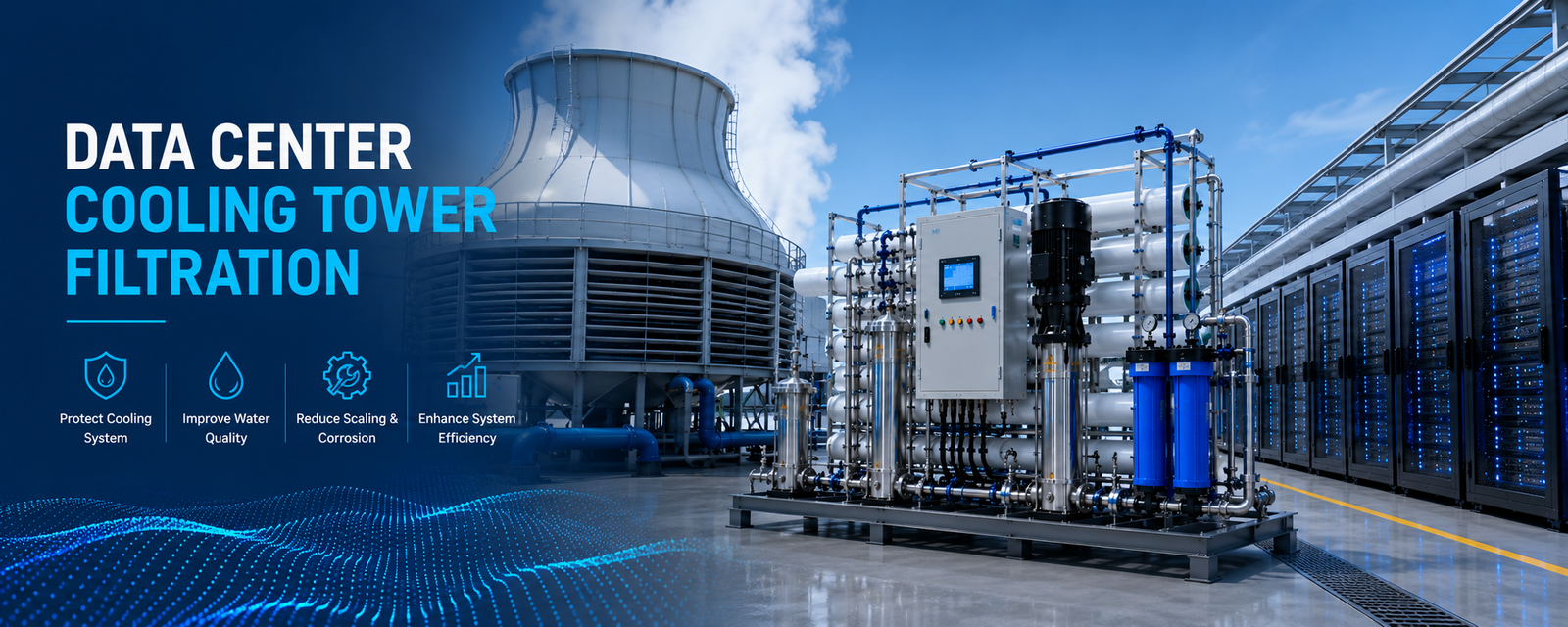
Next-generation AI compute clusters drawing 40 kW to 100 kW+ per rack have rendered traditional air-cooling methodologies completely obsolete. Modern infrastructure forces facilities directors and utility engineers to deploy advanced direct-to-chip liquid cooling loops coupled with high-capacity evaporative heat rejection systems. Within these hyper-scale frameworks, raw water chemistry fluctuations represent a direct technical threat to continuous computational availability. Uncontrolled mineral scale, dissolved silica precipitation, and biological fouling inside heat exchangers elevate thermal resistance, triggering immediate GPU thermal throttling and risking catastrophic server chassis leaks. Safeguarding these mission-critical assets requires the deployment of engineered data center cooling tower filtration systems designed to execute continuous desalination, sub-micron particulate isolation, and dynamic chemistry stabilization.
The most underestimated failure mechanism in high-density AI data center cooling is not mineral scale—it’s biofilm.
When cooling tower basin water sits at 50–80 ppm total dissolved solids (TDS) and elevated nutrient loading (phosphate, ammonia from reclaimed water sources), microbial colonization begins in days, not weeks. The biofilm acts as a thermal insulator, reducing heat exchanger effectiveness by 15–30% and creating localized corrosion pits that perforate tubes within 6–18 months.
Running at Cycles of Concentration (COC) 6+ amplifies this risk exponentially. Most operators assume automated biocide dosing will solve it. It won’t—without upstream filtration precision and real-time ATP (adenosine triphosphate) monitoring.
Critical Procurement Non-Negotiables:
- Coagulation + multimedia pre-filtration to <5 µm before any secondary treatment
- Dual-biocide rotation (oxidizing + non-oxidizing) on 7-day cycles, automated via proportional metering pumps tied to makeup flow sensors
- Continuous ATP microbial monitoring (inline sensors, not lab sampling)—alerts trigger at ≥500 RLU before visible biofilm forms
- Blowdown recovery RO sized at 70–75% recovery (NOT 82%), configured for 600+ ppm TDS reclaimed-water feeds
- BMS integration (Modbus TCP) with automated blowdown valve override when conductivity exceeds set-point OR ATP alarm fires
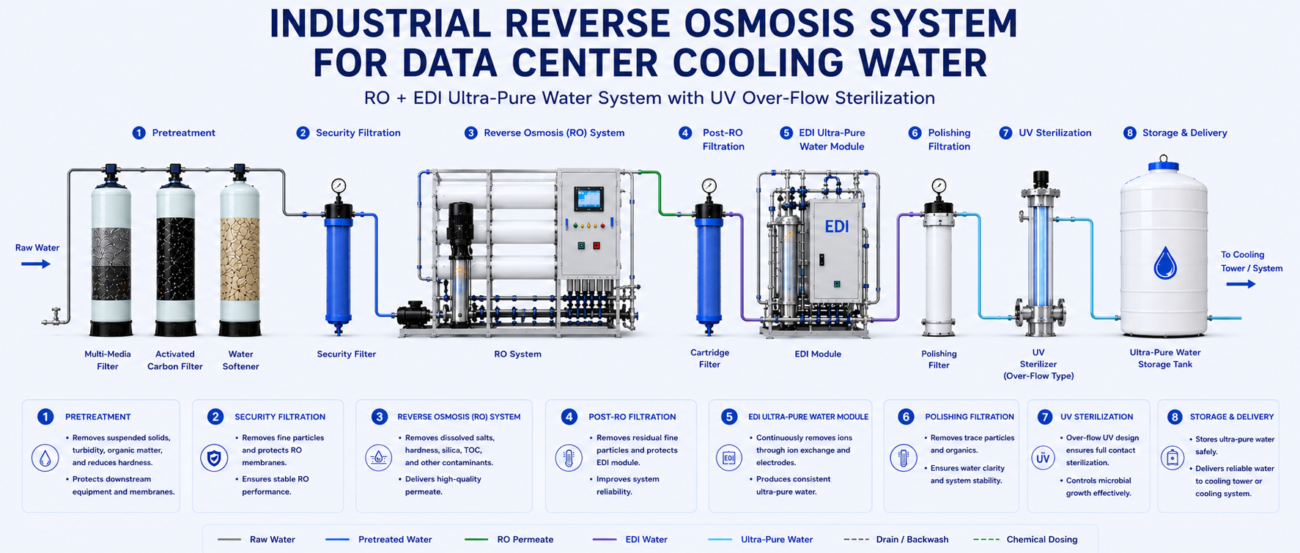
Continuous Electrodeionization (EDI) Polishing Module: [Advanced Ultra-Pure Upgrade] Serving as the final polishing tier for AI facility loops, the EDI module combines ion-exchange membranes and resin beds under a continuous DC electrical field. By splitting water molecules into H⁺ and OH⁻ ions, it continuously self-regenerates without any acid-base chemical consumption. It eliminates residual weakly ionized silica, boron, and trace minerals, elevating product water resistivity up to 10–18.2 MΩ·cm (conductivity <0.1 µS/cm).
Fast Check Product: https://yourwatergood.com/product/industrial-reverse-osmosis-system/
When procuring mission-critical liquid cooling water treatment assets across major data center hubs in the United States and Europe, system longevity and structural resilience are vital. YourWaterGood (www.yourwatergood.com) manufactures heavy-duty industrial configurations from 1 t/h to 10 t/h, built with thickened membrane housings and premium stainless steel or UPVC high-pressure piping.
| Specification | Standard Industrial Cooling Tower Treatment | Data Center Grade High-Redundancy Biofilm Prevention System |
|---|---|---|
| Pretreatment | Multimedia filter only (20–50 µm nominal) | Coagulation + multimedia (5 µm) + activated carbon |
| Biocide Delivery | Fixed-rate pump (4 ppm oxidizer continuous) | Proportional metering (2–8 ppm) triggered by ATP sensor |
| Microbial Monitoring | Lab sample 2× weekly | Inline ATP sensor, 4+ readings/hour, auto-alert at 500 RLU |
| COC Capability | Safe to COC 3–4 | Safe to COC 6–8 (with proper filtration upstream) |
| Blowdown Recovery RO | Standard 82% recovery (designs fail on TDS >500 ppm) | Specialized 70–75% recovery (handles reclaimed water TDS 600–1200 ppm) |
| BMS Integration | None; manual valve operation | Full Modbus TCP, automated blowdown trigger, ATP failsafe override |
| Redundancy | Single biocide pump (N) | N+1 dual pumps with auto-switchover in <10 seconds |
| 5-Year OPEX | $95K–$150K + $280K unplanned fill replacement = $375K–$430K | $140K maintenance cost; zero catastrophic fill replacement risk = $140K |
| Cooling Tower Fill Lifespan | 4–5 years (premature fouling) | 8–10 years (biofilm suppression + proper biocide chemistry) |
Thermodynamic Realities of High-Density GPU Clusters and Cold Plate Thermal Throttling
Direct-to-chip cooling loops depend on fluid passing through internal cold plate micro-channels that frequently feature clearances under 100 microns. At this microscopic boundary layer, the localized heat flux generated by dense tensor processing arrays is intensely concentrated. If the incoming water supply possesses elevated electrical conductivity or hardness parameters, rapid localized crystallization occurs.
Unlike soft calcium carbonate formations, which can be managed with standard acidic flushes, specialized computing environments cannot tolerate the downtime required for mechanical or chemical descaling. Even a sub-millimeter layer of mineral scale inside a micro-channel alters the heat transfer coefficient, causing junction temperatures to breach safe thresholds. The server immediately enters a thermal throttling state, reducing compute velocity and degrading the operational efficiency of the entire multi-node cluster.
Managing Cycles of Concentration Under High Silica Loadings in Arid Siting Zones
In major data center markets across the southwestern United States, such as Phoenix, Arizona, municipal water supplies carry intense dissolved silica (SiO2) concentrations, often exceeding 80 ppm. When evaporative cooling towers reject heat, pure water vaporizes, causing the remaining dissolved ions to concentrate within the basin. If a facility attempts to run at high Cycles of Concentration (CoC) to meet ambitious Water Usage Effectiveness (WUE) metrics, the silica saturation point is rapidly breached.
Amorphous silica precipitation forms a dense, glassy insulation layer across secondary heat exchangers and cold plates. This formation resists standard chemical dissolution techniques. Preventing this asset degradation requires integrating high-capacity reverse osmosis units directly into the cooling tower makeup line. Stripping up to 98% of dissolved silica from the influent stream allows infrastructure managers to safely elevate cycles of concentration, reducing water utility expenses and protecting heavy machinery from irreversible scaling fouling.
[Request a Data Center Water Sizing Consultation]
Reclaimed Water Risks: Addressing High Chloride Corrosion and Biological Slime Dynamics
Environmental compliance mandates in major算力 hubs like Ashburn, Virginia, increasingly restrict the use of potable municipal water for industrial cooling. Consequently, data center operators must adapt to reclaimed or recycled wastewater streams. While environmentally compliant, reclaimed water introduces highly volatile chemical profiles, including elevated nutrients like phosphates and ammonia, alongside high ambient chloride ions.
High chloride concentrations increase the galvanic potential of the circulating fluid, accelerating pitting corrosion along stainless steel heat exchanger plates and brazed joints within Coolant Distribution Units (CDUs). Simultaneously, elevated phosphate levels act as a primary nutrient source for accelerated biological colonization. Biological slime layers feature a lower thermal conductivity than mineral scale, acting as highly efficient thermal blankets that insulate heat-generating components.
To safely exploit these secondary water assets, yourwatergood.com delivers integrated purification arrays that utilize a robust five-stage pretreatment and membrane isolation protocol:
- Multi-Media Deep Bed Filtration: Intercepts suspended solids, silt, and macro-particulates down to 20 microns to protect downstream processing velocity.
- Granular Activated Carbon (GAC) Adsorption: Catalytically strips free chlorine, chloramines, and complex organic compounds, preventing oxidative breakdown of downstream polyamide membrane structures.
- Continuous Ion-Exchange Softening: Utilizes high-capacity cation resins to swap scale-forming calcium and magnesium ions for non-precipitating sodium ions under automated brine regeneration control.
- Absolute Security Micro-Filtration: Acts as a mechanical guard barrier, capturing resin fines and microscopic particulates down to 1-5 microns before fluid compression stages.
- High-Rejection Reverse Osmosis System: Drives water through semi-permeable membranes under high hydraulic pressure, isolating monovalent ions, heavy metals, chlorides, and phosphates to produce low-conductivity permeate.
[Raw Influent Stream]
│
▼
[Multimedia Pre-Filter] ──► Intercepts macro-sediment & suspended solids
│
▼
[Activated Carbon Bed] ──► Adsorbs free chlorine to protect membranes
│
▼
[Ion-Exchange Softener] ──► Swaps Calcium/Magnesium for non-scaling Sodium
│
▼
[Security Micro-Filter] ──► Traps microscopic particulates & resin fines
│
▼
[High-Pressure RO Arrays]──► Strips TDS from 1300 mg/L to under 20 mg/L
Hydraulic Fluid Sizing and Temperature Correction Factors in Sub-Zero Operational Windows
A frequent point of failure in standard commercial water treatment specification is the omission of the Temperature Correction Factor (TCF) during winter sizing calculations. Water viscosity changes in direct correlation with temperature changes. When incoming municipal lines drop toward freezing during winter operation, the fluid resistance through an industrial reverse osmosis membrane increases significantly.
This increase in viscosity results in a net flux reduction of approximately 3% for every single degree Celsius drop in water temperature. If the high-pressure pumping infrastructure lacks sufficient hydraulic headroom, the purification plant will fail to produce its rated GPM output. During peak processing workloads when cooling towers demand high evaporative makeup volumes, a deficit in purified water supply can compromise the entire central cooling plant.
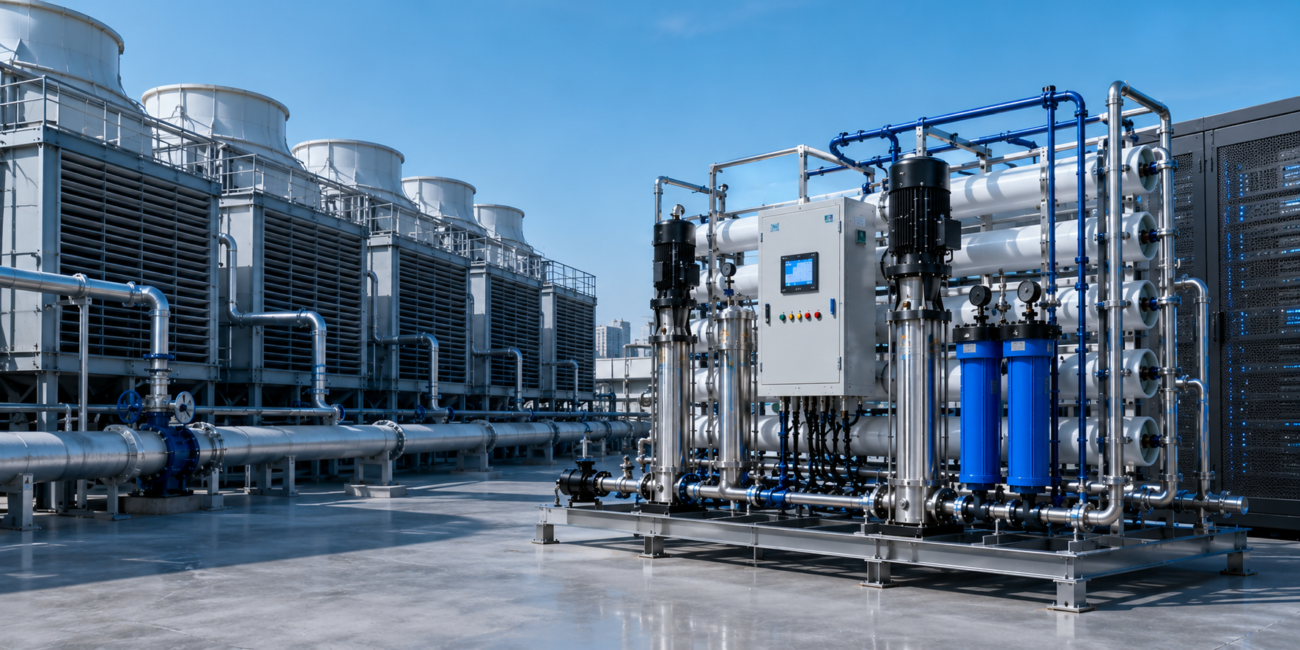
Our mission-critical product lines resolve this physical bottleneck by deploying skid-mounted industrial purification systems equipped with smart Variable Frequency Drive (VFD) multi-stage vertical pumps. These systems automatically adjust operating pressures to maintain steady permeate flow rates even during winter temperature drops.
Continuous Electrodeionization Integration for Zero-Chemical Secondary Loop Polishing
While primary reverse osmosis arrays effectively manage the heavy mineral load of external cooling tower systems, secondary cooling loops directly interfacing with server electronics demand ultrapure water profiles with near-zero electrical conductivity (≤ 0.1 μS/cm). Traditional mixed-bed deionization tanks achieve this water quality, but they introduce significant operational friction, requiring hazardous acid and caustic chemical handling for periodic resin regeneration.
Integrating Continuous Electrodeionization (EDI) modules downstream of our industrial reverse osmosis systems eliminates the need for chemical regeneration. EDI utilizes a combination of ion-exchange resins, ion-selective membranes, and an applied direct current (DC) electrical field. The electrical potential continuously splits water molecules into hydrogen (H⁺) and hydroxyl (OH⁻) ions, automatically regenerating the resin bed inline without interrupting operations.
Implementing an EDI architecture provides distinct advantages for high-performance computing (HPC) infrastructures:
- Uninterrupted Water Quality: Continuous electrical self-regeneration ensures a stable, high-resistivity product stream without the ion leakage common in exhausted mixed-bed systems.
- Footprint Optimization: Compact, modular layouts maximize GPM output per square foot, freeing up valuable real estate within the central utility plant.
- Elimination of Chemical Footprints: Zero chemical effluents simplifies compliance with local EPA water discharge regulations, lowering overall facility liabilities.
[Request a Data Center Water Sizing Consultation]
Engineering Comparison: Standard Skids vs. Data Center Grade High-Redundancy Infrastructure
Data center utility plants cannot tolerate single points of failure. Standard commercial water treatment systems lack the component grade, material thickness, and structural backup systems required to support continuous hyper-scale computing loads.
| Engineering Parameter | Standard Pre-Engineered Skids | Data Center Grade High-Redundancy Systems |
| Hydraulic Flow Capacity | Fixed 5 to 20 GPM | Scalable 1 t/h to 10 t/h+ per train |
| Redundancy Configuration | Single Train (0% Redundancy) | N+1 or 2N Duplex/Triplex Parallel Architecture |
| Piping & Housing Materials | Thin-walled PVC / Plastic | Thickened stainless steel or high-grade UPVC |
| BMS Protocol Integration | Localized LCD Only | Native Modbus RTU / BACnet IP for SCADA telemetry |
| Automated Maintenance | Manual Backwash Valves | Pneumatic/Electric Actuated Automatic Flushing Cycles |
| Filtration Element Precision | 5.0 to 10.0 microns | Down to 0.0001 microns via multi-stage arrays |
Technical FAQs for Data Center Infrastructure Managers
Q1: What ATP level should trigger aggressive biocide dosing in a data center cooling tower?
ATP ≥500 RLU (Relative Light Units) measured inline is the international biofilm nucleation threshold per ASTM D4687. At this level, visible biofilm colonization is 3–5 days away. Trigger aggressive biocide (8 ppm oxidizing + 4 ppm non-oxidizing) for 36–48 hours, then revert to baseline. Do not wait for lab culture results—they are 5–7 days old by the time results arrive.
Q2: Why does standard cooling tower biocide dosing fail at high COC levels?
At COC 6+, nutrient concentration (especially ammonia, phosphate) reaches 60–120 ppm, allowing biofilm cells to develop matrix-protective phenotypes. Traditional continuous-dose biocides (e.g., 4 ppm sodium hypochlorite) achieve only 15–20% kill rate inside mature biofilm slime. Microbes develop resistance within 3–4 weeks. Proportional biocide dosing (triggered by ATP signal, not fixed schedule) forces periodic “shock” treatment that breaks through matrix and resets microbial adaptation cycle.
Q3: Can reclaimed water cooling tower makeup use the same RO recovery rate as municipal water?
No. Reclaimed water (500–1,200 ppm TDS, elevated BOD and silica 40–50 ppm) cannot safely operate above 70–75% RO recovery. Attempting 82% recovery will cause silica precipitation in the concentrate line and premature membrane fouling. Municipal potable feed (150–400 ppm TDS) safely operates at 75–82% recovery. Specifying identical RO configurations for both source types is a design error that voids warranties within 18 months.
Q4: What is the cost of an unscheduled cooling tower fill replacement due to biofilm fouling?
Cooling tower fill (wood or plastic) at hyperscale (50–200 ton capacity) costs $180K–$450K depending on tower type and site location. Add labor (contractor crew + drain-flush-inspection-reinstall) = $40K–$80K. Total unplanned OPEX event: $280K–$530K. An automated biofilm prevention system (ATP monitoring + proportional biocide + filtration pretreatment) costs $120K–$180K upfront and prevents this event entirely.
Q5: How does Tier IV facility biofilm management differ from Tier III?
Tier III requires N+1 biocide pump redundancy with automatic failover in <30 seconds. Tier IV requires fully independent dual biofilm treatment trains (separate ATP sensors, separate metering pumps, separate chemical storage) with zero shared single points of failure. Switchover events and all sensor readings must log to DCIM with timestamps. Cost difference: ~$45K additional for dual-train Tier IV architecture.
Q6: What filtration precision is required upstream of blowdown recovery RO in a high-COC cooling tower system?
Blowdown RO inlet must be ≤5 µm absolute (not nominal). At COC 6–8, colloidal silica and biofilm particulate slipped through coarse multimedia prefilters will blind the RO membrane in 6–12 weeks. Mandatory: multimedia 20 µm → activated carbon → ultrafiltration (UF) 0.1 µm → RO. This 4-stage pretreatment adds $35K–$60K but extends RO membrane life from 18–24 months to 5–7 years.
Secure Your High-Density Cooling Infrastructure
Thermal management failures in next-generation AI compute clusters can cause costly hardware damage and operational downtime. Protecting high-density CDUs, cold plates, and cooling towers requires a high-rejection data center cooling tower filtration system from a water purification partner that understands critical infrastructure engineering.
Contact our application engineering team today to receive:
- A comprehensive, site-specific data center water sizing and layout consultation.
- Direct B2B factory pricing on fully customized, skid-mounted industrial purification systems.
[Request a Data Center Water Sizing Consultation]