Strategic Procurement: Sizing and Sourcing from an Industrial RO System Supplier

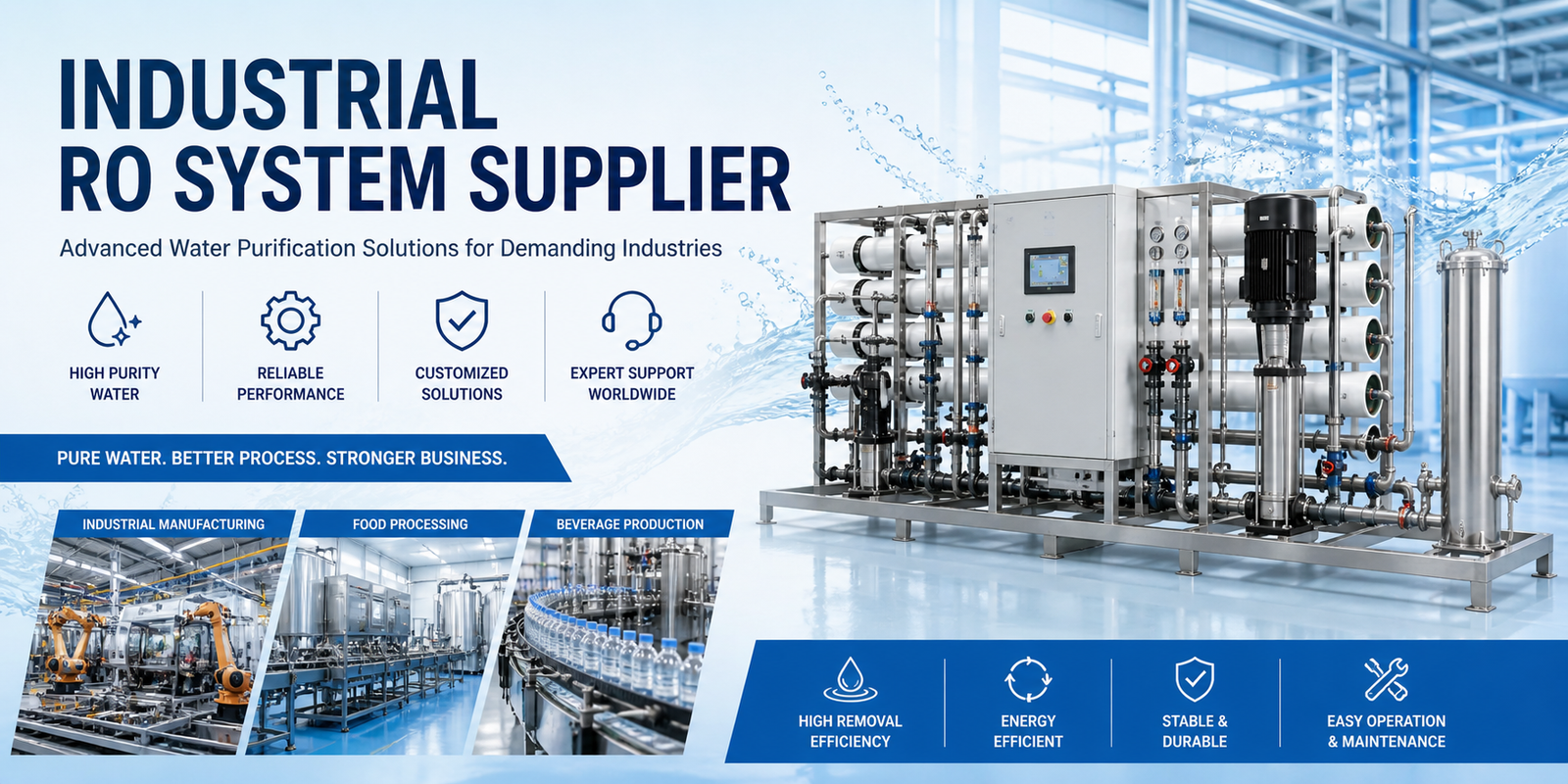
When sourcing high-capacity water treatment for food plants, beverage facilities, and industrial manufacturing, finding a reliable industrial ro system supplier is the most critical decision an industrial water purifier buyer can make. You need a system that delivers exact specifications, minimizes downtime, and guarantees regulatory compliance.
The Leading Industrial RO System Supplier for Food, Beverage, and Manufacturing
An industrial RO system supplier must deliver water quality that meets stringent ingredient-grade and process-water standards. YourWaterGood specializes in modular industrial reverse osmosis units designed for a 99.8% salt rejection rate, providing the high-purity water required for sensitive food processing, beverage bottling, and advanced manufacturing.
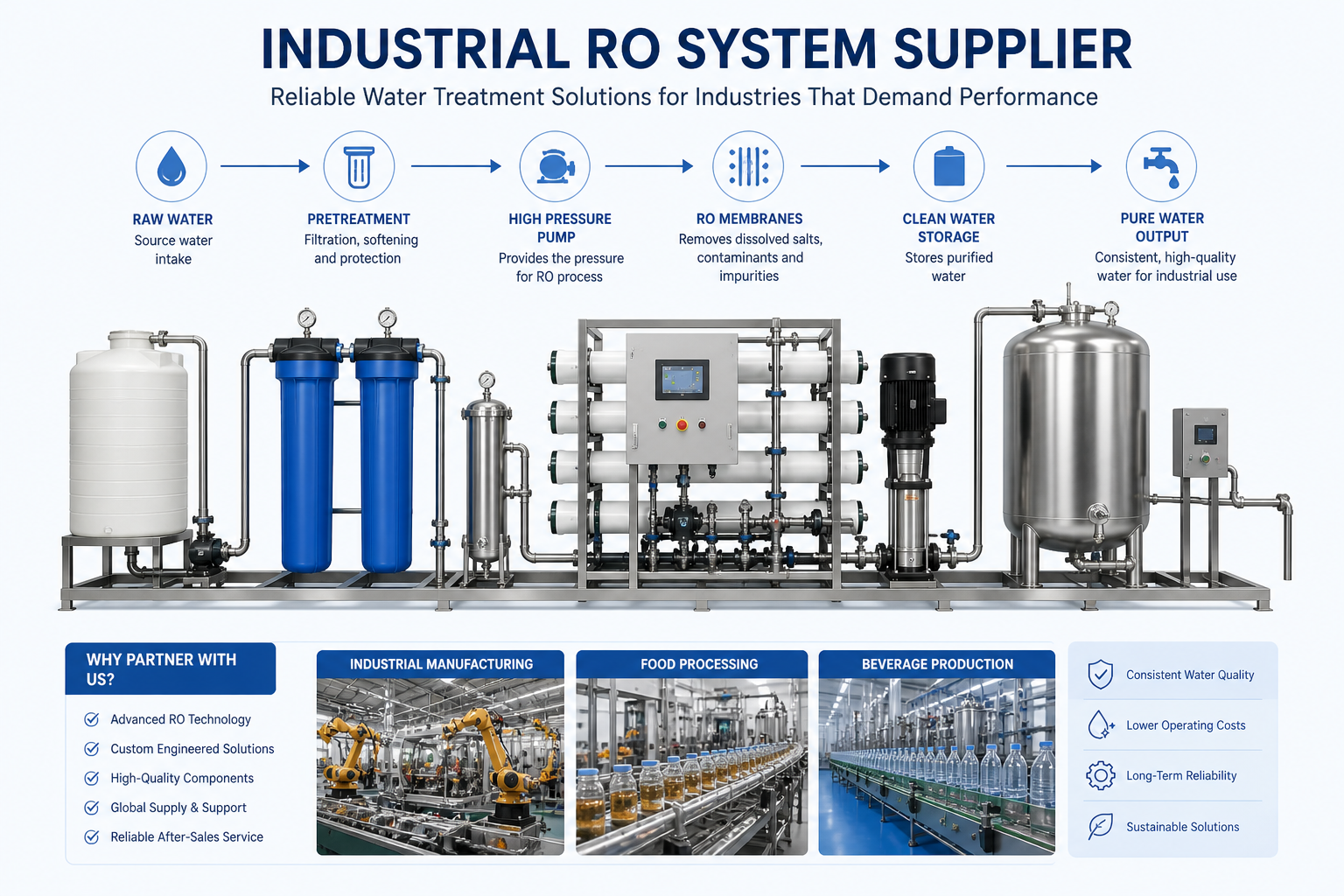
Our industrial systems utilize a professional modular architecture. By isolating the high-pressure RO core from the pre-filtration stages, facilities can implement high-capacity external pre-filtration housings. This setup ensures that the RO membranes are protected from physical fouling and chemical scaling, maximizing uptime and ensuring that food and beverage plants in the US and Europe remain compliant with FDA and EU health regulations.
Fast Check Product: https://yourwatergood.com/product/industrial-reverse-osmosis-system/
| Feature | Standard Industrial Skids | YourWaterGood Modular Industrial RO |
| Technology | Standard TFC Membranes | High-Rejection Industrial Membranes |
| Salt Rejection | 96% – 98% | 99% – 99.8% (Absolute Control) |
| Pre-Treatment | Integrated / Fixed | External / High-Capacity PP Cotton |
| Serviceability | Full-System Downtime | Independent Stage Maintenance |
| Application | General Utility | F&B Ingredients & Manufacturing |
Asset Protection: In beverage plants, water purity determines product flavor and equipment life. A modular system from YourWaterGood allows the plant to use massive, multi-stage pre-filtration that catches sediment before it can damage high-pressure pumps or foul the RO membrane.
Scalable Compliance: For food plants facing new PFAS or chemical regulations, a modular system is easier to upgrade. You can simply add a specialized mineral or carbon stage to the external pre-filtration stack without needing to replace the entire RO machine.
Logistical Optimization: For global manufacturing groups, shipping a compact, high-tech industrial RO core is faster and more cost-effective. Local contractors can then source the bulky external filter housings (PP/Carbon) locally, following the engineering specifications provided by YourWaterGood.
Always demand a comprehensive feed water analysis: Design parameters must change drastically depending on whether you are using municipal tap water or raw well water.
Size for cold-water flux, not just standard conditions: Ensure your supplier accounts for temperature drops that can drastically reduce your GPM (Gallons Per Minute).
Look beyond CAPEX: Evaluate the OPEX (Operational Expenditure), specifically the membrane replacement frequency and energy consumption of the high-pressure pumps.
Verify EPA compliance capabilities: Ensure the system effortlessly meets or exceeds the EPA water quality framework for your specific manufacturing sector.
Prioritize automated CIP (Clean-In-Place): This dramatically lowers labor costs and extends the operational lifespan of your reverse osmosis membranes.
What is the Best Solution for Manufacturing and Food & Beverage Facilities?
For industrial water purifier buyers, the optimal solution is a heavy-duty, skid-mounted Reverse Osmosis (RO) system tailored to the facility’s specific production line. Food plants and beverage plants require absolute consistency. A minor fluctuation in total dissolved solids (TDS) can alter the taste profile of a beverage batch or cause product rejection in food processing.
An industrial RO system acts as the ultimate safeguard. By utilizing semi-permeable membranes under high pressure, these systems strip away dissolved salts, heavy metals, organics, and chemical contaminants. When dealing with municipal water, the primary concern is often chlorine or chloramine removal prior to the RO membranes to prevent oxidation damage. Conversely, if your facility relies on well water, the system must be engineered to handle high hardness, silica, and iron, requiring robust pretreatment to prevent membrane scaling.
The ideal system design operates seamlessly within the EPA water quality framework. While the EPA sets the National Primary Drinking Water Regulations detailing maximum contaminant levels for public safety, industrial manufacturing and F&B buyers know that their internal standards are often much stricter. The best solution is a system over-engineered to provide pure, consistent water that surpasses basic EPA baselines, ensuring total brand protection and operational continuity.
Reverse Osmosis vs. Other Filtration Systems
Industrial buyers frequently evaluate multiple technologies before committing capital. Understanding how RO compares to other filtration methods is crucial for an optimal procurement strategy.
- Reverse Osmosis (RO): This is the gold standard for reducing TDS. It uses high pressure (often ranging from 150 PSI to over 400 PSI, depending on the feed water) to force water through a membrane at the molecular level. It is the only practical choice when you need highly purified water for boiler feed, ingredient water in beverage plants, or critical industrial manufacturing processes.
- Ultrafiltration (UF): UF is excellent for removing suspended solids, bacteria, and macromolecules, but it does not remove dissolved salts or minerals. It is often used as a pretreatment step for an RO system, particularly when dealing with high-turbidity well water.
- Media Filtration (Carbon/Sand): Granular Activated Carbon (GAC) is necessary for removing chlorine and organics, while sand or multimedia filters handle larger particulates. These are not alternatives to RO; they are prerequisites. Relying solely on media filtration leaves dissolved solids in the water, which will eventually scale and destroy downstream industrial equipment.
- Ion Exchange (Water Softeners): Softeners exchange calcium and magnesium for sodium. While this prevents hard scale, it does not lower the overall TDS of the water. For true industrial purity, softeners are used to protect the RO system, not replace it.
How to Choose the Right System
Choosing the correct equipment requires thinking like a technical sales engineer. Procurement officers must move beyond standard catalog browsing and focus on rigorous engineering parameters.
First, define your absolute continuous flow requirement in GPM. Do not size a system based on your facility’s average daily use; size it based on peak hourly demand. If your beverage plant needs 50 GPM during a specific shift, the system and its associated storage tanks must accommodate that peak without dropping system pressure (PSI).
Second, analyze the feed water. A system engineered for clean municipal water will fail spectacularly if connected to high-iron well water. The pretreatment design is just as vital as the RO unit itself.
Finally, evaluate the supplier. A competent supplier will not just sell you a skid; they will ask for your water chemistry report, discuss your floor space constraints, and engineer a solution that integrates with your existing PLC (Programmable Logic Controller) network.
POE vs. POU Systems Comparison
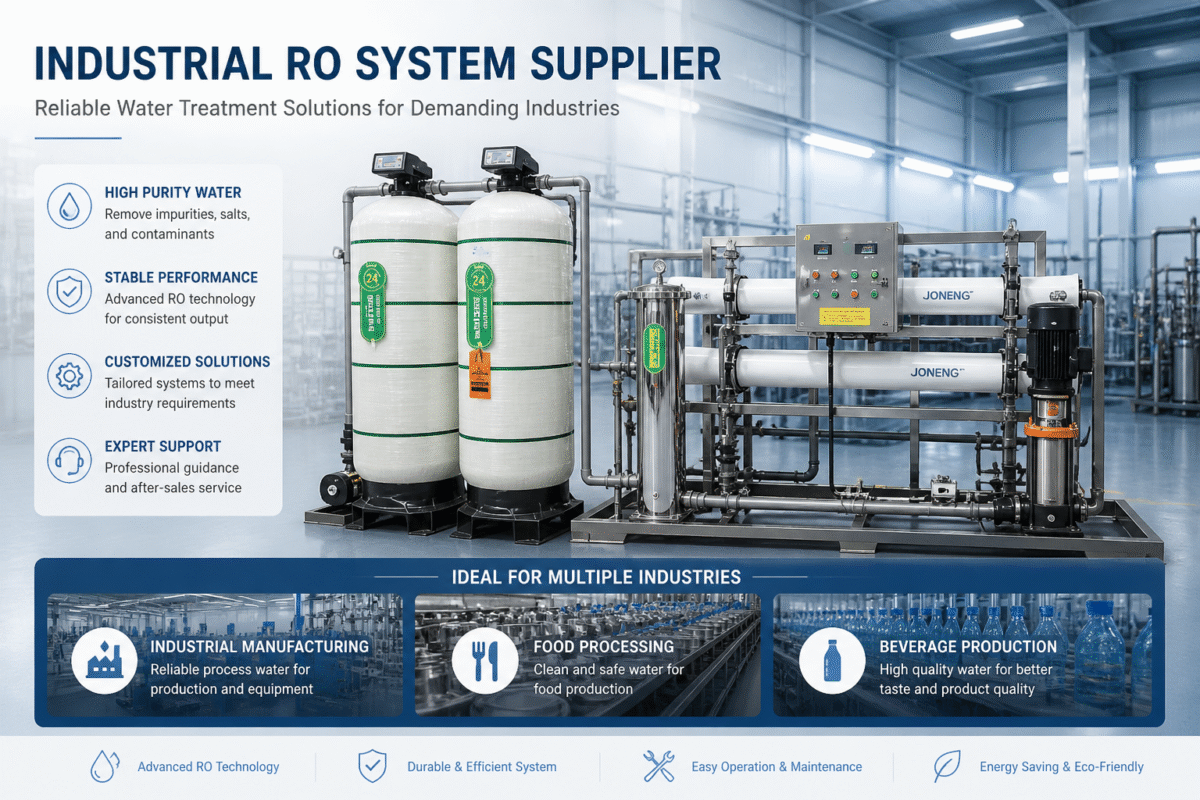
When designing a water treatment layout for a large industrial or food production facility, buyers must choose between Point-of-Entry (POE) and Point-of-Use (POU) configurations.
Point-of-Entry (POE) Systems: A POE industrial RO system treats the water as it enters the facility. This centralized approach means every pipe, boiler, and production line receives highly purified water.
- Pros: Protects the entire facility’s plumbing infrastructure. Easier to maintain a single, large centralized skid. Highly efficient for overall plant operations.
- Cons: Higher initial CAPEX. Requires extensive plant-wide piping capable of handling high-purity water (which can be corrosive to standard copper or galvanized pipes).
Point-of-Use (POU) Systems: In an industrial context, POU means installing smaller, dedicated RO systems at specific machines or production lines—for example, one RO system dedicated solely to the beverage mixing tanks, while the rest of the plant uses standard municipal water.
- Pros: Lower initial cost if only a small fraction of the plant requires pure water. Allows for customized water profiles for different manufacturing lines.
- Cons: Multiplies maintenance tasks. Requires managing multiple pumps, membranes, and pretreatment filters across the factory floor.
For heavy industrial manufacturing and large F&B plants, a centralized POE approach is generally the superior investment, ensuring facility-wide asset protection and consistent product quality.
Costs, ROI, and Equipment Protection
Investing in commercial water treatment is not just an operational expense; it is a critical asset protection strategy. As an industrial water purifier buyer, your primary focus is the long-term return on investment (ROI). A properly engineered RO system delivers profound business value to food plants, beverage plants, and industrial manufacturing sites by:
- Lowering Maintenance Costs: Hard water and high TDS cause aggressive scaling in boilers, cooling towers, and heat exchangers. By feeding these systems with RO water, you drastically reduce the frequency of chemical descaling procedures, acid washes, and manual cleanings.
- Extending Equipment Lifespan: Scaling and mineral deposits create thermal stress and mechanical wear on industrial machinery. By removing the contaminants at the source, an RO system adds years of operational life to your most expensive capital equipment.
- Improving Operational Stability: Unplanned downtime is the enemy of manufacturing. When water quality fluctuates, sensors foul, valves stick, and production halts. Consistent high-purity water ensures that your lines run 24/7 without water-related interruptions.
- Guaranteeing Water Consistency: In the food and beverage sector, water is often the primary ingredient. Removing seasonal variations from municipal supplies or ground water guarantees that your product tastes exactly the same in December as it does in July, safeguarding your brand reputation.
Common Buyer Mistakes
Even experienced procurement teams can make costly errors when specifying water treatment equipment. Avoid these common pitfalls to ensure a successful deployment.
The Temperature Flux Trap (Expert Engineering Insight): The most common mistake buyers make is accepting a system sized strictly at the membrane manufacturer’s standard test conditions (typically 77°F / 25°C). Water temperature dramatically affects membrane flux (the rate at which water passes through the RO membrane). If your facility uses well water that drops to 50°F (10°C) in the winter, the water becomes more viscous. Without adjusting the pump PSI or adding a heater, your 100 GPM system might only produce 65 GPM during the colder months, starving your production lines. Always ensure your supplier has engineered the system using a temperature correction factor for your worst-case winter scenario.
Ignoring Pretreatment Reality: Many buyers focus all their budget on the RO skid and underfund the pretreatment. If your municipal water has high chlorine spikes, and your carbon filter is undersized, the chlorine will permanently destroy the polyamide RO membranes in a matter of weeks. The RO system is only as robust as the pretreatment that protects it.
Focusing Solely on CAPEX over OPEX: Selecting the cheapest system often means accepting low-efficiency pumps and generic membranes. A system that costs 15% less upfront but requires 50% more electricity to maintain operating PSI, or requires membrane replacement twice as often, will destroy your ROI within the first year of operation.
FAQ
What GPM flow rate do I need for a commercial beverage plant? Flow rates vary wildly based on production volume. A small craft operation might require 20-50 GPM, while a large-scale bottling plant may require systems capable of 500 GPM or more. Always size based on peak hourly demand, not daily averages, and include adequate atmospheric storage tanks.
How does well water affect the maintenance of an industrial RO system? Well water typically contains higher levels of hardness, iron, manganese, and sometimes silica compared to municipal water. This requires aggressive pretreatment, such as antiscalant dosing or heavy-duty multimedia filtration, to prevent the RO membranes from rapidly fouling and scaling.
What is the typical lifespan of industrial RO membranes? With precise pretreatment, automated CIP protocols, and diligent monitoring of operating PSI, high-quality industrial membranes can last 3 to 5 years. Poor feed water management can destroy them in months.
Does an industrial RO system meet EPA standards for food production? Yes. A properly designed system will easily reduce contaminants far below the thresholds established by the EPA water quality framework, ensuring total compliance for food and beverage ingredient water.
How much pressure (PSI) is required for industrial RO? Brackish water RO systems typically operate between 150 to 400 PSI. The exact pressure required depends on the temperature of the feed water and the total dissolved solids (TDS) concentration. Higher TDS requires higher pressure to overcome natural osmotic pressure.
Why is ROI so fast on industrial water purification? The ROI is accelerated because pure water instantly reduces chemical usage in boilers, eliminates scale-related downtime, cuts energy costs by improving heat transfer efficiency, and prevents product loss in F&B manufacturing due to water-quality variations.
Can I upgrade my existing system instead of replacing it? Often, yes. A skilled engineering team can audit your current skid, upgrade the high-pressure pumps, optimize the membrane array, or install modern PLC controls to increase your GPM output without requiring a total system replacement.
Are you ready to optimize your plant’s water infrastructure, protect your capital equipment, and secure a rapid ROI? Don’t leave your production to chance with an undersized or poorly engineered system. Contact us to receive detailed technical parameter sheets, request customized CAD drawings, and secure B2B wholesale pricing from a premier industrial ro system supplier.