
Sourcing a Reliable Light Commercial Reverse Osmosis System for B2B Operations

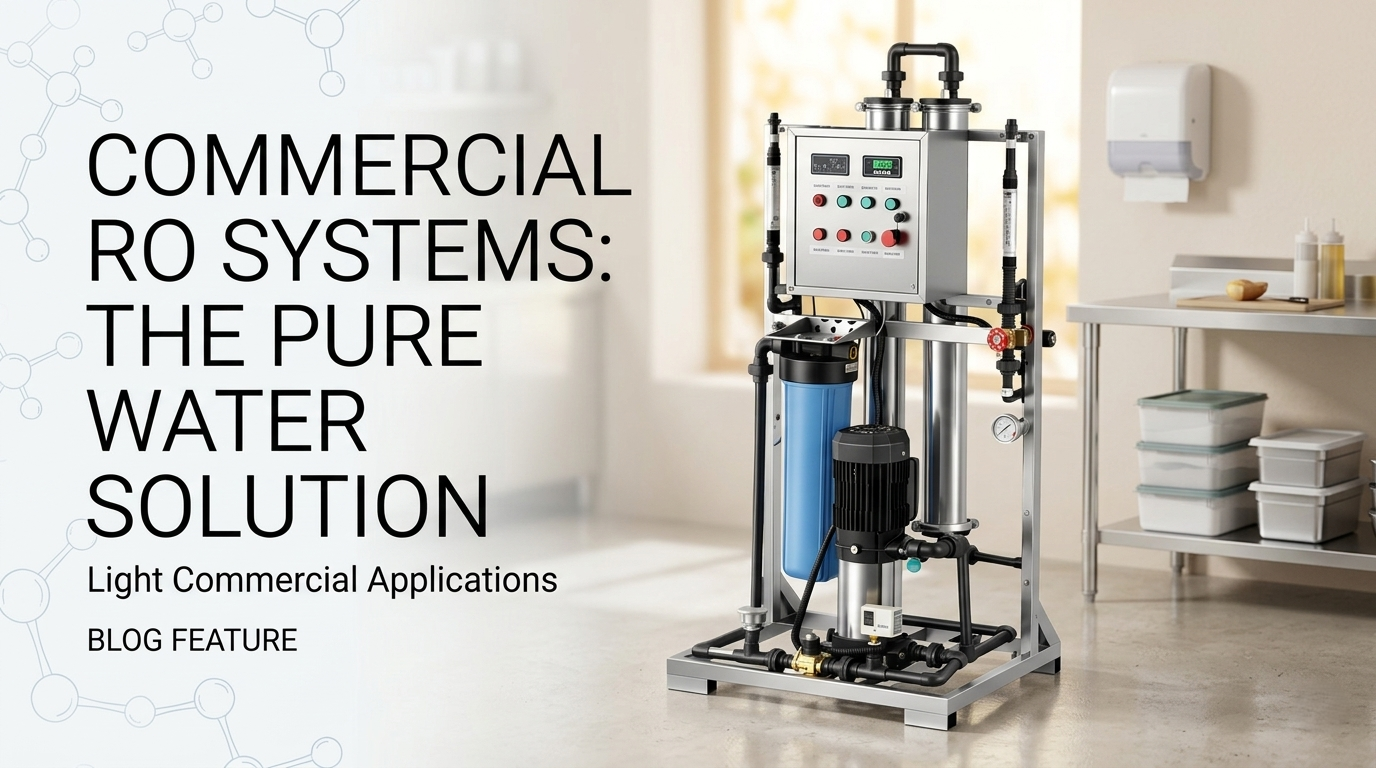
The optimal solution for commercial restaurants, cafes, and small office facilities is a direct-sourced light commercial reverse osmosis system. It physically removes up to 99% of dissolved minerals and oxidative chemicals from the feed water, definitively preventing hard scale buildup in expensive espresso machines, ice makers, and combi-ovens. To ensure your system meets the exact peak Gallons Per Minute (GPM) flow rates and dynamic pressure (PSI) required by your commercial equipment, we strongly recommend bypassing retail suppliers. Request a technical parameter sheet and a customized B2B wholesale quote directly from our engineering sales team to secure your facility’s operational stability.
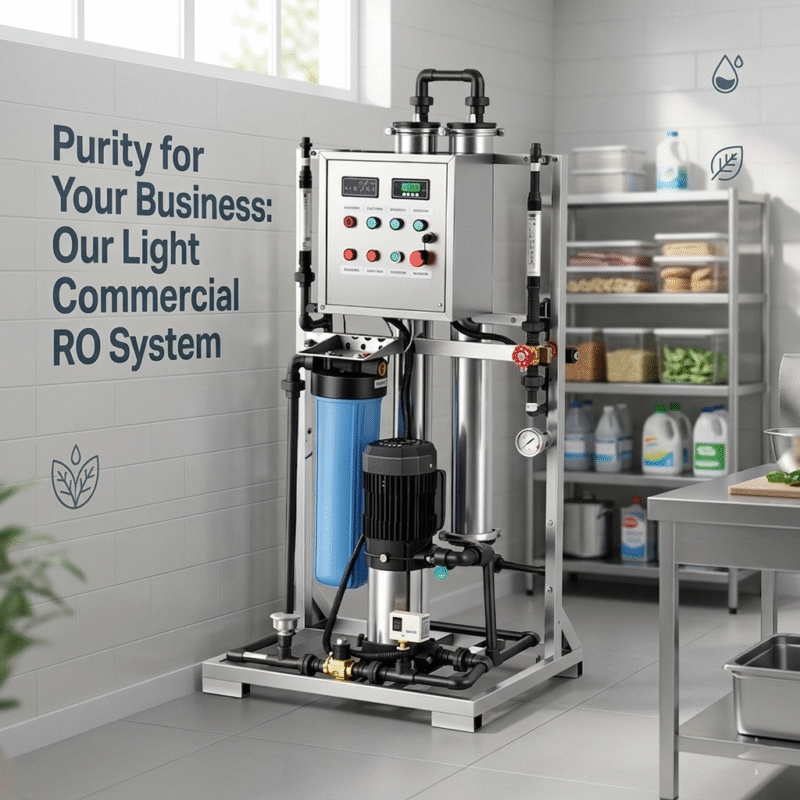
A light commercial reverse osmosis system is designed for applications requiring between 50—265/Hour gallons of high-purity water per day. YourWaterGood offers a professional-grade modular RO core that delivers an industry-leading 99.8% salt rejection rate, providing industrial-level purity in a compact frame.
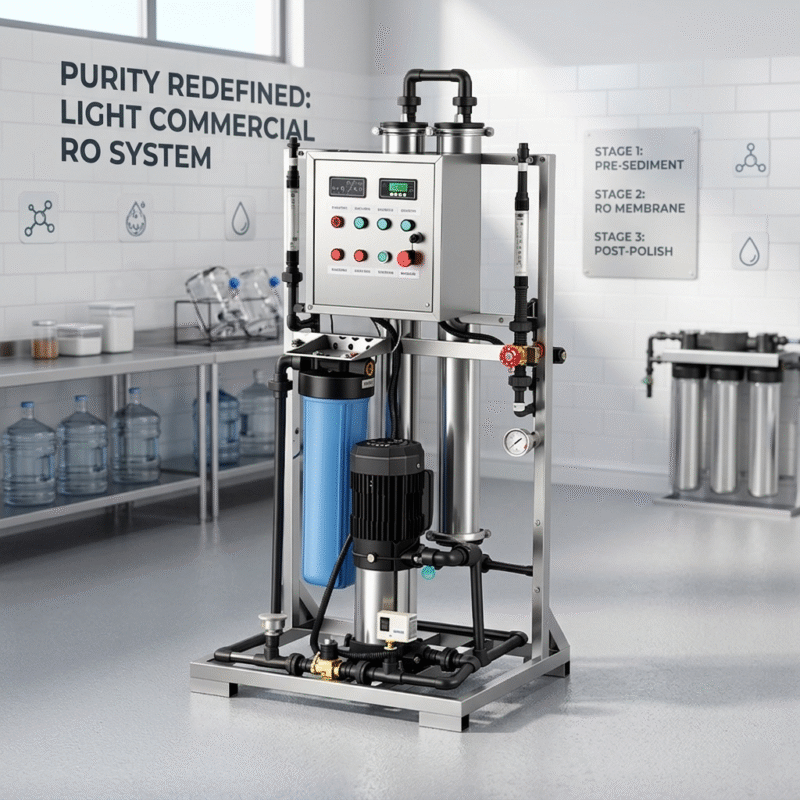
The key to long-term reliability in light commercial settings—such as specialty coffee shops and medical clinics—is the use of a modular architecture. Unlike consumer-grade units with small internal filters, our professional systems are designed to be paired with high-capacity external PP cotton pre-filtration housings. This prevents the RO membrane from premature fouling, ensures consistent flow rates during peak hours, and significantly reduces the total cost of ownership (TCO) for business owners in the US and Europe.
Fast Check Product: https://yourwatergood.com/product/commercial-reverse-osmosis-system/
| Feature | Consumer-Grade (Upscaled) | YourWaterGood (Modular Professional) |
| Purification Core | Standard TFC Membrane | High-Rejection Industrial Grade |
| Architecture | Integrated / All-in-One | Modular / Core-Centric |
| Pre-Filtration | Built-in (Limited Capacity) | External (High-Capacity PP/Carbon) |
| Daily Output (GPD) | 400 – 600 GPD | 500 – 1,000 GPD (Continuous) |
| Equipment Life | 1 – 2 Years (Low Pressure) | 5+ Years (Industrial Pump Quality) |
Customized Pre-Treatment: Light commercial environments often have unique water challenges (e.g., high sediment in older urban pipes). A modular system from YourWaterGood allows the user to choose a specific, heavy-duty PP cotton pre-filter that matches their local water quality, rather than relying on a “one size fits all” internal cartridge.
Space-Efficient Power: By separating the RO core from the pre-filters, the unit remains compact enough to fit under counters or in small mechanical closets, while still offering the high-pressure performance needed for $99.8\%$ chemical and mineral rejection.
Business Continuity: In a light commercial setting (like a dental office or small laboratory), downtime is costly. A modular design allows for independent maintenance of pre-filtration stages without affecting the main RO machine, ensuring the business always has access to pure water.
What is the Best Solution for Commercial Restaurants?
Designing a highly functional water purification architecture for a commercial restaurant requires an engineering-first approach. Facility managers and B2B procurement buyers must strictly evaluate the raw feed water chemistry before specifying equipment. A one-size-fits-all approach is a massive liability in the food service industry.
Evaluating the Feed Water Source: Municipal vs. Well Water The fundamental starting point for system sizing is determining the exact nature of the raw water supply entering the commercial property.
- Municipal Tap Water: City water networks operate under the federal EPA water quality framework (Safe Drinking Water Act). Procurement buyers must understand a critical engineering reality: these federal guidelines are engineered exclusively for baseline human biological safety. They are not designed to protect sensitive commercial heating elements. Municipal plants utilize heavy doses of chlorine and chloramines to sanitize the piping grid. When this city water hits your restaurant, these oxidative chemicals combine with high Total Dissolved Solids (TDS) to rapidly corrode boiler seals and form hard calcium scale inside your heating equipment.
- Well Water: Commercial restaurants located in rural or semi-rural areas operating on private well water face significantly harsher, unregulated variables. Groundwater frequently introduces extreme mineral hardness, dissolved iron, and fluctuating pH levels. This raw water profile demands robust, heavy-duty pre-treatment before the water ever reaches a sensitive purification membrane.
The Tailored Commercial Solution The definitive solution for commercial food service operations is a skid-mounted or high-capacity under-counter Reverse Osmosis (RO) unit. Whether your restaurant requires pure, scale-free steam for a high-volume combi-oven, or specific TDS balancing for a specialty coffee program, the system must be precisely engineered to match your kitchen’s daily operational duty cycle.
Reverse Osmosis vs. Other Filtration Systems
Understanding the mechanical and chemical differences between water treatment technologies is critical for procurement managers. Sourcing the wrong filtration technology for a commercial restaurant will lead to massive equipment failure and voided manufacturer warranties.
Standard Carbon Block Filtration Basic activated carbon filters are highly effective at absorbing volatile organic compounds (VOCs) and improving aesthetic taste by removing free chlorine.
- The Engineering Reality: Carbon filtration is a purely chemical absorption process; it does absolutely nothing to reduce TDS or remove dissolved hard minerals (calcium and magnesium). If your commercial restaurant uses hard municipal water, a carbon filter will only make the water taste slightly better while it continues to rapidly scale and destroy your $15,000 espresso machine.
Scale Inhibitors (Polyphosphate Cartridges) Many entry-level retail filters use polyphosphate media to coat hard minerals, temporarily preventing them from sticking to metallic surfaces.
- The Engineering Reality: This is a temporary chemical mitigation strategy, not true water purification. Under the high-heat and high-pressure environments of commercial boilers and steamers, these polyphosphates rapidly break down, allowing hard scale to form anyway.
Commercial Reverse Osmosis (RO) RO is the uncompromising, gold standard for commercial and restaurant water purification. By utilizing integrated booster pumps to force feed water through microscopic semi-permeable membranes, RO systems physically reject up to 99% of dissolved solids, heavy metals, and chemical impurities.
- The Engineering Reality: RO creates a perfectly “blank slate” water profile. For commercial restaurants, this guarantees absolute beverage flavor consistency across all franchise locations and provides ultimate, definitive protection against hard scale formation in high-heat commercial equipment.
How to Choose the Right System
Selecting the correct B2B equipment requires partnering with a direct manufacturer that prioritizes fluid dynamics, technical data, and long-term asset protection. B2B buyers must use the following engineering logic when evaluating a supplier:
1. Accurate GPM Sizing and Flow Dynamics Never size a restaurant system based on daily average consumption (GPD – Gallons Per Day). If your commercial kitchen draws 5 gallons of water in a frantic 2-minute window to satisfy an ice maker harvest cycle and a combi-oven flush, a system sized merely for 400 GPD will run dry, dropping the line pressure to zero and halting service. Your supplier must design the system around peak GPM demand with an appropriately sized hydropneumatic storage tank.
2. Dynamic Pressure (PSI) and Booster Pump Integration RO membranes require adequate dynamic pressure to overcome osmotic resistance. Many commercial buildings suffer from low municipal line pressure (dropping below 50 PSI during peak city usage). A professional supplier will integrate a high-efficiency centrifugal booster pump into the system framework, ensuring the membrane receives a constant, optimal PSI. This maximizes pure water output and drastically reduces wastewater.
3. Precision Blending Valves for Coffee and Espresso Pure RO water (with near-zero TDS) is highly corrosive to specific metals and lacks the mineral content required for balanced coffee extraction. For commercial cafes, your supplier must integrate a precision blending valve (TDS controller). This allows the facility manager to bypass a highly controlled percentage of filtered water back into the pure RO stream, dialing in the perfect TDS target (typically 100-150 ppm) for optimal flavor and internal machine sensor functionality.
POE vs. POU Systems Comparison
Restaurant operators and procurement contractors must decide where to deploy their water purification assets to achieve the highest possible Return on Investment.
Point of Entry (POE) A POE system is a large, centralized unit installed at the main water intake of the commercial building, treating all water before it distributes throughout the facility’s plumbing manifold.
- Best for: Massive resort kitchens, central commissary production facilities, or heavy industrial washdown applications.
- Advantages: Comprehensively protects the entire facility’s infrastructure, including commercial water heaters and high-temp dishwashers.
- Disadvantages: Exceptionally high initial Capital Expenditure (CAPEX). It is highly inefficient to pay the electrical and wastewater costs to purify water to rigorous RO standards only to use that pristine water for mopping floors or flushing public restrooms.
Point of Use (POU) POU systems are highly compact, targeted commercial RO units installed directly adjacent to the specific piece of equipment requiring purified water (e.g., under the beverage counter or next to the combi-oven).
- Best for: Commercial restaurants, specialized coffee shops, office breakrooms, and fast-casual franchise rollouts.
- Advantages: Drastically lower initial costs and a highly targeted, immediate ROI. You only pay to treat the water that actually enters your premium beverage machines and sensitive heating equipment.
- Disadvantages: Requires maintaining a localized database of filter replacement schedules for individual units across the restaurant floor plan.
For the vast majority of commercial restaurants, a strategic deployment of POU RO systems offers the fastest payback period and the most efficient allocation of the procurement budget.
Costs, ROI, and Equipment Protection
Investing in commercial water purification is not a sunken operational expense; it is a critical, measurable asset protection strategy that directly drives profitability in the commercial restaurant sector.
Maximizing Your Return on Investment By feeding your critical commercial kitchen equipment with RO-purified water, you instantly achieve the following operational metrics:
- Lower Maintenance Costs: The total elimination of calcium and magnesium scale means your maintenance budget is not consumed by emergency contractor dispatch fees. You eliminate the need to frequently acid-wash scaled boilers or replace clogged solenoid valves.
- Extend Equipment Life: A $15,000 espresso machine or a $20,000 combi-oven operating under optimal, scale-free water conditions will reliably hit its maximum engineered lifecycle. This allows your CFO to safely delay massive capital equipment replacement cycles.
- Improve Operating Stability: Consistent, pure water quality prevents sudden, unexpected equipment failures during a busy Friday night dinner service. It keeps your production lines moving and entirely eliminates catastrophic, multi-day operational downtime.
- Ensure Water Quality Consistency: Your culinary broths, premium coffees, fountain sodas, and cocktail ice will taste perfectly balanced and uniform across every single franchise location. This strictly protects your culinary brand’s reputation against the extreme volatility of local municipal water supplies.
Common Buyer Mistakes
Even highly experienced corporate procurement managers can make costly supply chain errors when specifying water treatment for commercial restaurants. Avoid these critical traps:
1. Buying Consumer-Grade Equipment for Commercial Volume Attempting to save initial budget by installing a residential under-sink RO system in a busy commercial cafe will lead to immediate booster pump burnout and completely inadequate tank recovery rates. Commercial operations demand continuous-duty components engineered to handle hundreds of gallons a day without catastrophic failure.
2. Skimping on the Pre-Filtration Array The semi-permeable RO membrane is the most expensive consumable in the system. Allowing heavy sediment, particulate matter, or oxidative city chlorine to reach this membrane will irreversibly destroy it in a matter of weeks. Investing in a robust, high-capacity modular pre-filter array is the most effective insurance policy for your RO skid.
3. Sourcing from Middleman Brokers Many B2B buyers unknowingly purchase from trading companies rather than direct manufacturers. This severely limits your ability to get accurate technical engineering support, custom TDS blending modifications, or true bottom-line wholesale pricing. Always verify you are dealing directly with the factory engineering team.
FAQ
1. How often do commercial pre-filters need to be replaced in a busy restaurant? To strictly protect the sensitive RO membrane from chemical fouling, modular sediment and activated carbon pre-filters generally require replacement every 3 to 6 months, depending heavily on the local municipal chlorine load and daily flow volume.
2. What is the fundamental difference between GPM and GPD when sizing a system? GPD (Gallons Per Day) is a theoretical 24-hour production metric. GPM (Gallons Per Minute) is the actual, immediate volumetric flow rate required by your equipment at any given second. B2B buyers must always prioritize meeting the peak GPM demand to prevent pressure drops during service.
3. Does a commercial RO system generate a lot of wastewater? Modern commercial RO systems engineered with high-efficiency centrifugal booster pumps and internal recirculation valves can achieve recovery rates exceeding 50%. This significantly reduces municipal wastewater costs compared to older, passive retail technologies.
4. Can this system operate reliably if my commercial building has low water pressure? Yes. Our commercial systems are specifically integrated with heavy-duty electric booster pumps and low-pressure limit switches. This ensures the membrane receives optimal PSI for purification while protecting the pump from cavitation if the city supply pressure drops unexpectedly.
5. Do you offer B2B wholesale pricing and technical specs for multi-unit restaurant chains? Yes. As a direct manufacturer, we provide comprehensive engineering support, standardized equipment packages, and tiered wholesale pricing to ensure uniform water quality across regional and national franchise rollouts.
Is your commercial restaurant losing thousands of dollars annually to scaled equipment, emergency service calls, and inconsistent beverage quality? Stop relying on inadequate retail filters that inflate your maintenance budget and put your daily operation at risk. Partner with a direct manufacturer that understands the rigorous engineering and high-volume demands of the food service industry.
Contact Us Today to Optimize Your Operations – Connect with our technical sales engineers to get a custom quote, request technical parameter sheets, and lock in B2B wholesale pricing for your new light commercial reverse osmosis system.