
Optimizing Water Treatment in Food and Beverage Industry Production Lines

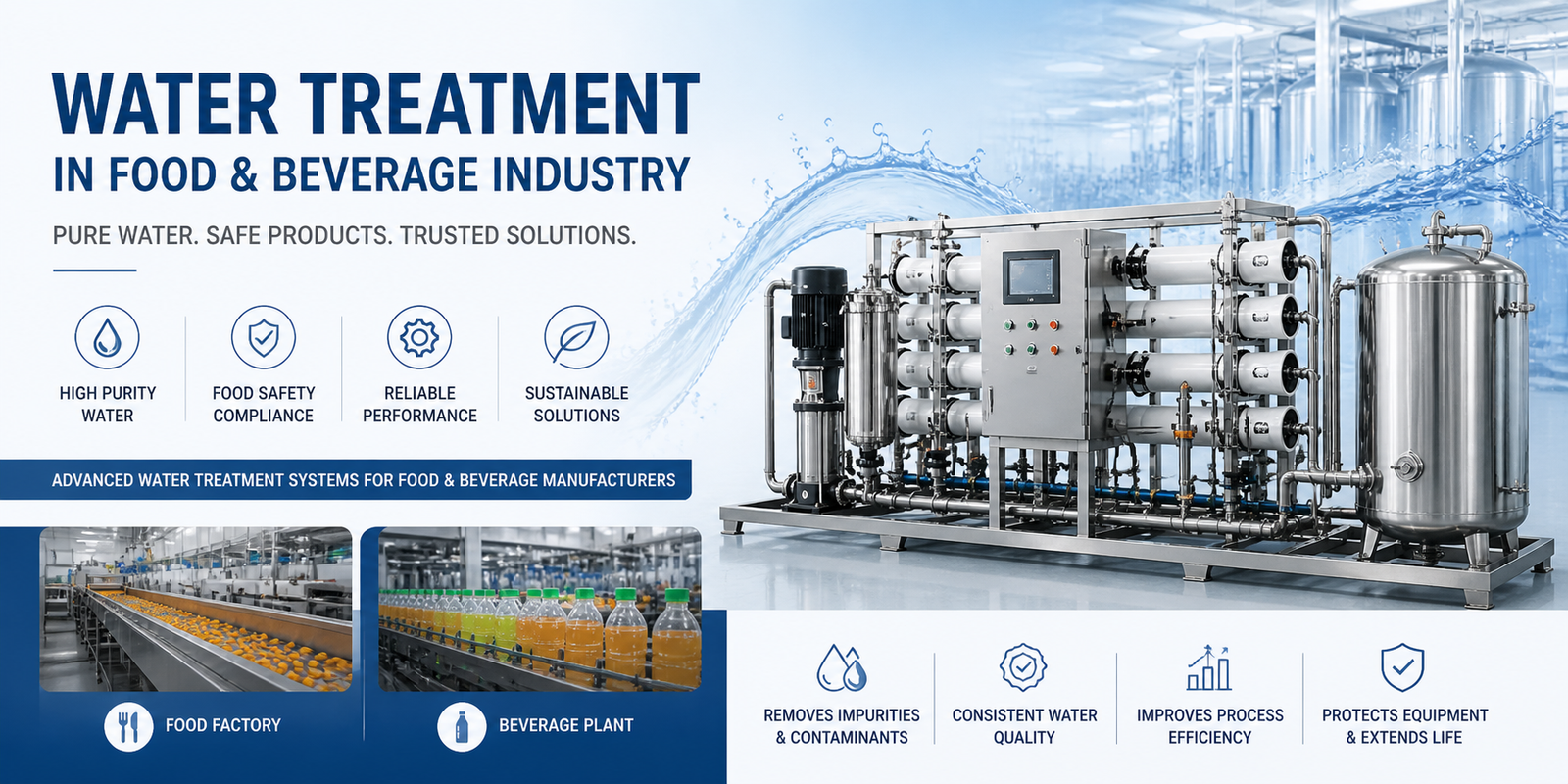
Implementing reliable water treatment in food and beverage industry facilities is not merely a utility requirement; it is the fundamental baseline for product consistency, regulatory compliance, and equipment protection. For procurement officers and plant engineers, selecting the right industrial purification skid dictates the long-term operational expenditure (OPEX) of the entire manufacturing floor.
In the F&B sector, water treatment is a critical utility that determines product taste consistency and the operational lifespan of production equipment. YourWaterGood provides industrial-grade modular Reverse Osmosis (RO) solutions designed to meet the rigorous standards of food and beverage plants.
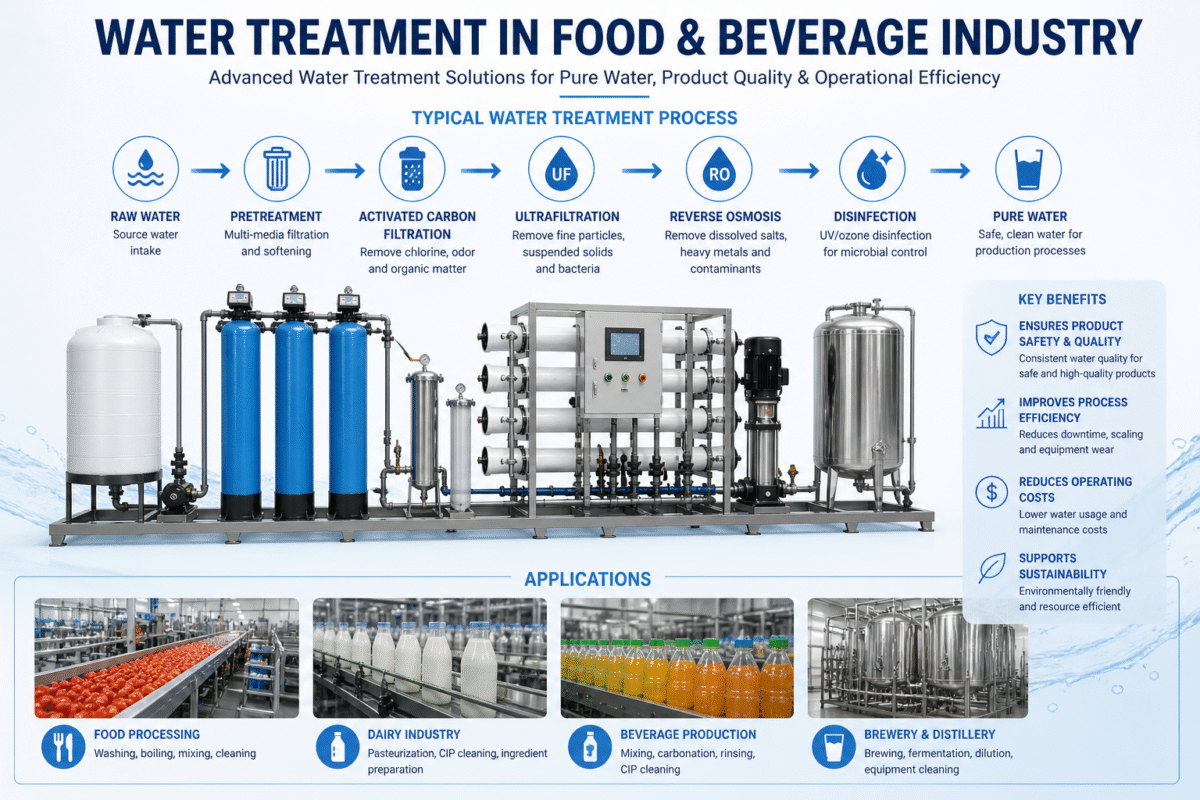
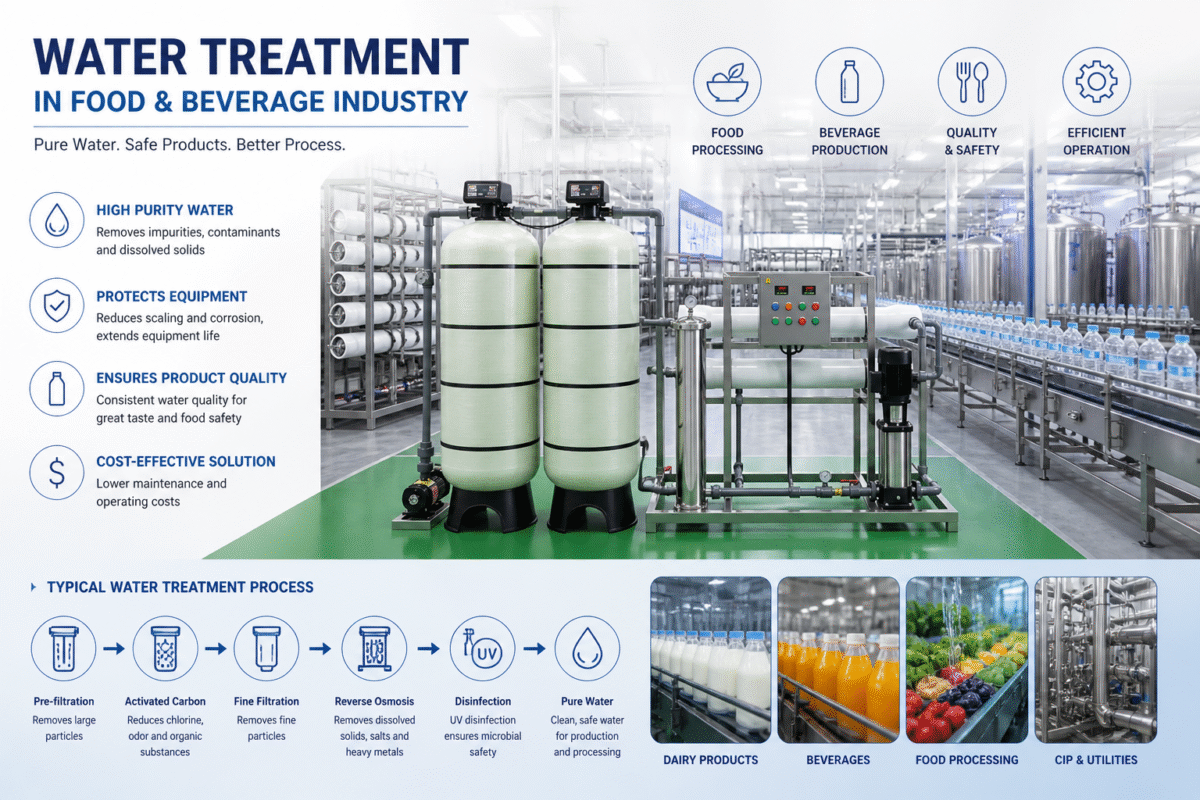
Unlike integrated commercial filters, these professional systems utilize a modular architecture that separates the high-rejection RO core from pre-filtration stages. This allows F&B facilities to implement high-capacity external pre-filtration to manage local water turbidity before it reaches the membrane. This setup ensures that ingredient water is free from PFAS, chlorine, and minerals, achieving a rejection rate of 99.8%, which is essential for protecting expensive combi-ovens, boilers, and industrial beverage dispensers from catastrophic scale damage and efficiency loss.
Fast Check Product: https://yourwatergood.com/product/industrial-reverse-osmosis-system/
| Technical Feature | Standard Commercial Filters | YourWaterGood Modular Industrial RO |
| Purification Depth | Carbon/Particulate Only | Molecular Rejection (RO) |
| Total Dissolved Solids (TDS) | 30% – 50% Reduction | 99.8% Rejection (Absolute Purity) |
| Architecture | Proprietary Cartridges | Modular Industrial Core |
| Asset Protection | Moderate (Scale-Inhibitor) | Maximum (Mineral Removal) |
| Pre-Treatment Style | Integrated (Small) | External High-Capacity Pre-Filtration |
Flavor Consistency: For beverage plants and specialty coffee, the “blank slate” water provided by an industrial RO core ensures that the flavor profile remains identical regardless of the local water source.
Operational Stability: In a food plant, a clogged filter means a production line shutdown. By using an external, high-density PP cotton pre-filtration stack, the expensive RO membrane is shielded from 99% of incoming sediment, doubling its service life compared to “all-in-one” systems.
Reduced Maintenance Costs: Modular systems allow for independent stage maintenance. A technician can replace the pre-treatment filters without interfering with the high-pressure RO unit, maintaining a continuous flow of high-purity water for 24/7 operations.
Establish a baseline with comprehensive feed water profiling: Never procure a system without a localized water analysis. The engineering parameters for municipal tap water differ drastically from raw well water, particularly regarding hardness and organic loading.
Size for peak demand, not daily averages: Calculate your exact Gallons Per Minute (GPM) requirements based on simultaneous CIP (Clean-In-Place) operations and peak bottling/processing shifts to avoid catastrophic pressure drops.
Isolate ingredient water from utility water: Deploy separate treatment standards for water entering the final product versus water feeding boilers and cooling towers to maximize capital efficiency.
Demand EPA-exceeding compliance: Do not settle for baseline safety. Over-engineer your system to comfortably clear the EPA water quality framework, shielding your brand from seasonal water fluctuations.
Evaluate membrane longevity over initial CAPEX: Factor in the replacement frequency of filtration media and RO membranes when calculating the true cost of the equipment.
What is the Best Solution for Food and Beverage Plants?
The optimal solution for food and beverage manufacturing is a highly customized, multi-stage filtration network anchored by heavy-duty Reverse Osmosis (RO). In this sector, water serves two distinct masters: it is the primary ingredient in your product, and it is the lifeblood of your heating, cooling, and sanitation equipment.
When dealing with municipal tap water, the primary engineering challenge is neutralizing disinfectants. Chlorine and chloramines injected by city municipalities will rapidly oxidize and destroy downstream filtration membranes. Therefore, the best solution involves robust granular activated carbon (GAC) pretreatment or precise sodium bisulfite dosing.
Conversely, if your plant operates on well water, the threat matrix shifts entirely. Well water introduces volatile variables such as dissolved iron, manganese, high total dissolved solids (TDS), and seasonal turbidity. The best solution here requires aggressive multimedia filtration, antiscalant injection, and potentially ultrafiltration (UF) prior to the core purification stage.
Regardless of the source, the system must be designed to consistently satisfy the EPA water quality framework. While the EPA establishes the National Primary Drinking Water Regulations for public safety, industrial F&B buyers require a system that goes much further. The best engineering solution delivers ultra-pure water that eliminates any trace flavors, odors, or visual impurities that could alter a food recipe or beverage batch, ensuring absolute product uniformity across all your production sites.
Reverse Osmosis vs. Other Filtration Systems
Procurement teams must carefully evaluate distinct filtration technologies to match their specific production line requirements. Understanding the operational differences between these technologies is crucial for an effective B2B purchasing decision.
- Reverse Osmosis (RO): RO is the undisputed industry standard for TDS reduction. Utilizing high-pressure pumps (typically operating between 150 PSI to over 400 PSI), RO forces water through semi-permeable membranes, stripping away dissolved salts, heavy metals, and micro-contaminants. For ingredient water and high-pressure boiler feed in beverage plants, RO is mandatory.
- Ultrafiltration (UF): UF is exceptional for physical separation. It removes suspended solids, colloidal matter, and pathogens. However, UF cannot remove dissolved minerals. In food plants, UF is an excellent pretreatment step for well water or a standalone solution for treating wastewater prior to discharge.
- Media Filtration (Carbon/Sand): These are foundational pretreatment technologies. Carbon removes chlorine, while sand removes large particulates. They are not substitutes for RO; they exist solely to protect the RO system from premature fouling.
- Ion Exchange (Water Softeners): Softeners exchange calcium and magnesium for sodium, preventing hard scale. While critical for protecting downstream equipment, softening does not lower the overall TDS. True purification requires RO following the softening phase.
How to Choose the Right System
Choosing the correct industrial water purification system requires moving past generic catalog specifications and evaluating hard engineering data.
First, mandate a precise GPM calculation. If your beverage filling line requires 60 GPM and your boiler make-up requires 20 GPM, your system and atmospheric storage tanks must handle an 80 GPM peak load without sacrificing operating PSI. Undersizing the system will starve your production lines and trigger automated shutdowns.
Second, analyze the required recovery rate. Traditional systems may waste a significant amount of water as concentrate (reject). Modern industrial systems should be engineered for high recovery, minimizing wastewater and lowering your municipal water bills.
Third, evaluate the control systems. The right supplier will provide a skid equipped with advanced PLCs (Programmable Logic Controllers), offering real-time monitoring of permeate conductivity, operating PSI, and flow rates. This allows your maintenance staff to predict membrane fouling before it impacts production.
POE vs. POU Systems Comparison
Facility managers must decide between Point-of-Entry (POE) and Point-of-Use (POU) architectures when mapping out their factory floor.
Point-of-Entry (POE) Systems: A POE system treats all water at the main inlet of the facility. Every drop of water flowing into the plant is purified.
- Pros: Total facility protection. Prevents scale buildup in all plant piping. Simplifies maintenance by centralizing equipment into one dedicated utility room.
- Cons: Higher initial capital expenditure. Requires the facility to use high-grade piping (like stainless steel or specific plastics) everywhere, as high-purity water is aggressive and will leach minerals from standard copper pipes.
Point-of-Use (POU) Systems: POU involves installing smaller, specific treatment skids directly at individual production lines (e.g., one RO unit for the beverage mixing tanks, and a separate softener for the boilers).
- Pros: Lower initial CAPEX if only specific lines require purified water. Allows engineers to dial in specific water profiles for different recipes.
- Cons: Multiplies your maintenance footprint. Your staff must monitor and service multiple pumps, filter housings, and membrane arrays spread across the factory floor.
For high-volume food and beverage plants, a hybrid approach or a centralized POE system is generally the most secure investment, guaranteeing consistency and protecting all capital assets simultaneously.
Costs, ROI, and Equipment Protection
Investing in commercial-grade water purification is fundamentally a strategy for asset protection and risk mitigation. For industrial buyers, the system must justify its presence through a rapid Return on Investment (ROI).
- Lowering Maintenance Costs: Hard water introduces scale. Scale ruins heat exchangers, blocks nozzles, and destroys boiler tubes. By feeding your equipment with purified water, you eliminate the need for harsh chemical descaling, reducing maintenance labor and chemical procurement costs.
- Extending Equipment Lifespan: Mineral deposits create thermal stress in boilers and mechanical wear in valves. Removing contaminants at the source adds years of viable operational life to your most expensive manufacturing machinery.
- Improving Operational Stability: Unplanned downtime costs thousands of dollars per hour in a beverage plant. When water quality is strictly controlled, sensors remain clean, valves actuate perfectly, and production lines run continuously without water-chemistry interruptions.
- Ensuring Water Consistency: Consumers expect your beverage to taste identical in every state and across every season. By stripping away local municipal water variations, an industrial RO system acts as a flavor-stabilizing firewall, safeguarding your brand equity.
Common Buyer Mistakes
Procuring industrial equipment is complex, and missteps can lead to massive operational failures.
Ignoring Peak Flow Storage Dynamics: Many buyers purchase a system that matches their exact hourly flow rate but fail to invest in adequate atmospheric storage tanks and distribution pumps. When a CIP cycle initiates, it pulls a massive volume of water instantly. Without proper storage, the RO system cannot keep up, resulting in line pressure dropping to zero and halting production.
Field Engineering Insight: The CIP Thermal Warp Trap: Here is a critical detail only a field engineer knows: In food and beverage plants, CIP (Clean-In-Place) protocols use near-boiling water and harsh sanitizers. A frequent and catastrophic mistake is failing to install proper thermal expansion loops and positive check valves between the production CIP loop and the water purification skid. If a valve fails and hot CIP water backflows into the RO membrane housings, it will instantly and permanently warp the delicate polyamide layers of the membranes. This destroys tens of thousands of dollars of filtration media in seconds. Always isolate your pure water generation from your high-temperature sanitation loops.
Underfunding Pretreatment: Buyers frequently negotiate the price of the RO skid but accept undersized pretreatment filters to save money. If the carbon filter cannot handle the GPM flow, chlorine will slip through and oxidize the RO membranes, destroying the core of the system within weeks.
FAQ
What GPM capacity does a standard beverage plant require? Flow rates depend entirely on production scale. A regional craft facility might require 30 to 60 GPM, whereas a massive commercial bottling operation will require custom skids outputting 400 GPM or more. System sizing must factor in both product mixing and sanitation demands.
How does well water change the system design? Well water has higher variability. It requires rigorous upfront testing for heavy metals and hardness. Systems running on well water typically require heavy-duty antiscalant dosing systems and more frequent membrane cleaning cycles compared to municipal water systems.
Does industrial water treatment help meet EPA regulations? Absolutely. A properly engineered RO system will reduce contaminants to levels far below the maximum thresholds established by the EPA water quality framework, ensuring your facility easily passes regulatory audits.
What is the required PSI for an industrial RO system? To overcome osmotic pressure and drive water through the membrane, industrial systems utilize high-pressure stainless steel pumps operating between 150 PSI and 450 PSI, depending on the feed water TDS and the temperature.
How often do RO membranes need to be replaced in a food plant? With impeccable pretreatment and proper automated CIP protocols, membranes can last 3 to 5 years. Without proper pretreatment, they can foul and require replacement in under 6 months.
Why is ROI so fast on these systems? The ROI is rapid because the system simultaneously prevents product rejection due to bad taste, cuts energy consumption in boilers by eliminating scale, and drastically reduces the need to purchase chemical descalers.
Can I get a custom system designed for my existing factory floor space? Yes. Professional suppliers engineer skid-mounted systems tailored to your specific dimensional constraints, ensuring seamless integration into your current utility room.
Do not compromise the integrity of your production lines or the lifespan of your capital equipment with inadequate filtration. Contact us today to receive customized CAD drawings, request a comprehensive technical parameter sheet, and secure B2B wholesale pricing for the most reliable water treatment in food and beverage industry applications available on the market.