
What Is An Inline Water Filter — A Complete, Practical Guide For Homeowners And Installers

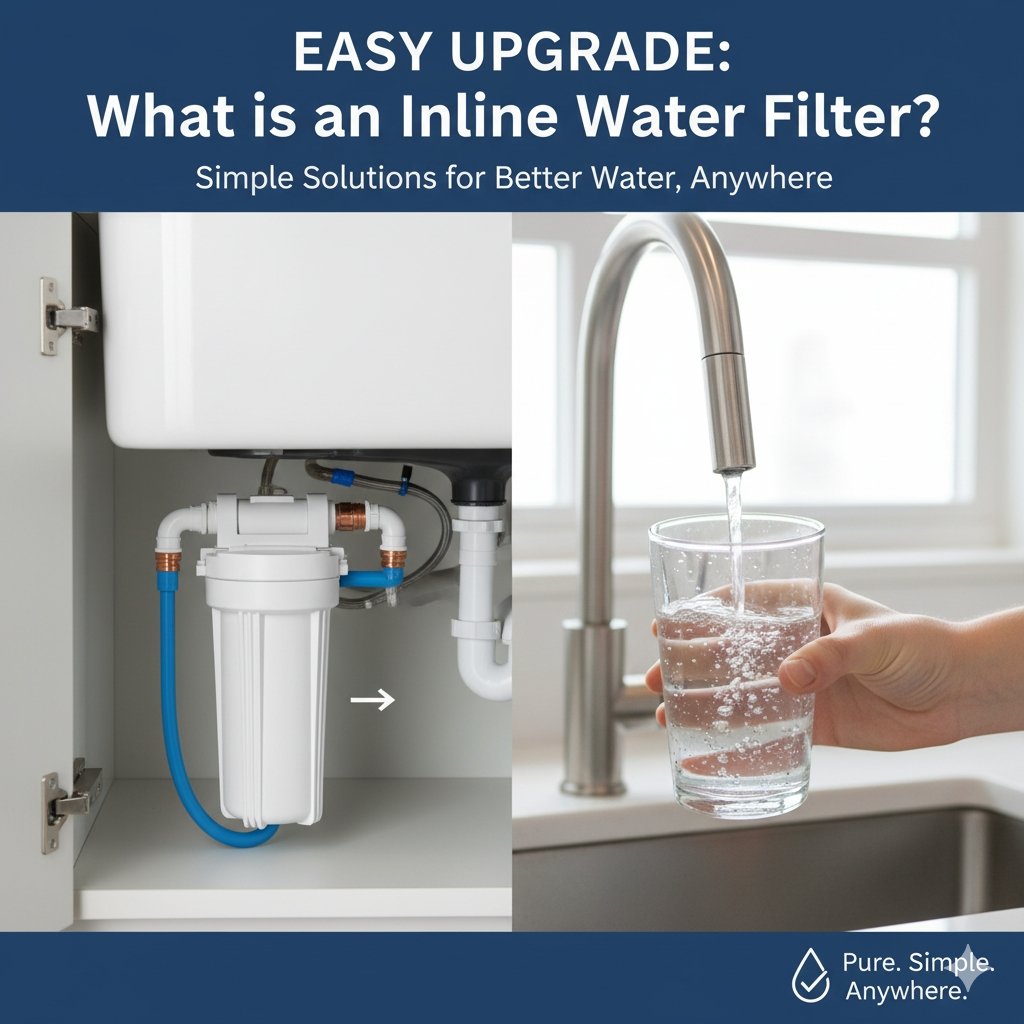
If you’ve typed what is an inline water filter into a search box, you’re probably trying to understand a component you’ve seen mentioned in appliance manuals, coffee machine specs, refrigerator waterlines, or whole-house plumbing diagrams. This article explains, in plain language and with practical detail, exactly what an inline water filter is, how it works, where it’s used, how to choose one, and how to install and maintain it so it keeps performing reliably. You’ll also find troubleshooting tips, comparisons with other filter types, and a buying checklist so you can pick the right inline solution for your situation.
Throughout this guide I’ll point you to examples and product collections — for detailed model specs and to compare certified products, check sources like https://yourwatergood.com/. Read on: by the time you finish, you’ll know whether an inline filter is the right choice for your appliance, fixture or plumbing system.
Quick answer — one sentence
An inline water filter is a compact filtration cartridge installed directly into a water line to remove sediment, chlorine, taste/odor compounds, and sometimes specific contaminants (depending on media), providing filtered water at the point it’s needed without a separate under-sink or countertop unit.
1. Definition and basic concept
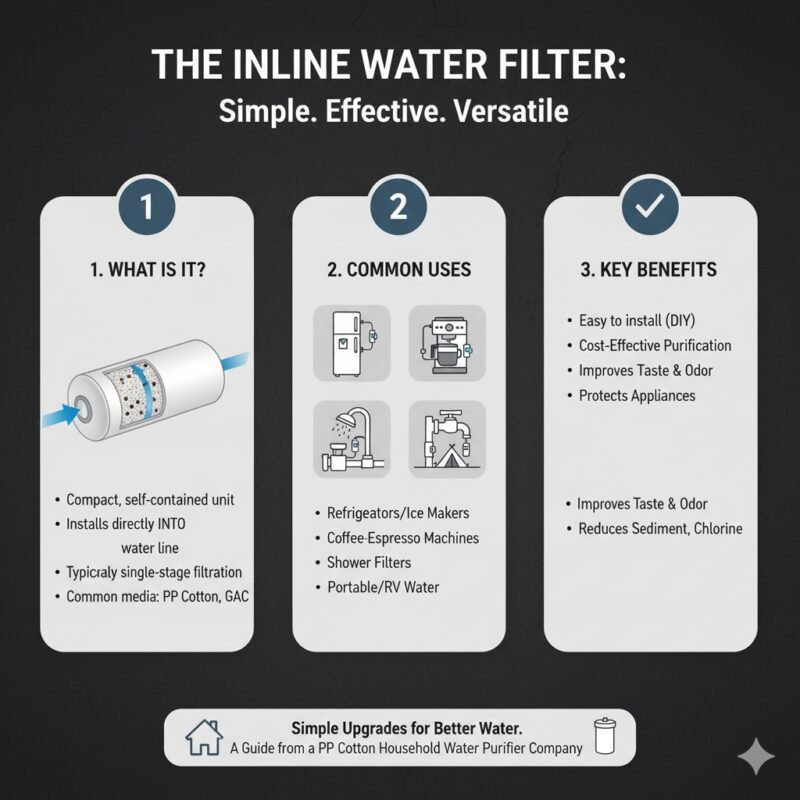
An inline water filter is a filter cartridge or module designed to be placed directly in-line with the water supply piping — meaning water flows through the filter housing as part of the existing plumbing path. These filters are commonly used where space, convenience, or aesthetic reasons make an under-sink or countertop unit impractical. Inline filters are often installed:
- Behind refrigerators to filter the ice/dispense water line.
- Inside coffee or espresso machines for taste and scale control.
- Beneath sinks in compact enclosures where a dedicated housing is preferred.
- In RVs, boats, and point-of-entry branches to protect appliances.
- As a final polishing stage downstream of larger systems (for example, after a water softener or whole-house filter).
Because they sit directly in the water line, inline filters must meet pressure ratings and connection standards, and they’re chosen both for what they remove and how they fit physically into the plumbing layout.
2. How inline water filters work — the mechanics
Inline filters use the same filtration principles as other cartridge-based systems: mechanical straining, depth filtration, adsorption, ion exchange, or combinations of these. Common internal media include:
- Polypropylene (PP) sediment — a common depth filter that captures particles, rust, and sand by size exclusion.
- Activated carbon (GAC or carbon block) — adsorbs chlorine, taste/odor compounds, and many organic contaminants. Carbon block offers finer particle removal and better chloramine performance than loose GAC in many cases.
- Ceramic — provides particle filtration and some microbial protection in specialty units.
- Ion-exchange resins — used for softening or targeted removal of certain dissolved ions.
- Specialty adsorbents — e.g., PFAS-specific media, arsenic-selective resins, or catalytic carbon for chloramine removal.
Water flows into the inlet of the inline housing, passes through the media where contaminants are retained or adsorbed, and exits through the outlet as treated water. Inline housings can be disposable (the entire unit is replaced) or serviceable (replaceable internal cartridges). Because flow tends to be continuous and often at low volumes (refrigerator dispensing, coffee cycles), many inline filters are designed for intermittent use and small to moderate flow rates.
3. Common formats and connection types
Inline filters come in several common mechanical formats designed to match installation contexts:
- Quick-connect inline cartridges: Often used for refrigerators and coffee machines — push-fit tubing connectors (typically 1/4″, 3/8″) make installation fast and tool-free.
- Threaded filter housings: Use threaded fittings (NPT, BSP) and replaceable cartridges; common in under-sink and appliance-protection setups.
- Compact disposable canisters: Entire cartridge and housing are replaced when exhausted; popular in tight spaces.
- Inline membrane modules: For ultrafiltration or small RO prefilters; more specialized and typically plumbed with fittings.
- Inline housings with mounting brackets: Allow secure mounting to walls or equipment shelves to reduce stress on tubing.
Connections must match existing plumbing: common sizes are 1/4″ OD tubing for ice makers and refrigerators, 3/8″ for some cold-water lines, and 1/2″ or larger for whole-house or appliance branches. Ensure you know your line size and whether you need compression fittings, quick-connects, or threaded adapters.
4. Typical uses and applications
Understanding where inline water filters are used helps you decide whether one suits your needs:
Refrigerators and ice makers
Inline filters are commonly plumbed to refrigerators to remove chlorine taste and small particulates so ice and dispensed water taste clean. Many refrigerator models have manufacturer-recommended inline cartridges sized for the fridge’s flow needs.
Coffee and espresso machines
Coffee shops and espresso machines use inline filtration to manage chlorine, hardness, and particulates — all of which affect taste and machine longevity. Barista-focused inline filters can incorporate scale inhibitor or ion-exchange stages.
Under-sink “hidden” installations
If you want an under-sink filter without a visible housing or tank, a compact inline housing mounted to the cabinet back can achieve a “hidden” installation while still serving the kitchen faucet.
Point-of-entry/point-of-use protection
Inline cartridges protect appliances such as icemakers, dishwashers, or lab equipment from sediment or specific contaminants. They’re useful in RVs, boats, tiny homes, or anywhere space is limited.
Reverse osmosis pre-filters and post-filters
Inline sediment or carbon cartridges are often used as pre-filters for an RO membrane or as post-polishing filters downstream of the RO storage tank.
Medical or laboratory devices
Specialty inline filters—ultrafiltration modules, sterilizing-grade cartridges—are used where precise filtration is required in compact form factors.
5. Benefits of inline water filters
Inline filters offer several practical advantages:
- Space efficiency: They fit into tight spaces and hide behind appliances or cabinetry.
- Convenience: Many models use quick-connect fittings for fast replacement with minimal plumbing work.
- Targeted protection: They can be dedicated to a single appliance (e.g., fridge) so you treat only the water that needs treatment.
- Simplicity: Disposable inline cartridges simplify maintenance—swap and go.
- Lower visual impact: No bulky housings or tanks visible under sinks or on counters.
- Cost-effective for small flows: Often cheaper than installing a full under-sink system for one tap or appliance.
These benefits make inline filters ideal for applications where limited flow rates and compact form are primary concerns.
6. Limitations and things inline filters cannot do
Inline filters are not a universal solution. Know their limitations:
- Limited capacity: Because they’re compact, inline filters typically have smaller media volumes and therefore shorter lifetimes than larger under-sink or whole-house cartridges — expect more frequent replacement where demand is high.
- Lower flow or pressure restrictions: Some inline units restrict flow; they’re not suited to high-demand taps.
- Narrow contaminant scope: Many inline filters are designed for taste & odor and sediment removal; they rarely provide comprehensive dissolved contaminant removal like a full RO system.
- Not ideal for serious microbial contamination: Most inline carbon/sediment filters do not disinfect; if microbial contamination is present, a UV stage or certified microbiological filter is necessary.
- Maintenance tracking: Because they’re hidden, users sometimes forget to replace inline cartridges, leading to degraded performance or bacterial growth in stagnant cartridges.
If your needs include high-volume drinking water, broad contaminant removal, or whole-house coverage, inline filters may be only part of the solution.
7. Choosing the right inline filter — key decision factors
When selecting an inline water filter, evaluate these practical factors:
1) Purpose — what problem will it solve?
Decide if you need sediment removal, chlorine/taste control, microfiltration, scale inhibition, or a combination. Matching media to the problem is essential.
2) Flow requirements
Measure the expected flow rate at the tap or appliance. For a refrigerator, the flow requirement is low — a 1/4″ inline filter is fine. For a sink or dishwasher branch, you may need larger inline housings rated for higher GPM.
3) Connection type and size
Identify tubing or pipe sizes; pick a filter with compatible fittings. Quick-connect models make DIY easier.
4) Certification and performance data
If health-critical contaminants are at issue (lead, PFAS), choose filters with third-party test data or certifications for the specific contaminant. For aesthetic issues (taste/odor), NSF/ANSI 42 is a useful standard.
5) Capacity and replacement interval
Check the rated gallon capacity or months-of-service based on usage. For high-use households, choose higher-capacity inline modules or plan frequent replacements.
6) Pressure rating and temperature
Confirm the filter can handle your home’s water pressure and temperature range. Many inline units are rated to ~125 psi and 40–100°F, but check specifics.
7) Ease of replacement and availability of spares
Prefer models with readily available replacement cartridges and clear part numbers. Proprietary or hard-to-source cartridges make maintenance a headache.
8) Cost — upfront and ongoing
Evaluate the unit price and replacement cartridge cost. Compare lifetime cost (per-gallon or per-year) versus alternatives like under-sink cartridges or pitcher filters.
9) Warranty and brand support
Choose reputable vendors with clear warranty terms and customer support.
8. Installation basics — do-it-yourself or professional?
Many inline filters are designed for DIY. Typical steps for a quick-connect refrigerator inline filter:
- Turn off water supply to the line you’ll cut (or use the fridge’s shutoff valve).
- Relieve pressure by dispensing water or opening a faucet downstream briefly.
- Cut tubing cleanly with a tube cutter.
- Insert tubing into quick-connect fittings until it seats; pull to confirm secure.
- Mount the filter using supplied bracket if necessary — secure to prevent stress on fittings.
- Slowly open the water and check for leaks. Flush per manufacturer instructions (usually several gallons/5 minutes) to purge air and manufacturing dust.
- Record install date and set a reminder for replacement.
For threaded or larger inline housings, you’ll need basic plumbing tools and perhaps plumbing tape or thread sealant. When in doubt (complex lines, multiple connections, city code issues), hire a plumber.
Always follow manufacturer instructions for flushing and priming — many inline carbon filters need flushing to avoid initial carbon fines in water.
9. Maintenance schedule and best practices
How often you replace an inline filter depends on water quality and usage. Typical guidelines:
- Refrigerator inline carbon filters: replace every 6–12 months or after X gallons (manufacturer-specified).
- Inline sediment filters for appliances: replace every 3–12 months depending on turbidity.
- Inline specialty cartridges (PFAS, scale inhibitors): replace per manufacturer guidance — often 6–12 months.
- High-use scenarios: for frequent ice/dispense or heavy coffee shop use, change more often (monthly to quarterly).
Best practices:
- Write the installation date on the filter or housing.
- Use a calendar reminder or a smartphone app for replacements.
- Keep a spare cartridge at home so you can replace promptly.
- Flush new cartridges thoroughly before use.
- If water taste or flow changes abruptly, inspect immediately and consider early replacement.
Neglecting replacements can lead to taste deterioration, reduced flow, fouling of downstream equipment, and in some rare cases bacterial growth in stagnant media.
10. Troubleshooting common inline filter issues
Low flow after installation
- Likely causes: clogged cartridge, incorrect orientation, kinked tubing, or a filter rated for lower flow.
- Fixes: check for kinks, verify correct install orientation, and replace cartridge if clogged.
Leaking at fittings
- Likely causes: incomplete tubing insertion in quick-connects, damaged O-rings, or loose threaded fittings.
- Fixes: reseat tubing, cut and reseat to ensure a clean cut, replace damaged O-rings, or re-tape threads.
Bad taste after initial install
- Likely causes: insufficient flushing of new carbon filter.
- Fix: flush the filter per instructions (often several gallons); if taste persists, replace cartridge.
Frequent replacements
- Likely causes: heavy sediment load or undersized filter for usage.
- Fix: add a coarser sediment prefilter upstream, or choose higher-capacity inline cartridge.
No water
- Likely causes: shutoff valve closed, frozen lines, or clogged prefilter upstream.
- Fix: check valves and upstream filters.
If problems persist, contact the filter brand’s support and provide model numbers and photos.
11. Inline filters vs other filter types — a practical comparison
To decide if inline is best, compare to alternatives:
Inline vs under-sink cartridge
- Inline: smaller footprint, ideal for appliance-specific needs, easier to hide.
- Under-sink: larger media capacity, higher flow, easier to service for multiple uses.
- Choose: inline for fridge/coffee; under-sink for whole-kitchen drinking water.
Inline vs countertop or pitcher filters
- Inline: plumbed, always available, no pitcher refills.
- Pitcher: portable, cheap, no plumbing.
- Choose: pitcher for occasional use; inline for continuous access and better taste at appliance.
Inline vs whole-house systems
- Inline: protects individual appliance or tap, inexpensive and targeted.
- Whole-house: treats all water, larger cost and maintenance.
- Choose: inline if only one appliance needs protection; whole-house if multiple taps/ appliances suffer from sediment/ chlorine/ hardness.
Inline vs point-of-entry (POE) branch filters
- Inline: installed on branch lines for specific fixtures.
- POE branch: larger capacity, often backwashing, treats a whole branch (e.g., laundry) rather than single appliance.
- Choose: inline for single fixtures; POE branch for treating a group of fixtures.
12. Specialty inline filters: PFAS, scale inhibitors, and ultrafiltration
Beyond basic carbon and sediment, specialty inline filters exist:
- PFAS-rated inline cartridges: contain adsorbents validated to reduce certain PFAS compounds. These require matching media to the specific PFAS profile and credible test data.
- Scale inhibitor inline modules: release polyphosphate or use template-assisted crystallization to reduce scale in coffee machines and kettles. They don’t remove hardness ions but change their behavior to avoid deposits.
- Inline ultrafiltration (UF): hollow-fiber or membrane modules provide micron-level filtration and can remove cysts and some bacteria; used where microbial safety is a concern but chemical removal isn’t required.
If you need treatment for a specific contaminant class, insist on vendor test reports and ensure the inline module is rated for the flow and pressure you’ll use.
13. Buying checklist — how to select the right inline water filter
Before you buy, verify these items:
- Exact keyword match: ensure the product page states it is an inline filter and shows compatible connection sizes.
- Purpose and media: does the media remove the contaminants you care about? Look for NSF or lab data for health-critical claims.
- Capacity and recommended replacement interval: compute your expected gallons/month and match to rated capacity.
- Connection compatibility: tubing size or thread type must match your plumbing.
- Pressure & temperature ratings: ensure suitability for your system.
- Mounting & orientation: does it ship with brackets and instructions to secure it?
- Ease of replacement: can you swap cartridges without tools? Are OEM replacements readily available?
- Flushing and priming requirements: clear instructions reduce first-use issues.
- Warranty & customer support: verify length and coverage.
- User reviews & brand reputation: watch for recurring complaints about leaks or short life.
A good product listing should provide clear answers to each item — and for model comparisons and certified product lists, visit product pages such as https://yourwatergood.com/.
14. Environmental and disposal considerations
Inline filter cartridges are typically plastic and contain spent media — plan for responsible disposal:
- Used carbon cartridges: not hazardous but may be accepted by some recycling programs if separated. Check vendor take-back programs.
- Membrane modules: check manufacturer guidance.
- Minimize waste: choose higher-capacity cartridges if you want fewer disposals. Consider recyclable housings with replaceable inner cartridges where available.
From a sustainability standpoint, inline filters reduce bottled water use (a global environmental win) but still create consumable waste — factor this in and prefer vendors with recycling programs where possible.
15. Real-world examples and case studies
Example 1 — Refrigerator inline filter
A family notices chlorine taste in ice. They install a 1/4″ quick-connect inline carbon filter behind the fridge. After flushing per instructions, ice and dispensed water taste markedly better. Cartridge replacement is scheduled every 9–12 months.
Example 2 — Espresso machine protection
A café installs an inline scale inhibitor + carbon module in the coffee machine waterline. Over 12 months the group heads required less descaling, and coffee flavor improved because chlorine and organics were reduced before extraction.
Example 3 — RV potable water
An RV owner plumbs a compact inline sediment + carbon filter to the freshwater line. The filter removes particulates and improves taste; annual replacements are easy and the filter’s compact form fits the storage bay.
These examples highlight how inline filters provide focused solutions where space or convenience matters.
16. Frequently Asked Questions (short answers)
Q: Can I install an inline filter myself?
A: For quick-connect and small threaded units — yes, if you’re comfortable with basic plumbing. Always shut off water and follow instructions. For larger lines or code-sensitive installs, hire a plumber.
Q: Do inline filters remove hard water?
A: Only if they include a specific softening or scale-inhibitor stage. Most inline carbon/sediment filters do not soften water.
Q: How long do inline filters last?
A: Typical ranges are 3–12 months depending on media and use. Check the manufacturer’s rated capacity.
Q: Are inline filters sanitary?
A: Yes when installed and replaced per instructions. Hidden inline filters risk being forgotten, so set reminders.
17. Final words — is an inline water filter right for you?
Inline water filters are a practical, space-saving, and cost-effective way to protect appliances and improve water taste for single fixtures or devices. They are ideal for:
- refrigerators and ice makers,
- coffee machines,
- compact under-sink installations, and
- RVs and boats.
They are not a substitute for whole-house treatment when broad protection or high-volume drinking water is needed, and they rarely match the contaminant removal breadth of a dedicated RO system. Choose inline filters when your need is targeted, when space is limited, and when the expected flow and contaminant profile match the filter’s capabilities.
Before you buy, test your water, match the media to the contaminant, confirm fitting sizes and pressure ratings, and plan for timely replacement. For certified products and model comparisons that fit your application, begin your shortlist at reputable product catalogs such as https://yourwatergood.com/ and verify documentation and replacement part availability.