
2 Stage Water Filter Supplier: How to Vet One Before You Place an Order

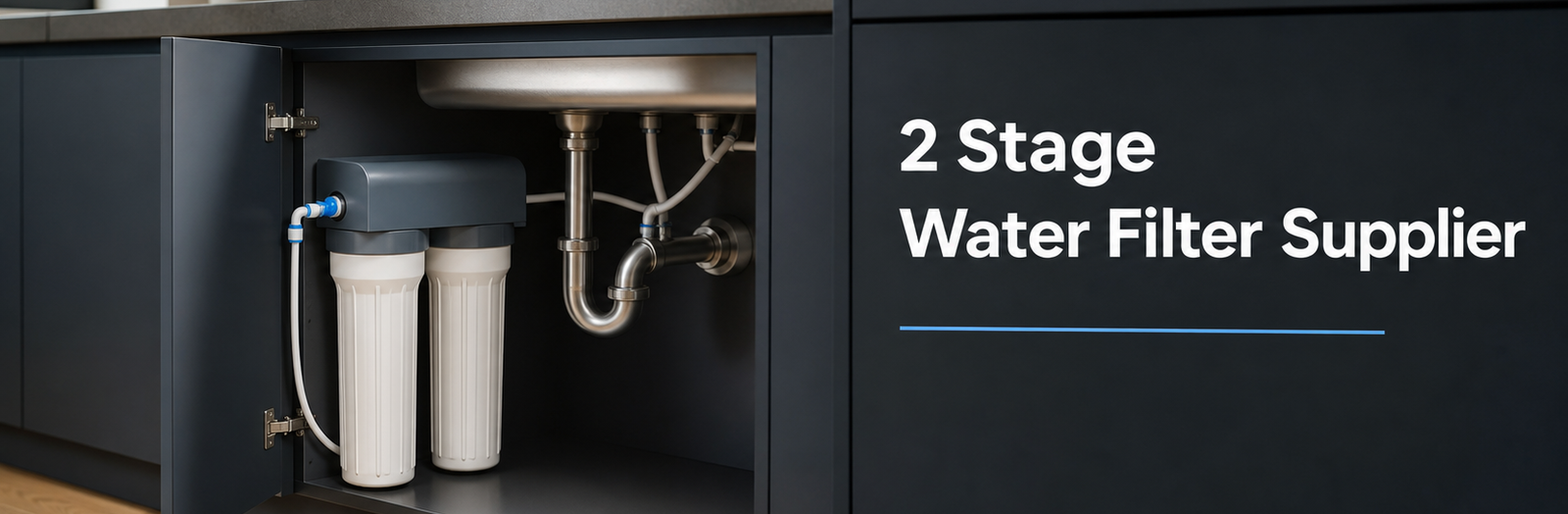
A 2 stage water filter supplier is not the same thing as a factory, and treating the two as interchangeable is how brand owners end up with inconsistent stock. Before you sign a purchase order, confirm five things:
- Factory-of-record clarity — one confirmed production site, not a rotating pool of subcontracted mills
- Component traceability — batch records for PP cotton density, carbon block source, and O-ring compound
- In-house test data — pressure-drop (PSI) curves at rated flow, not a single spec-sheet number
- Water chemistry range — validated performance across municipal supply and hard well water, not one lab sample
- Tooling and MOQ transparency — mold cost, amortization schedule, and minimum order quantity disclosed before quoting
A supplier that can’t answer all five is asking you to underwrite the risk on their behalf.
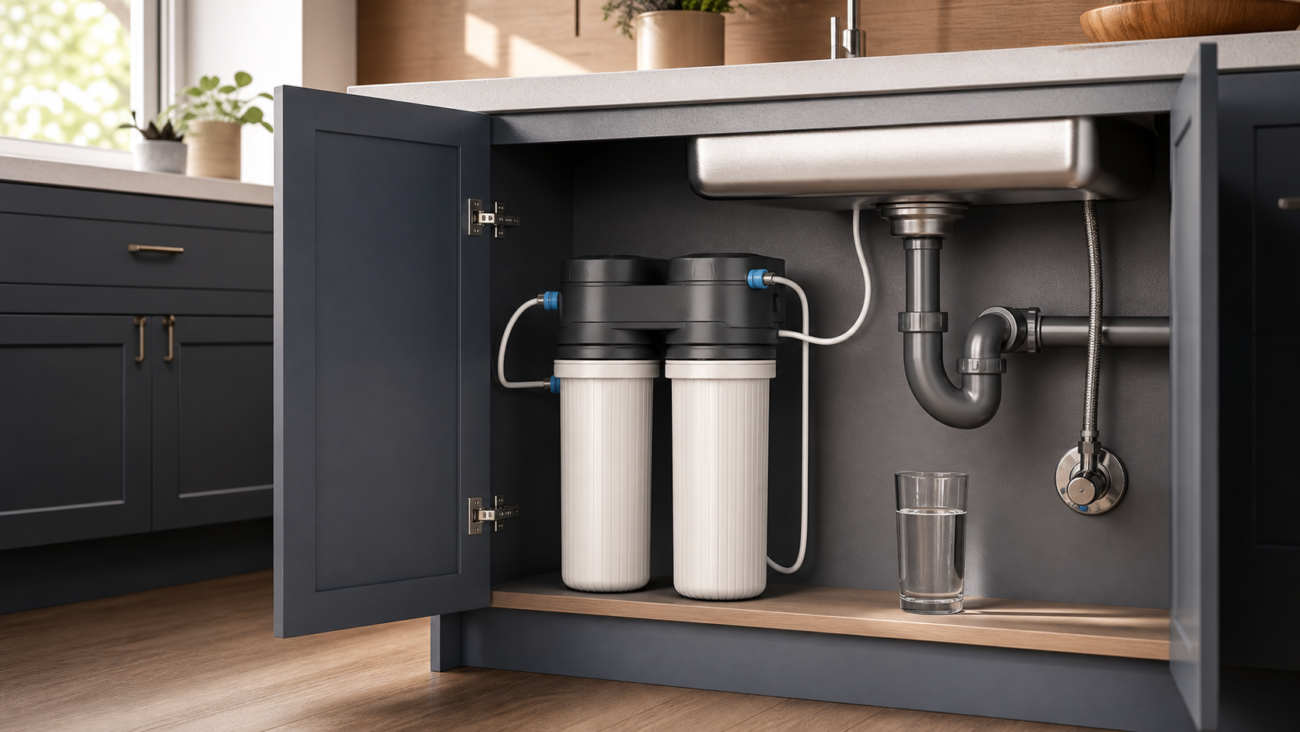
Fast Check Product: https://yourwatergood.com/product/whole-house-water-filtration-system-for-home/
What Buyers Mean by “2 Stage Water Filter Supplier”
The word “supplier” covers three very different business models, and each carries a different risk profile.
Direct factory-backed suppliers — the factory itself, or a sales arm that sits inside the same company. One production site, one point of accountability.
Trading-company suppliers — an intermediary that sources from whichever mill has capacity that week. Pricing is often competitive, but the factory behind your product can change between orders.
Regional distributors — companies holding finished-goods inventory for faster domestic delivery, usually at a markup over factory-direct pricing.
None of these models is automatically wrong. The mistake is not knowing which one you’re buying from, then being surprised when consistency doesn’t hold.
The practical difference shows up at reorder time. A brand working with a factory-direct supplier can lock the same production line for every batch. A brand working with a trading company may get a perfectly good first shipment and a noticeably different second one — same listing, different mill, different cartridge media grade — without ever being told the source changed.
Two Cartridge Configurations a Reliable Supplier Should Stock
A supplier worth a repeat order carries more than one cartridge pairing, because household water problems aren’t uniform.
The “Clean & Clear” configuration targets municipal (city) water:
- Stage 1 — PP Cotton, 5-Micron: traps rust, sand, and silt before they reach downstream fixtures
- Stage 2 — CTO Carbon Block: reduces 95%+ of residual chlorine, along with taste and odor
The “Scale Shield” configuration targets hardness-driven complaints — white spots on glassware, buildup inside a showerhead:
- Stage 1 — High-Efficiency PP Cotton: protects the scale-fighting stage from premature fouling
- Stage 2 — Scale Inhibitor (Siliphos/Polyphosphate): keeps calcium and magnesium suspended instead of depositing on pipes and heating elements, with no added sodium
Ask any prospective supplier which configuration ships by default. If they only stock one, they’re assuming your end customer’s water type for you.
→ Request a Factory Component Blueprint — see cartridge dimensions, media grade, and housing tolerances before committing to a PO.
Factory-Direct Supplier vs. Trading-Company Supplier
The gap between these two models shows up in the paperwork long before it shows up in the product.
| Factor | Trading-Company Supplier | Factory-Direct Supplier |
|---|---|---|
| MOQ | Often lower, pooled across clients | Set by the factory, negotiable at volume |
| Lead Time | 20–30 days, dependent on mill availability | 15–20 days off-the-shelf, 35–55 days for OEM/ODM |
| Price Transparency | Marked up, factory cost usually hidden | Cost structure visible, easier to audit |
| QC Access | Limited — audits require the trader’s permission | Direct — audits and inspections scheduled with the factory |
| Tooling / Custom Molds | Rarely available | One-time fee, amortized into unit cost over volume |
| Technical Drawings | Generic spec sheet only | Full CAD drawings, cartridge cross-section, PSI curve data |
Neither column is the “correct” answer for every buyer. A trading company can be the right call for a small first order. Factory-direct becomes the better economics once volume justifies tooling investment and audit access.
Payment structure tends to follow the same split. Trading companies often quote FOB or CIF, with the shipping and customs complexity handled for you at a markup. Factory-direct suppliers more commonly quote EXW or FOB, pushing freight-forwarding decisions back to the buyer — which lowers unit cost but requires your own logistics relationship to actually capture the savings.
Vetting Water Chemistry Coverage
A supplier who only quotes performance against clean municipal water hasn’t actually vetted their own product for a well-water market.
- Feed water TDS: ask for the range each configuration was tested against, not a single low-TDS lab sample
- Operating pressure: a dependable platform holds rated flow across roughly 14.5–58 PSI, matching typical U.S. municipal supply pressure
- Operating temperature: cartridge media and housing seals should be rated for 41°F–100°F (5°C–38°C) to cover both winter well-water intake and summer attic or garage installs
- Hardness swings: well-water buyers need the Scale Shield configuration validated against harder feed water, not just municipal-water samples
Municipal supply is chemically consistent and generally low in suspended solids. Well water is the opposite — sediment spikes after heavy rain, iron staining hits some wells and not others fifty feet away, and hardness swings widely within the same county.
Ask for the supplier’s own EPA-aligned water-quality reference sheet, not a marketing claim. One that specifies the actual TDS and hardness range each configuration was tested against is worth more than a page of adjectives.
That reference sheet is only useful if it’s re-verified per batch, not issued once and reused indefinitely. A single test report from two years ago tells you nothing about the cartridge media currently on the production line.
What a Weak Supplier Costs You
The purchase order is the easy part. The cost of a weak supplier shows up eight months later, in claims you didn’t budget for.
- Lowering warranty claims: consistent cartridge density and housing tolerance keep pressure drop predictable across a full batch, not just the sample unit
- Operational stability: a system that holds rated flow for its full service life avoids the support-ticket spike that follows inconsistent media
- Water consistency: every unit in a container load should perform the same, not sit on a bell curve
- Brand equity protection: a product that fails quietly in month six damages trust more than one that fails visibly in week one — the brand often doesn’t know there’s a problem until the reviews do
Run the math before it happens on a whole batch. A warranty replacement costs the unit itself, outbound shipping, a support interaction — and, if it becomes a public review, a measurable dent in conversion for every future buyer who reads it.
Request a Technical Parameter Sheet — compare rated PSI, flow, and micron accuracy against your current supplier’s spec sheet.
The One Sourcing Detail Most Importers Never Check
Buyers ask about price and lead time. Almost none ask this question: is the factory behind my order the same one that produced my last shipment?
A trading-company supplier under order-volume pressure will sometimes fill a shortfall by pulling stock from a second mill — same spec sheet, different production line, different carbon source, different O-ring compound. The finished units look identical in the box. They don’t always behave identically in the field.
The fix is contractual, not technical: lock a factory of record into your purchase agreement, and require notice before any production is shifted to a secondary site. A supplier confident in their own consistency will agree to this without pushback. One who hesitates just told you something worth knowing before your next container ships.
FAQ
What’s the difference between a 2 stage water filter supplier and a manufacturer? A manufacturer runs the factory. A supplier may be the factory’s own sales channel, a trading company sourcing from multiple mills, or a regional distributor — each carries a different consistency and pricing profile.
What is a 2 stage water filter, and how does it work? It pairs a sediment pre-filter (Stage 1) with a chemical or scale-control stage (Stage 2), removing particulate first so the second stage isn’t fouled prematurely.
What’s the difference between the Clean & Clear and Scale Shield configurations? Clean & Clear pairs PP cotton with a carbon block for chlorine and odor removal. Scale Shield pairs PP cotton with a scale inhibitor for hardness control — they solve different problems.
What MOQ should I expect from a 2 stage water filter supplier? Trading-company suppliers often quote lower MOQs pooled across clients. Factory-direct suppliers set MOQ based on their own production batch size, though it’s negotiable at volume.
Can a 2-stage system handle well water as well as municipal water? Yes, provided the Scale Shield configuration is validated against your specific hardness and TDS range — municipal-only testing doesn’t confirm well-water performance.
How do I know if my supplier is sourcing from more than one factory? Ask directly, and put a factory-of-record clause in your purchase agreement. A supplier that resists naming their production site is usually sourcing opportunistically.
What warranty terms should a wholesale buyer negotiate? Ask for claim-rate data from existing production runs, not just a stated warranty period — the number that matters is how often units fail, not how long the document says they’re covered.
Get Your Custom OEM Quote
A 2 stage water filter supplier earns a repeat purchase order with documentation, not adjectives. If a supplier can’t produce the paperwork covered above on request, treat that as your answer — not as a reason to ask a softer question. Before your next purchase order, request:
- A Custom OEM Quote scoped to your target MOQ and branding requirements
- Full Technical Parameter Sheets covering PSI range, TDS tolerance, and cartridge specifications
- Current B2B Wholesale Pricing across both the Clean & Clear and Scale Shield configurations
Compare those documents against your current 2 stage water filter supplier before you commit to your next container.