Whole House Water Filter System Sourcing: Softener vs Centralized RO

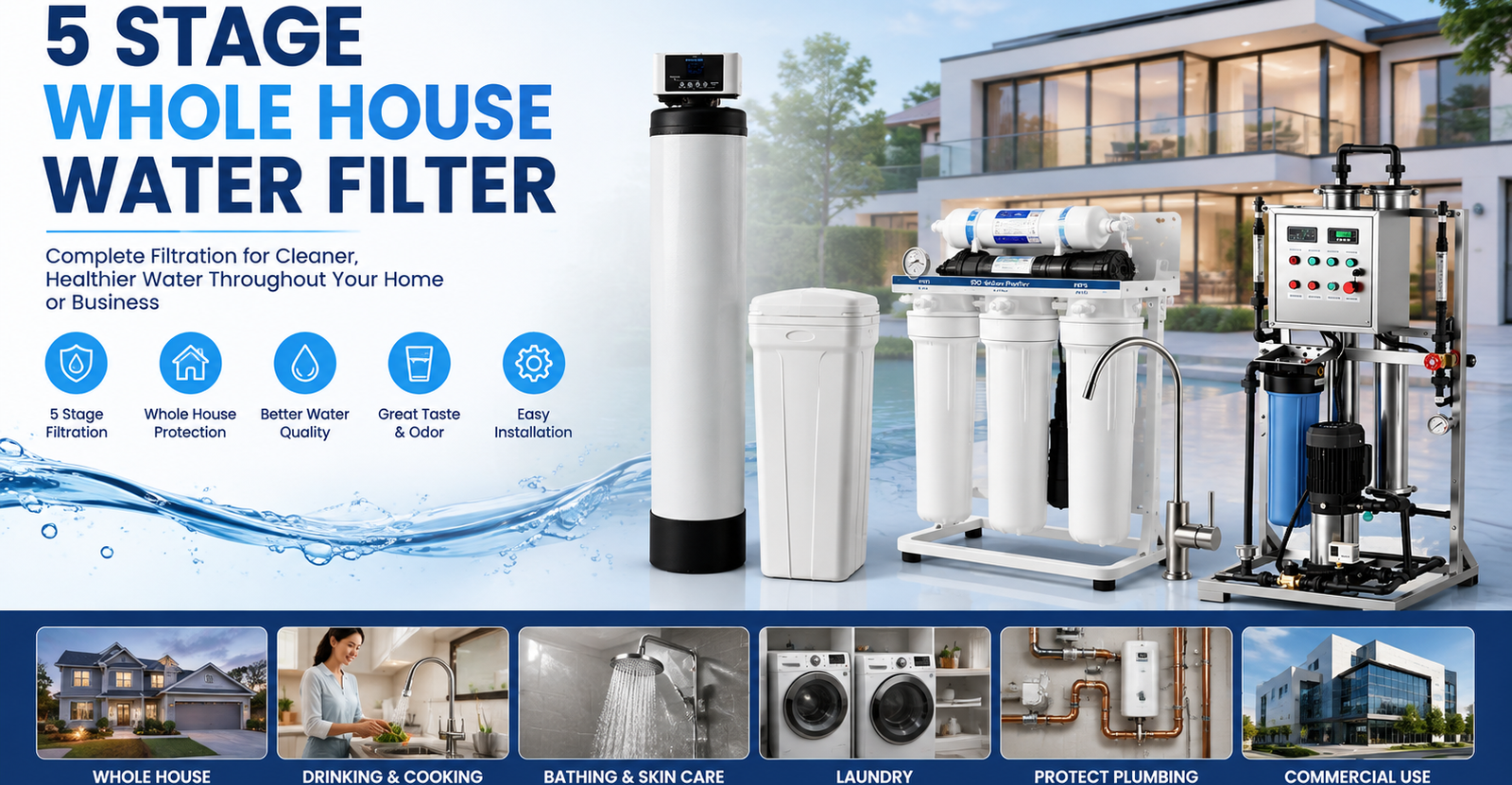
A whole house water filter system isn’t one product — it’s a choice between two different engineering problems, and most B2B buyers source the wrong one because a supplier’s site doesn’t separate them clearly.
Before requesting quotes, confirm which problem you’re actually solving:
- Hardness and scale across every fixture — this needs point-of-entry softening, sized for full building flow, not a filtration cartridge.
- Centralized purified water at multiple taps — this needs a pressurized RO skid with a duty cycle built for continuous or near-continuous operation, not a single under-sink unit.
- Feed water conductivity and pressure — every whole-house spec sheet should state a maximum input conductivity and a minimum operating pressure. If it doesn’t, ask.
- Automated protection — pressure switching, auto-flush cycling, and inline monitoring separate an industrial-grade skid from a scaled-up residential unit.
Sourcing the wrong category wastes a container shipment. Sourcing the right one starts with understanding why these two problems don’t share one product.
Why “Whole House” and “5-Stage RO” Are Different Engineering Problems
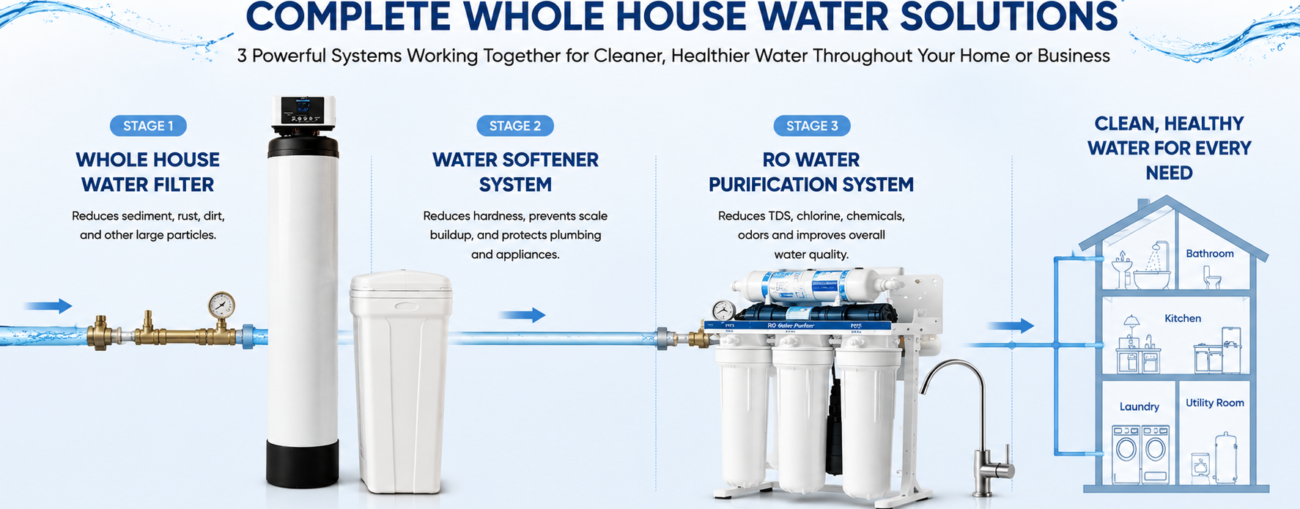
A 5-stage RO system is a point-of-use design: one tap, low continuous demand, a storage tank that recovers between uses. That architecture doesn’t scale to full-building flow — no residential-class RO membrane can keep up with simultaneous draw from multiple fixtures.
Real whole-house programs split into two categories instead:
- Point-of-entry softening handles the full-flow problem — hardness, scale, and appliance protection — without a membrane bottleneck anywhere in the system.
- Centralized RO purification solves a different problem: delivering low-TDS, purified water to several points from one industrial-duty unit, sized well above residential capacity.
Buyers evaluating “whole house RO” as a single 5-stage product are usually looking at a mismatch before they’ve even requested a quote.
Whole House Water Softener: The Real POE Solution for Hardness & Scale
For hardness-driven markets and well water with mineral content, softening is the correct point-of-entry technology — it treats every fixture in the building without limiting flow rate.
This is the product to source when the buyer’s end customer is dealing with:
- Scale buildup across water heaters, dishwashers, and plumbing fixtures
- Hard-water spotting on glassware and fixtures throughout the property
- A need for full-flow treatment that doesn’t bottleneck simultaneous fixture use
See the Whole House Water Softener specs and OEM options →Request a Factory Component Blueprint for the softener line — resin capacity, tank sizing, and control valve options vary by target market water hardness.
Commercial RO System: Centralized Purification for Multi-Point Delivery
When the requirement is purified water delivered to several taps from one unit — not just softened water at every fixture — this is the category that fits.
Specs from the current production skid:
| Parameter | Spec |
|---|---|
| Membrane | 4040, single element, stainless steel housing |
| Purified Water Output | ~66 GPH (up to ~1,585 GPD at continuous operation) |
| Inlet Pressure Requirement | 29–58 PSI |
| Feed Water Compatibility | Tap water / groundwater, up to ~800 μS/cm conductivity (roughly 400–560 ppm TDS, depending on water chemistry) |
| Power | 1.1 kW, 220V/50Hz (voltage/frequency configurable for target markets — see below) |
| RO Membrane Service Life | ~1 year, water-quality dependent |
| Pre-Filter Cartridge Life | 2–4 months, recommended replacement cycle |
| Footprint | ~23.6″ × 23.6″ × 55.1″ (L × W × H), floor-standing |
| Inlet / Outlet Piping | ~1-1/4″ inlet, ~3/4″ purified water outlet |
This is a pressurized skid built around a high-pressure pump, not a gravity or tank-recovery design — which is what makes near-continuous multi-point delivery possible.
See the Commercial RO System specs and OEM options →
Off-the-Shelf vs Full OEM/ODM Support for Whole House Systems
The unit price on a whole-house skid is the smallest part of the sourcing decision:
| Factor | Off-the-Shelf Components | Full-Scale OEM/ODM Support |
|---|---|---|
| MOQ | Fixed, standard configuration only | Scales with order size; configuration adjustable to spec |
| Lead Time | Quoted for stock builds only | Customization built into the quoted timeline from day one |
| Tooling / Enclosure Fee | None, but the control cabinet and frame branding are generic | One-time cost, amortized across the order; enclosure and labeling are yours |
| Technical Drawing Support | Rarely provided beyond a basic spec sheet | Full drawings, pressure and flow ratings, and wiring schematics before production |
| Voltage / Frequency | Fixed to the factory default | Configurable for the destination market (e.g., 110V/60Hz vs 220V/50Hz) |
| Feed Water Range | Fixed conductivity limit, no adjustment | Pump and membrane sizing adjustable to your target market’s water profile |
Buyers sourcing for a single domestic market can often work with a standard build. Buyers exporting across multiple grid and water-quality profiles need the OEM path — the voltage and conductivity rows above are exactly where an off-the-shelf order runs into trouble mid-container.
Field Engineering Insight: What Separates a Real Commercial Skid from a Scaled-Up Residential Unit
Three things on this spec sheet do work a basic residential system doesn’t:
- High/low pressure switching. The pump shuts down automatically outside its rated pressure window — protection against dry-run damage and against feed-pressure spikes that would otherwise reach the membrane directly.
- Automated flush solenoid valve. A scheduled flush cycle clears concentrate from the membrane surface between production runs, which is what keeps recovery rate stable over months of near-continuous duty instead of degrading week over week.
- Dual flow meters on product and concentrate lines. Most under-sink systems give you no visibility into recovery ratio at all. Here, both the permeate and reject flow are visible on separate gauges — which means a technician can diagnose a fouling membrane by flow rate alone, before output quality ever drops.
One sourcing question worth asking directly: confirm whether carbon pre-treatment is included or quoted separately. The BOM on this skid is sediment pre-filtration into the RO membrane — no GAC or CTO stage ahead of it. Thin-film composite membranes are chlorine-sensitive, so for municipal feed water with chlorine, carbon pre-treatment protects the membrane investment even if it isn’t part of the base package.
Sourcing Considerations Before You Quote
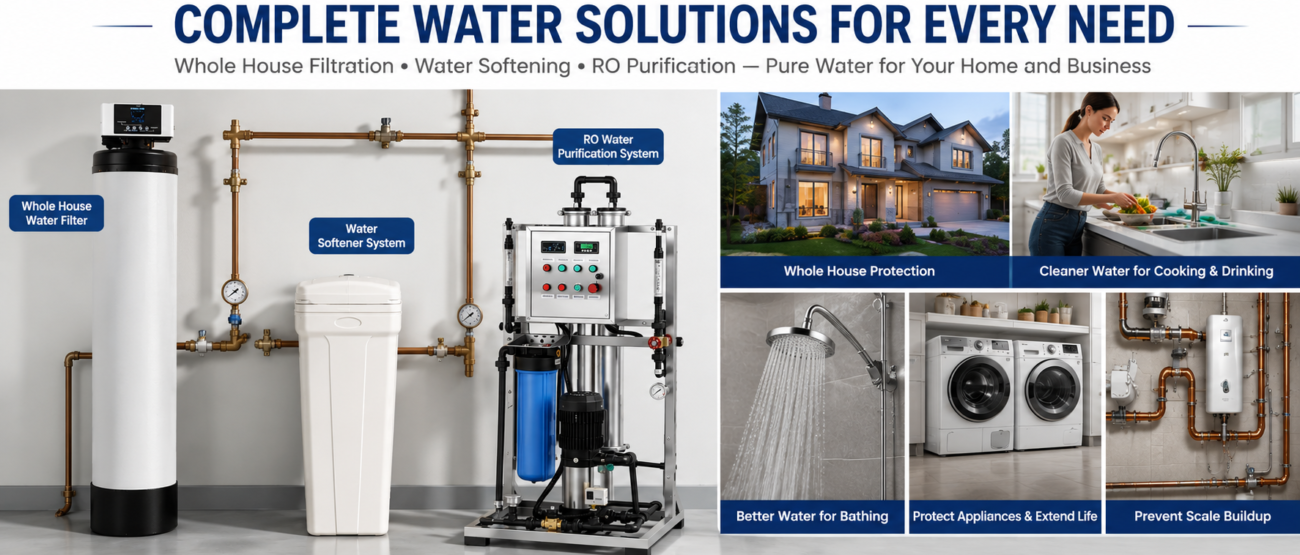
A few line items on this spec sheet change the total cost of ownership more than the unit price does:
- Membrane and pre-filter replacement cycle. A 1-year membrane life and a 2–4 month pre-filter cycle isn’t just a maintenance note — for brand owners, consumable replacement is recurring revenue built into the product from day one.
- Feed water conductivity ceiling. The ~800 μS/cm limit needs checking against your target market’s typical groundwater and municipal profile before committing to a container order.
- Grid compatibility. The base 220V/50Hz spec fits most export markets directly; North American deployment needs a 110V/60Hz configuration confirmed at the OEM stage, not after the container lands.
FAQ
What’s the difference between a whole house water softener and a commercial RO system for OEM sourcing? The softener treats hardness and scale across every fixture at full building flow. The commercial RO system delivers centralized purified water to multiple taps from one industrial-duty unit — they solve different problems and aren’t interchangeable.
Can a whole house water filter system really replace a 5-stage under-sink RO unit? Not directly. A 5-stage unit is built for one low-demand tap; whole-house systems are engineered for full-building flow or continuous multi-point output, which requires different pump, membrane, and control components entirely.
What feed water conductivity can this commercial RO system handle? Up to roughly 800 μS/cm, which translates to approximately 400–560 ppm TDS depending on the specific water chemistry involved.
How is inlet pressure and pump protection handled on a commercial RO skid? The system requires 29–58 PSI at the inlet and uses a high/low pressure switch to shut the pump down automatically outside that rated window, protecting it from dry-run and over-pressure conditions.
Should carbon pre-treatment be quoted separately for chlorinated water sources? Yes — confirm this directly with the supplier. The base skid’s BOM covers sediment pre-filtration and the RO membrane; carbon pre-treatment for chlorine removal ahead of the membrane should be specified if your target market’s municipal water is chlorinated.
Can voltage and frequency be customized for different export markets? Yes. The standard build is 220V/50Hz; OEM orders can be configured for 110V/60Hz or other regional grid specs at the sourcing stage.
Why does the RO membrane and pre-filter replacement schedule matter for a brand owner? A ~1-year membrane life and a 2–4 month pre-filter cycle define a predictable consumables cycle — which is recurring aftermarket revenue for the brand sourcing the system, not just a maintenance line item.
Get a Custom OEM Quote. Whether the requirement is full-building softening or centralized purified water across multiple points, matching the right whole house water filter system to your target market’s water profile and grid spec is what determines landed cost and warranty performance.
Request your Custom OEM Quote, Technical Parameter Sheets, or B2B Wholesale Pricing for the Commercial RO System or the Whole House Water Softener line, configured to your destination market.