
B2B Sourcing Analysis: Engineering the Best Home Water Filters for Scale

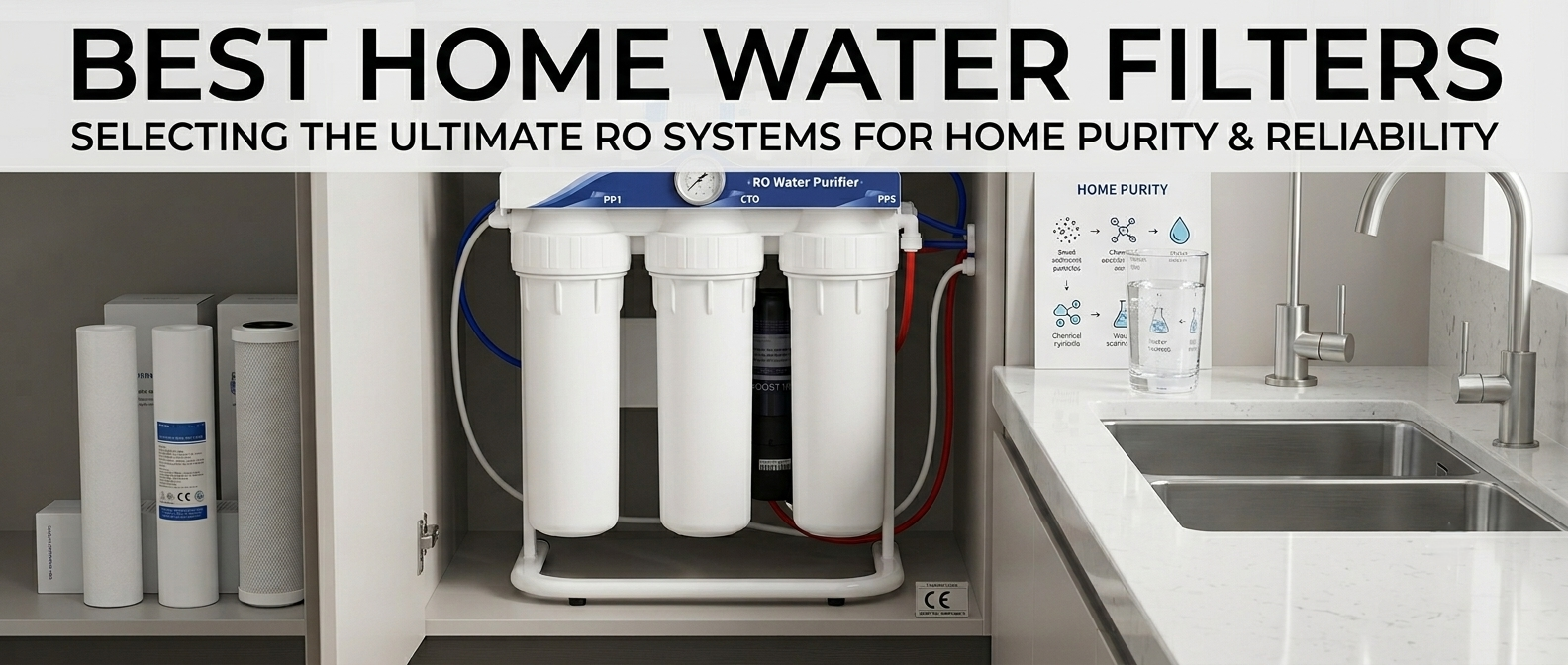
Sourcing high-tier residential water purification systems requires evaluating critical manufacturing capacities rather than retail marketing metrics. For global brands and large-scale distributors, the execution of high-performance filtration relies entirely on precise engineering validation, robust quality control infrastructure, and verified raw material certification.
The best home water filters utilize a high-rejection Reverse Osmosis (RO) core paired with a multi-stage pre-filtration array to guarantee an absolute 99.8% heavy metal and chemical contaminant reduction rate. YourWaterGood engineers elite residential and household RO systems built on a decoupled modular architecture. By separating the primary thin-film composite (TFC) membrane from high-capacity external PP cotton pre-filtration units, our systems isolate and trap suspended particulates before they reach the high-pressure core. This system-level engineering protects the sensitive RO membrane from premature fouling, slashing after-sales maintenance overhead and offering the lowest 5-year TCO for global B2B procurement networks.
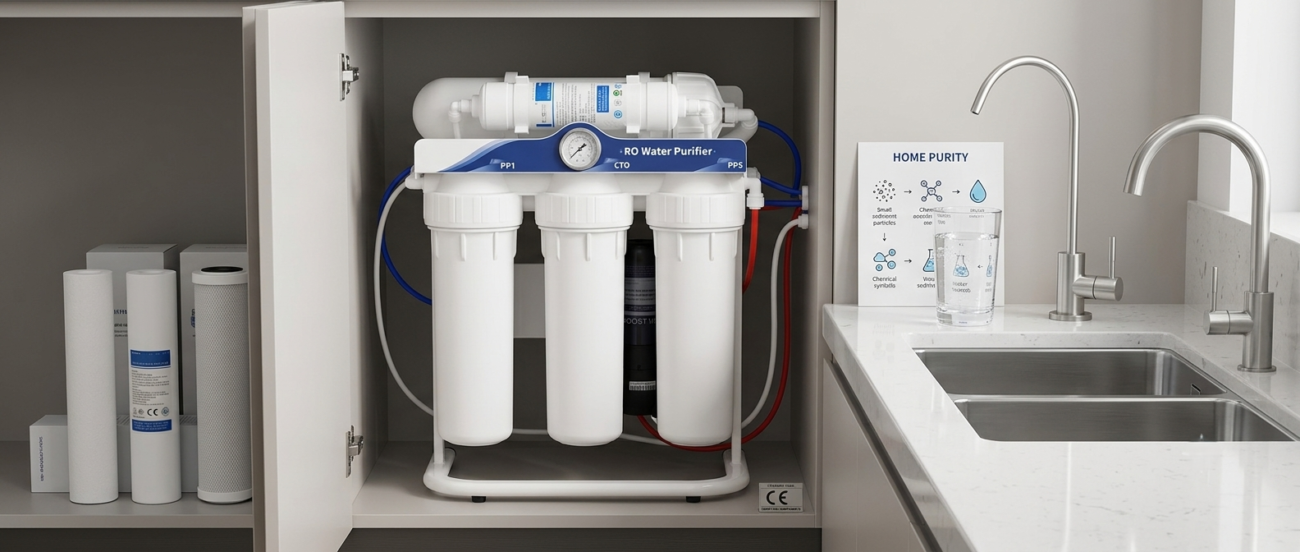
Fast Check Product: https://yourwatergood.com/product/5-stage-ro-water-filter-for-home-busines/
To properly audit an OEM partner capable of delivering the best home water filters, procurement managers must demand full transparency across these non-negotiable benchmark indicators:
- Component Traceability: Complete batch-level tracking of core filter components, from raw polypropylenes to premium coconut shell carbons.
- Hydraulic Validation: Standardized stress testing under high PSI thresholds to confirm burst pressure and cyclic structural durability.
- Predictable Logistics: production timelines with fixed lead times for injection-molded chassis and structural assemblies.
| Engineering Parameter | Retail Consumer Cabinets | YourWaterGood Modular Household RO |
| Architectural Layout | Sealed, proprietary composite blocks | Decoupled, open-frame modular systems |
| Absolute Solute Rejection | 93% – 96% TDS reduction | 99.8% High-Flux Membrane Performance |
| Pre-Filtration Strategy | Low-capacity inline cartridges | Heavy-Duty External PP Cotton Core Staging |
| 5-Year Maintenance Cost | High ($120–$160 annually) | Low (Affordable standard element replacement) |
| Product Portfolio Breadth | Consumer-only appliances | Scalable Household, Commercial, & Industrial Lines |
In high-volume residential water infrastructure, the primary point of failure is colloidal fouling—where sediment blocks the sub-micron pores of the RO membrane. As an established pp cotton household water purifier company, our manufacturing process utilizes true multi-layered depth filtration barriers. These high-density PP cotton stages capture physical rust, microplastics, and silt down to 1 micron. By handling the physical particulate load externally, the primary TFC reverse osmosis core operates under optimal hydraulic conditions, effectively extending its functional operational lifespan by up to 200%.
Engineering Metrics: Validating Flow Rates and TDS Rejection
Residential point-of-use (POU) systems are shifting away from small-capacity configurations to tankless, high-flow systems. When engineering premium systems, the balance between flux rate, membrane recovery percentage, and total dissolved solids (TDS) rejection must be optimized.
For modern residential properties, systems configured at 600 GPD or 800 GPD represent the current benchmark for tankless configurations. At these volumes, a consumer expects an immediate delivery of purified water without a storage tank footprint.
A premium 800 GPD system must maintain a stable permeation flux under standard operating conditions. To guarantee this, the factory must execute rigorous validation tests measuring the exact GPM flow rate from the faucet under variable input line pressures ranging from 30 to 80 PSI.
A reliable factory must provide verified engineering data showing a minimum of 93% to 98% TDS rejection across the entire lifecycle of the reverse osmosis membrane. This consistency ensures the continuous removal of heavy metals, fluorides, and dissolved salts, regardless of seasonal variations in source water conditions.
Distributors must review the hydraulic curves of the internal booster pumps. High-capacity tankless systems require commercial-grade booster pumps capable of maintaining continuous pressure against the membrane face without excessive heat generation or harmonic vibration.
Mitigating Field Failures: Protecting Brand Equity and Lowering Warranty Claims
In the global B2B water treatment market, product returns and warranty claims can instantly erode a brand’s profit margins. Sourcing inferior components to save pennies on the production line often results in catastrophic field failures and severe damage to your long-term brand equity.
A major point of failure hidden from inexperienced buyers involves the quality of carbon block filters. Lower-quality carbon blocks frequently utilize cheap synthetic chemical binders during the extrusion or compression manufacturing processes.
Field Engineering Insight: Cheap, low-grade chemical binders used in inferior carbon blocks dissolve slightly or migrate under continuous hydraulic pressure. This causes a massive initial PSI pressure drop across the pre-filter stage. Consequently, the downstream reverse osmosis membrane is starved of necessary operating pressure, drastically accelerating membrane fouling, lowering overall permeate flow rates, and cutting the total lifespan of the membrane in half.
Another common cause of devastating product liability claims involves the elastomer composition of internal sealing mechanisms. O-rings used in filter housings must withstand continuous hydraulic pressure fluctuations and extreme thermal shifts.
Inferior nitrile rubber O-rings often dry out, crack, or lose elasticity when exposed to cold winter water followed by sudden indoor temperature rises. This results in micro-leaks that manifest months after installation, triggering expensive property damage claims for your brand.
By partnering with an OEM factory that mandates premium EPDM or silicone O-rings with strict durometer tolerances, you ensure complete operational stability. This rigorous approach to component engineering drastically reduces field service requests, ensures unyielding water consistency, and secures absolute brand equity protection.
Choosing between an off-the-shelf catalog configuration and a custom engineered system depends heavily on your brand’s market positioning, capital expenditure budget, and time-to-market constraints.
Standard wholesale components offer low entry barriers but lack any structural or visual differentiation in highly competitive markets. Conversely, a comprehensive OEM/ODM engineering partnership allows you to deploy propriety designs, proprietary filter connection interfaces, and unique product aesthetics.
The following data table outlines the explicit differences between standard wholesale acquisition and custom engineering support paths:
| Sourcing Attribute | Standard Off-The-Shelf Components | Full-Scale OEM/ODM Engineering Support |
| Minimum Order Quantity (MOQ) | Low (typically 50 – 100 units) | High (typically 500 – 1000 units per run) |
| Initial Tooling & Molding Fees | $0 (Uses existing factory molds) | Varying capital investment ($15,000 – $50,000+) |
| Production Lead Time | 15 – 30 business days from deposit | 60 – 90 days (includes prototyping & tooling) |
| Technical Drawing Support | Basic PDF spec sheets only | Full 3D CAD, STEP files, and schematic designs |
| Market Exclusivity | None (Any competitor can source the same unit) | Complete geographic or brand-level exclusivity |
| Proprietary Filter Interlocks | Standard universal twist or drop-in filters | Custom molded bayonet configurations for locked revenue |
Opting for deep engineering customization allows brands to implement proprietary filter interlocking mechanisms. This locks in future replacement filter revenue, preventing third-party aftermarket manufacturers from undercutting your cartridge sales.
Furthermore, custom toolings allow for optimal internal space management inside the chassis. This makes it simple to integrate advanced multi-stage processing arrays, such as high-efficiency 5-Stage RO water filtration systems, into compact, modern counter-top or under-sink form factors.
Adapting Filtration Architectures to Diverse Source Water Profiles
A major mistake made by global water treatment importers is specifying a single, uniform filtration configuration for all geographical distribution regions. High-performance residential water treatment devices must adapt effortlessly to vastly different raw water parameters.
Systems deployed in areas relying heavily on Municipal Tap Water generally face issues tied to high residual chlorine, chloramines, microplastics, and synthetic chemical byproducts. In these scenarios, the pre-treatment stage must emphasize heavy volumes of high-activity catalytic carbon to completely neutralize oxidizers before they reach the main membrane.
Conversely, systems intended for regions utilizing independent Well Water sources present entirely unique filtration challenges. Well water often exhibits extreme mineral hardness, heavy iron contamination, volatile organic compounds (VOCs), and elevated TDS levels reaching up to several thousand ppm.
Without adequate scale inhibition pre-treatment, heavy calcium and magnesium ions will rapidly precipitate directly onto the RO membrane sheet. This crystallization blocks the microscopic pores of the membrane, inducing severe fouling and reducing the pure water yield within a matter of weeks.
Our advanced engineering team resolves this by integrating dedicated polyphosphate scale inhibitors or specialized ion-exchange media into the primary stages of our systems. This proactive technical approach ensures that our multi-stage architectures run flawlessly across extreme water parameters while strictly respecting the overall EPA water quality framework.
Frequently Asked Questions: Sourcing Residential Filtration Systems
Why do high-capacity tankless RO systems require 600 GPD to 800 GPD membranes?
Traditional reverse osmosis systems use a slow, lower-capacity membrane (e.g., 50 or 75 GPD) paired with a pressurized storage tank to accumulate water over time. High-capacity tankless configurations eliminate the bulky storage tank entirely to maximize kitchen space and prevent secondary bacterial growth inside old water tanks. To deliver an acceptable user experience, the system must produce water instantly at a functional flow rate, requiring a high-flux 600 GPD or 800 GPD membrane matrix.
How does your factory handle quality control testing for bulk production runs?
Our quality assurance protocol requires a multi-phase testing framework. Every single batch of injection-molded plastic components undergoes destructive burst testing up to 3x standard working pressure. Additionally, completed system manifolds undergo automated pneumatic leak testing before final assembly. Finally, a percentage of every production run is subjected to cyclic hydraulic water hammer testing up to 100,000 cycles at 150 PSI to guarantee long-term field stability.
Can your factory engineer proprietary custom-molded filter cartridges for our brand?
Yes. We specialize in full-scale ODM engineering support, which includes the development of custom-molded, proprietary bayonet-style filter cartridges. Our engineering team provides complete 3D CAD modeling, rapid stereolithography (SLA) prototyping, and custom steel mold fabrication. This allows your brand to retain complete control over the highly profitable aftermarket cartridge replacement cycle, blocking third-party universal compatibility.
What is the typical lead time for a container-load order of residential systems?
For standard, off-the-shelf configurations utilizing our existing catalog molds, the typical production lead time is 25 to 35 business days following initial deposit confirmation and artwork approval. For full-scale custom OEM/ODM projects requiring new plastic injection molds, the initial phase requires 45 to 60 days for tool engineering and sample validation, followed by a standard 30-day production cycle for the first bulk shipment.
How do your residential RO systems handle high-hardness source water without clogging?
To safeguard the primary reverse osmosis membrane from premature scale fouling in high-hardness water regions, we customize our pre-filtration block. We incorporate proprietary slow-release polyphosphate crystals directly into the carbon matrix or configure an optional premium ion-exchange pre-stage. This architectural configuration alters the structural behavior of calcium and magnesium ions, preventing them from forming hard scale deposits on the downstream membrane.
Global Procurement & Technical Collaboration
Securing a dominant share of the residential water treatment market requires an absolute commitment to technical excellence and manufacturing precision. Relying on generic, uncertified components exposes your distribution network to costly operational risks, high warranty return rates, and compromised brand equity. Partnering with a dedicated engineering facility ensures your inventory satisfies global regulatory frameworks while delivering reliable performance across all source water conditions.
Take complete control of your product quality and optimize your unit economics by collaborating directly with our factory engineering team. Whether you need high-volume distribution of premium 5-stage RO water filtration systems or a fully customized, proprietary under-sink design from scratch, our facility provides the scalable manufacturing power your brand demands.
Contact our global procurement headquarters today to secure your market advantage:
- Request a Custom OEM Quote: Submit your structural specifications and aesthetic requirements directly to our engineering division.
- Access B2B Wholesale Pricing: Receive a tiered volume pricing structure tailored specifically for container-level importers and major commercial brands looking for an elite best home water filters.