
5-Stage RO Water Filter: What It Is and Whether You Need One

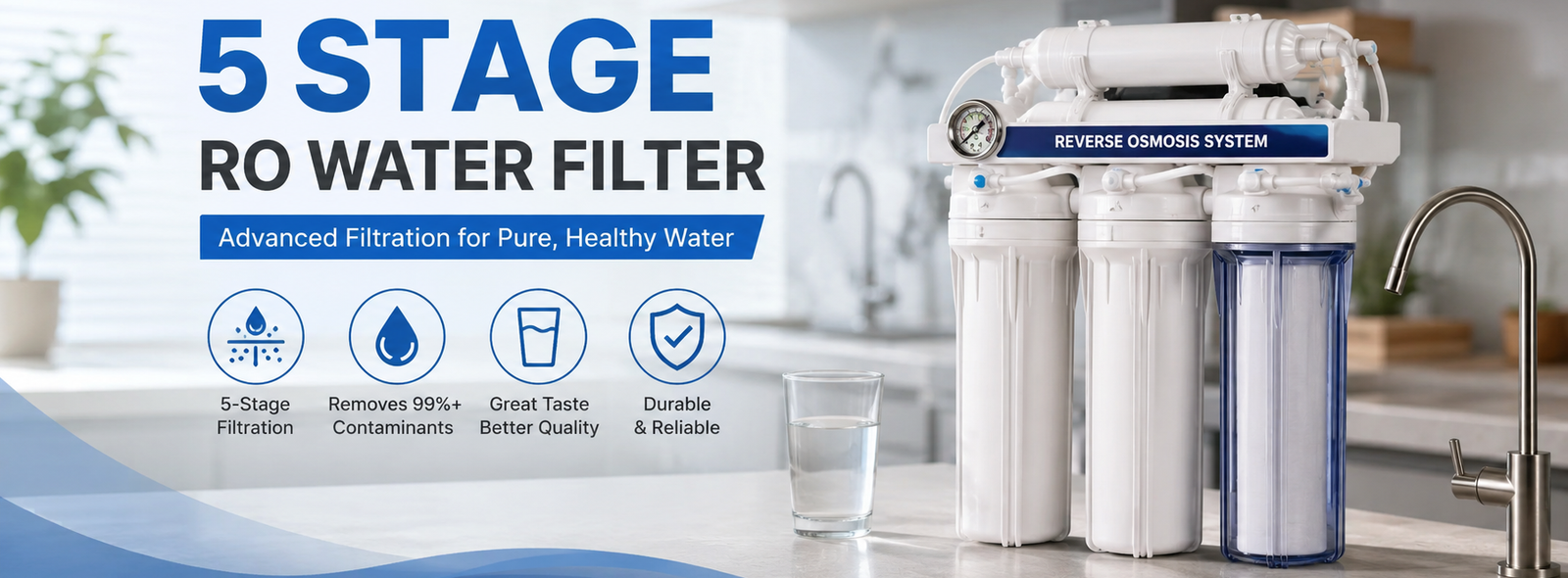
A 5-stage RO water filter is an under-sink reverse osmosis system that pushes tap water through five separate stages — sediment removal, two carbon filtration stages, a reverse osmosis membrane, and a final polishing filter — before it reaches your faucet. The result is water with most dissolved solids, chlorine, and common contaminants removed, which is a meaningfully different outcome than what a standard carbon pitcher delivers.
Before spending money on one, here’s what actually matters when deciding if it’s worth it for your household:
- Your water source matters more than the brand name. Well water and city water need different levels of filtration.
- TDS (total dissolved solids) is the number to check first, not the marketing copy on the box.
- A 5-stage system is built for drinking and cooking water — not whole-house coverage.
- Install and filter-swap effort is real, even when it’s downplayed.
- Some units let you add extras like UV sterilization if microbial contamination is a concern, not just chemical filtration.
Fast Check Product: https://yourwatergood.com/product/5-stage-ro-water-filter-for-home-busines/
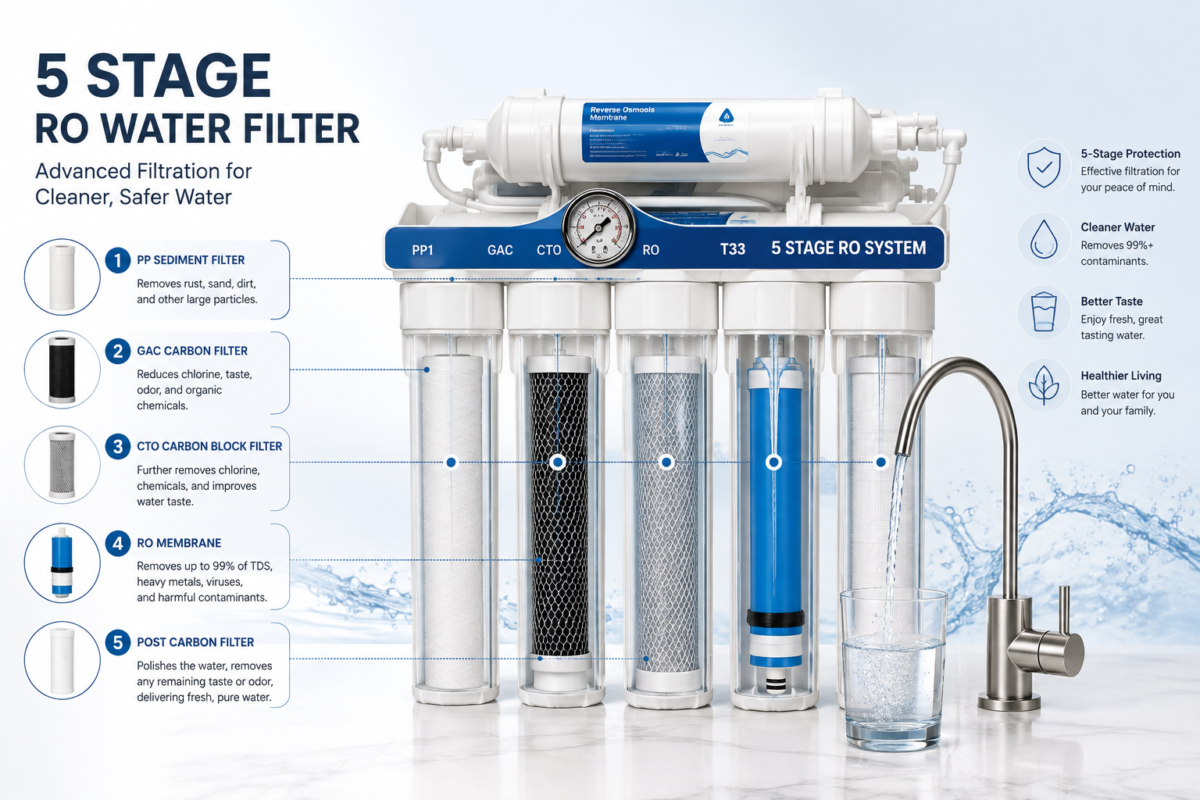
What the 5 Stages Actually Do
| Stage | What It Removes |
|---|---|
| 1 — PP Sediment Filter | Dirt, sand, rust, visible particles |
| 2 — Granular Activated Carbon (GAC) | Chlorine, VOCs, most odors |
| 3 — Compressed Carbon Block (CTO) | Finer chlorine and chemical residue |
| 4 — RO Membrane | Dissolved solids, heavy metals, most contaminants down to 0.0001 micron |
| 5 — Post-Carbon Polishing | Final taste polish before the water reaches the tap |
Some systems add a 6th stage for remineralization, since the RO membrane strips out beneficial minerals along with everything else. And if you’re on well water — or just want extra peace of mind — several manufacturers, including ours, let you add a UV sterilization stage on top of the standard 5, which handles bacteria and microorganisms the membrane alone won’t reliably catch. It’s a build option, not a standard inclusion, so it’s worth asking about specifically if that’s a concern for your home.
If you’re past deciding whether to buy and want help comparing tank size and which configuration fits your household, that’s covered in our full buying guide — no need to duplicate it here.
Who Actually Benefits From a 5-Stage System
Not everyone needs this level of filtration. It tends to make sense if:
- You’re on well water with unknown or inconsistent water quality
- Your city water has a noticeable chlorine smell or taste
- You’ve replaced bottled water with tap and want the taste to match
- You’re specifically concerned about contaminants like PFAS, lead, or heavy metals — that’s covered in more depth in our health-focused breakdown
- Your appliances (coffee maker, kettle, ice maker) are showing scale buildup from hard water
So — is a 5-stage RO system worth it? If two or more of these apply to your household, generally yes.
When a 5-Stage RO System Is Overkill
It’s not the right fit for everyone, and it’s worth saying so plainly:
- If your only complaint is taste and your water already meets basic safety standards, a simple carbon filter often solves it for a fraction of the cost.
- If you’re trying to filter water at every faucet in the house, not just the kitchen sink, an RO system isn’t built for that job — that calls for a whole-house setup instead.
- If you rent and can’t modify under-sink plumbing, the install requirement alone may rule it out.
- If your water utility already reports low TDS, an RO system won’t have much left to remove.
Buying one anyway in these cases isn’t a mistake exactly — it’s just money spent on a problem you don’t have.
5-Stage RO vs. Other Filter Types
| Pitcher Filter | Faucet-Mount | Whole-House | 5-Stage RO | |
|---|---|---|---|---|
| Removes dissolved solids | No | Limited | Limited | Yes |
| Install effort | None | Minutes | Professional | ~1–2 hours |
| Ongoing cost | Low | Low | Medium | Medium |
| Produces wastewater | No | No | No | Yes |
| Best for | Light taste fixes | Quick chlorine removal | Whole-home coverage | Drinking & cooking water quality |
The trade-off is straightforward: RO gives you the most thorough filtration of the group, at the cost of some wastewater and a real install step.
What Owning One Is Actually Like
Installation usually takes an hour or two under the sink — DIY with basic tools, or with a plumber if you’d rather not touch the water line yourself. After that, it mostly runs in the background: filters get swapped on a rotating schedule, with the RO membrane itself lasting the longest of the five.
One thing worth knowing before you buy: 0 ppm TDS isn’t automatically “better” water. It just means the membrane is doing its job removing dissolved solids — including minerals. If mineral content matters to you, look for a system with a remineralization stage rather than assuming more filtration is always the better choice.
FAQ
Is a 5-stage RO system better than a 3-stage one? Generally yes for contaminant removal — the extra stages typically add a second carbon filtration step and a post-filter polish that most 3-stage systems skip.
Does a 5-stage RO filter waste a lot of water? RO systems do produce some wastewater during filtration. Newer designs waste noticeably less than older ones, so it’s worth checking that spec before you buy.
Is reverse osmosis water safe to drink every day? Yes. RO water is fine for daily drinking and cooking — it’s simply lower in dissolved minerals than untreated tap water.
Can I install a 5-stage RO system myself? Most homeowners with basic plumbing comfort can install one in under two hours. If you’re not comfortable working on your water line, a plumber can do it quickly.
How is a 5-stage system different from a whole-house filter? A 5-stage RO system treats water at one point — usually the kitchen sink — for drinking and cooking. A whole-house system treats water entering the home for every faucet.
Does it remove minerals I actually want in my water? Yes, along with everything else. If that matters to you, look for a model with an added remineralization stage.
Can I add UV protection to a 5-stage system? On many systems, yes — a UV sterilization stage can be built in for households concerned about bacteria or microorganisms, particularly on well water.
Ready to Compare Actual Models?
If you’ve read this far and you’re in the “yes, I need one” camp, the next step is picking the right size and configuration for your household — not just the cheapest box on the shelf. Our buying guide walks through tank sizing and what to actually check before you buy.
If you already know what you’re looking for, you can view our 5-stage RO system, including the optional UV add-on.