
Scaling Residential Water Infrastructure: Technical Selection and ROI for High-Volume Household Applications

For property developers, large-scale residential contractors, and plumbing procurement managers, water treatment is not a luxury—it is a critical component of building mechanical longevity. In the United States, water quality varies drastically between municipal grids and private well sources, each presenting unique challenges to appliance lifecycles and plumbing integrity. Partnering with a specialized engineering team like yourwatergood.com allows you to move beyond retail-grade filters and implement industrial-strength residential solutions that reduce long-term maintenance costs.
Executive Sizing & Selection Criteria (Actionable Briefing):
- Establish Precise Flow Rates: Base your system sizing on a minimum of 6–8 Gallons Per Minute (GPM) for standard single-family homes to prevent pressure drops during peak demand.
- Pressure Management: Ensure the Point of Entry (POE) maintains a consistent 40–60 PSI. High-rejection membranes require stable pressure to function at their rated efficiency.
- Feed Water Analysis: Never specify a system without a comprehensive lab report. Municipal water requires chlorine/chloramine neutralization, whereas well water often demands iron oxidation and UV sterilization.
- Component Standardization: Prioritize systems with non-proprietary filter housings (e.g., Big Blue 10″ or 20″) to lower the Total Cost of Ownership (TCO) and simplify supply chain logistics for replacement media.
Strategic Asset Protection with a Leading 2 stage water filter manufacturer
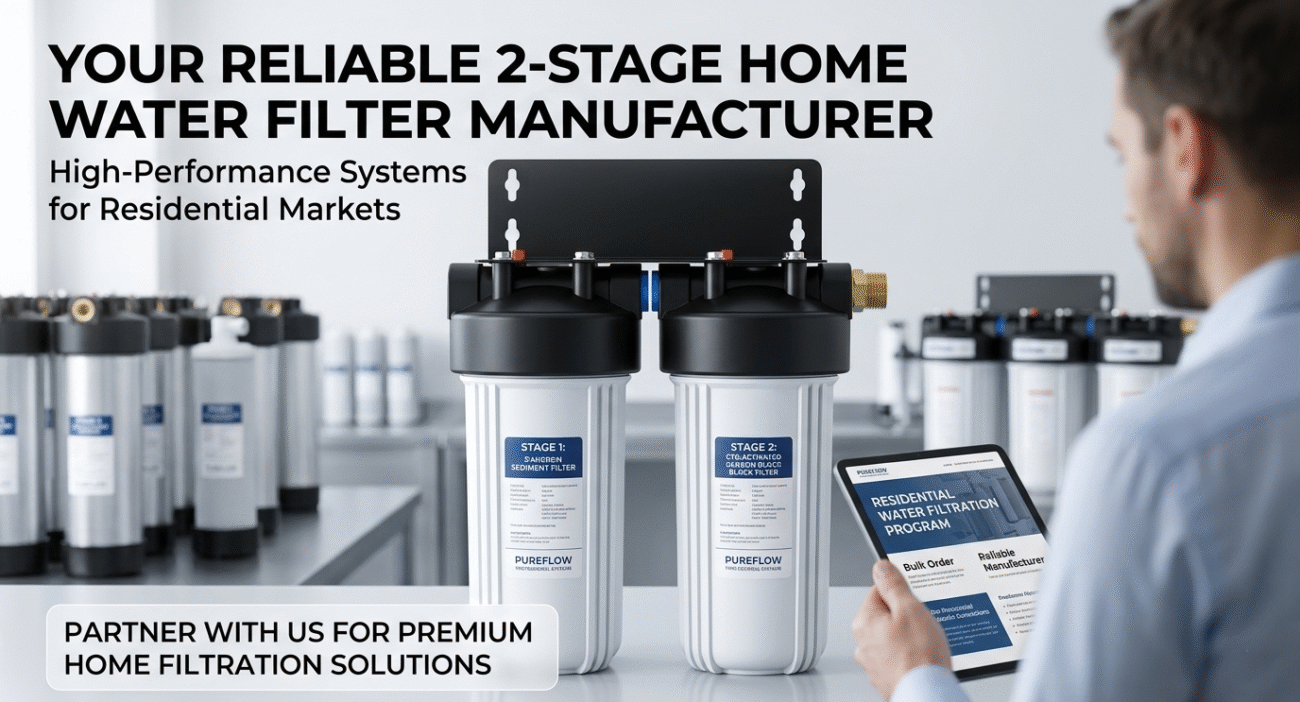
In the high-volume residential market, the primary goal of a Whole House system is the removal of physical sediment and chemical oxidants. As a premier 2 stage water filter manufacturer, we focus on the synergy between mechanical filtration and chemical adsorption.
A standard municipal setup involves a high-capacity sediment stage followed by a catalytic carbon block. This configuration is essential for protecting downstream plumbing fixtures. Chlorine, used by municipal plants to satisfy EPA Safe Drinking Water Act requirements, is highly corrosive to copper piping and rubber seals in water heaters. By removing these oxidants at the point of entry, you effectively double the lifespan of expensive household appliances like dishwashers and high-efficiency boilers.
From an ROI perspective, a 2-stage POE system represents the lowest CAPEX with the highest immediate impact on facility maintenance. By capturing silt and scale-inducing particulates before they enter the building’s internal loop, you eliminate the “silent killers” of residential infrastructure.
Protect your residential assets at the source. [Get a Bulk Quote & Technical Datasheet Here]
Advanced Multi-Stage Mitigation: 3 stage water filter manufacturer Insights
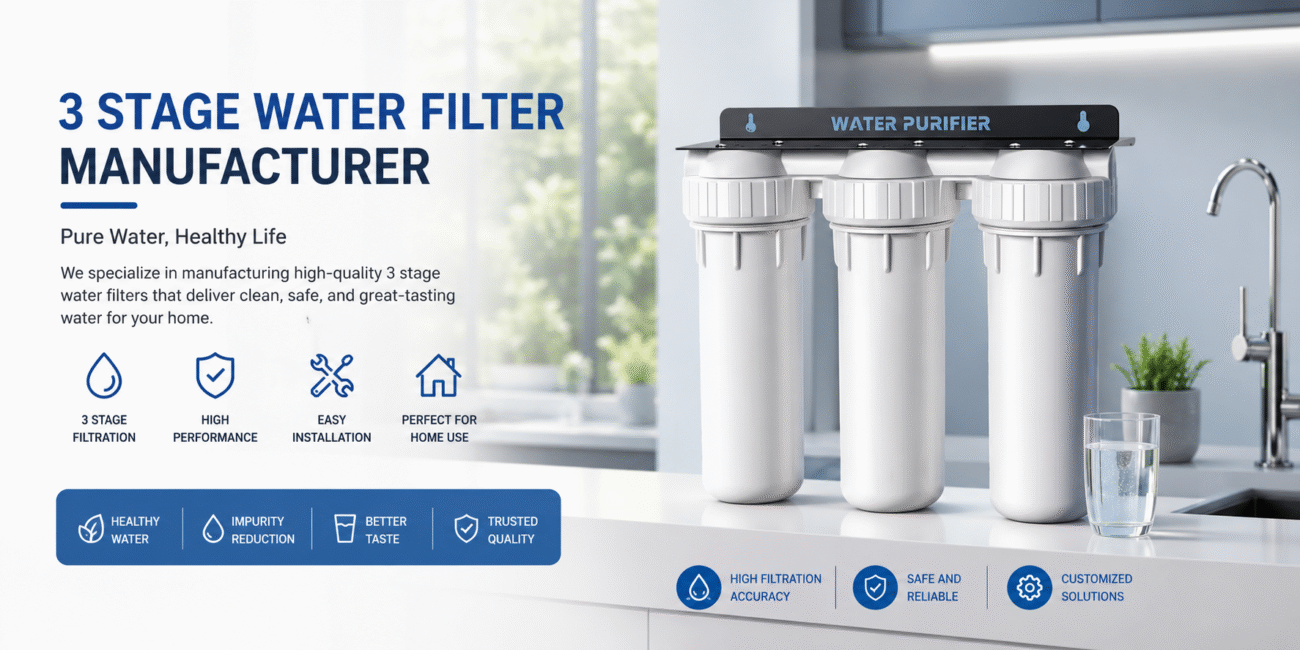
For properties relying on private wells or municipal areas with heavy heavy-metal contamination, a 2-stage system is often insufficient. As an expert 3 stage water filter manufacturer, we engineer systems that introduce a third, specialized media stage—typically Kinetic Degradation Fluxion (KDF) or specialized resins for iron and manganese removal.
Well water in rural US regions often exhibits high levels of “rotten egg” odors (Hydrogen Sulfide) and staining minerals. These elements do more than just affect aesthetics; they cause rapid “pitting” in stainless steel components and drastically reduce the efficiency of heat exchangers. A 3-stage configuration allows for a pre-sediment filter, a primary treatment resin, and a final carbon polish.
High-Density POU Solutions: compact under sink water filter manufacturer
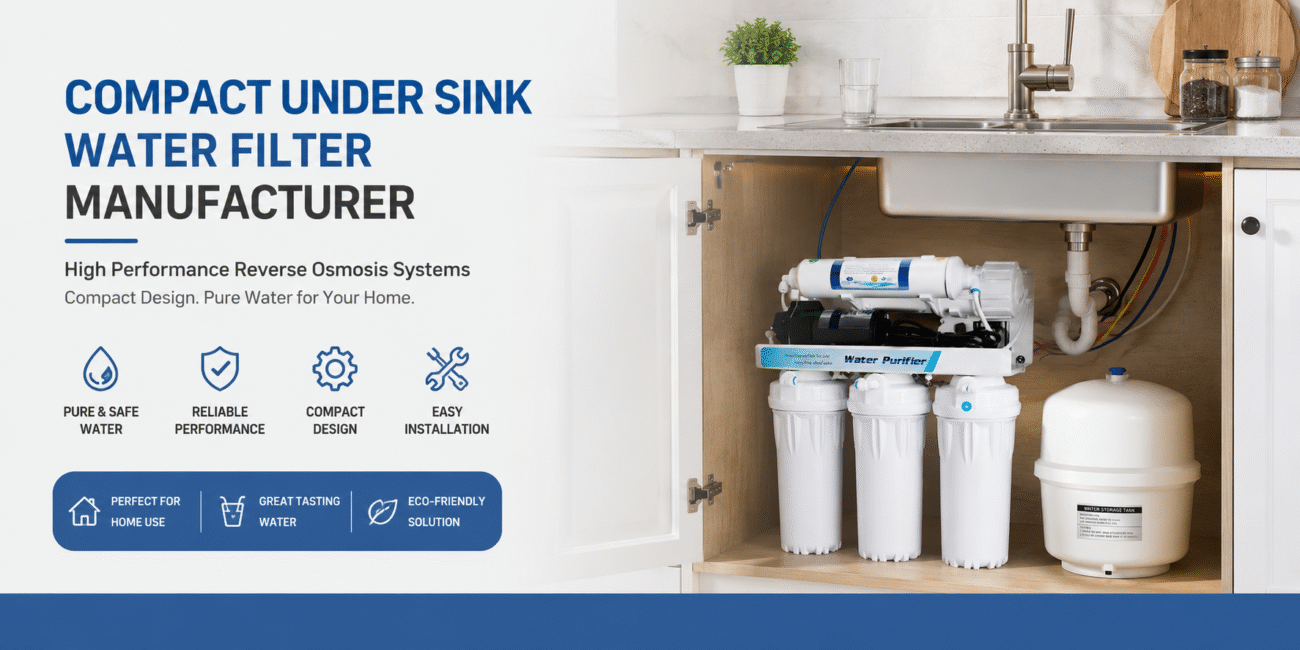
While POE systems protect the plumbing, Point-of-Use (POU) Reverse Osmosis (RO) systems provide the final barrier for drinking water. Modern urban residential designs, particularly in multi-family condos, demand high-performance filtration within extremely limited spatial footprints.
As a compact under sink water filter manufacturer, our R&D focuses on “tankless” or space-saving RO designs that deliver high GPD (Gallons Per Day) rates without the bulk of traditional pressure tanks. These systems utilize high-flow membranes that can generate a fresh stream of 0.5 GPM directly to the faucet.
For B2B procurement, the ROI of a compact RO system lies in its “plug-and-play” installation. By reducing the number of fittings and the overall footprint, contractors can decrease installation labor time by 30% per unit across a multi-unit development.
Engineer’s Insight: The “TDS Creep” Factor In the field, many installers ignore “TDS Creep”—the phenomenon where dissolved solids migrate across the membrane during the RO system’s off-cycle. If you are installing these in luxury developments, ensure the system features an automated “auto-flush” cycle. This 15-second high-pressure rinse before each use clears the concentrated brine from the membrane surface, ensuring the first glass of water is as pure as the last. This is a detail only field engineers prioritize, but it significantly reduces consumer complaints about water taste.
Looking for high-density POU solutions? [Request wholesale pricing for your multi-family project]
Hard Water Mitigation: Partnering with water softener manufacturers and water softener manufacturers
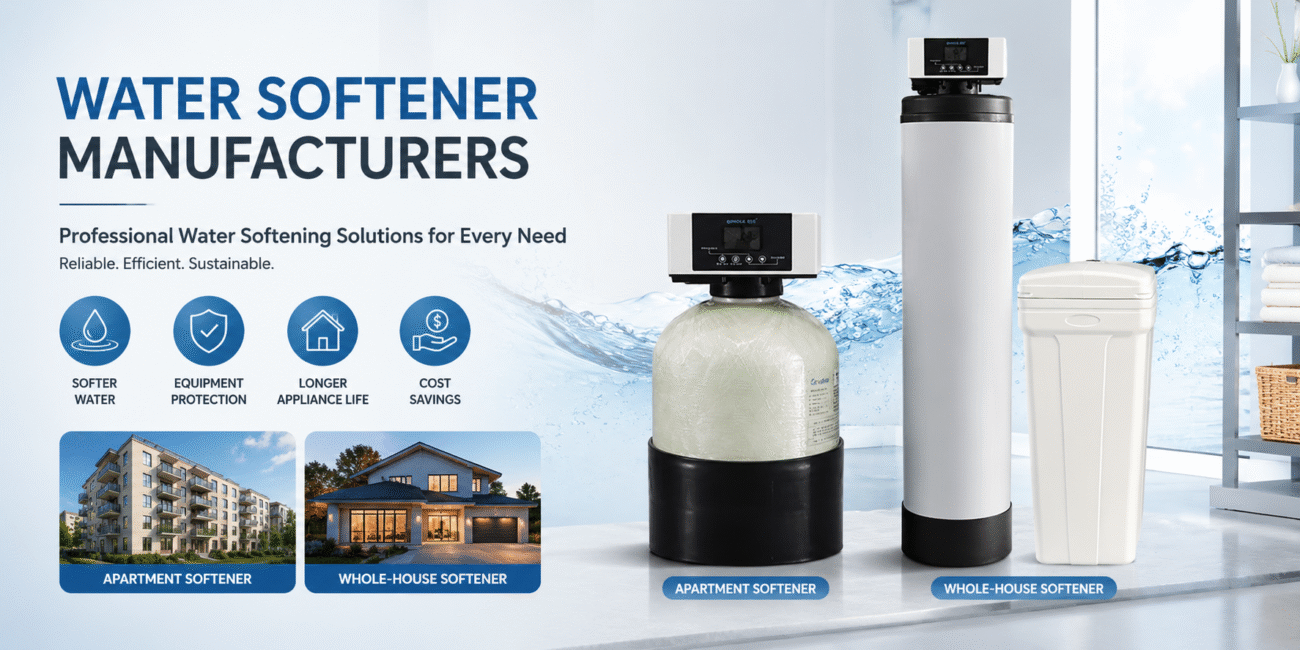
Over 85% of the United States has hard water. Left untreated, calcium and magnesium ions precipitate out of the water as scale, clogging pipes and insulating water heater elements. For B2B buyers managing property portfolios, hard water is the leading cause of premature appliance failure.
Choosing between water softener manufacturers requires looking at the resin quality and control valve intelligence. Our systems utilize high-capacity cross-linked resins that resist chlorine degradation—a common failure point in standard softeners. Furthermore, partnering with water softener manufacturers who utilize “Upflow Regeneration” technology can reduce salt and water waste by up to 40% compared to traditional downflow units.
The business logic is simple: a $1,500 investment in a softener protects $20,000+ in plumbing, fixtures, and appliances. It is the most effective insurance policy against hard water damage in residential construction.
Click Here to Get a Comprehensive Quote and B2B Wholesale Pricing
Consolidating Your Procurement Supply Chain
In the B2B water treatment space, fragmentation is the enemy of efficiency. Sourcing your 2-stage systems, 3-stage systems, RO units, and softeners from disparate vendors leads to inconsistent water quality and logistical headaches.
By centralizing your procurement with a vertically integrated manufacturer, you ensure component compatibility across your entire project. This means your maintenance teams only need to stock one type of filter wrench, one set of O-rings, and one brand of replacement media. This standardization is the hidden ROI that separates successful property managers from those overwhelmed by maintenance overhead.